Future Festivals Field Guide: Crip Rave Advocates for Access and Disability Justice
“Prioritizing accessibility for Crip, Mad, Sick, Deaf, and Disabled people makes an event more accessible for everyone.”
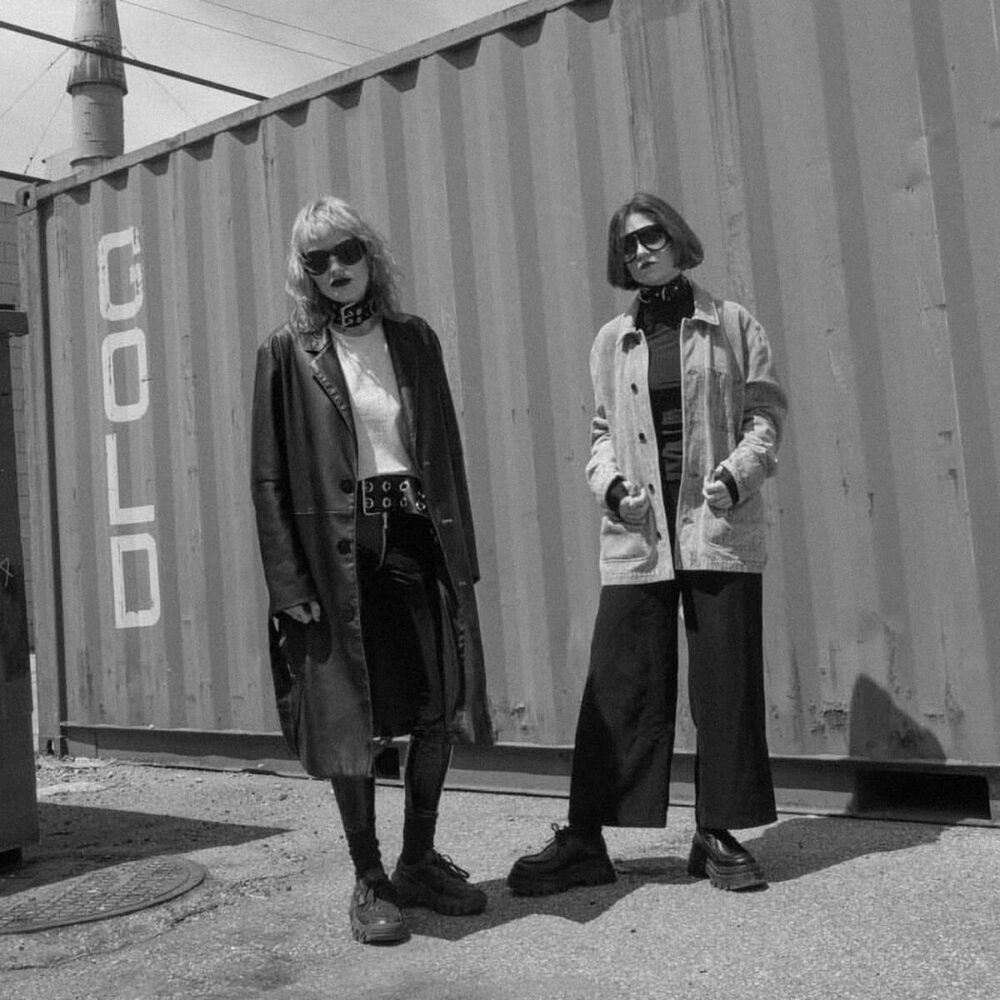
Crip Rave is a Toronto-based collective, event platform, and consulting hub showcasing and prioritizing Crip, Disabled, Deaf, Mad and Sick body-minds within safer and more accessible rave spaces. It was co-founded by Mad and Crip organizers Renee Dumaresque and Stefana Fratila, who draw on lineages of Disability Justice and Crip community wisdom in their work.
Q: Could you describe how your experiences with chronic pain and the dancefloor inspired the formation of your collective?
A: The two of us met in 2018 and bonded over our shared love for electronic music and our own personal relationships with disability, madness, and pain—whether that be bodily pain or psychic pain. We had both had the experience of pain being animated and felt differently on dance floors or in the context of raving. At its best, the dance floor has a unique capacity to facilitate altered states that produce a simultaneous sense of escape and presence. The potential in that for connection—as well as disconnection—forms the basis of love for the work we do. The collective emerged from our love for what we were already experiencing and a longing to make that even better. And then from there it was our differences, in terms of the experiences and skills that we bring, that make the project what it is—Stefana as a DJ and sound artist and Renee as a long-time community organizer in social justice movements.
“We use words like Crip and Mad because they are politicized terms that have been reclaimed by a range of communities around disability, mental health, chronic pain and illness.”
Q: Part of your advocacy is organizing radically accessible events to demonstrate what is possible. Tell us about the raves you’ve organized: what were their major accessibility features and how were they received by the Crip, Disabled, Deaf, and Mad audience they prioritized?
A: We held our first party in 2019 as part of a Toronto-based queer festival by the name of Bricks and Glitter. More recently, we’ve been focusing on collaborations and showcases with other festivals and promoters. In October of 2023, we curated Ciel as a headliner for Gray Area Festival in San Francisco and in early December we were at Pique in Ottawa, featuring Regularfantasy and Venus in Foil. But regardless of whether we are producing our own event or collaborating with others, we always take an expansive approach to asking what makes a space, community, or creative practice accessible for people. We focus on a range of areas from selecting an accessible venue to setting up the space so that there’s a place to sit and chill away from the music to offering low barrier pricing, making on-site access support available, free water and harm reduction materials, as well as considering multiple access points into the sensory experience of music. Some of the specific ways we’ve actioned the latter include incorporating ASL (American Sign Language) music interpretation in lyric-heavy DJ sets or visually-integrated music descriptions, and/or live visuals that are responsive to music. Another huge part of what we do is communicate event accessibility information and engage accessible graphic design in promotion, as well as prioritize accessibility in talent relations through things like access riders.
The feedback from the Crip, Mad, Sick, Deaf and Disabled community has been overwhelmingly positive. It’s also been really exciting to hear from people who don’t identify as disabled about how much better their experience has also been with attention to accessibility—most people want access to free water, a place to sit and a room to decompress. Our hope is for all people—regardless of disability-identity or experience—to recognize their own personal stake in enhancing accessibility within Rave and electronic music culture. Prioritizing accessibility for Crip, Mad, Sick, Deaf, and Disabled people makes an event more accessible for everyone.
The feedback from the Crip, Mad, Sick, Deaf and Disabled community has been overwhelmingly positive. It’s also been really exciting to hear from people who don’t identify as disabled about how much better their experience has also been with attention to accessibility—most people want access to free water, a place to sit and a room to decompress. Our hope is for all people—regardless of disability-identity or experience—to recognize their own personal stake in enhancing accessibility within Rave and electronic music culture. Prioritizing accessibility for Crip, Mad, Sick, Deaf, and Disabled people makes an event more accessible for everyone.
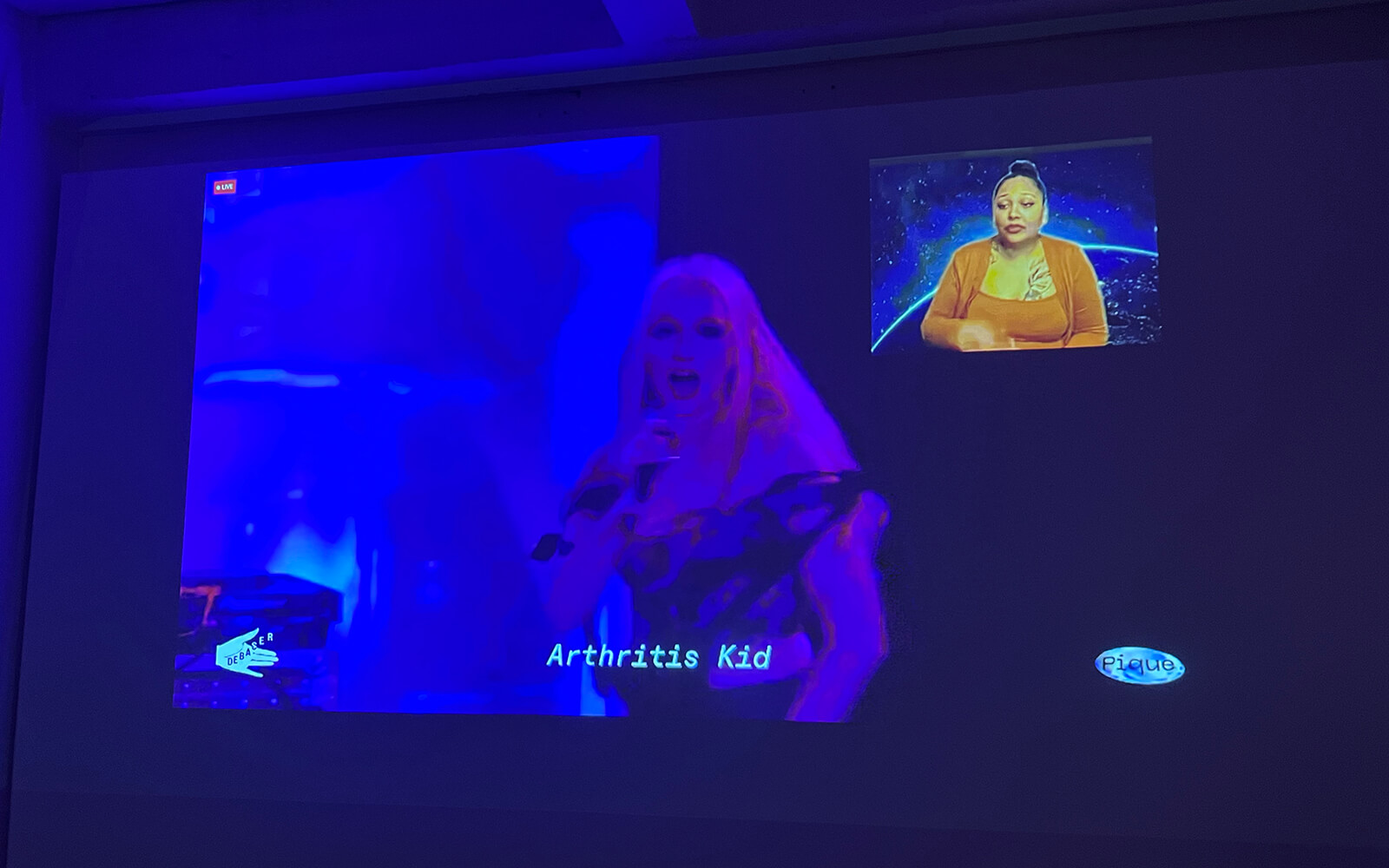
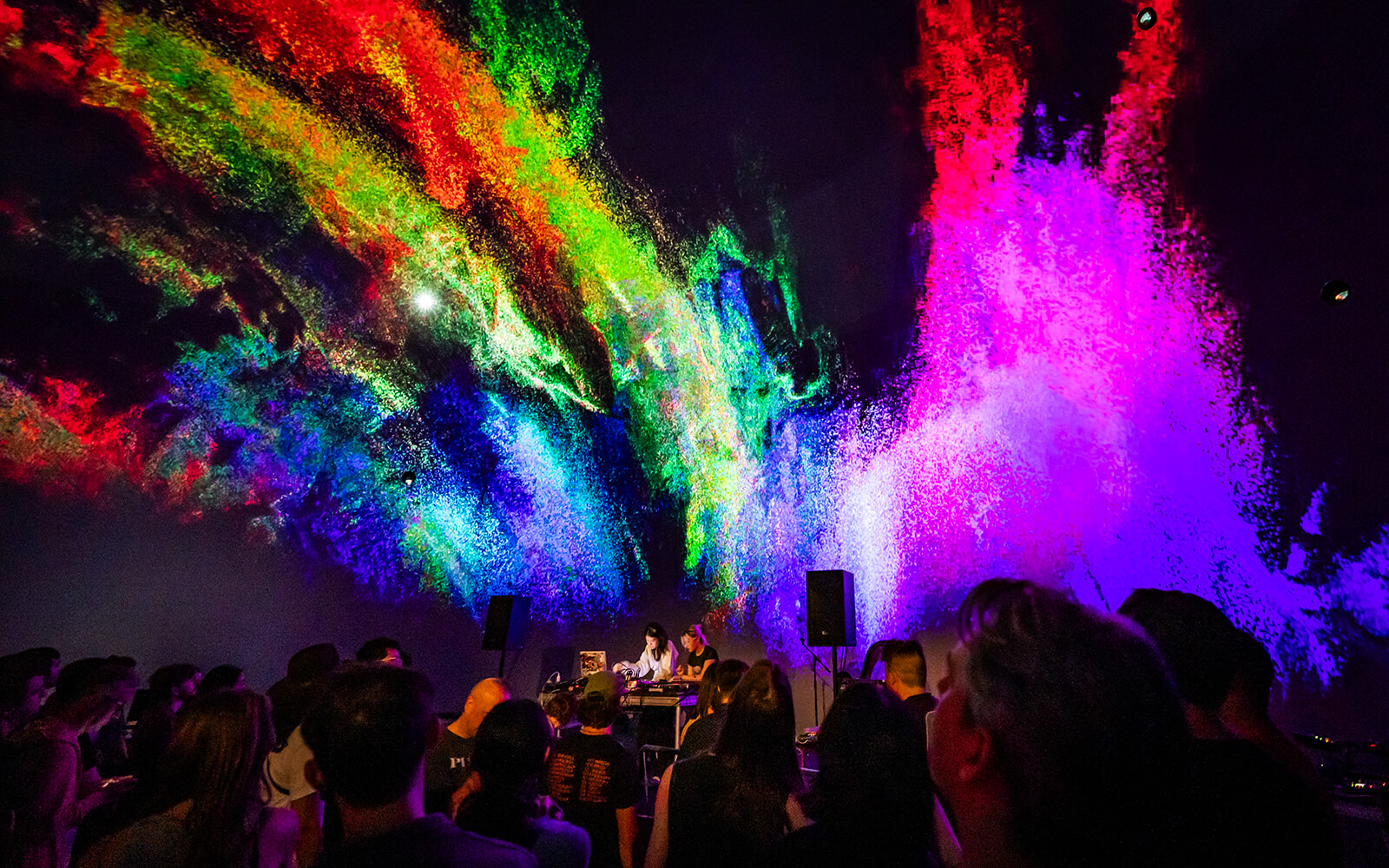
The live feed of a December 2023 Crip Rave event at Ottawa’s Pique included ASL music interpretation by Gaitrie Persaud, here for Canadian music artist Arthritis Kid.
Q: The DJ booth is a heavily coded space. Tremendous meaning is derived from the musical gestures that emanate from it and many unspoken rules dictate who gets to be in it. It’s a site you put under the microscope in a 2021 workshop facilitated by Syrus Marcus Ware. Could you tell us a bit about how that went and walk us through what a more accessible and equitable version of the DJ booth looks like?
A: The workshop that Syrus Marcus Ware facilitated was called “Cripping the DJ Booth.” In terms of language, we use words like Crip and Mad because they are politicized terms that have been reclaimed by a range of communities around disability, mental health, chronic pain and illness, etc. These words are often taken up as an identity but our objective is to enhance the conditions of work and play for anyone with related lived experiences, regardless of what language they use or identify with (if any). Crip also gestures to a political and artistic orientation or a praxis that exposes and counters the ways that ableism, sanism, and audism, for example, shape the norms that guide non-disabled spaces. By approaching ‘the DJ booth’ from a Crip politic, Syrus invited attendees to learn and engage with technology in a way that works for—instead of asking us to override—the body and mind. He emphasized building a track list with time for a bathroom break in mind to working with the multi-sensory nature of sound through the visual act of DJing, and the importance of bass and vibrations for Deaf folks. He also advocated for threading activist and abolitionist archives into your set and DJing with attention to economic justice, because, and these are his words, “crips are often under-resourced—over-talented and under-resourced.”
A large part of our work is challenging the narrow and limiting understandings of disability by emphasizing that Mad and Crip DJs and producers are already in the room, while simultaneously addressing the industry and societal norms that have pushed people out or made it impossible for them to be there in the first place.
“A large part of our work is challenging the narrow and limiting understandings of disability and the industry and societal norms that have pushed people out or made it impossible for them to be there in the first place.”
Q: Amongst other consulting work you’ve undertaken, you advised MUTEK when they developed an accessibility policy in 2022. How did you audit their operations and determine where improvements were most needed? What aspects of the resulting policy were you happiest with?
A: Working with MUTEK was exciting because they had invested a lot of time and energy into strengthening accessibility in their festival when we started working together and we got to collaborate in pushing that further. We got involved fairly close to the 2022 festival in Montréal and supported them in identifying realistic goals for that year and conducting an accessibility audit in relation to their access-related goals and objectives via our participation in the festival. Using that information we supported them to build an action plan for some deeper work the following year.
We always encourage festivals and events to start wherever they are. Crip organizing shows us the value in slow and sustainable work rather than operating from a place of urgency and scarcity.
We always encourage festivals and events to start wherever they are. Crip organizing shows us the value in slow and sustainable work rather than operating from a place of urgency and scarcity.
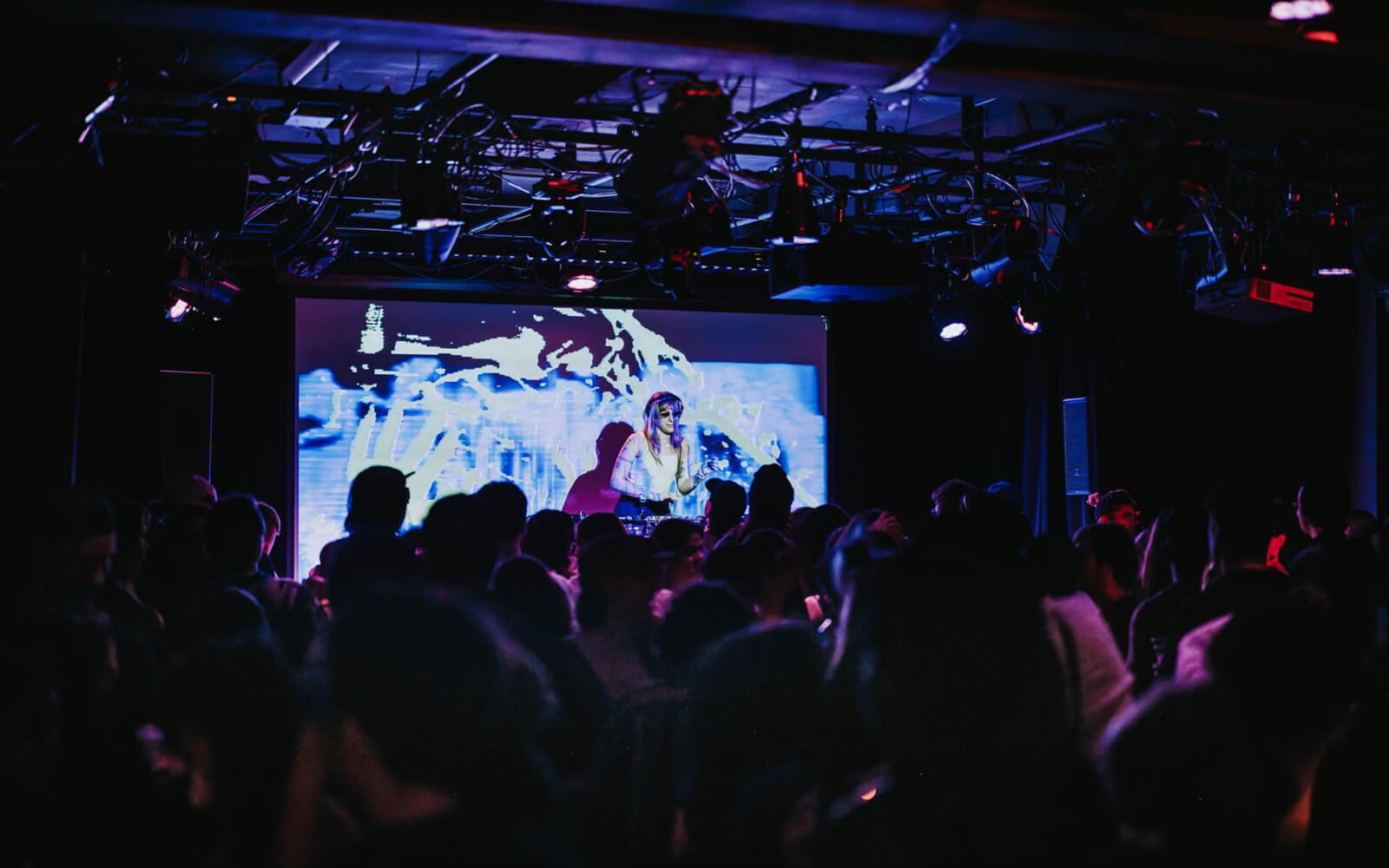
Also in the mix at the Crip Rave event in Ottawa: artist and DJ Regularfantasy
(Photo: Curtis Perry)
(Photo: Curtis Perry)
Q: Bigger festivals, clubs, and more underground DIY communities have varying relationships with capitalism. What differences do you see across this spectrum of more commercial to less commercial event organizing, in terms of how they are responding to disability advocacy? Where is the most progress being made?
A: There’s certainly a wide spectrum, but the most progress is undoubtedly being made in DIY and underground spaces that are value-driven and have the fewest resources. There has been huge work around the creation of safer spaces and collectives prioritizing underrepresented talent, which contributes to accessibility in both direct and indirect ways, and more and more, we are seeing a broader interest across the spectrum from promotors and festivals wanting to learn and make changes that address barriers for disabled communities in particular.
Engaging this work with attention to economic justice means both challenging the impulse of capitalism to profit above all else, while also acknowledging that under capitalism people need to make money to survive. Most organizers need to make concessions and we want this work to be sustainable while asking ourselves hard questions about the values, assumptions, and norms that shape or define what we understand as non-negotiable and who is commonly excluded from the decision-making as an effect. We’re really excited by festivals and parties doing what they can with what they have. Sharing event accessibility information is a great place to start—even sharing the aspects of your event that are likely inaccessible for many people still works in service of generating greater accessibility.
“We’re really excited by festivals and parties doing what they can with what they have. Sharing event accessibility information is a great place to start.”
Q: A lot of your crip advocacy has been corrective and addressing gaps and shortcomings in present nightlife accessibility. Given the ‘future’ is of paramount interest to the Future Festivals project: what is your most optimistic vision of how disability justice could transform event organizing in the decades ahead?
A: Disability Justice would transform event organizing by turning the expertise that Crip Rave brings into common praxis. Our understanding of accessibility is informed by a Disability Justice framework, which is an approach that comes from queer of colour disabled communities and centres attention to intersectionality. (In the future) all raves and festivals would be accessible and sustainably funded and resourced, and in doing so, reflect the experience of madness and disability as modified by a person’s social location and intersecting identities or lived experiences. So when we are thinking about the future of accessibility in rave and electronic music spaces we want to be dreaming about not only an end to ableism but also white supremacy and colonization, economic and environmental injustice, racism, sexism, homophobia and transphobia—there is no disability justice without collective liberation. All freedom intersects as does violence. Approaching accessibility from this perspective brings into focus, for example, the increased risk surrounding police presence faced by Mad, Black, and racialized talent or attendees and the importance of centring an abolitionist approach to de-escalation, crisis intervention, and mental health support. Or, the importance of pay what you can and low-barrier pricing as accessibility features that reflect the reality that disabled communities are more likely to be poor and working class. Disability Justice would also transform event organizing, in that festivals and promoters would appreciate that making a rave or party more accessible doesn’t take anything away, but actually enhances creative innovation and processes.
Future Festivals Field Guide
Future Festivals Field GuideExplore more of "Future Festivals Field Guide:"
→ HOLO.mg/stream/
→ HOLO.mg/future-festivals-field-guide/
Greg J. Smith
A writer and cultural worker based in Hamilton, Canada, Greg is an editor for HOLO and his writing has appeared in publications including Creative Applications Network, Musicworks, and Back Office. He is also a PhD candidate within the Department of Communication Studies and Multimedia at McMaster University, where he is researching the emergence of the programmable drum machine in the early 1980s.
More