Future Festivals Field Guide: A Future Festival Simulcast Strengthens Transnational Solidarities
Transnational Solidarities
Future Festivals Tour:
MUTEK MX, Mexico City (MX), Oct 07-20, 2024
send + receive, Winnipeg (CA), Oct 17-20
MUTEK MX, Mexico City (MX), Oct 07-20, 2024
send + receive, Winnipeg (CA), Oct 17-20

Mexico City’s own neo-perrero band Meth Math dazzles audiences with ornate costumes and 8-bit glitch
Photo: Diego Figueroa
Photo: Diego Figueroa

French transmedia hacker NSDOS aka Kirikoo Des embodies alt-future potentialities
Photo: Diego Figueroa
Photo: Diego Figueroa

Boris Acket’s flowing veils transformed the main stage at Mexico City’s Maravilla Studios into a chapel of audiovisual sensation
Photo: Diego Figueroa
Photo: Diego Figueroa

Mexican artist Rodrigo Garrido’s newest ‘sentient sculpture’ We Don’t Trust You (2024) invites contemplation on the algorithmic regime in one of Maravilla Studios’ off-stage chambers
Photo: Diego Figueroa
Photo: Diego Figueroa
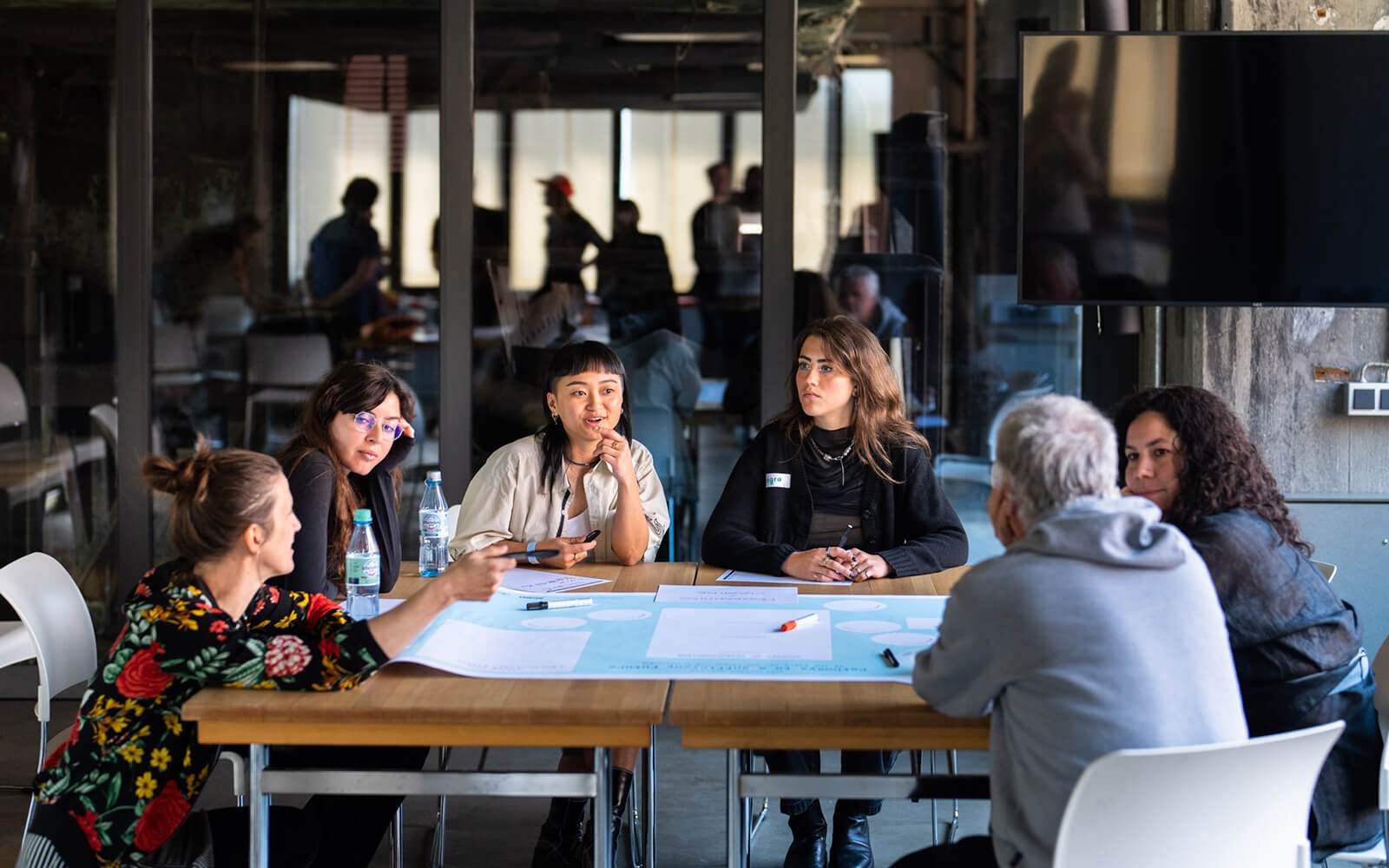
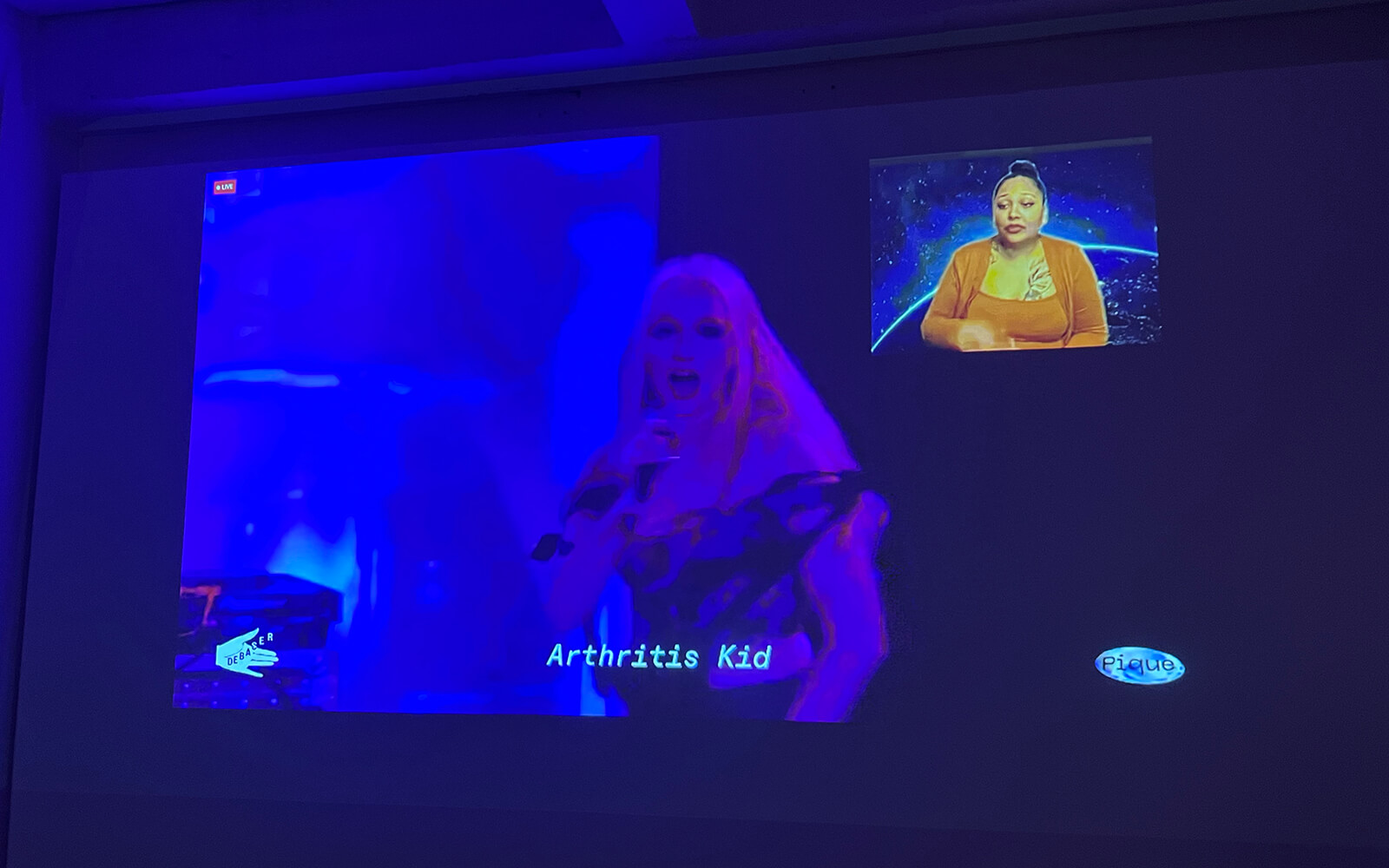
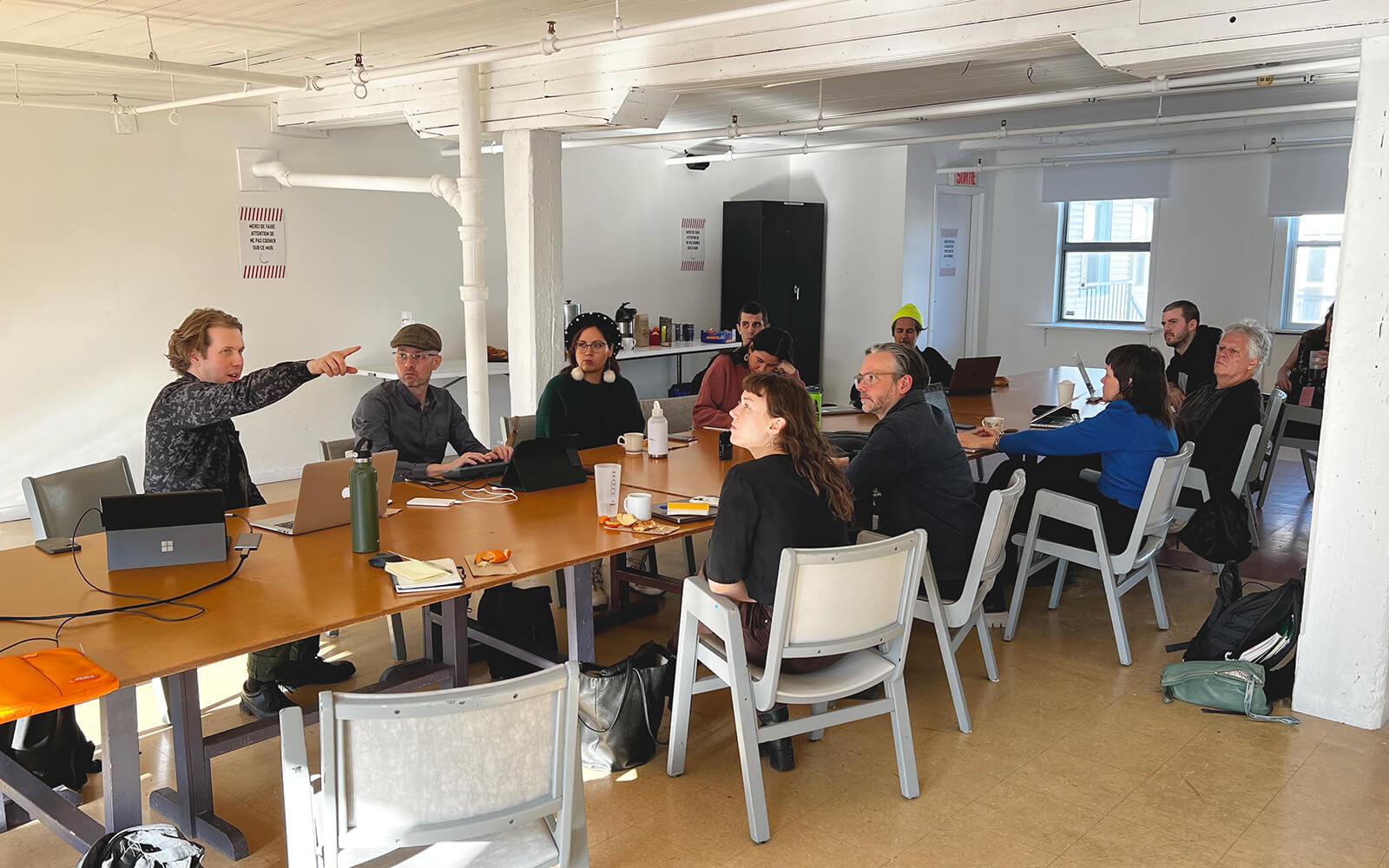
Any art and music lover knows that festival FOMO is a thing. Each week brings countless cultural offerings vying for our attention. Choose one, and you’re inevitably missing others. Organizers know this and strategically plan their schedules, but avoiding one competitor inevitably puts you in conflict with another. The Future Festivals tour eventually ran into the same problem when MUTEK Mexico and send + receive—the final opportunities for working sessions—scheduled their 2024 editions for the same time in October. Project lead Maurice Jones’ solution: a Zoom simulcast linking the two festivals together for a day of cross-border dialogue.
Co-hosting an online symposium bridging two wildly different cultural contexts—a bustling metropolis in Middle America and a isolated city in the Canadian prairies—presented a unique opportunity to move beyond the minutiae of local challenges and foster more internationalist thinking and deeper conversations about sustainability. It also offered the rare chance of bringing together two festivals that share a commitment to sonic innovation and community building, but that evolved ‘worlds apart’ and operate at vastly different scales.
The symposium simulcast offered the rare chance of bringing together two festivals that share a commitment to sonic innovation, but that evolved ‘worlds apart’ and operate at vastly different scales.
Attracting tens of thousands of visitors yearly, MUTEK Mexico—MX for short—is a beacon of electronic music and audiovisual experimentation in Latin America. The first satellite to spin out of the Montréal edition in 2003, it fosters connections between Mexican artists and a global community and now rivals the Canadian ‘mothership’ in scope and ambition. Over 50 national and international artists were featured in the 2024 edition that, from October 7-20, celebrated two decades of innovation in art and sound while firmly looking toward the future. During its signature music and audiovisual performance nights, for example, Grammy award-winning electronic music pioneer Suzanne Ciani and a collaboration between saxophonist Bendik Giske and choreographer Diego Vega Solorza transformed the historic landmark Museo Diego Rivera-Anahuacalli. Elsewhere, the maze-like Maravilla Studios, a storied 10,000 square-meter film production facility, dazzled audiences with distributed stimuli: veteran innovators like Daito Manabe, Alva Noto, and Amnesia Scanner & Freeka Tet electrified crowds with cutting-edge sound-image synthesis in one hall while Afrofuturist transmedia hacker NSDOS, German-Senegalese fusion band Ndagga Rhythm Force, and local neo-perrero figureheads Meth Math put on hypnotic shows in another. Meanwhile, the venue’s corridors and chambers offered meditative spaces featuring bespoke art installations and projections that pondered algorithmic regimes and techno-ecologies.
The MUTEK spirit of generosity and bridging cultures and disciplines was also felt at the PRO Digi Lab, the festival’s four-day educational track that hosted the Future Festivals Lab. The talks and exercises at the Centro de Cultural Digital (CCD) brought together international artists and local creators for transnational conversations and experimentation. Maurice Jones’ Wilding AI Lab, for example, is a Montréal transplant that invited prompt engineering, role-play, and choreographing live sound systems; Mexican-American artists Julieta Gil and Alfredo Salazar-Caro each delved into their AR activism while a panel of Mexican and Berlin-based DJs embraced their biggest failures. The program closed on a highlight with headline artist Daito Manabe sharing a deeply personal career retrospective that included vintage family pictures and rare insights into keystone projects.
MUTEK Mexico is a beacon of electronic music and audiovisual experimentation in Latin America that fosters connections between regional creators and a global community.
All in all, MUTEK MX 20 felt like a true milestone that mobilized art and music lovers across the whole city. In fact, several special collaborations at various cultural sites manifested as part of the celebrations not only during the festival but in the months leading up to it. In March, Patti Smith and the Soundwalk Collective united poetry and sound art at the Teatro de la Ciudad Esperanza Iris. InSpace, an immersive gallery, showed over ten artworks as part of the MUTEK AVisions exhibition. And a special MUTEK format opened Alva Noto’s sound installation, HYbr:ID (2021-), at the Museo Universitario Arte Contemporáneo (MUAC). Founding director Damian Romero, perhaps, summed it up best: “MUTEK MX 20 is the result of twenty years of experimenting with formats, locations, and collaborations along with the relentless search for artists and projects that continue to revolutionize what is possible to express through machines, technology and creativity.”
Focus: Electronic music, audiovisual performance, digital art
Location: Mexico City, Mexico
Launch: 2003
Frequency: Annual
Visitors: 20,000 to 27,000
Team: 7 permanent, 45 temporary, 45 volunteers
Structure: FP (for-profit organization)
Funding: Private (sponsorship) & public (national, municipal)
Formats: Shows, exhibitions, performances, public art, conference

Pioneering vocalist and noise musician Phew works the mixing board
Photo: Robert Szkolnicki
Photo: Robert Szkolnicki

Lucy Liyou intones Korean folk opera and poetry
Photo: Robert Szkolnicki
Photo: Robert Szkolnicki

Truth in the well blurs shoegaze, country, and noise
Photo: Robert Szkolnicki
Photo: Robert Szkolnicki

Lucy Liyou conjures textured melodies
Photo: Robert Szkolnicki
Photo: Robert Szkolnicki
Since emerging from Video Pool Media Arts Center in 1988, send + receive has evolved into a cornerstone of experimental sound art in Canada, mounting 25 editions of its annual festival leading into 2024. Bolstering its central performance program with a mix of screenings, installations, and artist talks that animate downtown Winnipeg each year, its mandate is to “convey the richness and curiosity” of sounds created in the Treaty 1 territory it is situated on and “bring a world of experimentation home.” The roster of past featured artists and musicians is a ‘who who’ of sound practitioners. Send + receive alumnae include Tony Conrad, Annea Lockwood, and Charlemagne Palestine. It’s not just about luminaries; the festival pairs pioneers with emerging and mid-career artists from Canada and abroad.
The 2024 edition showcased an extraordinary range of sound artists: legendary Japanese vocalist and electronics improviser Phew, Los Angeles-based composer Lucy Liyou, and Portuguese guitar innovator Rafael Toral. The international acts were complemented by Canadian artists, including Montréal’s sound-poetry duo Cloud Circuit and Vancouver sound artist and musician Daniel Majer. Artistic Director Cam Scott provided thoughtful, politically engaged introductions illuminating each artist’s unique approach and context.
send + receive dissolves traditional genre boundaries, creating a space where experimental sound and music can be encountered and celebrated on its own eclectic terms.
What was most notable about the adventurous lineup was that no matter how tenuous the links were between artists, each night of performances just worked. The opening show, for example, started with a set of grainy tape and video loops by Mark Templeton, which Niecy Blues followed by building dense and affective songs with nothing but her voice and a looper, and concluded with Dawuna singing falsetto R&B over dusty grooves emanating from a vintage cassette player. While united by their use of loops and samples, the trio of artists sounded so different—but they made absolute sense in sequence.
Over four nights, several hundred listeners of all ages gathered to reverently listen to swelling electric guitars, spacey synthesizer tones, and ethereal vocals. The program dissolved traditional genre boundaries, creating a space where experimental sound and music could be encountered and celebrated on its own eclectic terms.
Focus: Experimental music, sound and video art, installation
Location: Treaty One Territory / Winnipeg, Canada
Launch: 1998
Frequency: Annual with satellite events throughout the year
Visitors: 1,000-2,000
Team: 1 full-time, 8 temporary, 10+ volunteers
Structure: NPO (nonprofit organization)
Funding: Public (national, municipal)
Formats: Shows, exhibitions, performances, public art, symposium
Future Festivals Field Guide
Future Festivals Field GuideExplore more of "Future Festivals Field Guide:"
→ HOLO.mg/stream/
→ HOLO.mg/future-festivals-field-guide/
Alexander Scholz
Alexander Scholz (he/him) is a Berlin-based writer, curator, and publisher. He’s the founder and co-editor of HOLO, an independent media imprint that explores critical creative practice where art, science, technology, and culture intersect. Scholz works regularly with international festivals and cultural organisations and has, for example, developed exhibitions, conferences, and educational formats for A.C.C. (Gwangju, KR), Mapping (Geneva, CH), MUTEK (Montréal, CA), and NODE Forum for Digital Art (Frankfurt, DE).
Greg J. Smith
A writer and cultural worker based in Hamilton, Canada, Greg is an editor for HOLO and his writing has appeared in publications including Creative Applications Network, Musicworks, and Back Office. He is also a PhD candidate within the Department of Communication Studies and Multimedia at McMaster University, where he is researching the emergence of the programmable drum machine in the early 1980s.