Exhibitions, Research, Criticism, Commentary
A chronology of 3,585 references across art, science, technology, and culture
“In their hands, the mushroom becomes not an object but an inescapable feral imagination, with the exhibition a proposal to clean the plate and start over.”
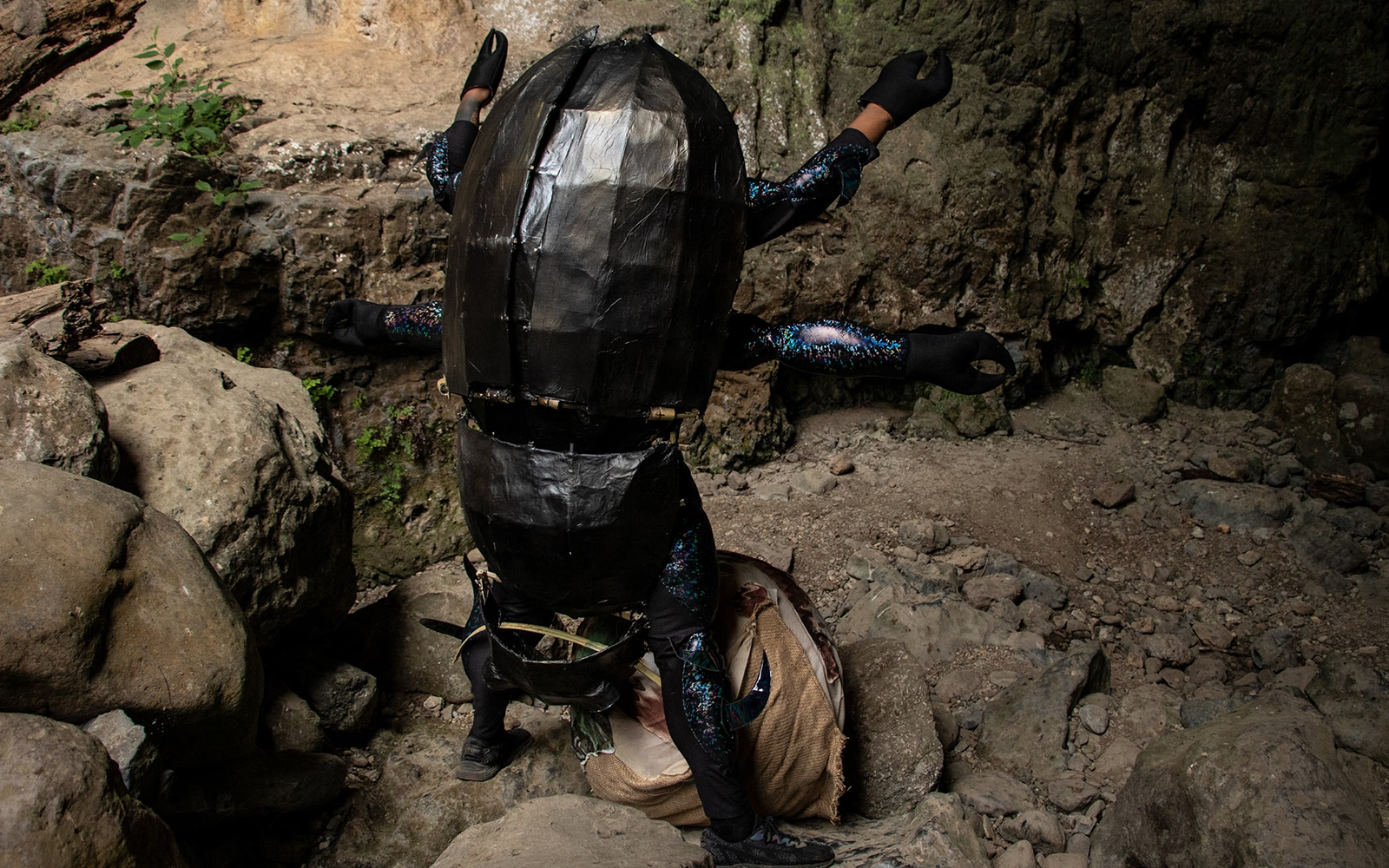
Taking Ludvig Holberg’s proto-sci-fi novel Underground Travels (1741) as its starting point, “Iter Subterraneum” at Bergen Kunsthall (NO) imagines nonhuman ways of sensing and reasoning. Artists including Cecilia Fiona, Wangechi Mutu, and Anicka Yi shift perspective toward plants, fungi, and insects—echoing Holberg’s sentient trees. Naomi Rincón-Gallardo’s Dung Kinship (2024), for example, fantastically chronicles ‘fly women’ and ‘dung folk’ transforming rot into regenerative force.
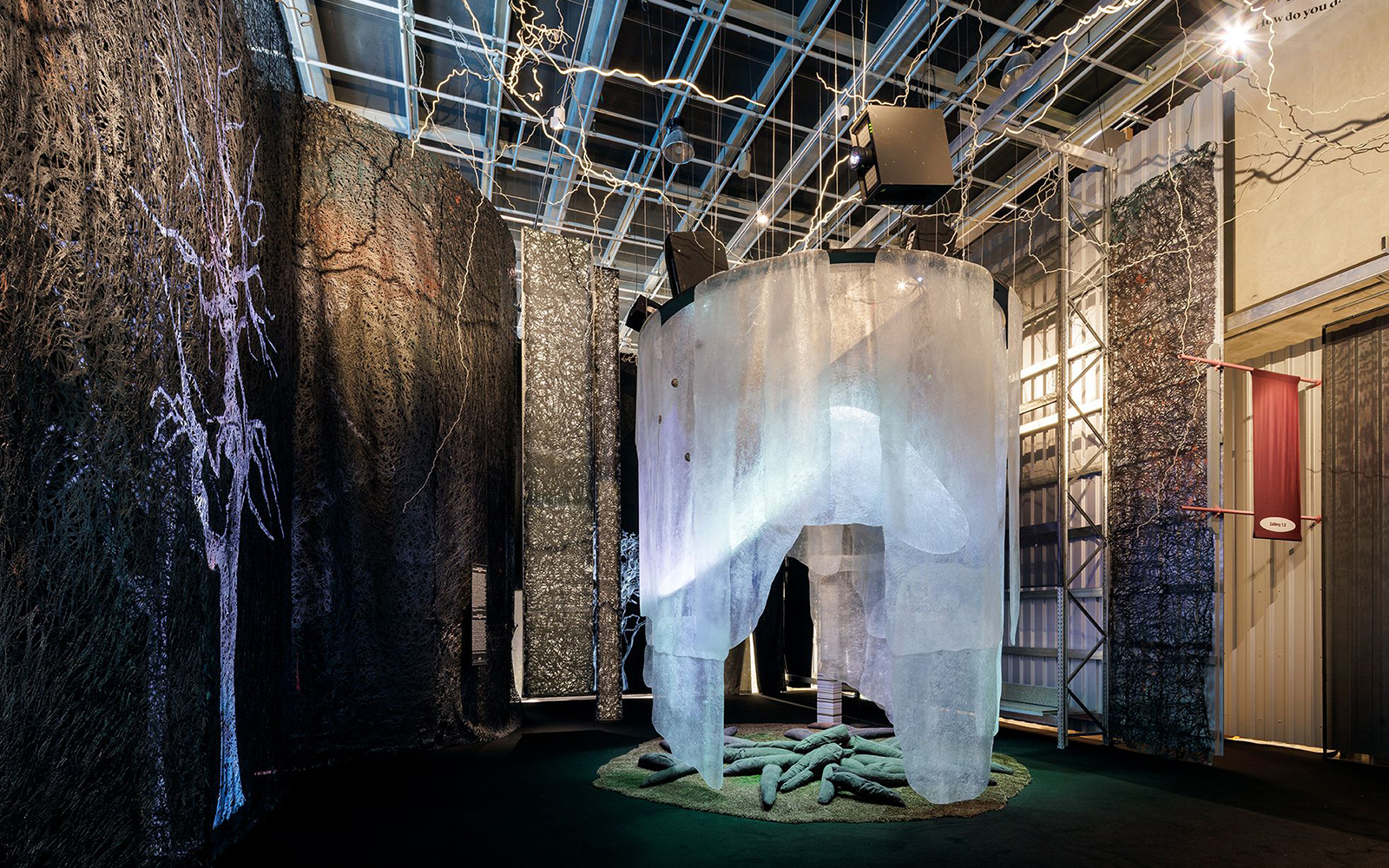
“FUNGI: Anarchist Designers” at Rotterdam’s Nieuwe Instituut positions fungi as anarchic co-designers of worlds shaped by capitalism and ecological ruin. Curated by anthropologist Anna Tsing and architect Feifei Zhou, artists including Anicka Yi, Kyriaki Goni, and Olafur Eliasson collaborate with ecologists, infectious disease specialists, and microbiologists to trace fungi across scales—from sick frogs and kitchen dishwashers to coffee plantations and termite mounds.
“Everything you’d need to start exploring fungi and computing could be as small as a compost heap and some homemade electronics, or as big as a culturing factory with pre-made templates. All of them are viable with the resources we have in front of us now.”
A team of Ohio State researchers led by John LaRocco demonstrate that shiitake mushrooms can function as memristors—components that ‘remember’ electrical states to store data like computer memory. The fungi achieved 90% accuracy using dehydrated mycelium wired with electrodes. Unlike conventional memristors that require rare earth minerals, the organic alternative needs infrastructure “as small as a compost heap,” the researchers note, suggesting applications in sustainable computing and aerospace systems.

Pietroiusti & Ramos (eds)
The Shape of a Circle in the Mind of a Fish

“It seems they [the fungi] prefer cultural heritage. I’ve never seen them anywhere else.”
“Rather than looking outward to conquer new frontiers, perhaps our focus should shift to nurturing and preserving the vessel we already inhabit.”
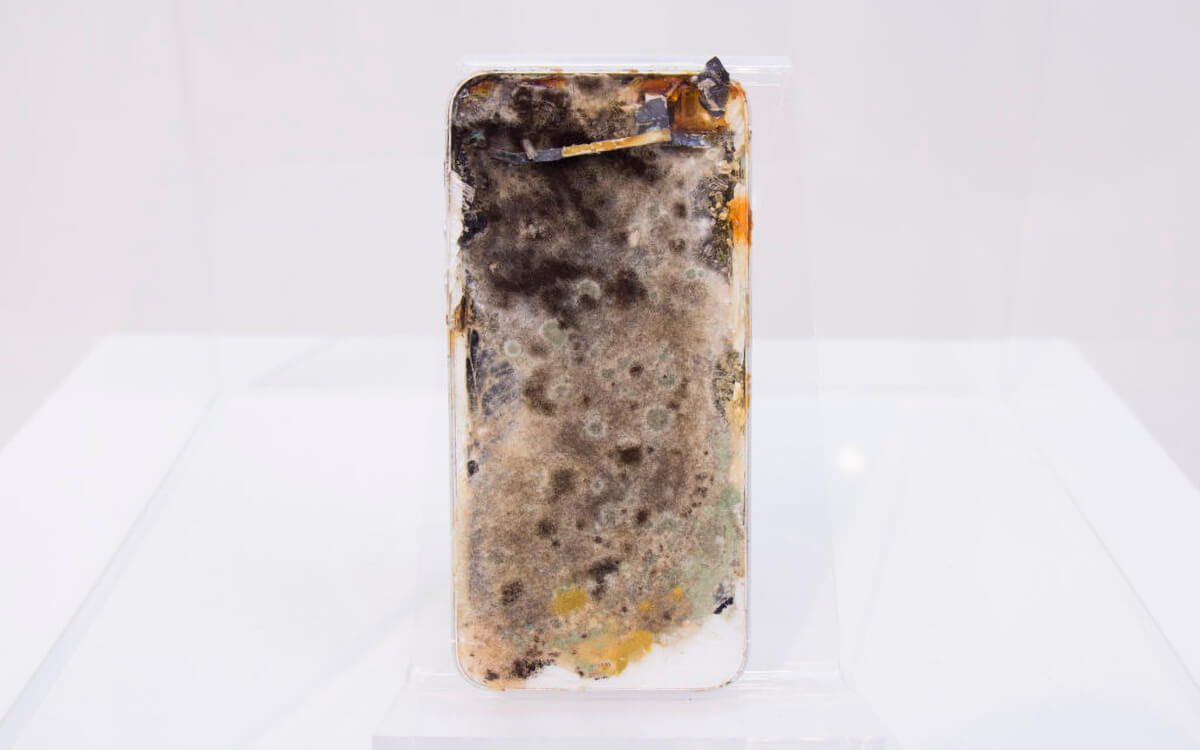
Faith Holland’s solo exhibition “Death Drive” opens at Microscope, New York, featuring new sculptures, videos, and digital prints that examine technological decay. In the series Death Doula (2023, image), for example, broken laptops, tablets, and smartphones become mycelium habitats that the New York-based artist, in the feminist tradition of the studio kitchen, cultivated in her home refrigerator. Over time, the molds will grow, shape colour, and, Holland muses, may help deteriorate hardware that takes eons to decompose.
Daily discoveries at the nexus of art, science, technology, and culture: Get full access by becoming a HOLO Supporter!
- Perspective: research, long-form analysis, and critical commentary
- Encounters: in-depth artist profiles and studio visits of pioneers and key innovators
- Stream: a timeline and news archive with 3,100+ entries and counting
- Edition: HOLO’s annual collector’s edition that captures the calendar year in print