Exhibitions, Research, Criticism, Commentary
A chronology of 3,585 references across art, science, technology, and culture
“What happens if aliens show up and they have a completely different theory that cannot be mapped to ours and yet is just as effective? That would be mind blowing. It would tell us that our description of the Universe is just a description, not the description.”
Jed Brody
The Joy of Quantum Computing

“Just like computers try to save space and run more efficiently, the universe might be doing the same. It’s a new way to think about gravity—not just as a pull, but as something that happens when the universe is trying to stay organized.”
“I saw artists speaking for hours with scientists about the Higgs field. When you see two people speaking about the same thing, but with different registers, knowledge, and background, it’s a precious moment.”
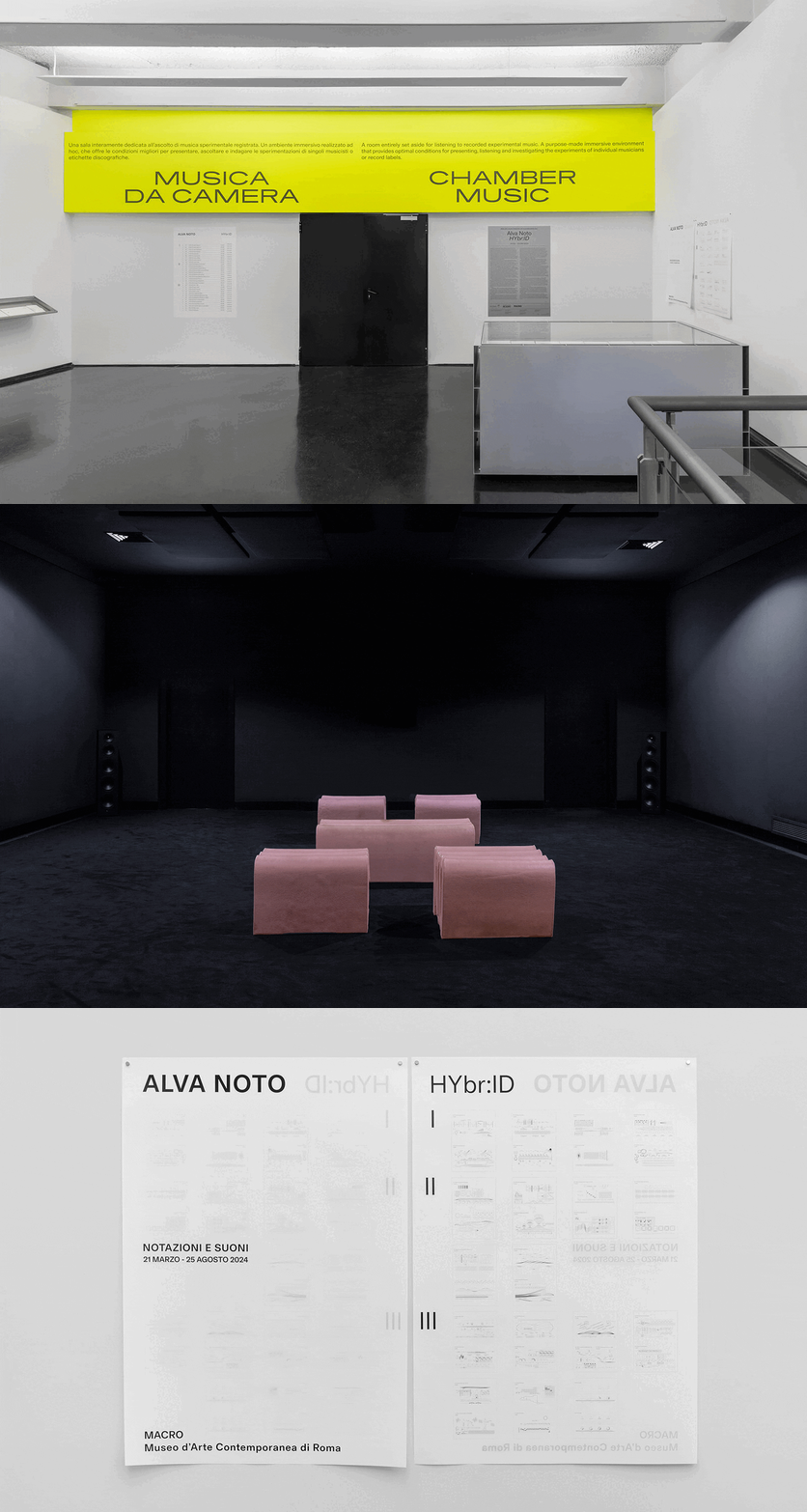
Presenting physics-informed work-in-progress, Carsten Nicolai’s HYbr:ID opens at the Museum of Contemporary Art of Rome (MACRO). A listening lounge featuring a sound piece that “oscillates between more stylized, dilated rhythms and dreamy atmospheres generated by low frequencies” inspired by Hermann Minkowski’s 1908 model of spacetime takes centre stage. Also presented are related drawings and graphics in which the German artist pushes the limits of musical notation.
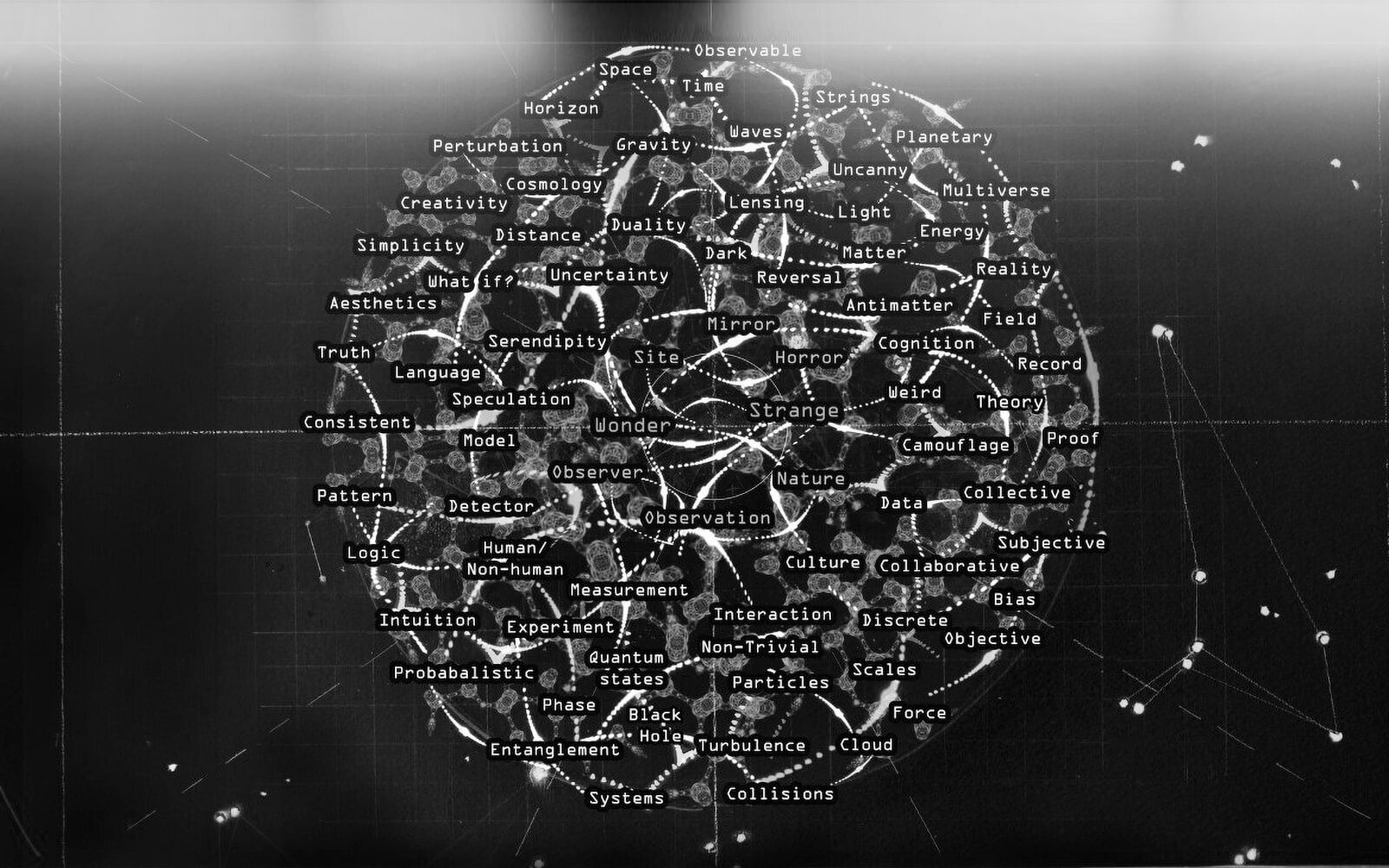
Indian artist Rohini Devasher publishes a reflection on her recent CERN residency, outlining efforts to move beyond the standard model of fundamental forces in particle physics—and in her practice. Devasher draws a connection between the “multiplication, magnification, distortion” that black holes rip in space-time with video feedback and shares drawings that map the implications of the “new modes and methodologies of research and practice” she was exposed to in Geneva (image: Beyond the Standard Model, 2023).
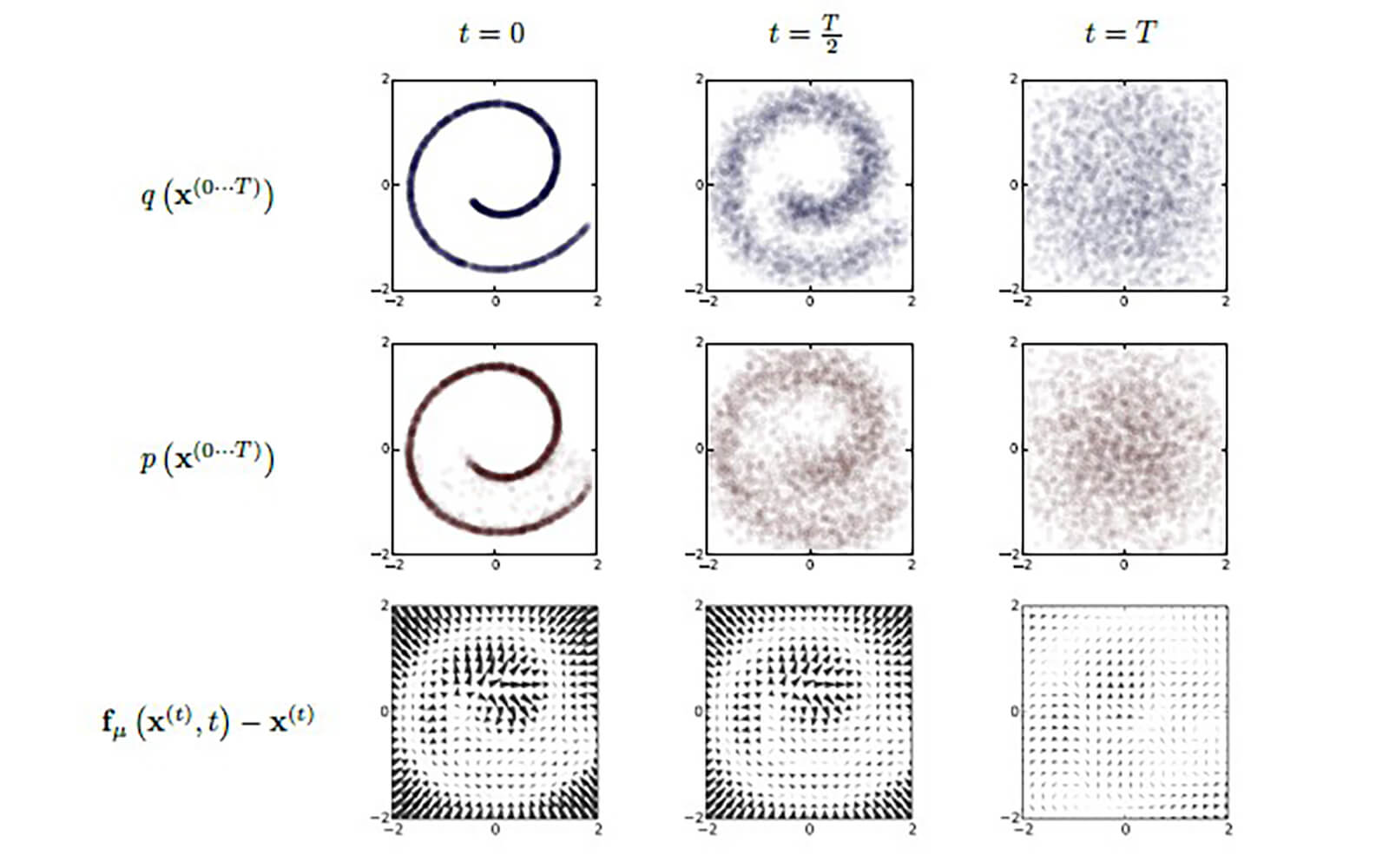
For Quanta, science journalist Anil Ananthaswamy traces the backstory of AI image generation. In his telling, a probabilistic model (image) proposed in a 2015 paper by Jascha Sohl-Dickstein set the stage for a subsequent denoising technique now used in DALL-E, Stable Diffusion, and other models. The technique reconciles the gap between generated images and training images, helping generative models provide lucid responses to whimsical prompts like “goldfish slurping Coca-Cola on a beach.”
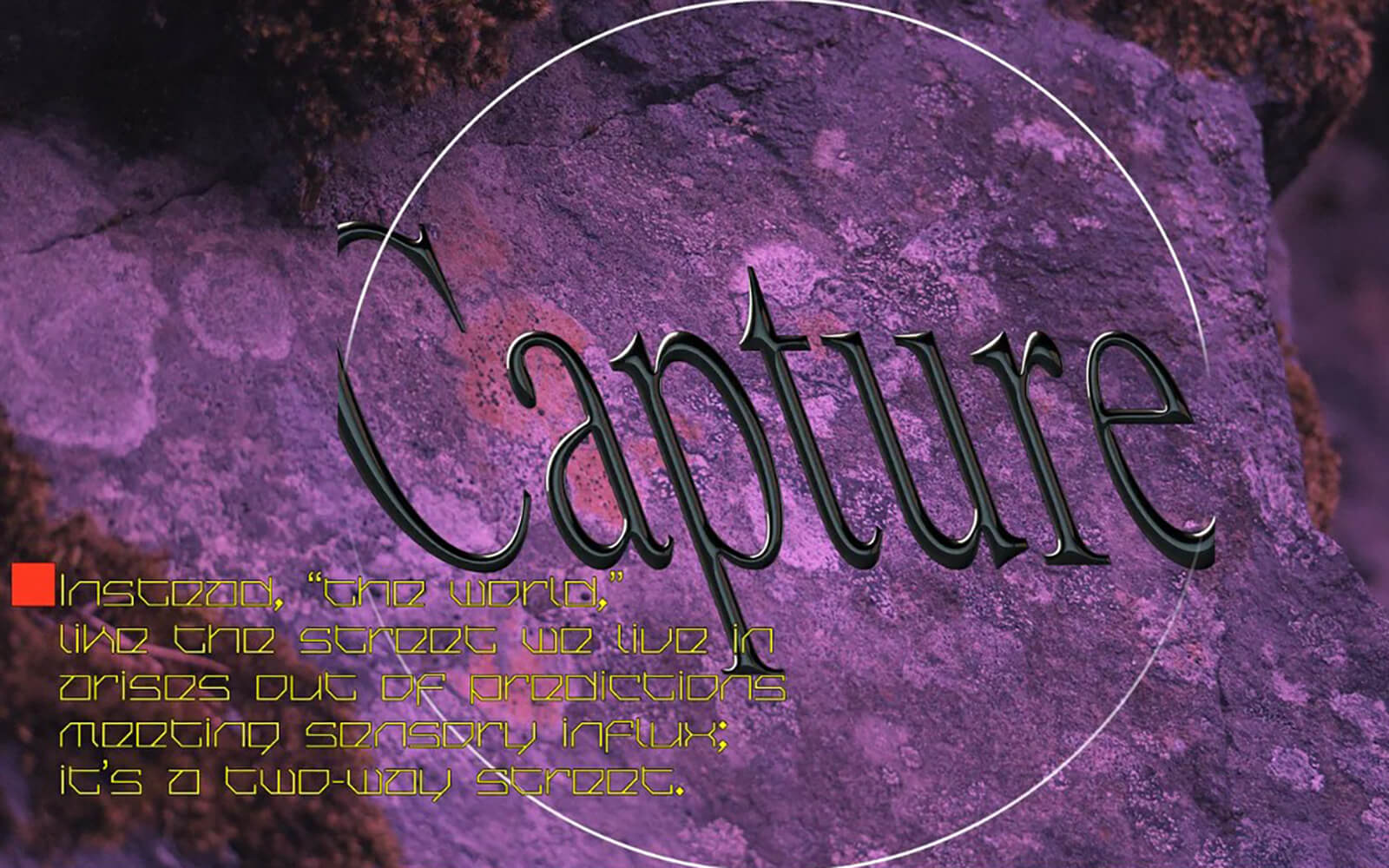
Delving into their (eponymous) new film (image, 2022), “Capture,” a solo exhibition by Metahaven, opens in Trondheim, Norway. In it, the artist collective explores ‘knowability’ on three fronts: a rumination on the inscrutability of bats, CERN’s hunt for the Higgs boson, and the remarkable qualities of lichens. Their displayed media, and accompanying textiles and collages contemplate consciousness in “both speculative deeply implicated ways,” writes curator Stefanie Hessler.
“It seems as if we’ve successfully found a structure for the ‘machine code’ of the universe—the lowest-level processes from which all the richness of physics and everything else emerges.”
Daily discoveries at the nexus of art, science, technology, and culture: Get full access by becoming a HOLO Supporter!
- Perspective: research, long-form analysis, and critical commentary
- Encounters: in-depth artist profiles and studio visits of pioneers and key innovators
- Stream: a timeline and news archive with 3,100+ entries and counting
- Edition: HOLO’s annual collector’s edition that captures the calendar year in print