Exhibitions, Research, Criticism, Commentary
A chronology of 3,585 references across art, science, technology, and culture
“I’d have more sympathy for NFT platforms shutting down if they hadn’t so openly embraced the capitalist extraction engine; the blinding antithesis of decentralization. These were businesses, and they made bad decisions. Own it.”
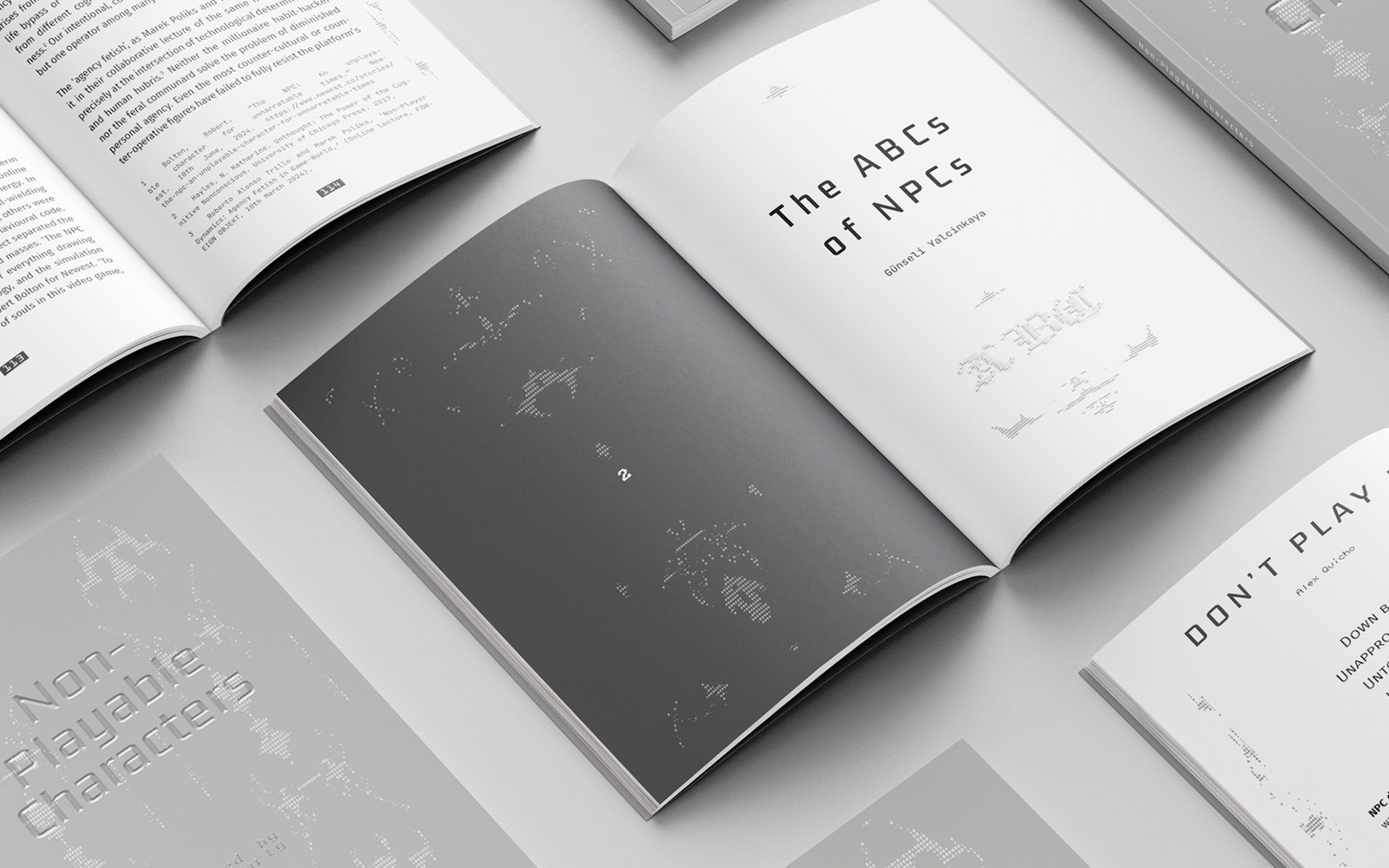
Non-Playable Characters
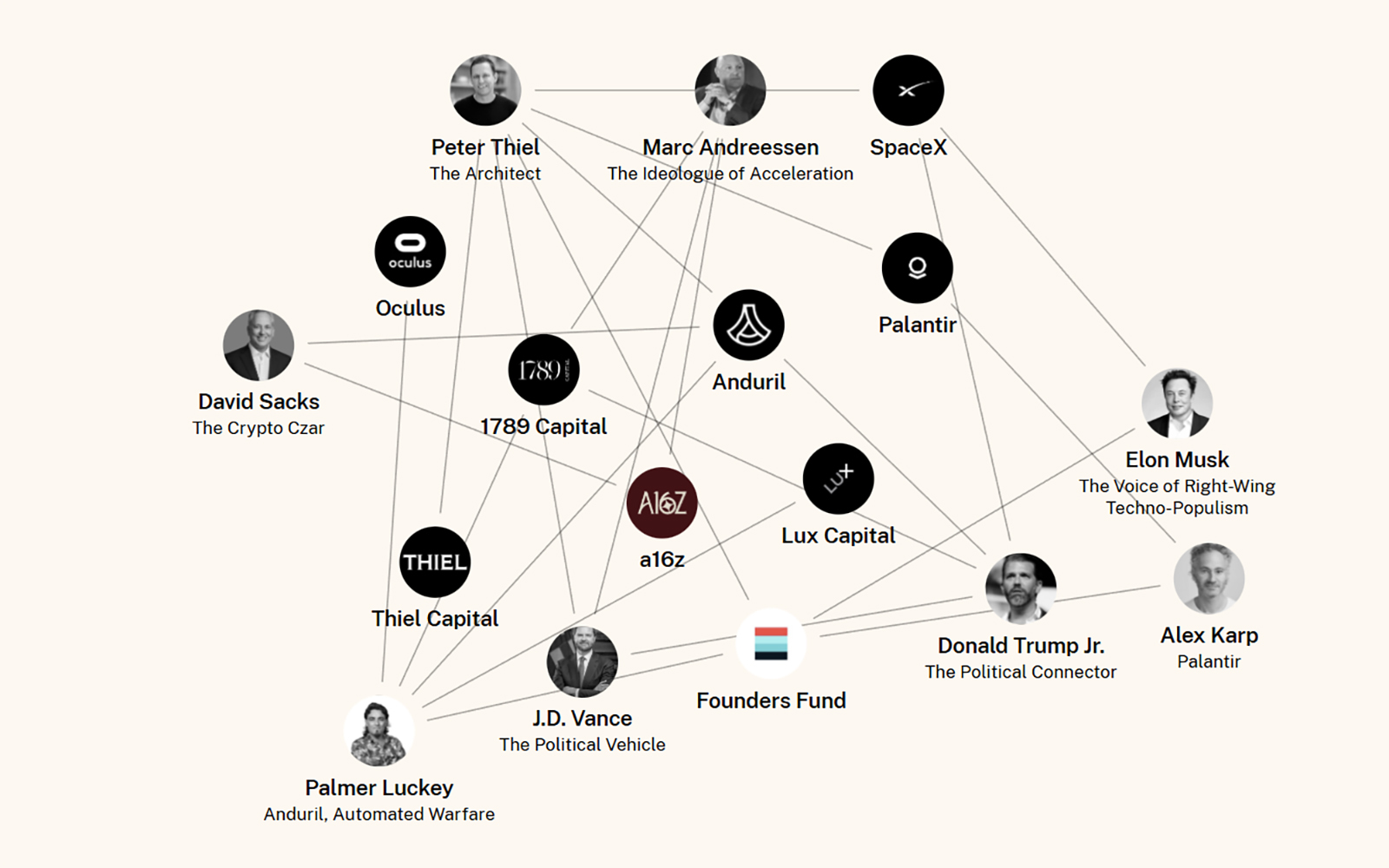
Francesca Bria and XOF Research launch The Authoritarian Stack, an interactive data visualization tracking Silicon Valley’s ascendant “patriotic tech” coalition. Drawing on an open-source dataset of 250+ actors (Alexander Karp, Palmer Luckey, Peter Thiel, etc.) and $45 billion in financial flows, the research traces how cloud platforms, AI, and defense tech, are converging into privatized infrastructure around core state functions—a system where “corporate boards, not public law, set the rules.”
“Even now, beset by bots and hemmed in by private equity at all sides, there are places on the internet that feel healthy and loved. They are built and maintained by people, for and with their communities, with an ecological-scaled attention.”
There might be hope for the internet after all: In a piece for Mozilla Foundation’s Nothing Personal imprint, co-matter strategists Severin Matusek, Nick Houde, and Paloma Moniz chart an emerging ecosystem of radical networks and alternate digital infrastructures that prioritize values and community over growth. Are.na, Metalabel, New Models, Subvert, or the Cyberfeminism Index are all examples of a “post-naive” internet era and builders determined to change the status quo.

“Consent is an ongoing, enthusiastic social contract that is mutable. You can agree to something, experience it, and then decide you don’t actually like it, and then you change the terms. But all of this needs to be in discussion in perpetuity.”
Cory Doctorow
Enshittification

“It’s not that these guys are so smart that they’re running circles around Congress. It’s that Congress created the enshittogenic environment and then we got enshittocene.”
In “Stuck? Click Here,” an Aksioma online exhibition via KUNSTSURFER, Dutch artist Lotte Louise de Jong replaces the web ads in your browser with slowed down “stuck” clips, a niche fetish genre where female bodies are wedged into sofas, office chairs or washing machines. A metaphor for our entrapment in digital platforms, de Jong’s intervention “reminds us that ‘stuck’ is no longer just a fetish but a default mode of existence online,” writes curator Hsiang-Yun Huang.

“Chess robots have been beating human world champions for 30 years now. ‘Get good’ is a petulant opinion.”
Deprecated API keys, banned bots, revoked permissions: Everest Pipkin’s solo exhibition, “Hostile Platforms / Beloved Margins,” at Berlin’s panke.gallery reveals the web’s fragility under platform capitalism. The retrospective of browser-based works, some live, some dead, some waiting to fail, reminds us that connections of personal meaning last, even if platforms crumble. “The history of the internet is a history of people constructing homes together, even temporarily in the margins,” Pipkin writes.

Net art veterans Cory Arcangel, JODI, Dirk Paesmans, and UBERMORGEN playfully probe the gamified mechanics of the attention economy in “Entertainment at all costs” at Wouters Gallery Brussels. UBERMORGEN contributes slogans decrying platform dynamics—“Drama Marketing,” “Trauma Dumping”—while Paesmans’ Pokemon Go Museum (2025) uses AR to riff on the commodification of cultural spaces. The show dissects how leisure has been weaponized into perpetual engagement—the churn of an endless content economy.

“Ambient Propaganda” at Utrecht’s IMPAKT Centre for Media Culture examines the shift from top-down to ambient influence, a new regime “where ideology is subconsciously incorporated into everyday digital culture.” From TikTok trends to political fandoms, the featured works by Noura Tafeche, Lesia Vasylchenko, Total Refusal, Paolo Cirio, Fantastic Little Splash and others highlight “how the boundaries between self-expression, performance, and ideological reproduction have blurred.”

“These products feel hallucinatory. The aesthetic is as much a defense mechanism against the internet era as it is a self-aware in-joke: We can see what late-hyper-digital-artificially-intelligent capitalism is doing to us—isn’t it a laugh?”
In advance of Ars Electronica, Mario Schmidhumer reflects on how platform capitalism looms over European digital sovereignty. Citing the 2025 S+T+ARTS Prize winners—AI War Cloud Database, Sensing Quantum—as exemplars, Schmidhumer positions artistic inquiry as essential for democratic engagement with (contested) AI futures. While clearly a festival programming preview, the missive argues for cultural institutions to serve as sites of technological resistance rather than mere exhibition spaces.

“The enshitternet was purpose-built for this kind of apocalyptic co-option, organized around giant corporations who will trade a habitable planet and human rights for a three percent tax cut.”
“Google’s unparalleled scale in programmatic advertising has given it significant advantages over rival firms.”
“It’s the antithesis of what a lot of tech does. We don’t want you to spend time in the app. You get information and get out. We don’t want people doom scrolling.”
Andrew deWaard
Derivative Media

Daily discoveries at the nexus of art, science, technology, and culture: Get full access by becoming a HOLO Supporter!
- Perspective: research, long-form analysis, and critical commentary
- Encounters: in-depth artist profiles and studio visits of pioneers and key innovators
- Stream: a timeline and news archive with 3,100+ entries and counting
- Edition: HOLO’s annual collector’s edition that captures the calendar year in print