Exhibitions, Research, Criticism, Commentary
A chronology of 3,585 references across art, science, technology, and culture
“Protecting artists doesn’t just mean excluding ‘AI content.’ It means crafting policies with enough nuance to distinguish between automation and critique, extraction and deep engagement. Otherwise, we risk eliding some of the most thoughtful and important work being made with and about these technologies.”
“The work that artists do is we take the world and we filter it through the lens of our own experiences, and some of that is the self-expression part, but I think much deeper than that, artists bear witness. That’s our job.”
“Applying a ‘move fast and break things’ ethos to a ‘national strategy’ flies in the face of any principled commitment to responsible AI regulation, human rights, societal justice, democratic participation, or building trust with civil society.”
“The economic return on this investment in Ireland’s artists and creative arts workers is having an immediate positive impact on the sector and the economy overall.”
“Europe choked its own creative engineering pipeline with regulation and paralysis by consensus. The precautionary delay was successfully narrated by a Critique Industry that monopolized both academia and public discourse.”
“The goal is not to react after a major incident occurs… but to prevent large-scale, potentially irreversible risks before they happen. If nations cannot yet agree on what they want to do with AI, they must at least agree on what AI must never do.”
“Artists are in a perpetual state of discovery,” notes the fifth Future Art Ecosystems briefing. Led by Victoria Ivanova, the report traces how artistic practices catalyze cross-sector innovation. Case studies include Lauren Lee McCarthy’s work for p5.js, Ian Cheng’s transition from simulation art into an AI startup, and Natsai Audrey Chieza’s biodesign studio. The report argues the cultural sector functions as a vital innovation hub largely invisible to policymakers.

“It feels, at times, like watching policymakers on horseback, struggling to install seatbelts on a passing Lamborghini.”
Marietje Schaake
The Tech Coup

“I do not see as much of a discussion about who gets to decide where legitimacy to make fundamental decisions about national security or the future of use of natural resources or landscapes, where that legitimacy to decide for companies comes from, and in turn, where accountability mechanisms come from.”
“Instead of adopting broader protection measures for all, which would mean granting the same rights to Latin Americans as those in the European Union, these platforms discriminate based on location.”
“But a Labour party looking for growth and state renewal over the next few years should recognize that if a government dataset is valuable enough to be worth charging for, it’s even more valuable if it can be built on, improved and reused.”
“They just lack the imagination. It’s not that these measures couldn’t be implemented—they didn’t get what they are for. This coming from government representatives I found really worrying.”
The culmination of two years of cross-disciplinary research and co-creation within Resonance IV, a EU flagship initiative fostering collaborations between artists, scientists, and policymakers, “NaturArchy” opens at iMAL in Brussels. Over 20 artists including Kristin Bergaust, Coline Ramonet-Bonis, Yiannis Kranidiotis, Margherita Pevere (image: Lament, 2022-24), JD Whitman, and Jemma Woolmore probe issues of deep ecology, sustainability, and the decolonization of nature in pursuit of systemic change.

“The era of ‘move fast and break things’ is coming to a close, with entities such as the Federal Trade Commission and various state Attorneys General emphasizing the necessity and impending reality of comprehensive AI regulation.”
“Our challenge has been to find a way to disrupt this banality visually, to reframe the material landscapes of surveillance in ways that pull this infrastructure back into focus.”
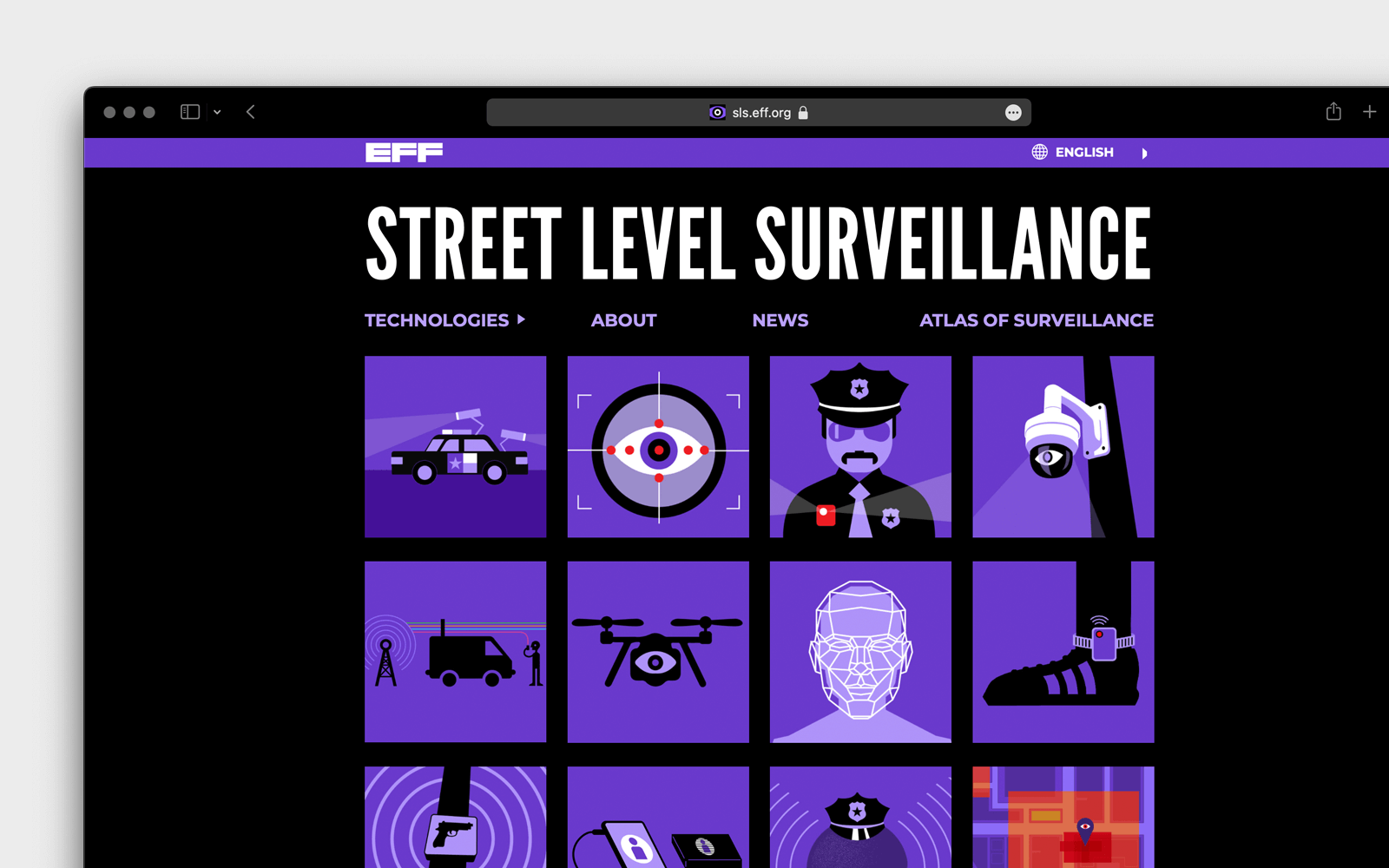
The Electronic Frontier Foundation (EFF) launches the Street Level Surveillance Hub, a resource for learning about invasive technologies used by U.S. law enforcement. The website contains accessible intros to cell-site simulators, gunshot detection systems, predictive policing, and other troubling technologies, and identifies related civil liberties concerns. “Understanding this panopticon is the first step in protecting our rights,” says EFF Policy Analyst Matthew Guariglia.
“I think the Bitcoiners that are celebrating these enforcement actions tend to be later on the adoption curve and lower on the IQ spectrum than folks that actually know what’s going on. They’re cultists.”
“If your world view is ‘somebody’s out to get me and I need to protect myself from them.’ Well, then you view everything through that lens.”

Daily discoveries at the nexus of art, science, technology, and culture: Get full access by becoming a HOLO Supporter!
- Perspective: research, long-form analysis, and critical commentary
- Encounters: in-depth artist profiles and studio visits of pioneers and key innovators
- Stream: a timeline and news archive with 3,100+ entries and counting
- Edition: HOLO’s annual collector’s edition that captures the calendar year in print