Exhibitions, Research, Criticism, Commentary
A chronology of 3,585 references across art, science, technology, and culture
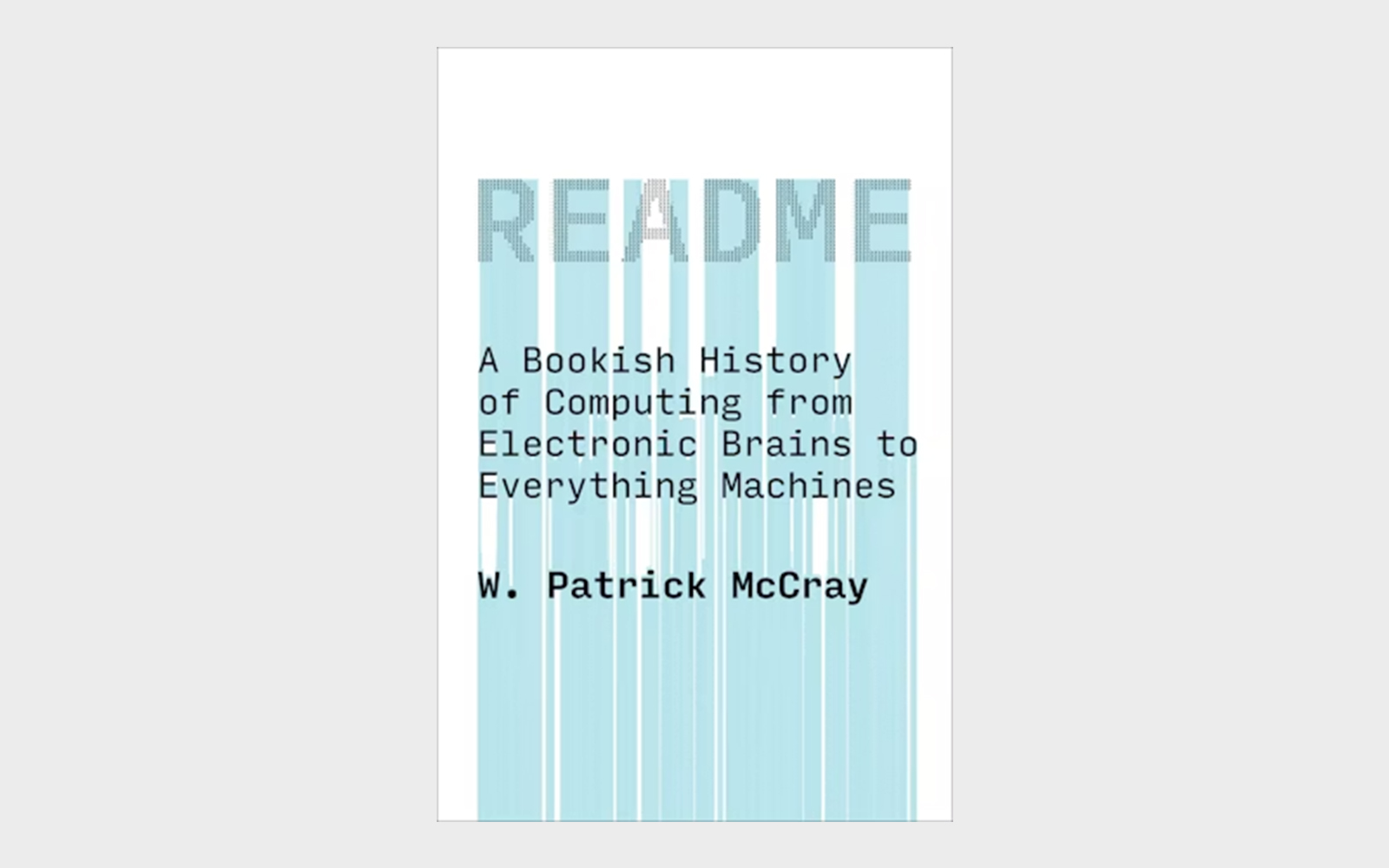
README
W. Patrick McCray
“Many people will say that citations are the ultimate feminist technology—a social network of how ideas come together through community, not because of some individual genius. Adding a financial component felt like an extension of that.”
“Creating and sharing knowledge are defining traits of humankind, yet copyright law has grown so restrictive that it can require acts of civil disobedience to ensure that students and scholars have the books they need.”
“We went from MONDO 2000 being the main magazine of the internet—a weird, psychedelic, hypertext universe, Gen X free-for-all—to WIRED, which was saying ‘you can make money,’ and ‘you can invest in the future.’ Once people are betting on the future they don’t want infinite possibility anymore.”
“Our two primary material references were the iPhone and the little black book. It’s like a brick—the dimensions of an iPhone extruded to 3 inches.”

“Some of the most important moments of people’s lives are in the deep, rich encounters with written work—they shape who we are and who we become. Why would we seek to rip this up into an abstracted mess of training data, a series of trivial and often incorrect Cliff Notes and factoids?”
“We now have the data that there are big, well-funded AI companies that are just behaving horribly. And, frankly, if they’re gonna behave like hackers, then we’re gonna behave like trolls.”
“Like Thiel, Elon Musk looked at Twitter and identified a unique—and uniquely ideological—vector for information, and snuffed out the parts he didn’t like. And like Thiel, he has been shockingly successful in achieving his goals.”
“There is functionally little difference between a lauded writer with a recognizable avatar and a prominent social-media influencer. The only difference is in the way each metabolizes the experience of influence.”
“The book needs to be read by at least two to three people before its environmental footprint becomes smaller than the one caused by reading all Low-tech Magazine articles online.”
London-based arts organisation Furtherfield drops a free PDF of its long out-of-stock publication Artists Re: Thinking Games (2010). Edited by Ruth Catlow, Marc Garrett, and Corrado Morgana, and co-produced with FACT, Liverpool, for the “Space Invaders: Art in the Computer Game Environment” exhibition, the book examines how artists use videogames for critique and commentary. “We still get requests for the book every other week, which speaks volumes about its lasting relevance,” Furtherfield writes about the rerelease.

“Pluralistic democracy doesn’t work if too many people are too angry to compromise. It also doesn’t work if too many people are too tired to listen.”
“They refuse to leave the party even though they hate the host and think he might have poisoned the drinks. The band plays on, while we wonder with every step whose tune it is we’re dancing to.”
One of the sites where tech blogging started in the 2000s, The Unofficial Apple Weblog (TUAW), is back—kind of. Shuttered in 2015, Jay Peters and Sean Hollister report on how TUAW was acquired by Web Orange Limited this year. The hitch: the new owner did not acquire TUAW’s content and used generative AI to rewrite it all—badly—to attract search engine traffic. “Seeing my name on this slop is so fucked,” vents former TUAW blogger Christina Sharp, who discovered recent zombie content had been attributed to her.

“Any art practice based on exposing systemic failure will ultimately be co-opted. Your clever face tracking critique will be turned into a cute photo filter. Your subversive design work will be appropriated to improve optics and grant an air of credibility.”
In honour of the 75th anniversary of Germany’s constitution, the weekend edition of one of the country’s major newspapers, Süddeutsche Zeitung, comes infused with its DNA—literally. Researchers from Munich and Zurich’s technical universities synthesized genetic code containing millions of copies of the legal text and mixed it into the printer ink. DNA is the data storage medium of the future, the researchers say. Whether the ink’s contents can be decoded, however, is subject to further experimentation.

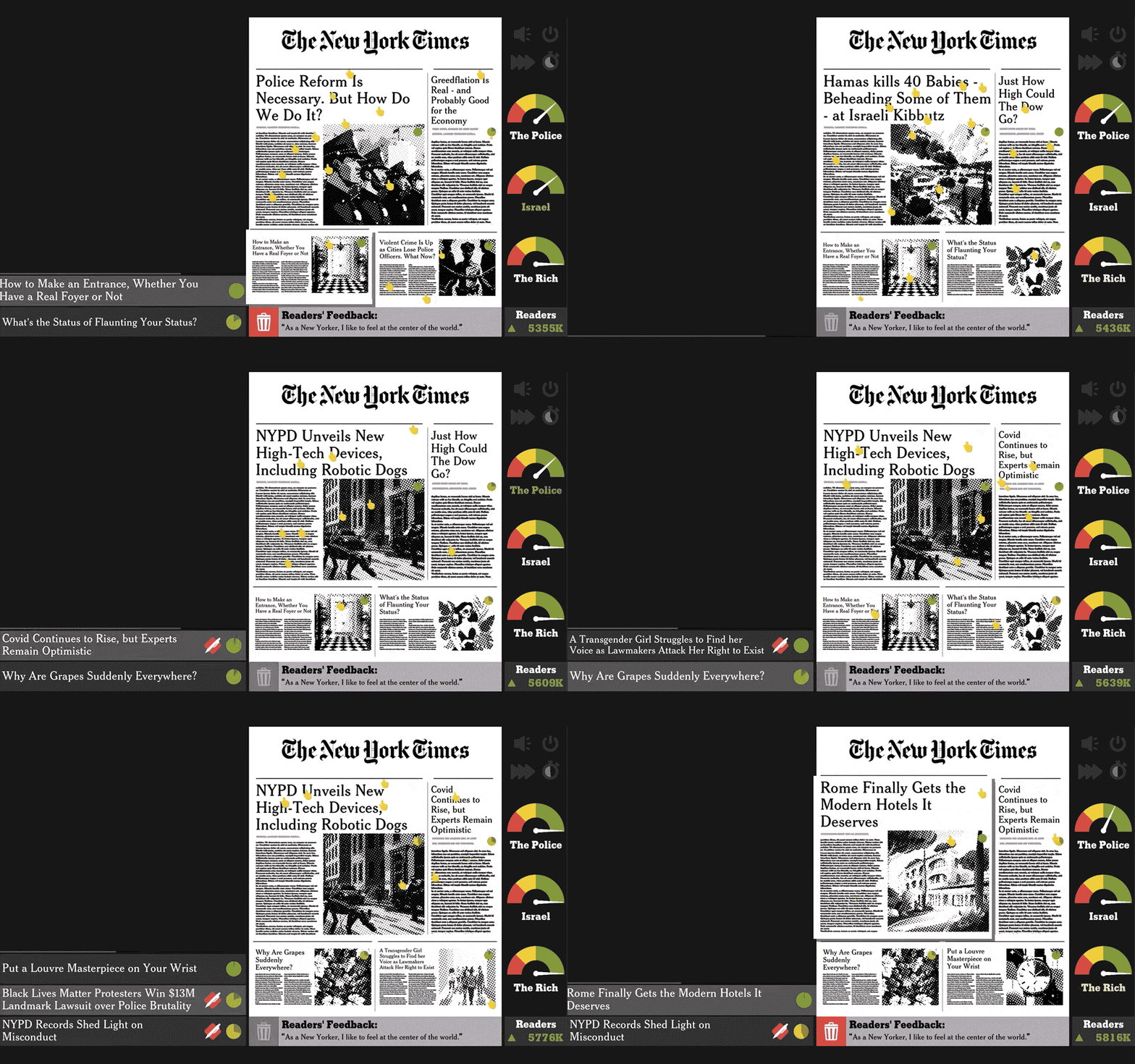
Italian game developer, artist, and educator Paolo Pedercini releases The New York Times Simulator (2024), a fast-paced browser game where players steer the news titan’s fortunes as editor-in-chief. Inspired by Lucas Pope’s 2012 Flash game The Republia Times, Pedercini’s parody game problematizes corporate media and propaganda. The goal: Align front page contents and headlines with powerful interests to “lead the most trusted newspaper through our tumultuous times and into the digital age.”
“So literally, I was like, what the fuck? Get these down. What are you doing? It’s as if I was the head of Gucci, and there’s all these knockoffs.”
“Artist PSA: Go download every bit of press you’ve received today, because the media industry situation is dire and not getting better any time soon.”
Daily discoveries at the nexus of art, science, technology, and culture: Get full access by becoming a HOLO Supporter!
- Perspective: research, long-form analysis, and critical commentary
- Encounters: in-depth artist profiles and studio visits of pioneers and key innovators
- Stream: a timeline and news archive with 3,100+ entries and counting
- Edition: HOLO’s annual collector’s edition that captures the calendar year in print