Exhibitions, Research, Criticism, Commentary
A chronology of 3,585 references across art, science, technology, and culture
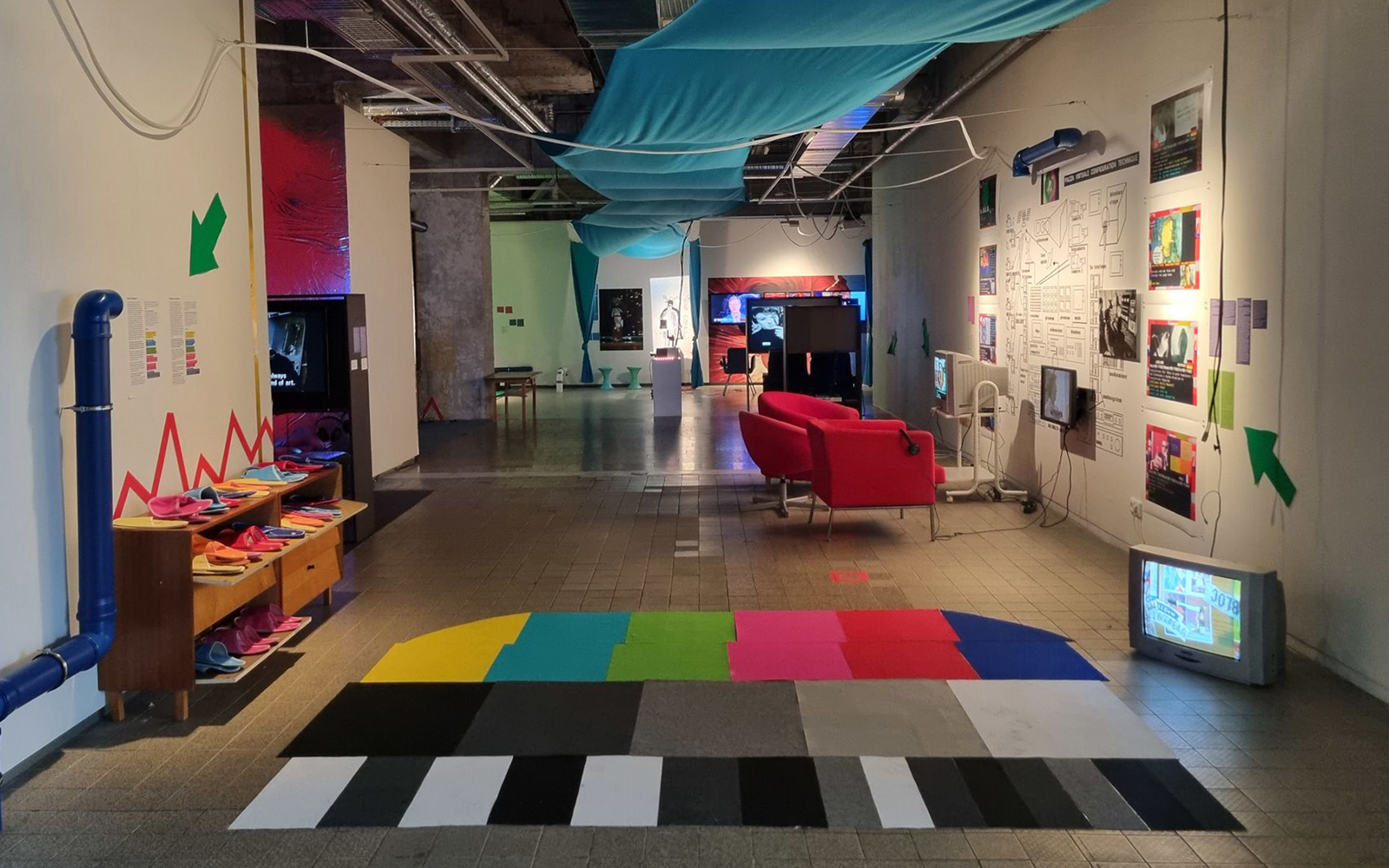
nGbK Berlin’s “EastUnBloc” examines the permeability of the “Iron Curtain” through the lens of experimental media art by more than two dozen artists and collectives from socialist and transition-era Central and Eastern Europe. From Slovak homebrew computer games, to Igor Štromajer’s hardware hacks, to the set of Hungary’s guerilla Vákuum TV: the included pieces counter clichés of socialist conformity and reveal the many inventive strategies—“scripts”—of making do.
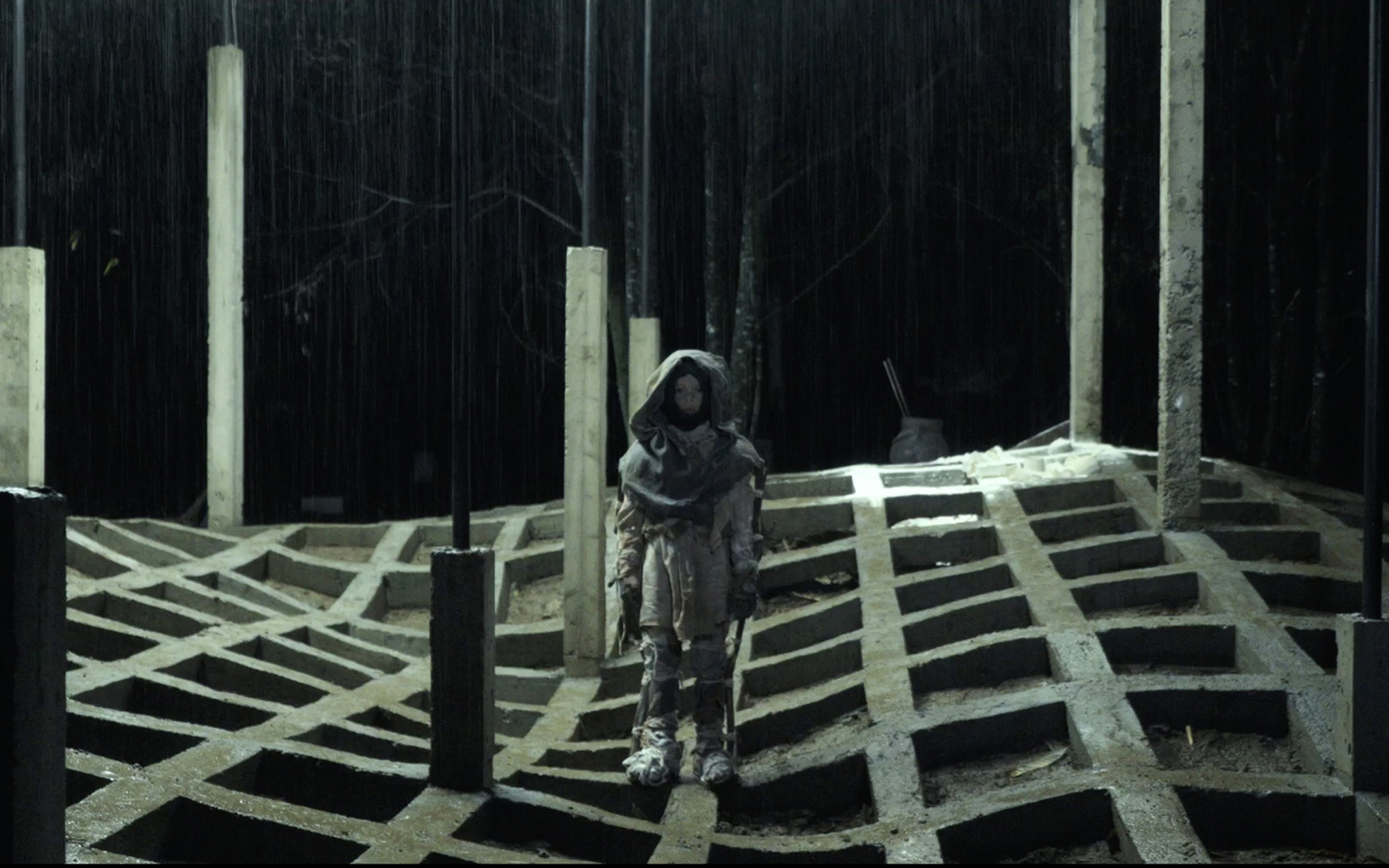
Sydney’s Museum of Contemporary Art Australia (MCA) probes the complex relationship between technology and power in a major survey: “Data Dreams: Art and AI” brings together ten international trailblazers, including Fabien Giraud, Kate Crawford & Vladan Joler, Trevor Paglen, Hito Steyerl, and Anicka Yi, to explore how algorithms and the data economy reshape world views, social systems, and the living planet. Giraud’s AI co-authored film, The Feral (2025–3025)—a world premiere—projects one possible outcome, hallucinating humanity’s future 32 generations ahead.
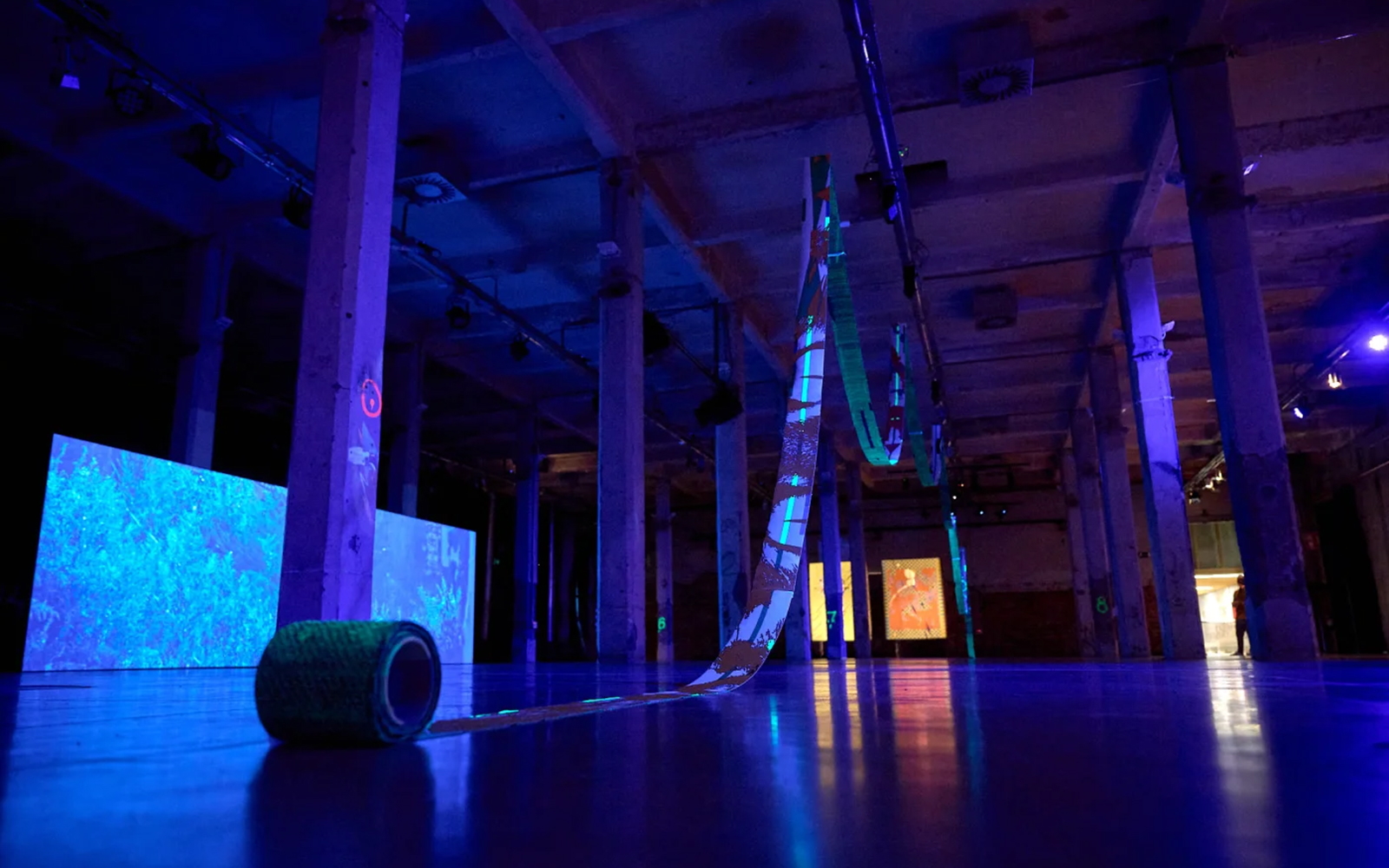
Quantum futures and soft science fiction: Dutch design collective Metahaven presents four video and textile works in “Collapse of the Weave Function” as part of Medialab Matadero’s “Weird Futures” program in Madrid. The titular centrepiece—an ultra-long, ultra-thin woven textile strip traversing the entire exhibition space—is a meditation on Schrödinger’s Cat. Here, however, the cat exists in states of waking and sleeping, countering the alive-or-dead binary with a gentler quantum interpretation.
“Video was a brand new art form that had not yet been colonized by men, and the male gaze could easily be short-circuited if you had a woman behind the camera.”
“What [Sam] Altman is describing is a world of creativity without craft. It is the removal of all friction, all agency, and, in turn, all humanity.”
“The multiday treatment program at NOX, with its careful progression through diagnostic spaces, doesn’t cure a car of contemplation but manages it, containing affect within acceptable parameters.”
Claudia Hart & Natasha Chuk
The First Circle: Radical Humanism

Art blogger Régine Debatty returns from the fourth Re:humanism biennial at Rome’s Fondazione Pastificio Cerere with her signature list of recommendations. IOCOSE’s whimsical video installation AI-Ludd (2025), for example—a top pick—follows a pro-labour chatbot encouraging workers “to deceive bossware, disrupt automation, resist capitalist constraints, and enjoy life,” Debatty writes. “It takes a machine to tell us how much machines have enslaved us!”

Oregon State University’s PRAx Center for the Creative Arts presents three of Rick Silva’s digital landscapes for the 2025 Society for Literature, Science, and the Arts conference. The show, titled “The Earth Opens,” explores the glacial formation of the Cascade Mountain Range (PEAKING, 2022), national monuments at risk under the Trump regime (Western Fronts, 2017), and resource extractivism that enables modern electronics (Liquid Crystal, 2023).

150 Media Stream, the massive media architecture inside Chicago’s 150 Riverside Plaza, brings back four artworks originally featured in 2020, “when many tenants were unable to see them in person.” Over the next four weeks, Patrick Steppan & Odessa Sagli’s Shrouded in Smoke, Sara Ludy’s Starmesh, Nicolas Sassoon & Rick Silva’s SIGNALS, and Christopher Andrew’s A Forest Through Time will ripple across the structure’s 89 LED blades.

In “DOKU the Creator – Bhavachakr,” Lu Yang’s second solo exhibition at Société, Berlin, the Chinese artist’s digital self, DOKU, transcends its avatar origins to become a deity. The metaphysical shift to Creator, a “meditative presence” that conjures virtual worlds through “contemplative stillness,” manifests in a new video piece and a series of paintings that gesture towards greater human-machine fluidity and a digital sublime.

“Just beyond the slop and gold rush there is a criticality rush of artists eager to invent something new, not because they are scared shitless but because we live in shitty times full of opportunity for improvement.”
“Funny… if we were making this today, we would chop it into 30 pieces and call it ‘a collection,’ but this is an 11:30 min noisy landscape saga.”

“Canyon, at least a decade in gestation, signals that born-digital art is finally (maybe) central instead of a sideshow. An institution imagined for years as video-focused begins with the inclusion of net art and video games.”
“Screen Time. Leipzig Video Art since 1990” at Leipzig’s Museum der bildenden Künste (MdbK) explores the evolution of time-based media art, with a focus on post-Wall East Germany. The exhibition showcases three generations of artists, including Paula Ábalos, Maithu Bùi, Nadja Buttendorf, Alba D’Urbano, and Charlotte Eifler, whose works reflect the shift from single-channel video to multi-channel installations, expanded cinema, CGI, AR, and internet art.

“The profusion of digital images and simulations of environmental transformation make it seem possible—easy even—to play the climate models in reverse, suck the carbon out of the atmosphere and sculpt the biosphere at will.”
Troika’s new film, Drill Baby Drill (2025), premieres during Vienna Digital Cultures’ AI Cinema Night, sending viewers on what the artists describe as “a hallucinatory ride through techno-optimism, ecological collapse, and the aesthetics of power.” As synthetic landscapes blur into sublime visions of destruction, the video piece reworks Suicide’s 1979 cult track “Dream Baby Dream” into a pop-anarchist chant echoing Trump’s fossil-fuel populism.

“LFG” (for “Looking for Group”) explores videogames as a foundational aesthetic language and social infrastructure at The Hole’s Tribeca location. Centred around Kévin Bray’s epic video-sculpture of an axe-clanging beast in fragmented motion (4 Exs, 2023), the show gathers 13 artists including Bezimienny, Gao Hang, Grant Stoops, Janne Schimmel, Ksawery Komputery, Mashine, and Ry David Bradley “that use the tools, textures and myths of gaming not to escape reality but to reprogram it.”

“You read the input, apply the cheese, crunch a few numbers, add the butter to the pan, return the value to the second function, and the result is a tasty treat.”

Daily discoveries at the nexus of art, science, technology, and culture: Get full access by becoming a HOLO Supporter!
- Perspective: research, long-form analysis, and critical commentary
- Encounters: in-depth artist profiles and studio visits of pioneers and key innovators
- Stream: a timeline and news archive with 3,100+ entries and counting
- Edition: HOLO’s annual collector’s edition that captures the calendar year in print