Exhibitions, Research, Criticism, Commentary
A chronology of 3,585 references across art, science, technology, and culture

“I’d have more sympathy for NFT platforms shutting down if they hadn’t so openly embraced the capitalist extraction engine; the blinding antithesis of decentralization. These were businesses, and they made bad decisions. Own it.”
Curated by Jack Thomas Taylor and Amal Zeyad Ali, “What’s between, between?” takes over Doha’s Media Majlis Museum (QA). The show takes Gulf Futurism as its starting point—a term describing rapid transformation across the Arabian Peninsula, “where hyper-modernization and clashing visual cultures create a distinctive sense of living between multiple temporalities.” Featuring works by artists from across the Gulf region including Ahaad Alamoudi, Farah Al Qasimi, and Manal AlDowayan, the exhibition refuses a singular definition of the contested aesthetic.
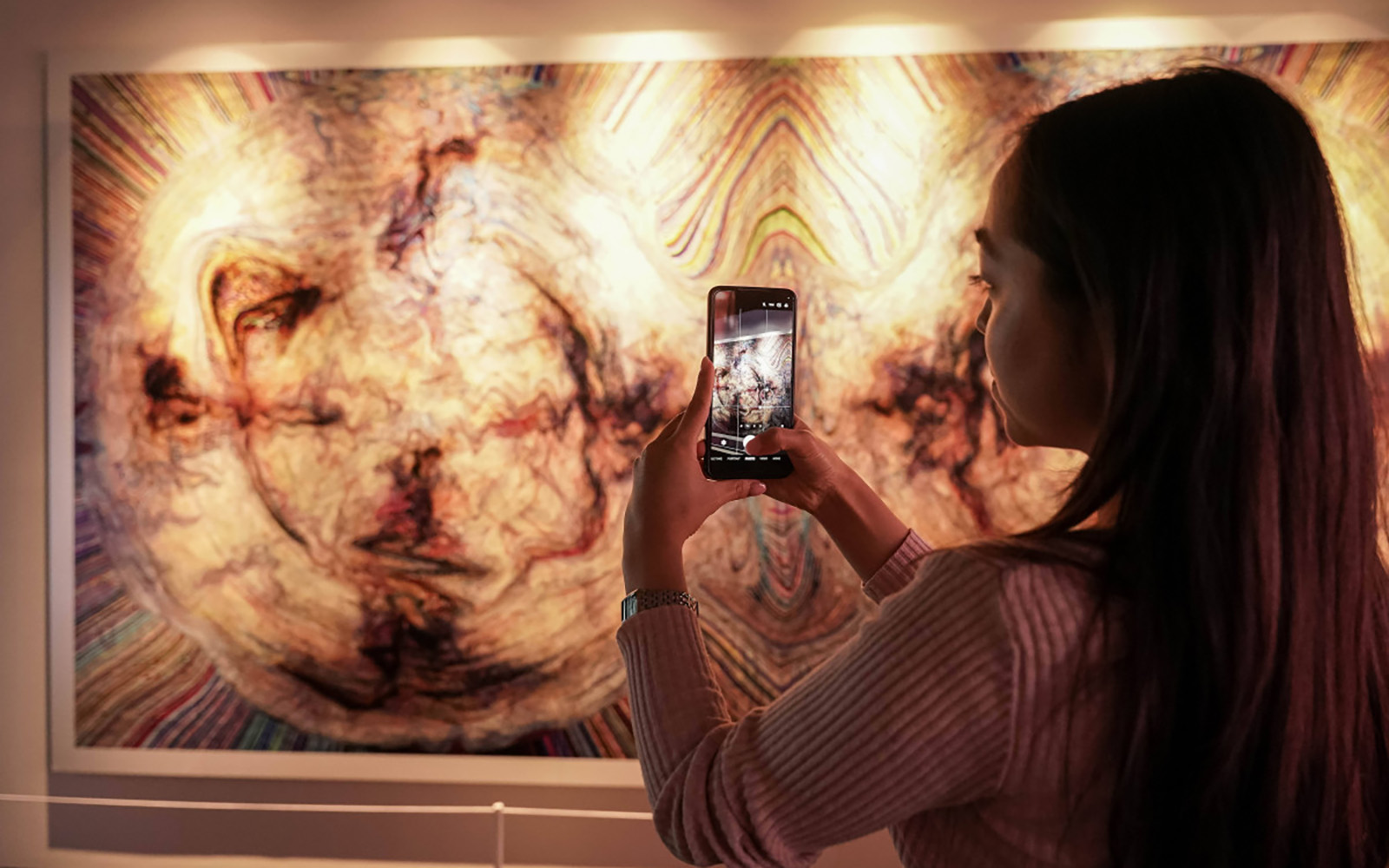
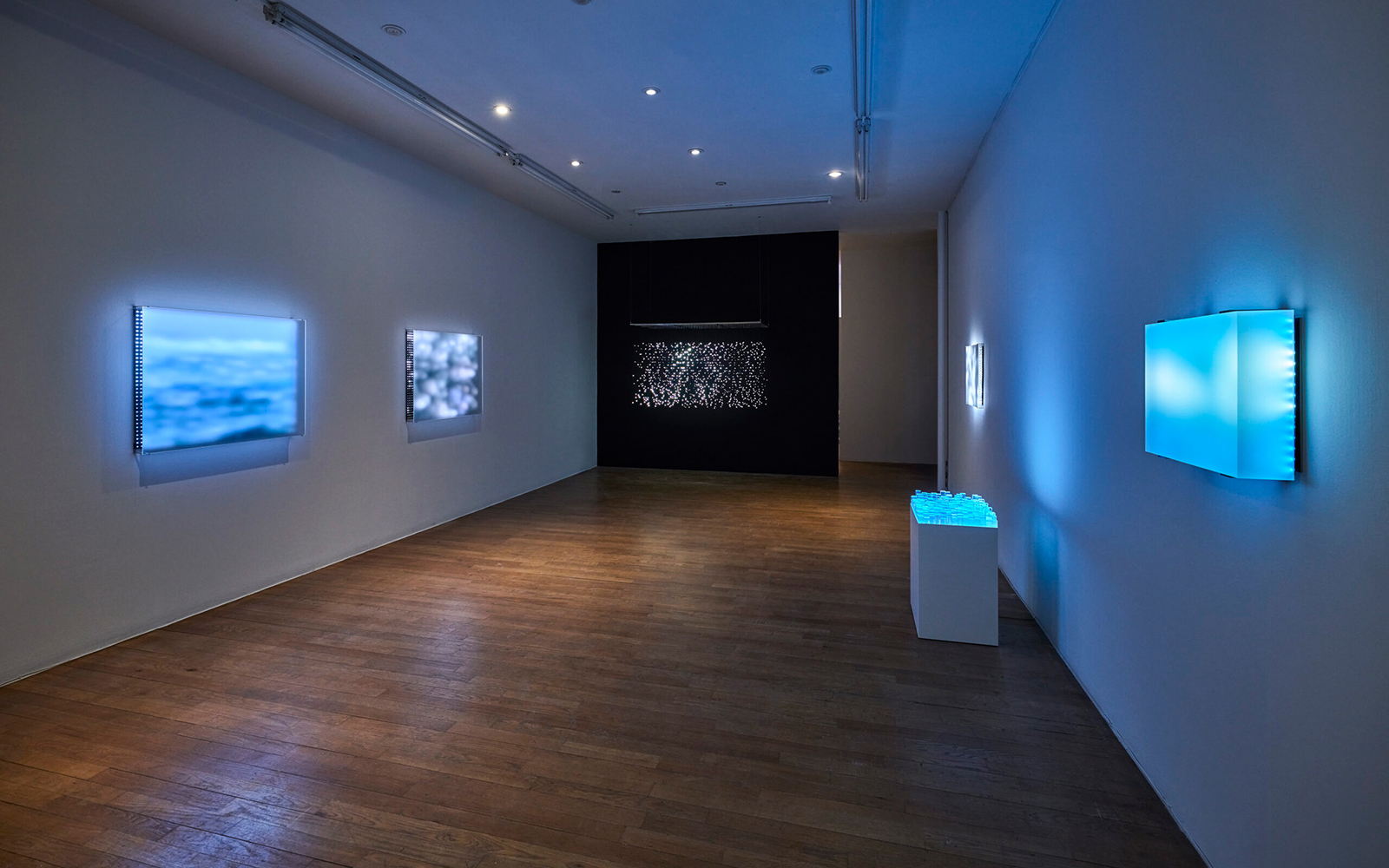
Three decades into his practice, Jim Campbell continues probing the threshold between abstraction and recognition. “Encoding Light” at bitforms NYC situates historic pieces alongside new works, positioning the American artist’s low-resolution LED installations as investigations into how perception fills in visual gaps. Motion Color Study #6 (2026), for example, translates footage of Monet’s Giverny garden into blurred colour fields—a continuation of the Impressionist’s inquiry, not a reinterpretation.
Rice University‘s Moody Center for the Arts in Houston (US) presents “Imaging After Photography,” a group show probing algorithmic bias, synthetic image-making, and photographic truth in the era of generative AI. Coinciding with FotoFest’s 40th anniversary, the show features Refik Anadol, Sofia Crespo, Trevor Paglen, and others. Nouf Aljowaysir’s Ancestral Seeds (2025) subjects British archaeologist Gertrude Bell’s photographs of the Middle East to computer vision models, exposing biases embedded in AI.
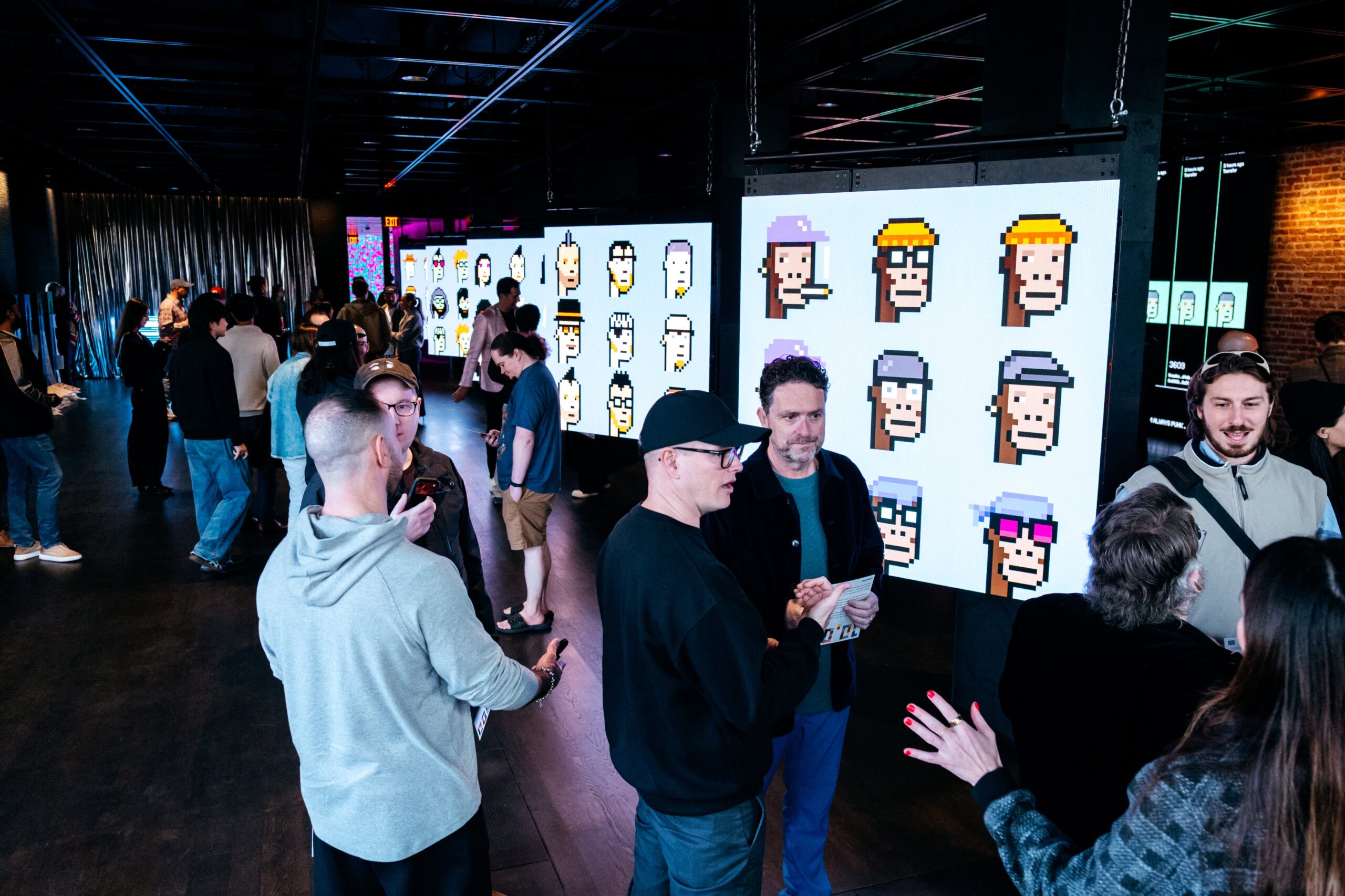
The Infinite Node Foundation launches its permanent Palo Alto (US) hub with “10,000,” the first major exhibition devoted to CryptoPunks (2017), Larva Labs’ (Matt Hall and John Watkinson) canonical PFP (profile picture) NFT collection. Following last year’s acquisition of the collection’s IP from Yuga Labs, NODE positions the algorithmically-generated portraits as a process-based artwork where “the marketplace is a living exchange that hums with activity.”
“In their hands, the mushroom becomes not an object but an inescapable feral imagination, with the exhibition a proposal to clean the plate and start over.”
“There’s always music in the garbage, an obsolete format, and the music industry has consistently been at the forefront of waste culture.”
“You have to clock in for school, clock in for work, and now you have to clock in just to prove you aren’t dead. Chinese people—spending a lifetime ‘clocking in.’”
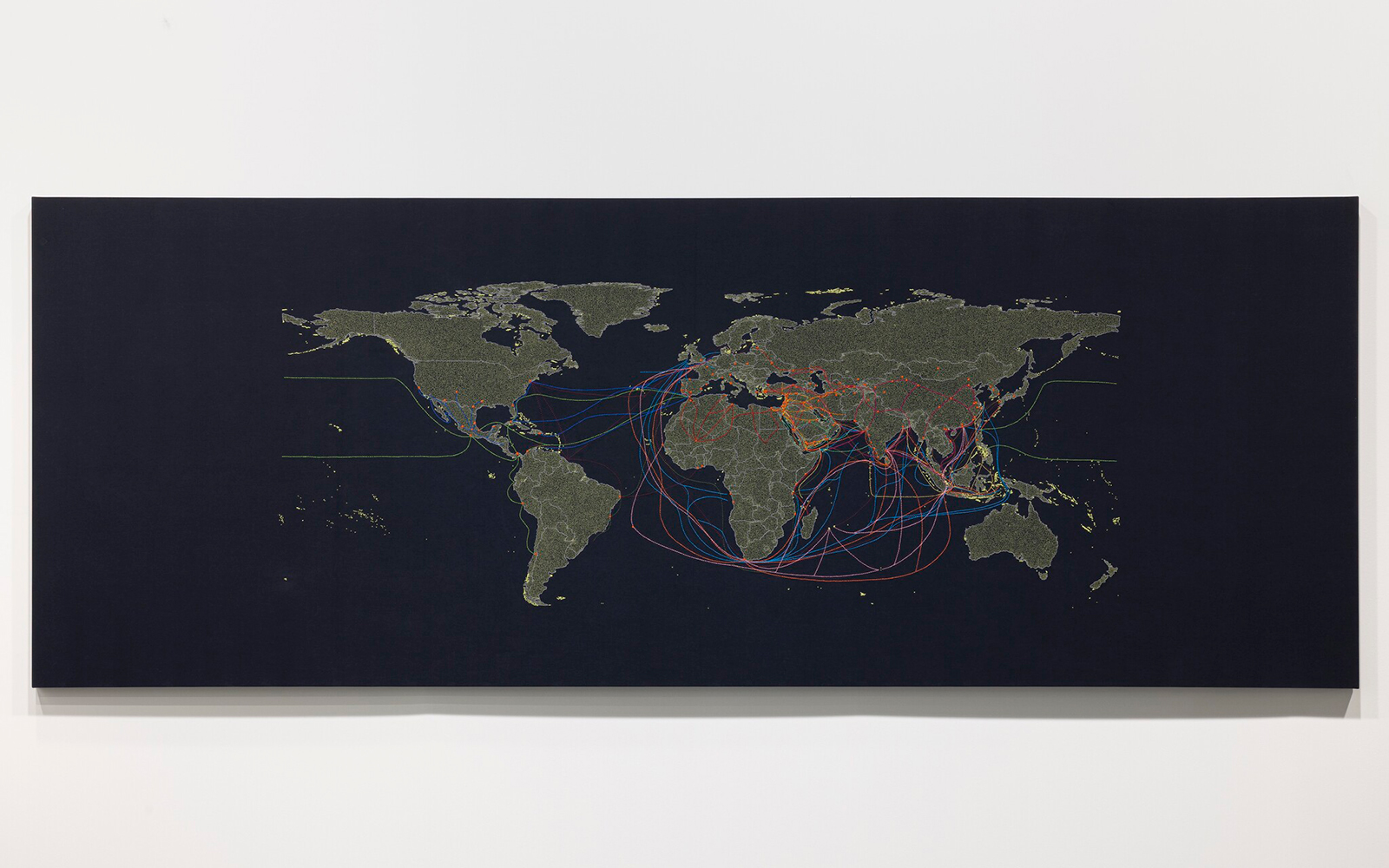
“Tiffany Chung: indelible traces” at UC Santa Barbara’s Art, Design & Architecture Museum (US) is the Vietnamese American artist’s first museum survey. Spanning 25 years and over 70 works—from embroidered maps to archival investigations of place—Chung excavates suppressed histories that official narratives overlook. A major thru-line: the climate-conflict nexus, “which views climate disasters and armed conflicts as dual systemic causes of forced migration.”
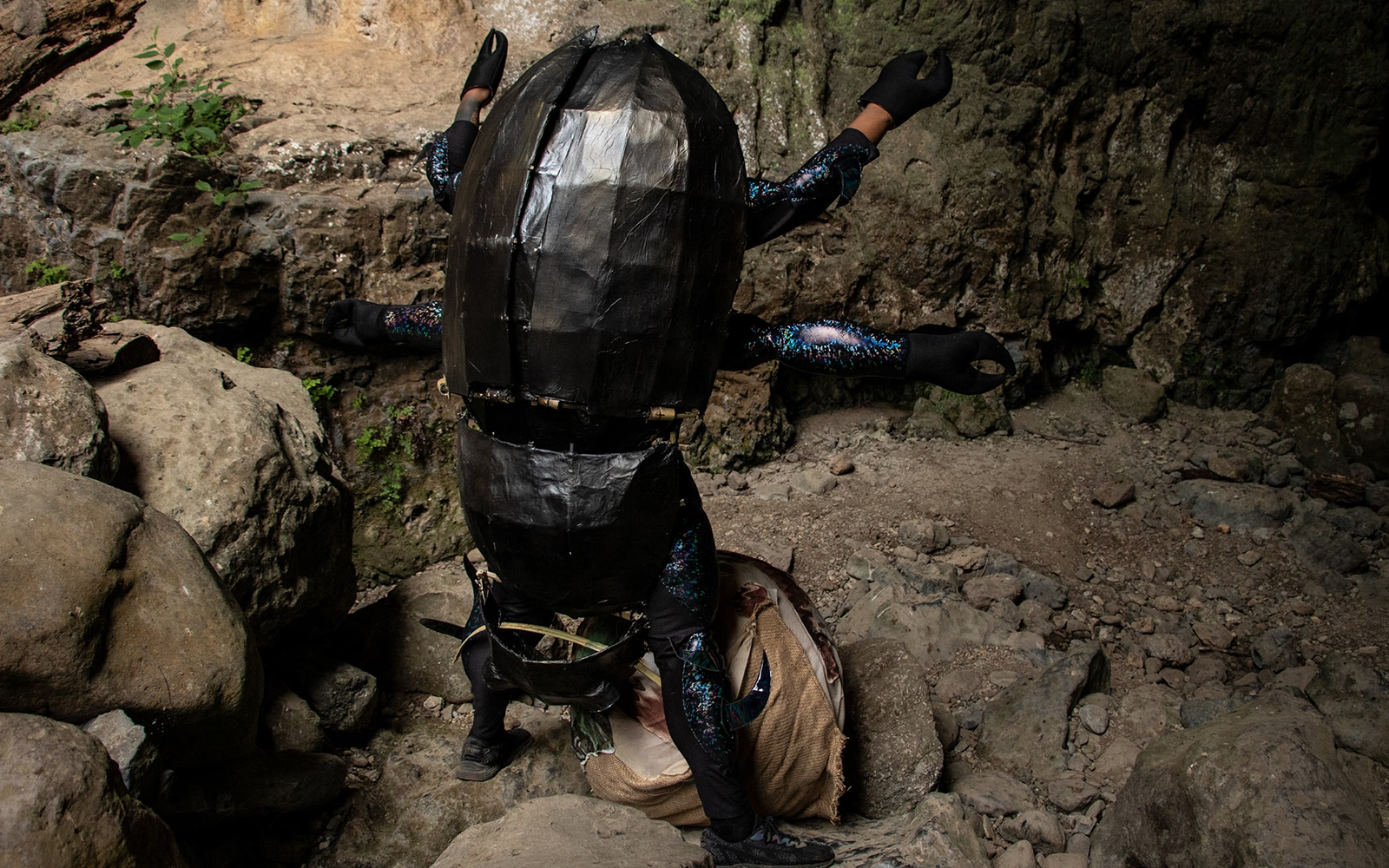
Taking Ludvig Holberg’s proto-sci-fi novel Underground Travels (1741) as its starting point, “Iter Subterraneum” at Bergen Kunsthall (NO) imagines nonhuman ways of sensing and reasoning. Artists including Cecilia Fiona, Wangechi Mutu, and Anicka Yi shift perspective toward plants, fungi, and insects—echoing Holberg’s sentient trees. Naomi Rincón-Gallardo’s Dung Kinship (2024), for example, fantastically chronicles ‘fly women’ and ‘dung folk’ transforming rot into regenerative force.
“Protecting artists doesn’t just mean excluding ‘AI content.’ It means crafting policies with enough nuance to distinguish between automation and critique, extraction and deep engagement. Otherwise, we risk eliding some of the most thoughtful and important work being made with and about these technologies.”
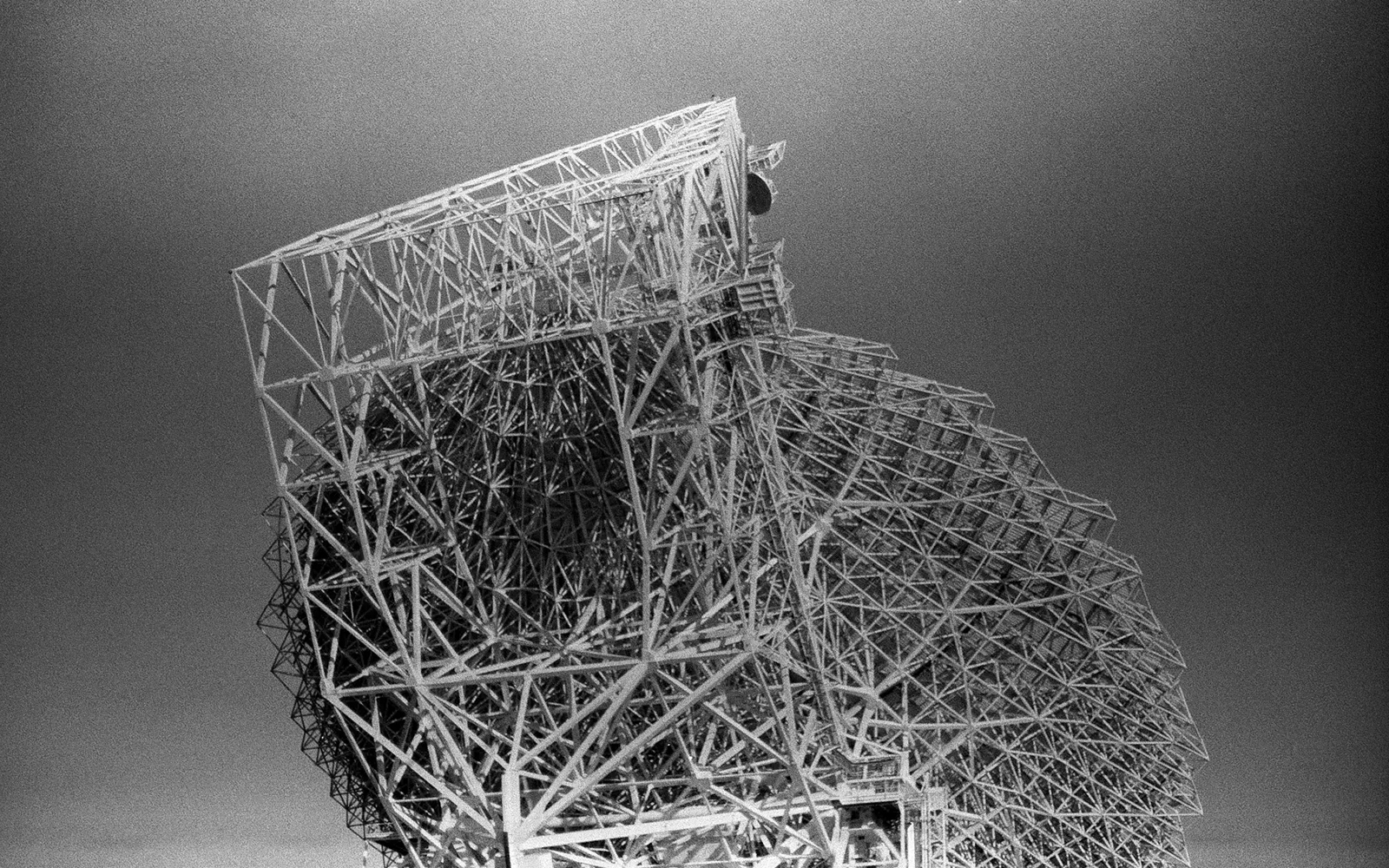
MIT’s List Visual Arts Center in Cambridge (US) presents “List Projects 34: Brittany Nelson,” featuring new photographs and a moving-image work filmed at West Virginia’s Green Bank Observatory—a hub for SETI researchers scanning the cosmos. Drawing on Daphne du Maurier‘s Rebecca (1938) and analog photographic techniques, the American artist frames the search for extraterrestrial contact as a mirror for human longing. Nelson has likened the telescope to “an ex-girlfriend,” and the piece unfolds as a “kind of breakup narrative.”
“I’m interested in artists’ ability to shift language and discourse, though that’s not necessarily quantifiable. Being an artist is akin to asking questions that nobody really has answers to, prototyping from that, and—hopefully—stimulating new thoughts, new ideas, or new ways forward.”
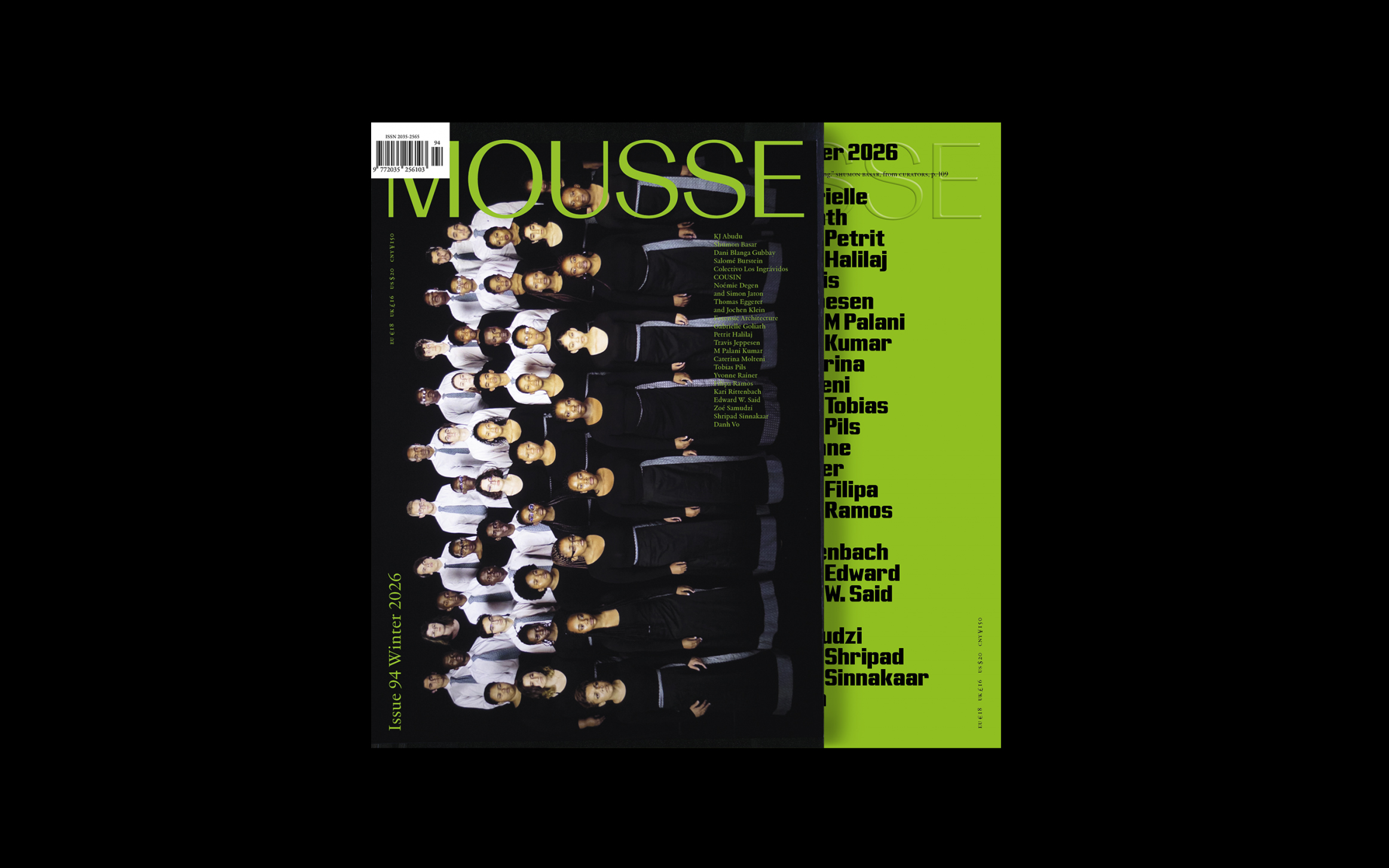
Mousse 94
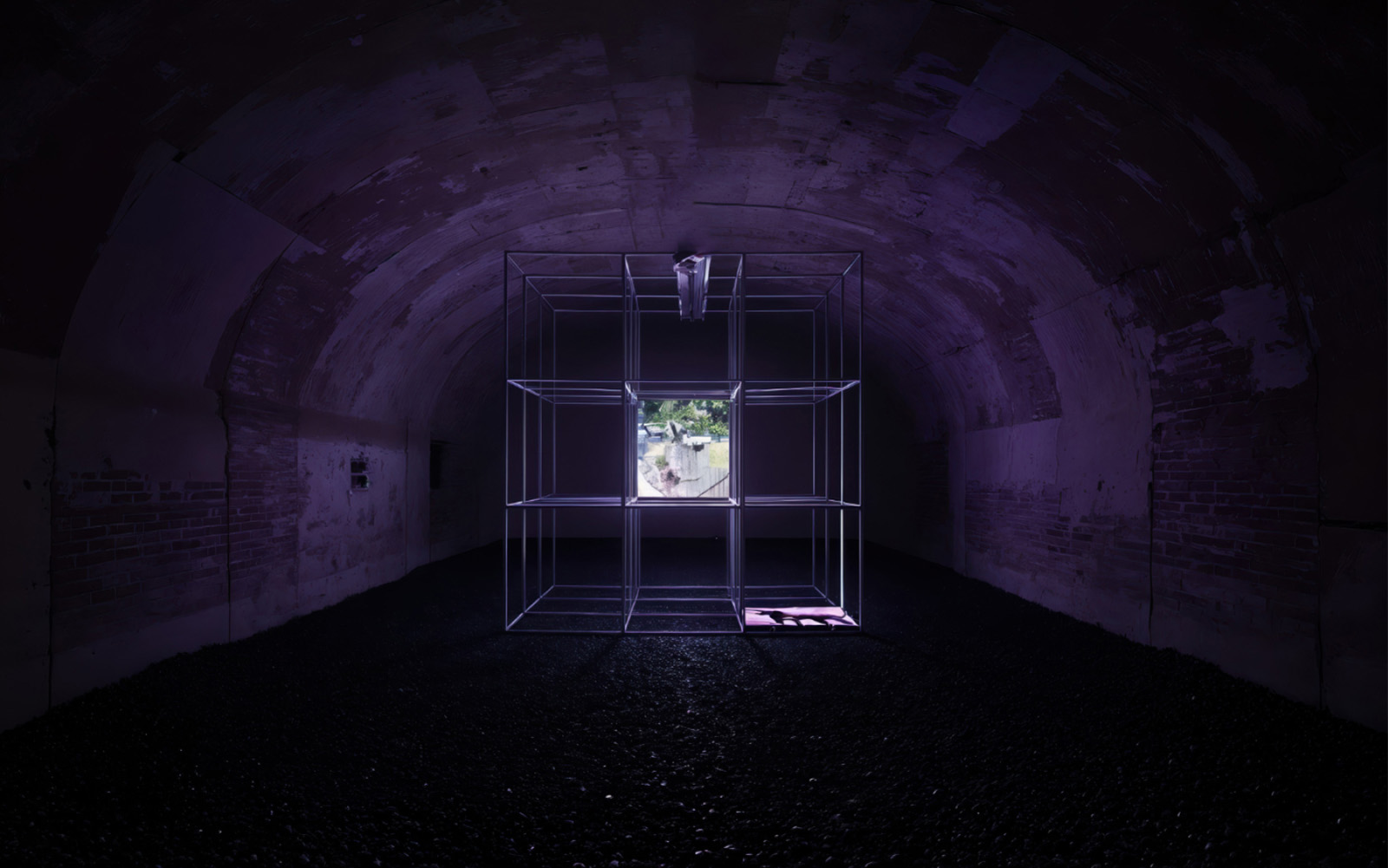
In her solo exhibition, “Image Remains,” at Filodrammatica Gallery, Rijeka (HR), Dutch glitch art pioneer and resolution theorist Rosa Menkman explores the “unteathered” digital image—copied, processed, and endlessly circulated across platforms and algorithms. Drawing on Paul Klee’s iconic 1920 painting Angelus Novus, Menkman’s installation, videos, and diagrammatic analysis ask “what is left of the image when its resolution is made destitute, and its appearances are governed.”

“Bianca approaches femininity not as an essence but as a kind of cultural technology—a set of inherited techniques the body learns to perform. She treats it as an operating system rather than identity.”
“Bryan Johnson—the man who transfused his son’s blood, dumped his fiancé when she was diagnosed with stage III breast cancer, and takes 54 pills every morning—is poised to be a major literary inspiration of our contemporary age. The longevity bro is the Dracula we deserve.”
“The reason why RAM has become four times more expensive is that a huge amount of RAM that has not yet been produced was purchased with non-existent money to be installed in GPUs that also have not yet been produced, in order to place them in data centres that have not yet been built, powered by infrastructure that may never appear.”
Daily discoveries at the nexus of art, science, technology, and culture: Get full access by becoming a HOLO Supporter!
- Perspective: research, long-form analysis, and critical commentary
- Encounters: in-depth artist profiles and studio visits of pioneers and key innovators
- Stream: a timeline and news archive with 3,100+ entries and counting
- Edition: HOLO’s annual collector’s edition that captures the calendar year in print