Exhibitions, Research, Criticism, Commentary
A chronology of 3,585 references across art, science, technology, and culture
Building on cyberethnographer Ruby Justice Thélot’s ARTnews meditation on AI and digital folk art creation, critic Louis Bury lists ten examples—art, books, essays—that speak to this tension in 2025. Bury’s picks include Dean Kissick’s dissection of “The Vulgar Image,” Agent 5.5’s QAnon-esque John Pork TikTok lore, artist Maya Man’s “funhouse vision of TikTok vernacular’s over-the-top banality” for the Whitney, and Nadia Asparouhova’s cult hit book Antimemetics (2025).
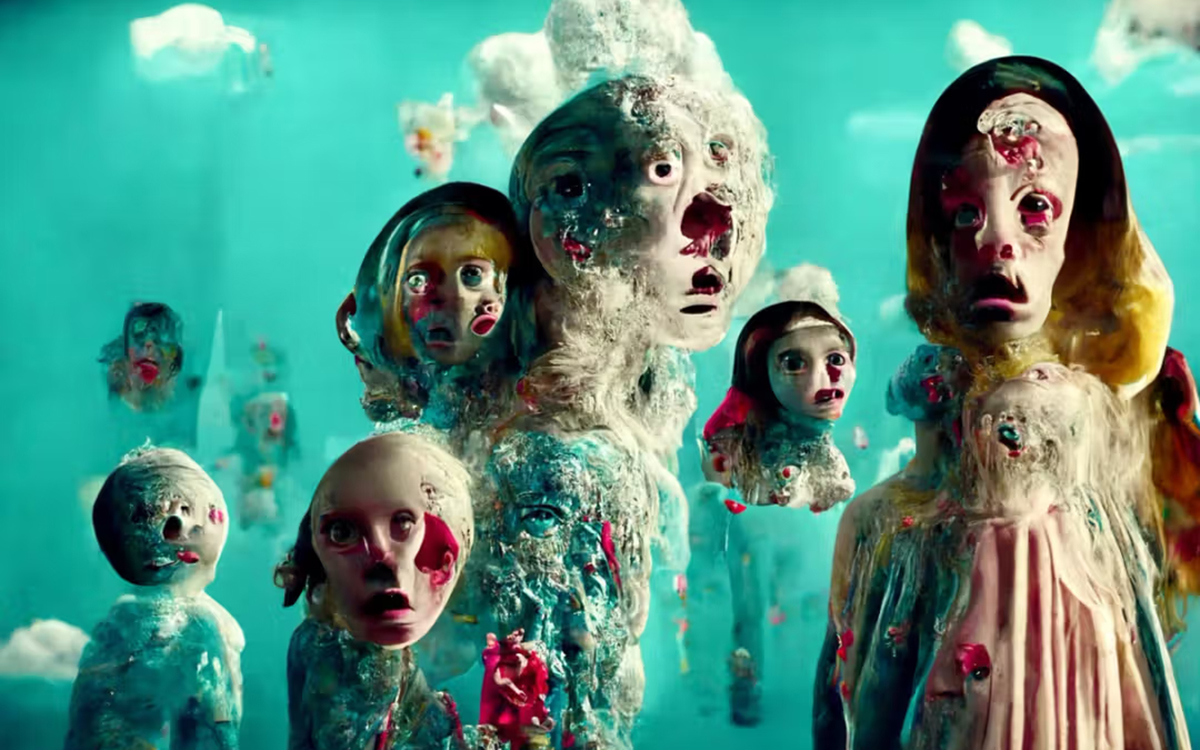
“I think everyone will miss the socializing part. But it’s also a relief to not have to do that on a platform designed to lure you in and waste your time, no one is going to miss scrolling.”
“As a matter of fact, a lot of people are already trying to take over the mantle of ‘the person who debates college freshman’ because they see that as a very successful vehicle to deliver a right-wing message to a much broader audience on the internet.”
“Ambient Propaganda” at Utrecht’s IMPAKT Centre for Media Culture examines the shift from top-down to ambient influence, a new regime “where ideology is subconsciously incorporated into everyday digital culture.” From TikTok trends to political fandoms, the featured works by Noura Tafeche, Lesia Vasylchenko, Total Refusal, Paolo Cirio, Fantastic Little Splash and others highlight “how the boundaries between self-expression, performance, and ideological reproduction have blurred.”

“We’re all becoming NPCs, nudged by recommendation engines, not through Orwellian control but by the seduction of ease and feedback.”
“Yayoi Kusama inaugurated a new era of art specifically catering to smartphone engagement. The conceptual artist James Turrell soon had a crossover moment when Drake visited his exhibition and later used it as the inspiration for the ‘Hotline Bling’ music video.”
“The voice of novel technological communication has been, almost from the beginning, a female voice, which is to say the voice of a helper, a perfect helper, pleasant, unflappable, immune to insults, come-ons and bossiness.”
Is Ben Grosser scrolling TikTok right now? Find out via Stuck in the Scroll (2024), a new website in which the American artist invites us to monitor his social media addiction. “Think of it as a last-ditch effort, a sort of public confessional as therapeutic tool aimed at defusing the intense compulsion I feel every day to endlessly scroll the world’s most popular video app,” Grosser writes. In going public, he aims to probe the designed effects of platform interfaces and, ultimately, “to break free from the engagement loop.”

“The logic is that TikTok is the beating heart of a social-media industrial complex that mines our data and uses them to manipulate our behavior, and, as such, it is very bad for an authoritarian country to have access to these tools.”
“The future’s gonna be weirder than anyone can imagine,” Turkish AI artist Memo Akten writes about the effect TikTok’s newly released Teenage Filter has on people. “It makes you look young,” he demonstrates in an uncanny reaction video, “and now TikTok is full of middle-aged folks trying come to terms with this, trying to understand where their life went.” Facing your younger self can be “quite emotional,” says Akten and provides dozens of examples in a (now viral) Twitter thread.

“If you look at TikTok your body is literally animated by the algorithm—it tells you how to move yourself—and you end up dancing for this abstract formulation of capital and algorithmic recommendation.”
“It takes a filter designed for people of colour to make us realize the extent to which most filters aren’t.”
Daily discoveries at the nexus of art, science, technology, and culture: Get full access by becoming a HOLO Supporter!
- Perspective: research, long-form analysis, and critical commentary
- Encounters: in-depth artist profiles and studio visits of pioneers and key innovators
- Stream: a timeline and news archive with 3,100+ entries and counting
- Edition: HOLO’s annual collector’s edition that captures the calendar year in print