Field Guide
Accessibility, Resilience, Sustainability:
Upgrading Our Cultural Infrastructure
Whether art, theatre, music, or film—festivals are vital nodes in the cultural nervous system. It’s where new ideas are first injected into the discourse; where they travel, mutate, and multiply, before they seep into the wider public consciousness. For the devoted audience, festivals are pilgrimages that rejuvenate the soul and reaffirm one’s love for art and music. For those that make them happen, festivals are a way of life—and a constant struggle.
Keeping cultural infrastructure not only intact but vibrant, requires more than keeping pace with trends, audience expectations, and shifting norms. Beyond perennial concerns like programming, funding, and the role of the festival in the ever-changing cultural landscape, there are existential questions about virtuality and sustainability raised by the COVID-19 pandemic and the climate crisis. How can festival makers simultaneously build resilience, expand accessibility and inclusion, while minimizing the environmental footprint of cultural production? And what would a future festival that overcomes these challenges even look like?
This much is clear: None of these questions can be answered by one isolated festival. That’s why Future Festivals, a research project funded by the Canada Arts Council, assembled a task-force of festival makers from Canada, Germany, and Mexico to collaboratively imagine how their work might evolve in the years and decades ahead. Under the helm of curator and cultural researcher Maurice Jones, representatives from MUTEK (Montréal, CA), imagineNATIVE (Toronto, CA), Mois Multi (Quebec City, CA), MUTEK Mexico (Mexico City, MX), New Forms (Vancouver, CA), NEW NOW (Essen, DE), and send + receive (Winnipeg, CA) will put their heads together to explore what forms festivals can take in the years ahead. The selection is no accident: these organizations can draw on distinct curatorial agendas, communities, geographies, and in many cases decades of institutional memory. It’s not a closed group either: if you and your organization are interested in joining the project, then please get in touch!
Over the next 18 months, starting with NEW NOW in Essen (June 1-4), each participating festival will host a Future Festivals Lab that gathers the group and selected experts around a key challenge. The goal: deeply analyze shared problems and prototype solutions—from immediate, easy to implement measures to more ambitious, long-term proposals.
HOLO will file reports from these sessions in what we call the Future Festivals Field Guide, an expanding companion dossier that follows the project from start to finish. As embedded journalists, we will document the group’s progress, share key findings and outcomes, and bring important guest voices into the conversation. But the scope of the Future Festivals Field Guide goes beyond coverage and commentary: Together with N O R M A L S, a Berlin-based design fiction collective and trusted HOLO collaborator, we will build on the ideas produced in each lab session and ‘act them out’ in speculative scenes—mockups of a future festival—for you to explore.
Needless to say, we at HOLO have a vested interest in the future of the festival circuit and the wider cultural landscape around it that we consider ourselves very much a part of. We look forward to not only reporting from the frontlines of that future, but to actively help shape and contribute to it. Stay tuned!


If upgrading our cultural infrastructure—the declared goal of the Future Festivals group—sounds like a daunting undertaking, try doing so within just 18 months and a group of traditionally overworked festival makers. How do you prototype festival futures with organizations from three different continents, all working at different scales, serving different communities with different needs? How do you settle on issues to tackle when challenges around access, resilience, and sustainability compound and overlap? Where do you even begin?
Thankfully, MUTEK co-curator and Future Festivals project lead Maurice Jones provided starting points and the necessary structure. Between April and May of 2023, he invited representatives of the partnering festivals to a series of online workshops designed to feel out an agenda. Starting from a place of “care, active listening, and generous questions,” festival directors, programmers, and operations team members gathered over Zoom to identify shared struggles and chart pathways to possible solutions. The stated goal: “develop a joint purpose and vision” while “providing space for the specific needs, contexts, and topics of each partner.”
To steer the conversation away from mere group therapy—yes, there was much needed venting about lack of funding, space, and capacity—and to a more productive mode of discussion, Maurice prepared a simple but effective exercise. Drawing on the aptly named Three Horizons model, a methodology first proposed in David White’s The Alchemy of Growth (1999), Jones asked participants think about festivals across different timelines: the present, the far future, and an interstitial in-between. Imagining the latter, Maurice explained, is key to discovering incremental steps that, over time, will pave the way for new modes of cultural production. To identify viable, near-term measures, however, we’d first need to be candid about current challenges and, conversely, dream big.
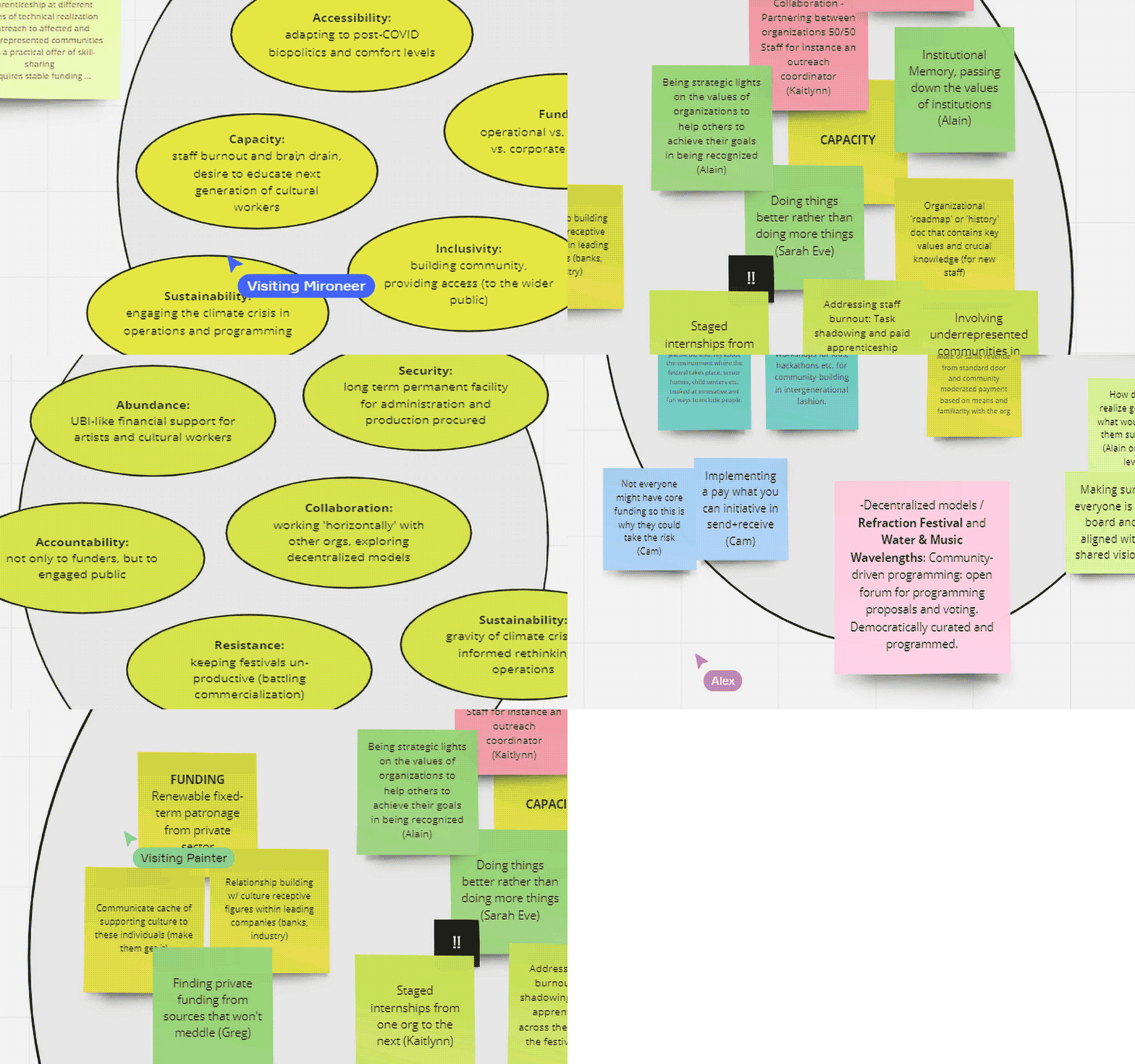
Unsurprisingly, the group’s critique of present festival realities echoed many perennial concerns within the cultural sector: the existential angst that comes with dwindling (or non-existent) public funds, the loss of affordable spaces to an out-of-control real-estate market, the exhaustion felt by cultural workers still reeling from the COVID-19 system shock (and its frenzied pivot online). Important issues like expanding accessibility, better community involvement, and lowering the environmental footprint become insurmountable when you operate at the edge of precarity.
Asked to counter present challenges with festival utopias, the group pondered everything from universal support structures to simple acts of solidarity. What would festivals look like, if artists and cultural workers could rely on UBI-like financial support that eliminates fears of precarity? And what if, instead of competing with one another, festivals would collaborate, share resources and commit to common goals? And wouldn’t it be nice if festivals were green as a first principle, offered respite from neoliberalism’s obsession with productivity, and were accountable to the public, not just funders?
Over the next 18 months, the Future Festivals group will try and produce concrete proposals that address some of these questions. The following list of themes and speculations will serve as our guide:
Present: The COVID pandemic prompted some overdue soul searching about who has access in the cultural sector. While the recognition of disability rights and experimentation with hybrid programming has lowered some barriers of entry, a lot of work remains to be done.
Future: Venues, content, communication—festivals lead by example when it comes to bringing different people together. They exceed mandated accessibility standards, accommodate the vision and hearing impaired, and include remote audiences with next-generation, mixed-reality formats.
Present: Countless hours of invisible labour go into compiling reports that are privy to funders, not audiences or the public. Direct communication with the community is largely limited to promotion (via stingy social media platforms that throttle visibility) and awkward surveys.
Future: Directly reporting to global audiences and local stakeholders radically increases transparency and community investment. Taking cues from the decentralized autonomous organizations (DAO) and community curation initiatives in Web3, festivals create more pathways for direct input.
Present: Compared to industry, culture workers perpetually have to do more with less—less money, staff, time—and largely live project to project. This leads to widespread fatigue and burnout, high staff turnover, and a steady ‘brain drain’ of talent leaving the sector.
Future: With more—and more reliable—support, organizations can chart long-term strategies on how to serve their community better. No longer overburdened and generally happier and healthier, staffers are able to build capacity, and train the next generation of cultural workers.
Present: In the never-ending race for limited attention and funds, galleries, festivals, and cultural organizations tend to view their peers as competition. The result: knowledge and resources are hoarded, leaving communities fractured and both staff and audiences overwhelmed.
Future: Aligned around common values, festivals and cultural organizations team up and share resources whenever they can. Collaborations allow knowledge transfer across teams, and pollination between fields and communities. They’re also a way to play and experiment, and keep audiences on their toes.
Present: The pandemic revealed and exacerbated a growing sense of social alienation that culture—festivals in particular—may just be the antidote for. But who gets to participate in the communities they foster? The truth is: More often than not, festival makers cater to privileged international niche audiences, while sometimes overlooking immediate neighbours and entire demographics.
Future: Festivals double down on local ties, forging deeper and more meaningful connections with the communities they take place in. Children, seniors, families, newcomers—a wave of fresh energy and perspectives flows into the mix, increasing diversity and expanding audiences.
Present: Organizations are in fierce competition over dwindling public funding or at the behest of corporate money. Grants that are progressively project-based (versus operational) tend to increase workload not capacity. Worse yet: skyrocketing real-estate prices force orgs and cultural workers out of the neighbourhoods they have enriched for decades.
Future: With UBI-like baseline support, artists and cultural workers can create without fear of precarity. Festivals and organizations have (easier) access to operational funding and rent subsidies, can generate revenue, and purchasing permanent facilities is feasible. Membership models and (ethical) private sector sponsorship add to the resilience.
Present: From energy and resource-intensive blockbuster shows to flying bodies and gear around the world—the environmental footprint of cultural business-as-usual is untennable. According to a 2020 study, the 184 organisations in the Arts Council England portfolio emitted 114,547 metric tonnes of CO2 in 2018/19 alone.
Future: Environmental considerations shape cultural programming, rather than being an afterthought. As innovators, festivals lead the charge in telepresence, circular exhibition and event practices, and offer pluralistic responses to any of the ugly sociopolitical consequences—migration, xenophobia, ultranationalism—the climate crisis may unleash.
The Future Festival visioning sessions were more than a temperature check and speculation. They provided a rare opportunity for cultural workers to be vulnerable, to speak openly and candidly about their struggles, and share some successes, too. From experimenting with PWYC (pay-what-you-can) models, to next-generation mentoring initiatives, to radical accessibility programs that include seniors and kids—there’s no shortage of promising trials for the group to learn from and build on over the coming months. A critical selection will be catalogued here.
Another lesson we took away from the sessions is the need for advocacy. As vital nodes in the cultural nervous system, festivals have to make a better case for themselves. All too often, the value that culture creates for society only becomes apparent in its absence—when spaces close and festivals die, or during the cultural winter of the early pandemic. Festival makers need to remind the public and stakeholders of their role and contributions in order to secure support and allies. Alain Mongeau, MUTEK’s founder and artistic director, compared building these lasting relationships to taking care of plants. “You need to water them regularly,” he said during one of the sessions. “You have to constantly seed ideas to align people and make them more receptive to your needs.”
Maurice Jones is a curator, producer, and critical AI researcher based in Tiohtià:ke/Montréal, Canada. As a Concordia University PhD student, he investigates cross-cultural perceptions of AI, public participation in technology governance, and festivals as methodology. He’s the Artistic Director of MUTEK.JP and in 2021 joined MUTEK’s Montréal headquarters to spearhead the AI program and Future Festivals think tank.
Through the MITACS-funded sub-project Festival as Methodology, a collaborative effort between Concordia University and MUTEK, I propose the art and technology festival as a potential site for developing new, more equitable, diverse, and inclusive forms of public participation in the shaping of AI and technology more broadly.
While the Future Festivals project has a far broader scope than my specific research interest as it is driven by our partner cohort, I believe there are two fundamental questions that we all try to understand better: 1) what is it exactly that happens during festivals that makes them spaces of valuable and transformative experience; and 2) how can we leverage these transformative potentials in multifaceted ways to drive social change?
Despite this heterogeneity of partners, the two-month co-design process crystallized that there are common concerns and challenges surrounding questions of accessibility, accountability, capacity, funding, inclusivity, and sustainability shared to some degree between all partners. One of the challenges of this project is then how to address these common issues in a practical manner that is aware and respectful of the situatedness of each partner.
Overall the project is centred around openness and co-creation. We already extended our outreach beyond the original partner cohort and are excited for more people to join the conversations. The upcoming MUTEK Forum in Montréal end of August will focus on expanding the conversation even further to the broader public and the about 50+ cultural delegates that come to visit Montréal each year.
A concrete example was the emphasis we laid on diversifying our lineups starting 2018 inspired by international projects such as Keychange and Amplify. For the third edition of MUTEK.JP we initiated a EUNIC-funded project highlighting the underrepresentation of women and members of the LGBTQ+ community on festival stages and within the cultural sector. In a country that just fell again on the gender gap to place 125 earlier this month, pushing these conversations in our conference program and highlighting underrepresented artists on our festival stages continues to mark a stark intervention.
While there are certainly many factors that play into transformation, the impact of our activities on at least our surrounding milieu was felt. Many conversations with cultural professionals were held and lineups of club nights and other festivals markedly took note in diversifying their lineups as well.
Q: Beyond the cultural shutdown (and shift to digital and hybrid events) that resulted from the COVID-19 pandemic, what other recent developments in the cultural sector make you think Future Festivals is a necessary and timely project?
A: The co-design process found that across the board there appears to be an increasing precarity of cultural work, which was accelerated by the pandemic and really just now comes to the forefront with all COVID-related relief measures waning off. Inflation is rising and budgets are cut. Spaces become scarce. Cultural workers, those who actually remained in the field after the pandemic, are notoriously overworked and underpaid. In many ways this project could also be framed as: Is there a future for festivals?
At the same time culture in the public mind is expected to be vibrant and engaging. It is what makes cities like Montréal so attractive to people. The work and the labour that goes into making these things happen goes mostly unnoticed. Future Festivals then also becomes about finding better ways to advocate for the work that we as festival makers do and why it is important. One such way might be looking at festivals and culture more broadly through the lens of mental health and well-being rather than through a consumerist perspective looking for entertainment.
First, Future Festivals as a platform of sharing knowledge around best practices of festival making. There are many projects and experimental case studies that festivals around the world already engaged in. Without reinventing the wheel, how can we mobilize this sort of knowledge to benefit festival makers across the board. As Naomi Johnson from imagineNATIVE put it eloquently, we should foreground what we can give rather than what we can take.
Second, I hope that Future Festivals becomes a vehicle for advocating for the work of festival makers, for making more present the challenges we face and that culture more broadly doesn’t just magically appear. The HOLO Future Festivals Field Guide plays a crucial role in both these endeavours.
Finally, I believe that the project itself and how it unfolds in an open and exploratory way is already an experiment in prototyping new ways of cultural production—a sort of learning by doing, which will hopefully inspire other festival makers to jump on board or initiate conversations within their own cultural ecosystems.
The agenda mapped out by the seven festivals currently part of the Future Festivals group was only ever intended to be a starting point, a first pass at identifying the top-level issues that ail the cultural sector. There’s broad consensus on expanding access, equity, and sustainability, for example, but noble goals rarely square with existential needs. The truth is that the on-the-ground realities of festivals are often complicated, and individual circumstances differ greatly even within the same region (or city). Many more festival makers have since joined the discussion, but we’ve only begun tap into the myriad perspectives this project could and should surface. Besides, it’s not only festival makers who make a festival. Artists and audiences are the lifeblood of the festival circuit and, more often than not, swing the balance towards success or failure. Shouldn’t they, too, have a seat at the table when the future of festivals is being discussed?
With the Future Festivals Survey, we invite all stakeholders—curators, cultural workers, artists, and festival goers—to chime in about the state of our cultural infrastructure. What do you think the role of festivals is, or should be, in your community? In which areas do festivals deliver for people and where do they fall short? And does it matter how and by whom they’re funded? Over the coming months, we plan to map the cultural needs and wants across regions and communities to guide us and other festival workers into the future. And the more participants we hear from, the more complete the picture. Whether you attend them for work or pleasure, whether they champion music, theatre, art, or film—if festivals are a part of your cultural diet, please take a moment to support our research by adding your voice to the conversation. Thanks!
The survey is available in English, French, and Spanish. It collects demographic details, personal opinions, and offers opportunities to get involved. The results will be published at the conclusion of the Future Festivals project.
Post-Industrial Imaginaries
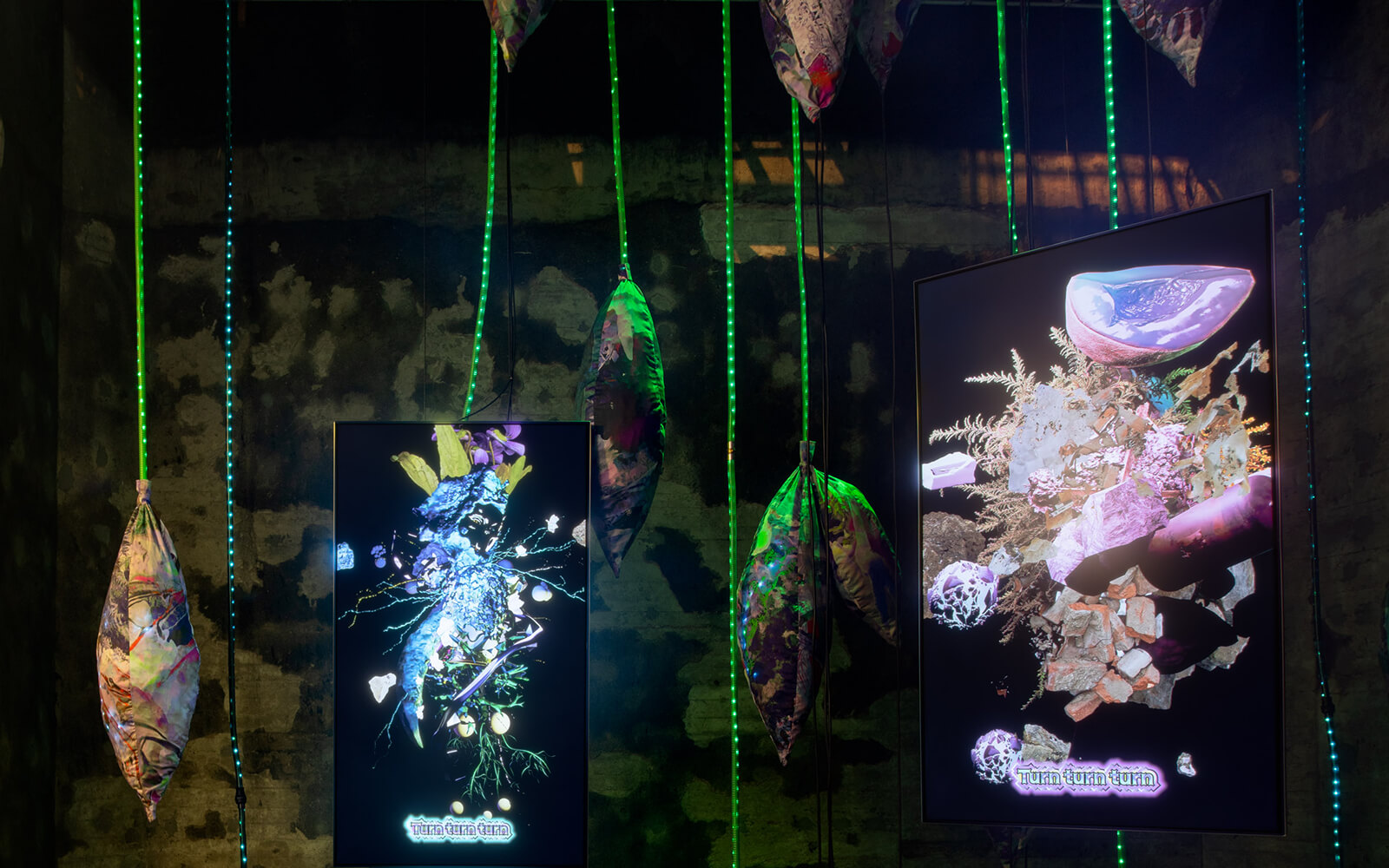
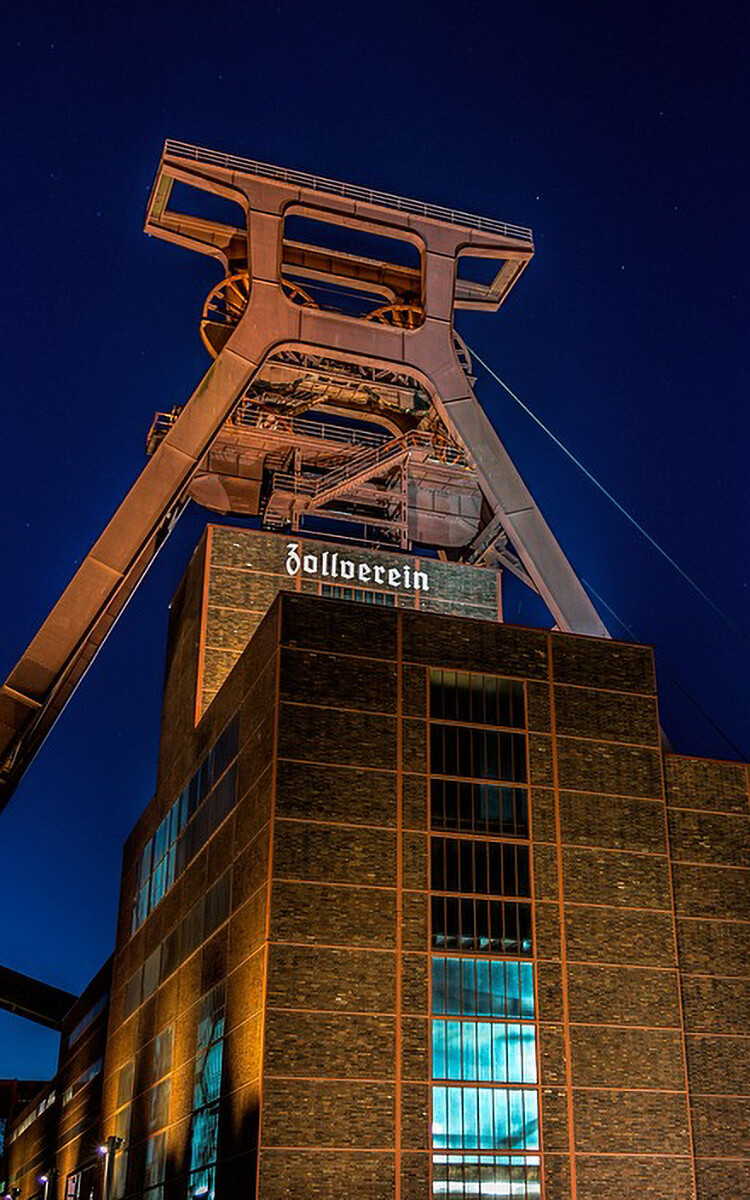
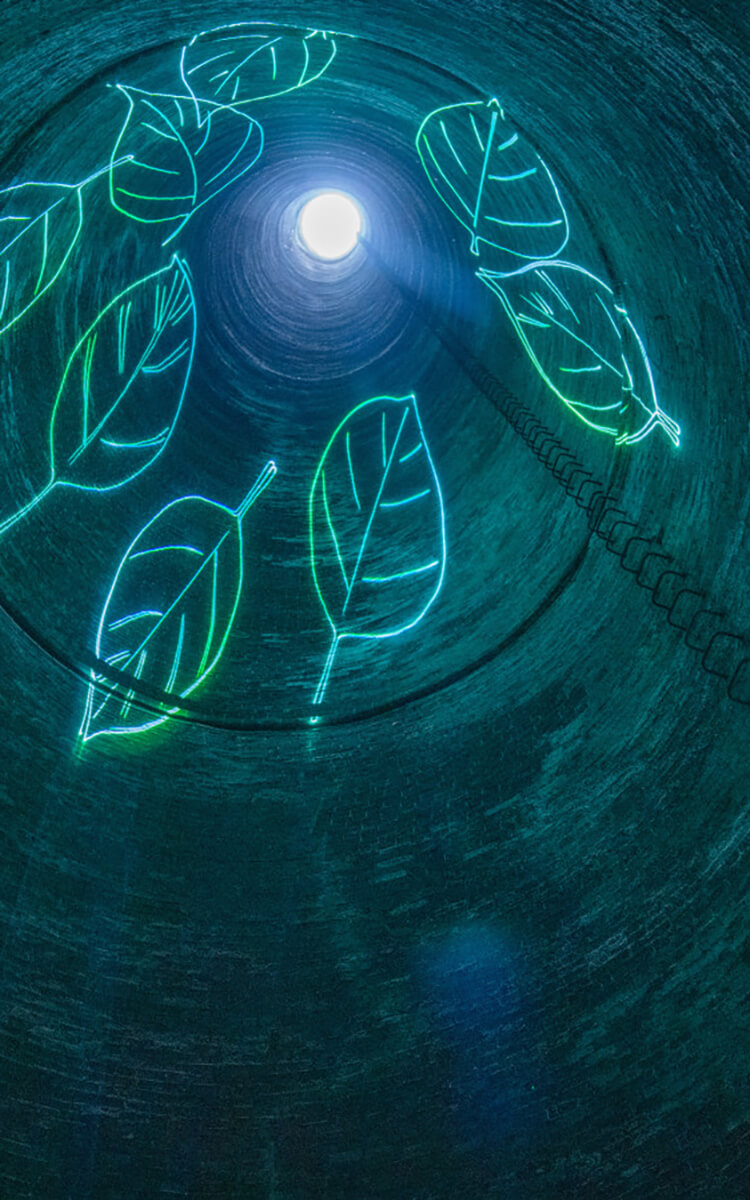
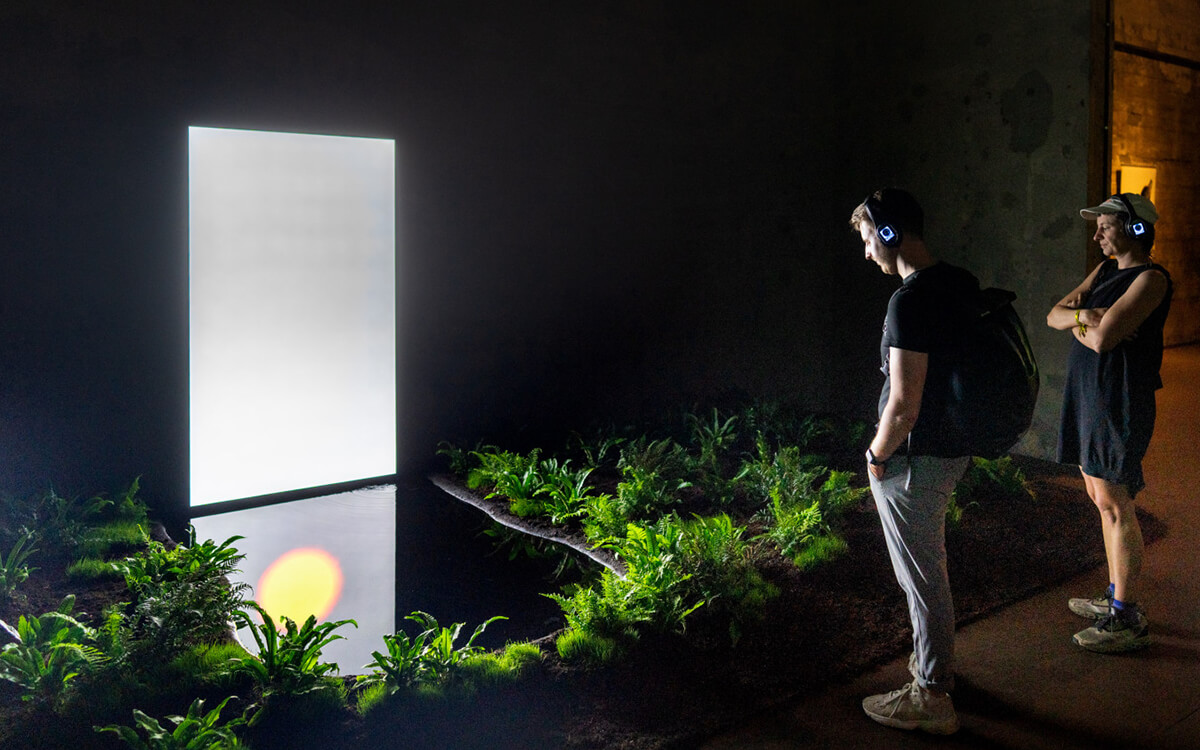
Withering machine giants from a bygone era, chutes and pipes that extend as far as the eye can see: Embedded in over 100 hectares of decommissioned mining infrastructure, the first Future Festivals Lab couldn’t have taken place in a more dramatic setting. Zeche Zollverein in Essen, Germany, was once the epicentre of European fossil fuel production. Now, it’s an open-air museum of 19th and 20th Century industrial architecture and revered as a national treasure. The highlight: the iconic winding tower of shaft 12 that looms large at the complex’s centre. At 55 meters tall, the steel structure locals affectionally call the region’s Eiffel Tower is considered a 1920s engineering masterpiece and the reason for Zollverein’s reputation as the most beautiful coal mine in the world. So beautiful, UNESCO declared Zollverein a World Heritage Site in 2001.
During its peak, between the two World Wars, Zollverein employed more than 8,000 miners and extracted 3.2 million tonnes of coal per year. Today, the only things produced at Zollverein are art and culture. After the mine’s closure, in 1986, a plan was devised to preserve the site’s unique architecture and put it to public use. Now home to several museums, theatres, and more than 150 creative businesses, it is a bustling hub of cultural activity and an example of post-industrial redevelopment for the entire region.
Our host, NEW NOW, is the latest and, perhaps, boldest attempt at bridging Zollverein’s past and future. Launched in 2021 under the stewardship of artistic director Jasmin Grimm, the biannual digital art festival leverages nascent technologies and emergent creative practices to reflect on the site’s legacy and ask urgent, vexing questions: What can a former coal mine teach us about the belief systems and power structures that prop up past and present regimes of extraction? What are the true costs—social and environmental—of ‘inevitable’ technologies; who stands to benefit at whose expense? And how do we break the delusional cycle of infinite economic growth before the planet hits its boiling point?
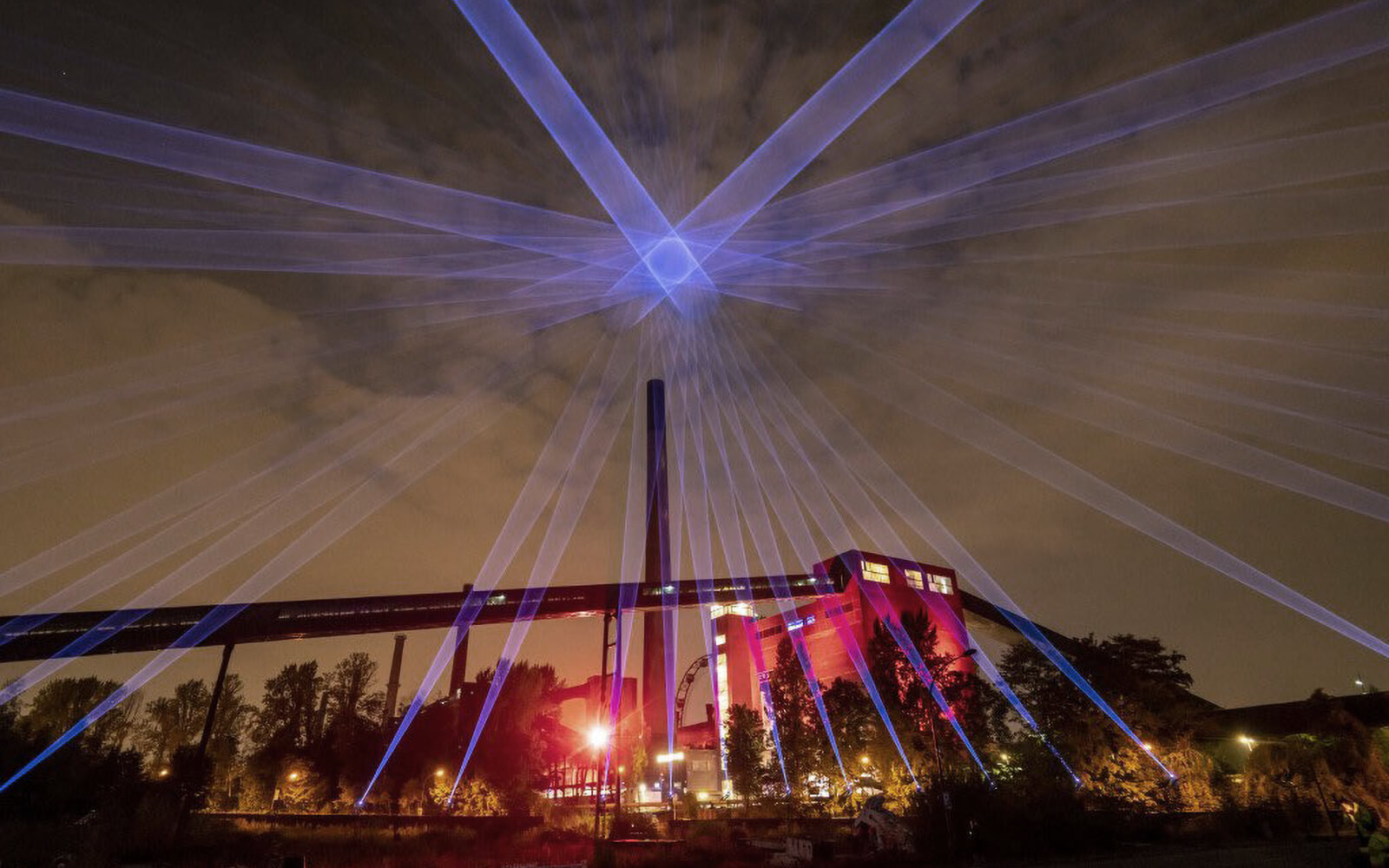
During the festival, NEW NOW seeks answers in discursive formats that bring artists, theorists, policymakers, and the public into conversation. But what sets the tone are months of artistic experimentation: For every edition, NEW NOW invites a cohort of seven resident experts working with new media—code, videogames, robots, AI—to explore a central theme with new creations. The brief: engage with the site on a deeper level and engineer forward-looking, hopeful visions in response. At the inaugural “Another End is Possible” edition, for example, a solar-powered satellite (Kimchi and Chips, Another Moon) rose over Zollverein at night. Cast with lasers that reenergize during the day, it signalled a future after fossil fuels.
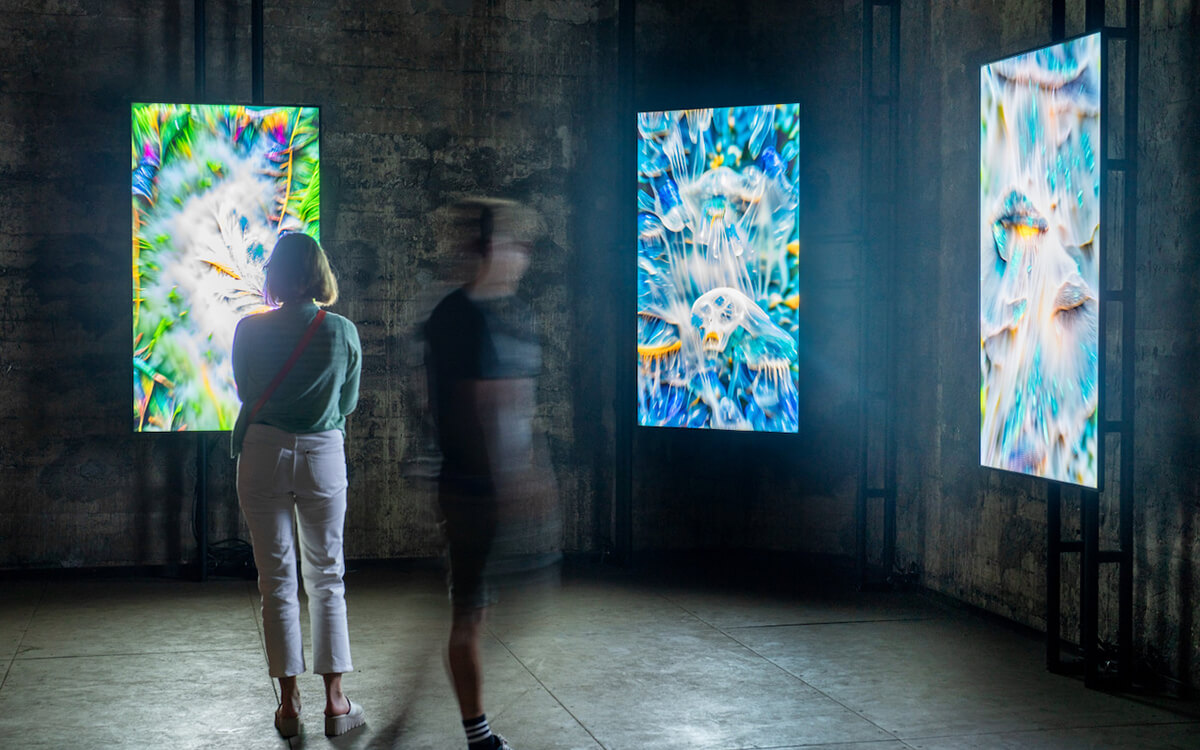
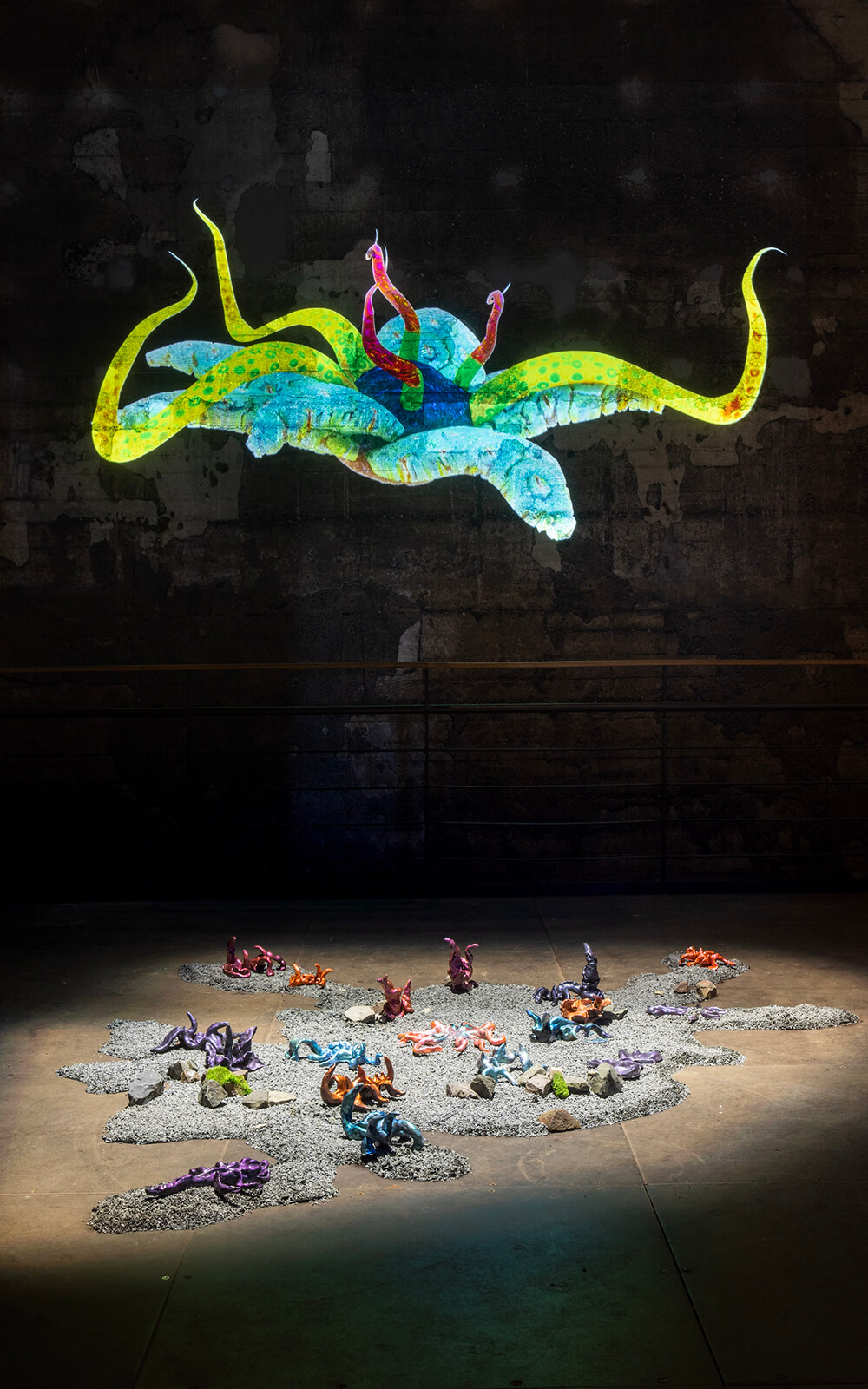
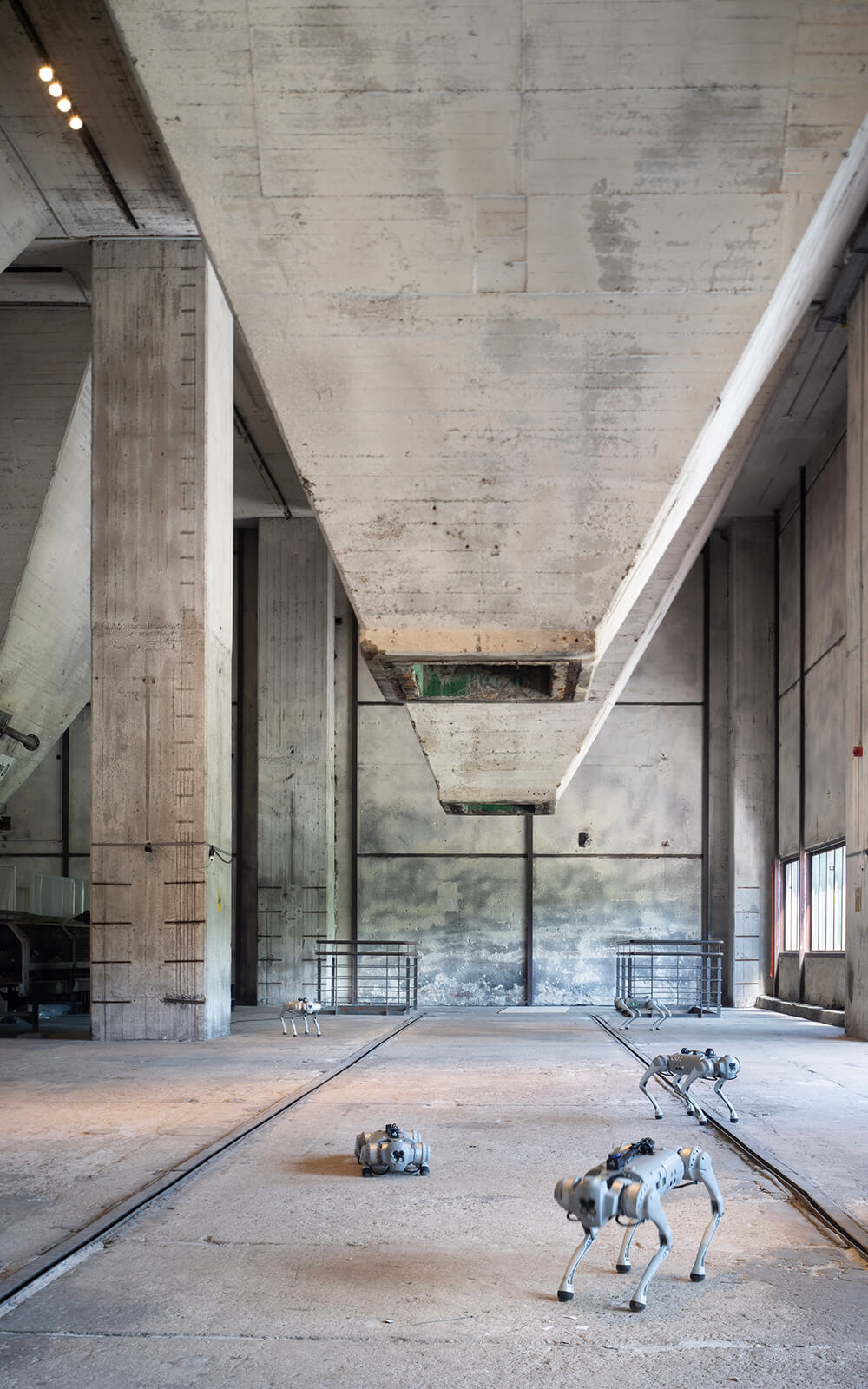
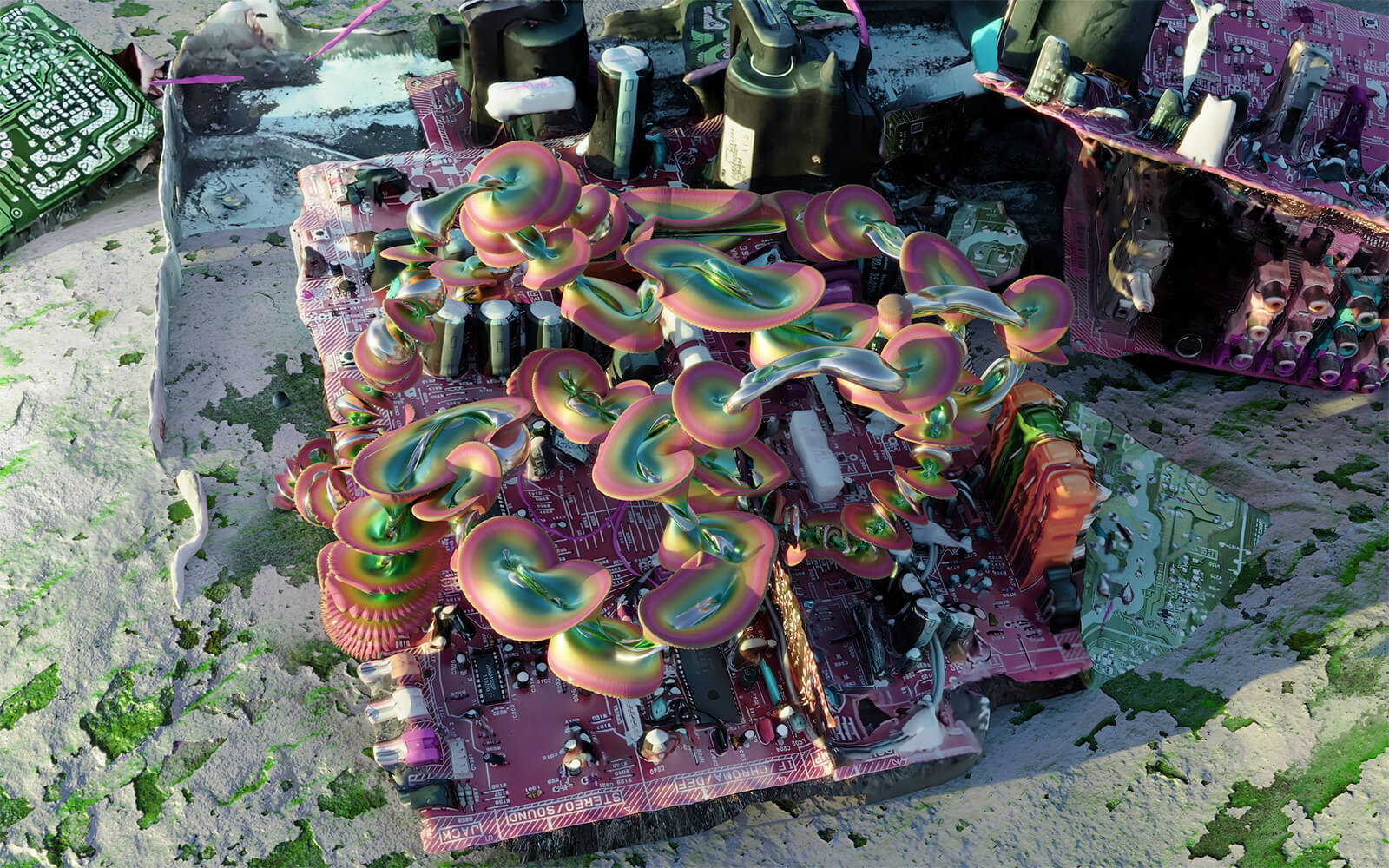
This year, NEW NOW doubled down on hope with a dose of eco-fiction. Under the evocative theme of “Hypernatural Forces,” the residents conjured cyborgian encounters where, rather than being at odds, technology and ecology amalgamate into one. Once the domain of heavy-duty machinery, the concrete caverns of Zollverein’s Mixing Plant were now habitat to feral robot dogs (AATB, Spare Pack), shimmering e-waste flora (Sabrina Ratté, Inflorescences), and AI fungal infestations (Daniel Franke, Gan Chimera). The people were mere guests, no, alien visitors in this environment, curiously probing for life signs in contaminated soil samples (Eva Papamargariti, All that is hidden) or tuning into the songs of synthetic plant intelligences (Jana Kerima Stolzer & Lex Rütten, Neophyte). They teleported into threatened treetops (Haha Wan, Would you would you would you••••••) and zoomed into the deep time aeons compressed into coal (Pınar Yoldaş, Time Tunnel).
We’re already surrounded by ‘hypernature,’ Grimm noted during NEW NOW’s opening. Large parts of the planet, including its atmosphere, are heavily geoengineered. Entire ecosystems have been irrevocably changed. Our concept of ‘the environment,’ too, is technologized: Without satellite data and atmospheric sensors, we couldn’t measure CO2 or air pollution; without supercomputers, there would be no climate models. The term hypernature, Grimm explained, borrows from the supernatural and Jean Baudrillard’s concept of hyperreality, where constructed or simulated worlds take precedence over the ecosphere. It describes a post-natural condition that acknowledges that there’s no return to a mythical state of purity. Instead, it offers hope that we may live with our toxic legacy and cultivate new ecologies going forward. The implants at Zollverein’s Mixing Plant indicate as much. Like pioneer species reclaiming de-natured space, they erode and break down the binaries of a bygone era, allowing alternate worlds to emerge from the rubble.
The first Future Festival Lab, too, invited introspection: Beholden to funders and the attention economy, aren’t we festival makers perpetuating extractive practices and growth as a metric of success? Can art and music survive (or thrive) outside platform hegemony? And what would festivals look like if we curbed production excesses and focused more on what our communities really need?
Focus: media art, sound, performance
Location: Zollverein in Essen, Germany
Launch: 2021
Frequency: biannual
Visitors: ~10,000
Team: 10 plus Zollverein staff
Structure: NPO (nonprofit organization)
Funding: public via the Ministry of Science & Culture NRW
Formats: conference, exhibition, performances, workshops, residency and regional satellite program
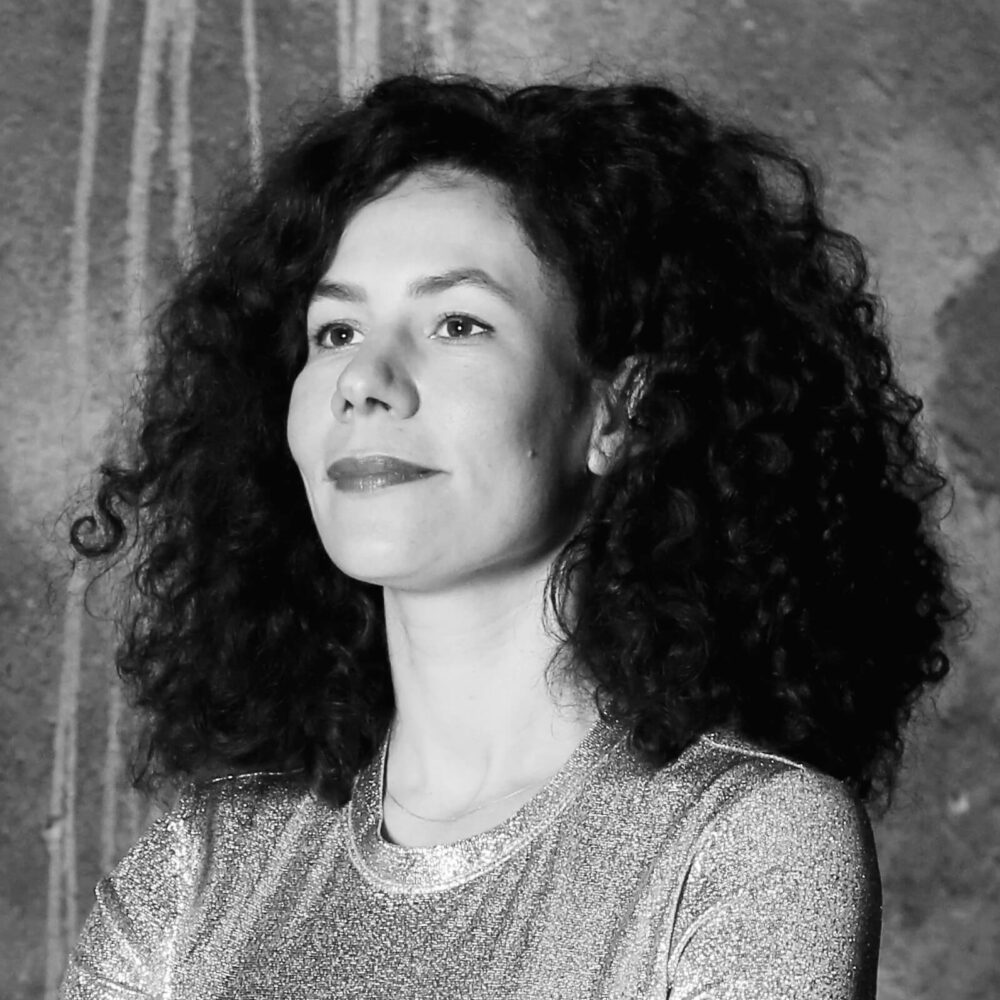
Jasmin Grimm is a German-Algerian curator and creative entrepreneur. She is the founder and artistic director of NEW NOW Festival. Prior, she has directed programs for NRW-Forum, Goethe Institute, Bitkom, the Competence Centre for Cultural & Creative Industries of the German Federal Government, Retune Festival and TINCON. She was a programme advisor for the Kulturstiftung des Bundes, Futurium, Ministry of Culture and Science of the State of North Rhine-Westphalia. (Photo: Constanze Flamme)
Positioning a new festival in this context is an exciting challenge. How do we build new cultural infrastructures in times of environmental breakdown and vanishing resources? How do we create a space that offers a hopeful vision for the future? What can we contribute and whose voices should we amplify? We ask ourselves these questions all the time.
Q: The Future Festival Lab at NEW NOW explored sufficiency—the suggestion that rather than perpetually maximizing output, we focus on essentials and cultivate content within those means. As a festival that activates not only Zollverein site but the rentire egion, where do you think NEW NOW could do more with less?
A: I really love sufficiency as a path towards sustainability, the notion of focusing on what’s really needed to live what its proponents call a ‘good life.’ The workshop reminded me again that festivals should prioritize quality over quantity, that it’s not about audience size and the number of artists or artworks in the show, but about creating experiences and making them meaningful. Rather than spaces for consuming culture, we should create spaces for transformation and connection.
One thing I’d like to see more of is communication between festivals and institutions. When an artist has to fly to Europe for a project, for example, it would make sense to coordinate other shows, meetings, and events to make those emissions count. For this to happen, however, the obsession with exclusivity in festival line-ups and cultural programs has to soften. We need cooperation, instead.
For festival workers, it’s hard to take in NEW NOW festival and not think about what the site, a former coal mine, and the post-industrial imaginaries on view mean for cultural production. There’s a direct connection between Zollverein’s fossil fuel legacy and the enormous footprint of the cultural sector. Festivals may be innovators but they’ve yet to address (or fully acknowledge) the true costs of international logistics and powering huge shows. The trends, it seems, all point in the wrong direction: shows get bigger, not smaller, and the growing appetite for immersive spectacles—look no further than London’s Outernet and the Las Vegas Sphere—begs some fundamental questions: What are the metrics for engaging audiences meaningfully? How can we best serve our communities? And what kind of precedents do we want to set for the future?
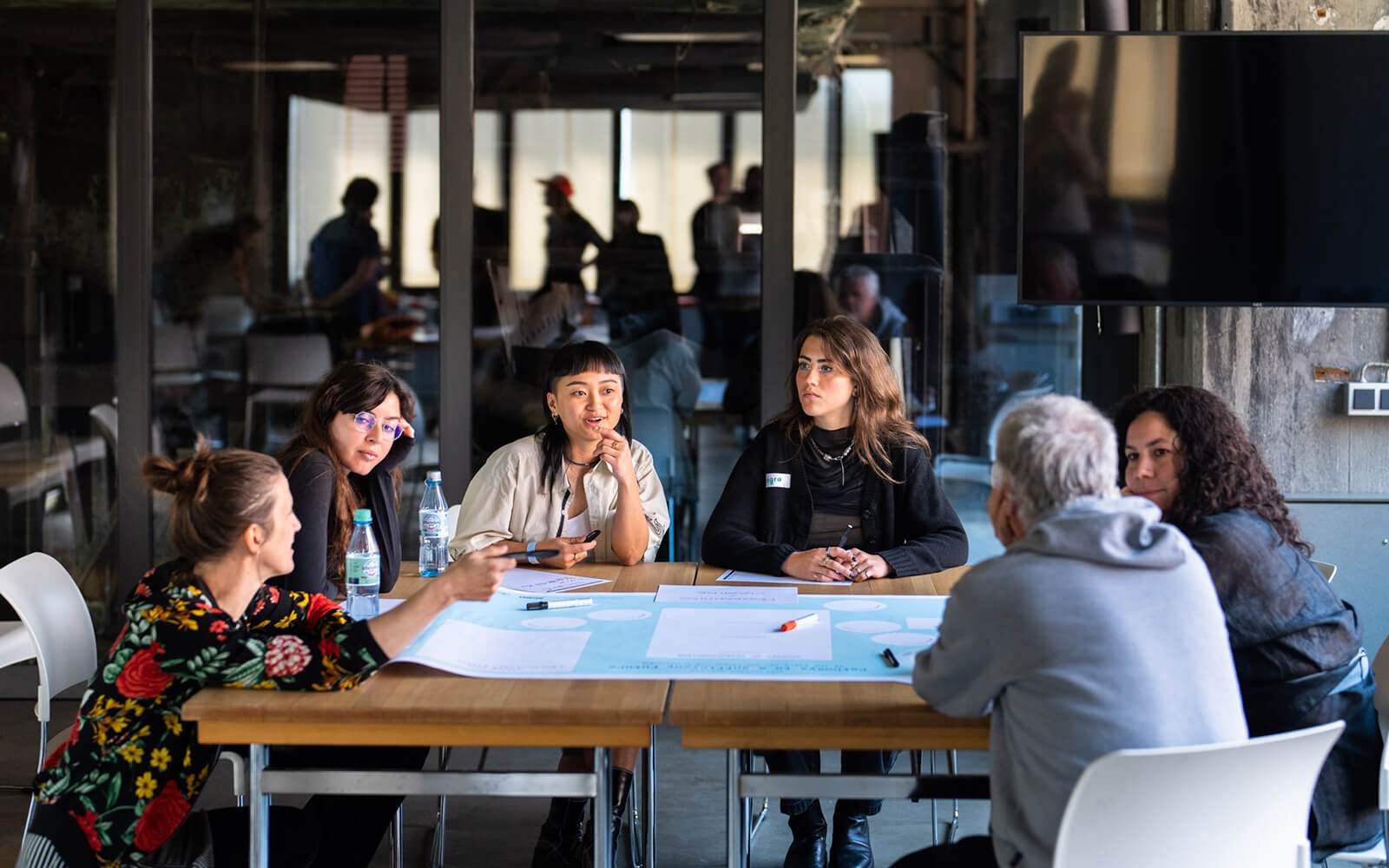
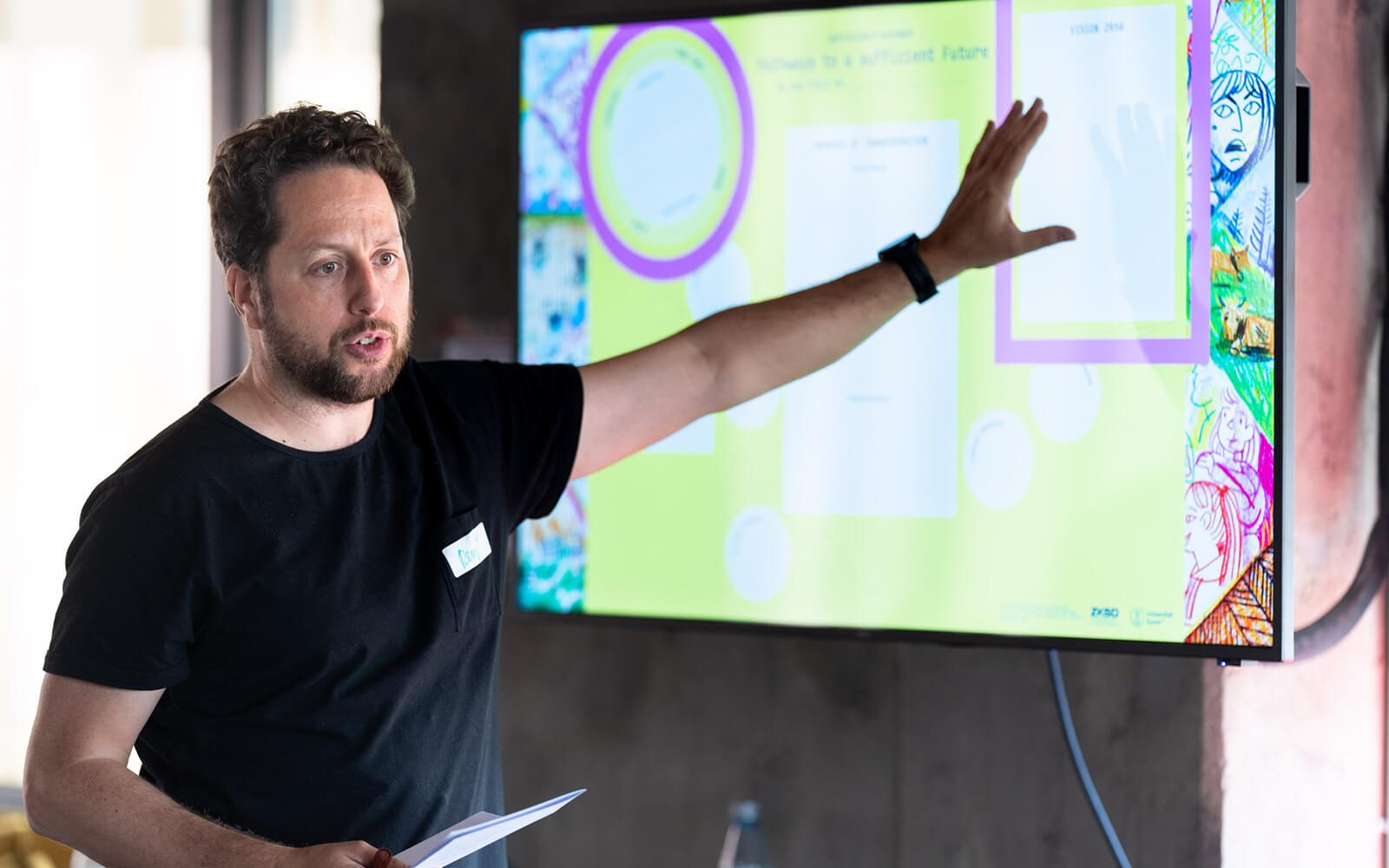
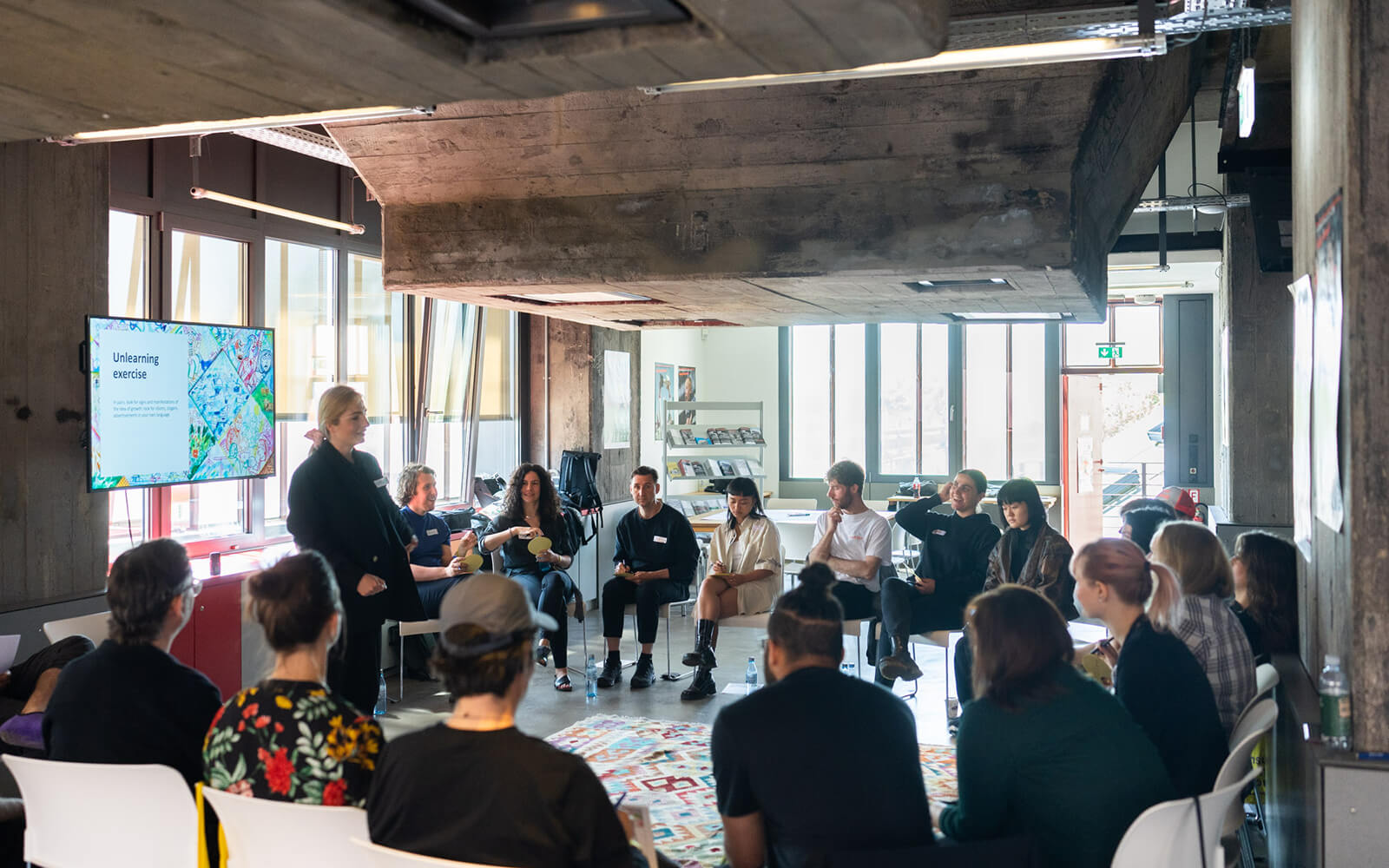
To find out, NEW NOW curators Jasmin Grimm and Rafael Dernbach invited Wiktoria Furrer and René Inderbitzin, two researchers from the Zurich Knowledge Center for Sustainable Development (ZKSD), to put festival makers and goers to the test. In an opening weekend workshop that comprised a series of self-reflection and visioning exercises, they encouraged this heterogeneous group of professionals and members of the public to unlearn growth-driven practices and rethink cultural production and consumption.
Workshop: “Patchwork Futures: The Challenges of Sufficiency” with Wiktoria Furrer & René Inderbitzin (Zurich Knowledge Center for Sustainable Development)
In their seminal 1972 report, The Limits to Growth, the international think tank the Club of Rome modelled the economic and population boom far into the 21st Century. The results don’t bode well: On a business-as-usual trajectory—the one we’re currently on—the model predicts overshoot and collapse before 2070. A more granular view into why offers another pivotal paper: In the ”Great Acceleration” graphs, German researchers demonstrate how the exponential rise of atmospheric CO2, methane, soil nitrogen, ocean acidification, and plastic pollution maps one-to-one on the growth of GDP.
There’s a mountain of evidence that economic growth drives the planetary emergency, ZKSD researchers Wiktoria Furrer and René Inderbitzin argue at the beginning of their workshop. We need to reorganize society and, yes, cultural production around eco-sufficiency, they say, because the dominant sustainability strategies, efficiency and consistency, simply aren’t enough. Efficiency improvements do help curb energy and resource use, but demand rebound effects cancel almost all sustainability gains. Over the past 50 years, for example, cars have gotten a lot more fuel-efficient but they’ve also gotten bigger and heavier, and their numbers grew tenfold. The promise that we can meet all our energy needs sustainably by switching to renewables—consistency—doesn’t hold up either: these technology transitions take time and are very resource-intensive.
“We hear more about efficiency and consistency strategies because they’re compatible with growth,” Furrer says of the neoliberal belief that we can mine and engineer our way out of the climate crisis. Eco-sufficiency, a concept first introduced by MIT professor Thomas Princen, promotes alternative models of wealth instead. Only when we prioritize immaterial riches like happiness and community, can the excesses of material consumption, particularly in the Global North, be curbed. That, of course, is easier said than done. “Growth has become such an important mental infrastructure, that it governs how we see and navigate the world,” Furrer says. “It’s incredibly difficult to get rid of.”
The cultural sector, too, is obsessed with growth, the participating festival makers were quick to admit. “Funders don’t care about the quality of the program or the difference your event makes for a community,” says Jeanne Charlotte Vogt, director of Frankfurt’s NODE Forum for Digital Art. “What matters, ultimately, are the stats: number of booked artists, audience size, press clippings, and social media reach. And after a while that gets into your head.” The pressure to perform goes far beyond a single festival edition. On the internet, festivals are in international competition with one another and incentivized to crank out content to feed the algorithm all year round. “We’re locked into FOMO infrastructures,” says NEW NOW’s Rafael Dernbach, “that keep us in a permanent state of stress.”
Festival workers are not the only ones exhausted by the relentless chase for relevancy and attention. “Artists have to deliver under this pressure and are forced to produce, produce, produce because festivals and institutions need their premieres,” says Jarl Schulp, director of Amsterdam’s FIBER festival. And the bigger the premiere, the better. Notoriously underpaid arts writers, then, complete the extractive content cycle, penning glowing reviews that organizations can take back to their funders. “Content, audience, traffic: everything has to be a number to be understood by the system,” groans Future Festivals project lead Maurice Jones. And the system depends on those numbers going up.
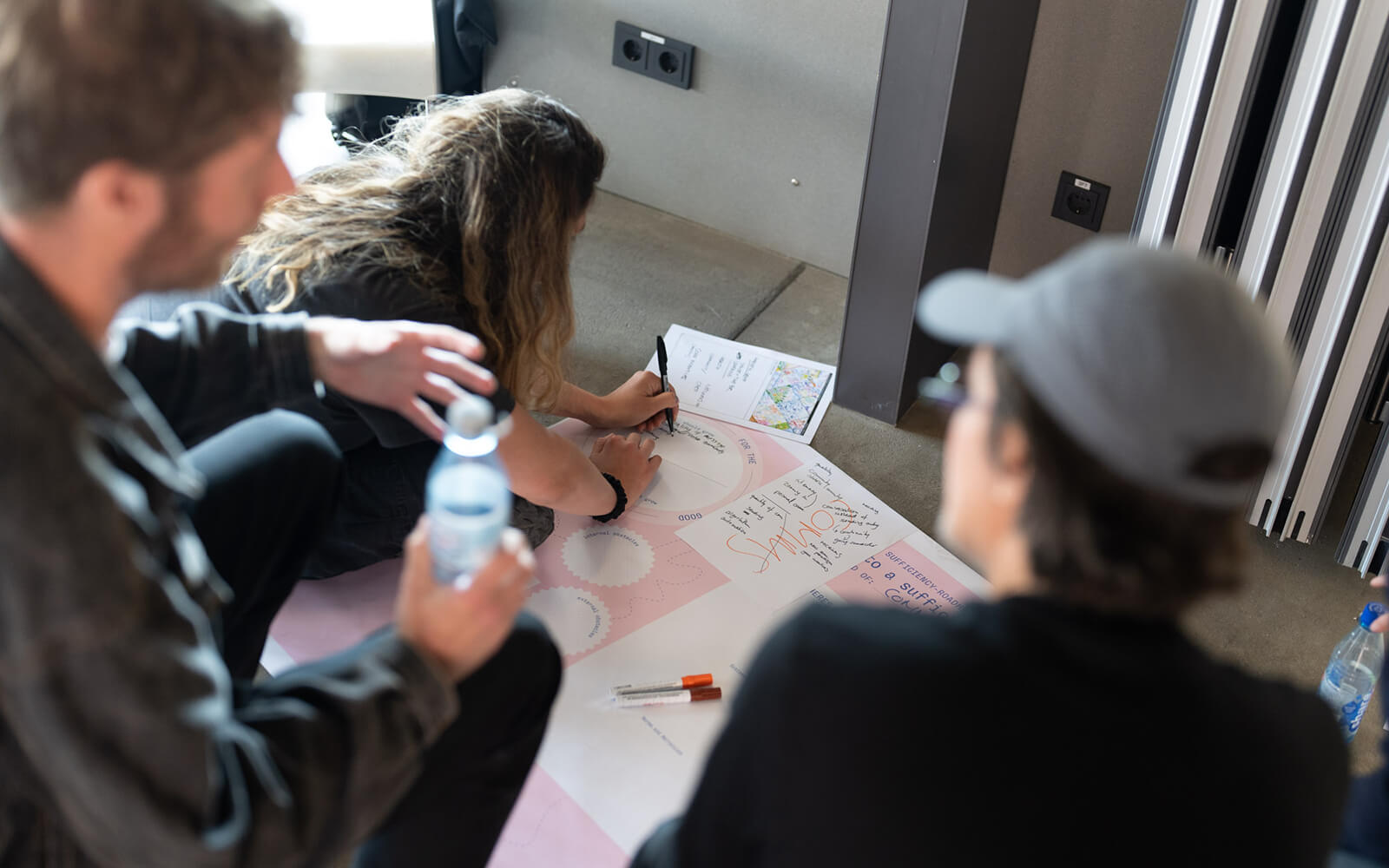
“Sufficiency comes from the word suffice—to be enough,” René Inderbitzin reminds participants as they head into the visioning sessions. But how much is ‘enough’ to sustain a festival? How many resources do organizations really need, and how should they be distributed internally and throughout their ecosystem?
Naomi Johnson, director of the Toronto-based Indigenous film and media arts festival imagineNATIVE, reminds the group that Indigenous communities have practiced sufficiency for millennia. “We open our festival with the ‘Dish With One Spoon’ wampum, an Indigenous treaty that recognizes everyone’s right to eat—and that you’ll never take more than you need,” she explains. It’s a set of values that runs counter to everything evangelized in Western societies. “We’re conditioned to not just take what we need today but more than we need in preparation for the future,” notes MUTEK founder Alain Mongeau. “Simply existing is difficult.”
To help participants hash out their needs and determine what should and shouldn’t grow, Furrer and Inderbitzin hand out templates for ‘sufficiency roadmaps’ to the year 2050. Split into five groups, participants assessed their current situation, internal and external obstacles, and charted future visions for anything from curation to communication.
The results they came back with echoed many of the challenges and dreams the Future Festivals group articulated early into the project. There was broad consensus, for example, that the grind, production excesses, and unhealthy reporting metrics have to end. We need to do away with platform dependencies and our obsession with exclusivity and novelty. Conversely, there’s infinite potential for things like equity and solidarity to grow. We need more access, accountability, and spaces for un-productivity, participants agreed.
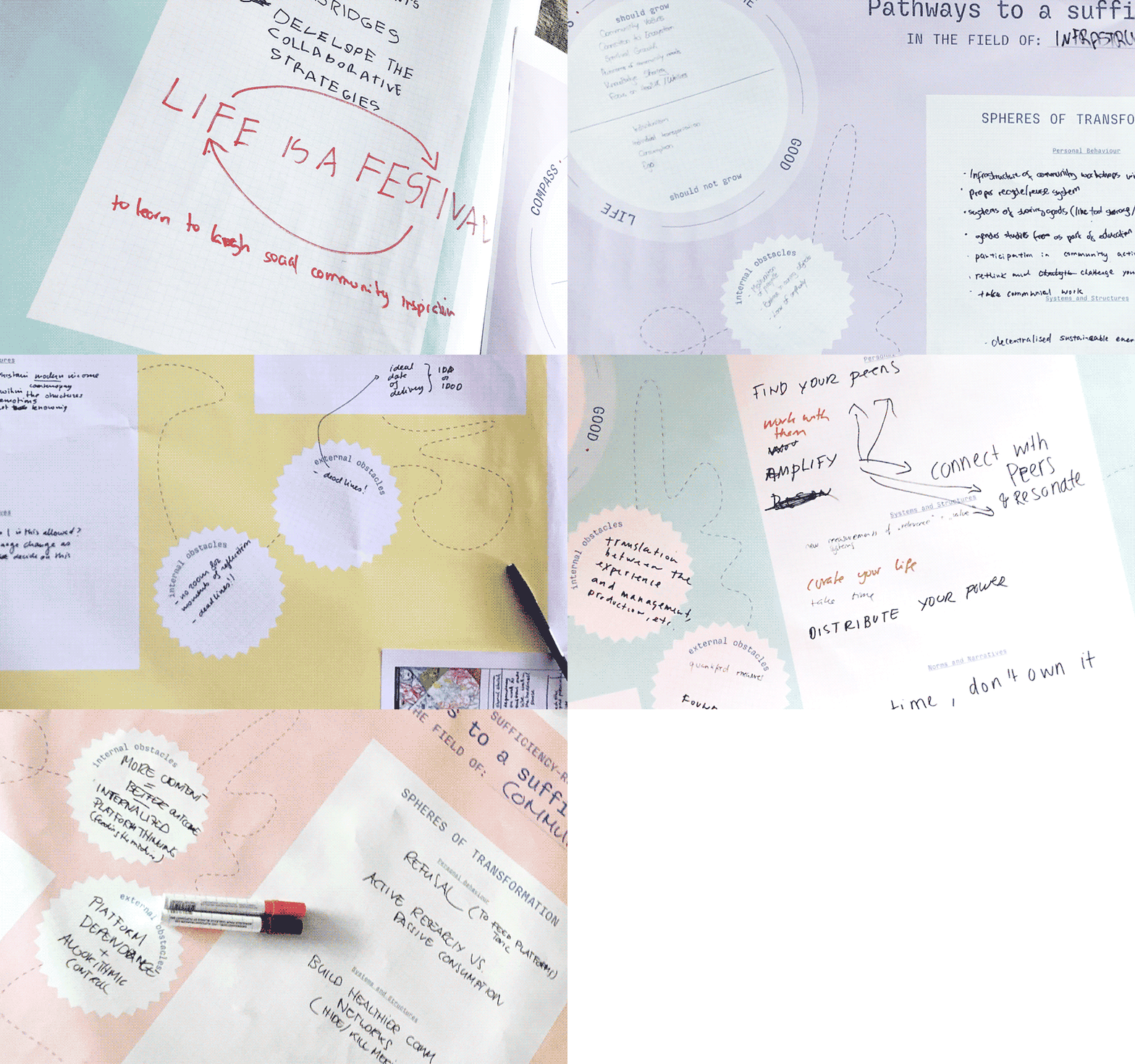
But where to begin with the transformation? Ideally early on, Maurice Jones suggests, by reforming education. The privatization of academia, for example, turns universities into workforce production spaces, with little room to experiment and explore alternate ways of thinking and doing. “We need to improve the research experience, where we can embrace the process without the pressure to publish.” More responsible modes of publishing would also help knowledge production, Jones argues. “Researchers could collaborate on fewer but better papers rather than adding to the noise.”
More responsibility is also required in how we use social media. Rather than broadcasting to everyone and around the clock, we could cultivate bespoke and more direct communications and make sure we keep offline audiences in mind, Jeanne Charlotte Vogt suggests. We definitely need to regain control from our algorithmic overlords. For that, we need healthier networks and that might mean boycotting toxic platforms altogether. As HOLO guest editor Nora N. Khan tweeted in support of the WGA writers strike in May 2023, “There is enough content from the last year for the next century.” Khan’s workers rights advocacy also makes a great case for sufficiency.
Everyone agrees that a lot can be achieved with more collaboration—across fields, organizations, and communities. Sharing knowledge and resources may seem an obvious way to reduce emissions and build resilience, but a lot of organizations work in isolation. “It’s important to realize that you’re not alone in what you’re doing,” Alain Mongeau urges fellow cultural workers. “Find your peers and connect with them!”
Early on in the workshop, the festival makers and cultural workers in attendance self-identified as mediators, translators, navigators, and narrators who build bridges between communities, bring stakeholders together, and create access to critical knowledge. Who could be more important for putting society on a path to sustainability? If the predictions made by the Club of Rome are right—and a 2014 expert reassessment suggests they are—we’re headed for degrowth of some kind. It is up to us, the people shaping culture, whether it will take the form of collapse or reformation.
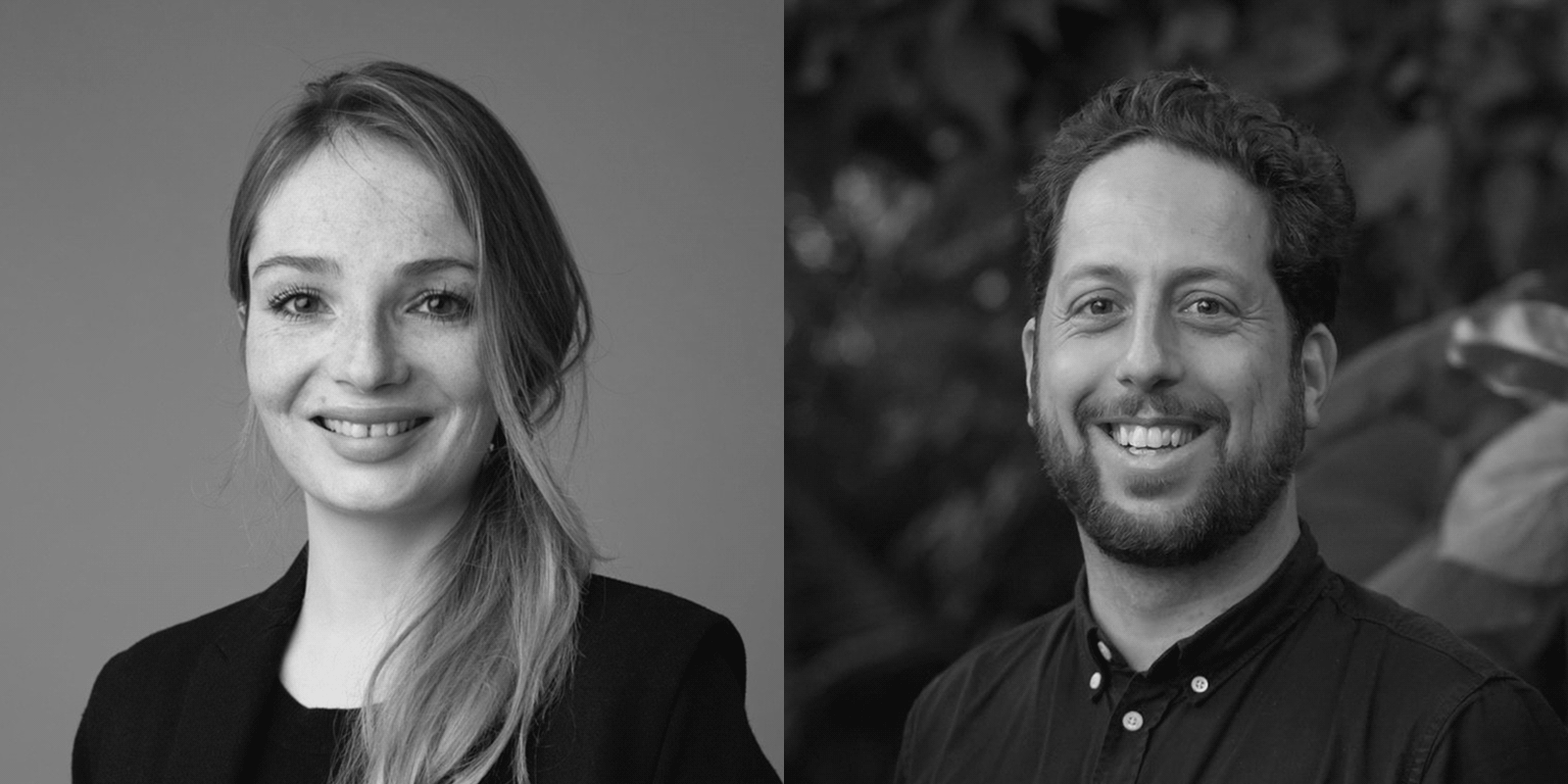
Wiktoria Furrer and René Inderbitzin are sustainability researchers and educators at the Zurich Knowledge Center for Sustainable Development (ZKSD). Furrer (who since joined the FHNW School of Education as Chair of Art and Theater Education) studied political science and cultural media studies, and holds a PhD in cultural analysis. Inderbitzin holds a bachelor’s in natural resource science and a master’s in sustainability science.
Sufficiency addresses these shortcomings by advocating for an overall reduction of our energy and resource use. As a strategy, it is quite straightforward: sufficiency means that we consume according to our needs, not wants, and live what researchers Uwe Schneidewind and Angelika Zahrnt call “the good life” within the limits of the eco-sphere. In addition to reducing consumption, sufficiency encourages the transition to a sharing economy with a strong emphasis on repair and reuse. This involves ‘unlearning’ neoliberal beliefs rooted in the myth of infinite growth, the creation of new social practices, and the adoption of new role models. To maintain our quality of life and improve our overall well-being, we need to prioritize non-material wealth, like happiness or time spent with friends and family.
It’s worth noting that the implementation of eco-sufficiency strategies is particularly important in the Global North. It’s here where, today and historically, the majority of resources are being consumed, while people in the Global South face the brunt of the consequences.
Q: Between the ideological grip of neoliberalism and Western culture that celebrates consumption—what, in your experience, is the biggest hurdle to sufficiency?
A: The primary problem is an economic system that relies on infinite growth. It’s a belief system that permeates society and prevents us from making the big structural changes necessary for bringing human civilization and the planet back into balance. On an individual level, we found that the main hurdle to reducing one’s footprint is not a lack of knowledge or motivation but a lack of time, which in itself is a result of extractive labour practices.
Over 2023-24, the Future Festivals Survey polled 125 artists, curators, and festival workers from over a dozen countries on the state of cultural infrastructure in their communities. Here’s a sample of what respondents said about pressing challenges.

“Reliance on government funding timelines results in our festival fluctuating in scale and scope from year to year, which is labour-intensive and requires committing to programming before we have funding confirmed. A high staff turnover means we’re planning a new festival with new staff every year. Staff capacity is just enough to support the implementation of programming, but not enough for the documentation and reflection required to increase our organizational memory in order to respond to sectoral shifts and prepare properly for future years.”
Evangeline Y Brooks is a postcyber artist working to maintain sustainable and accessible artist communities in online and DIY spaces against cultures of immediacy. She is the Programming Manager at Toronto’s InterAccess and co-hosts the A/V showcase ponyHAUS.

“Collaborations shape the cultural sector. They can either reinforce the status quo or help effect change. When done right, collaborations make our sector fairer and more resilient, sustaining the types of artistic and curatorial work that defy conventions and challenge power. Instead, they’re often short-sided and extractive. We need healthy and supportive spaces to imagine alternatives to a world in crisis.”
Carmen Salas is a Spanish curator and cultural producer who works at the intersection of the arts and systems change. She is the founder of Connecting the Dots, a Mexico City-based international forum on creativity, art, and digital culture. She also co-founded the renowned Alpha-ville Festival in London, that ran from 2009 to 2016.

“Funding and mid-term research are a huge challenge and the economical and cultural sustainability of independent organizations are at stake. The likely result is that culture will be even more polarized between institutional initiatives and their slow (and often stale) logics, commercial projects sponsored by political and economic elites, and marginalized independent culture.”
Bani Brusadin is a contemporary art curator, educator and researcher with a background in communication studies, cultural production, and creative activism. Since the early 2000s his work revolves around unconventional communication and artist tactics, technological dreams/nightmares, planetary-scale infrastructures, and all the possible feedback loops between them.
Access and Inclusivity
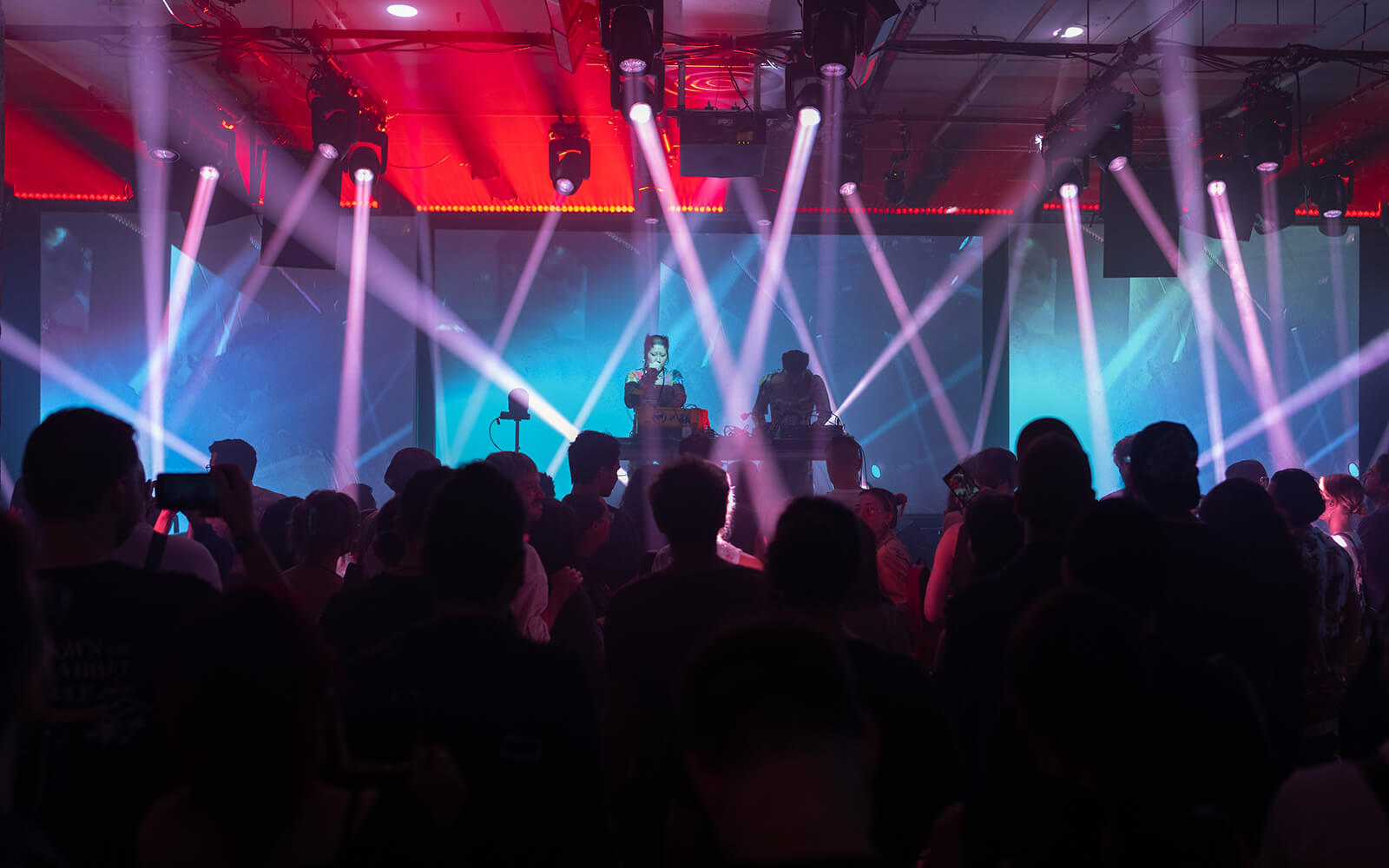
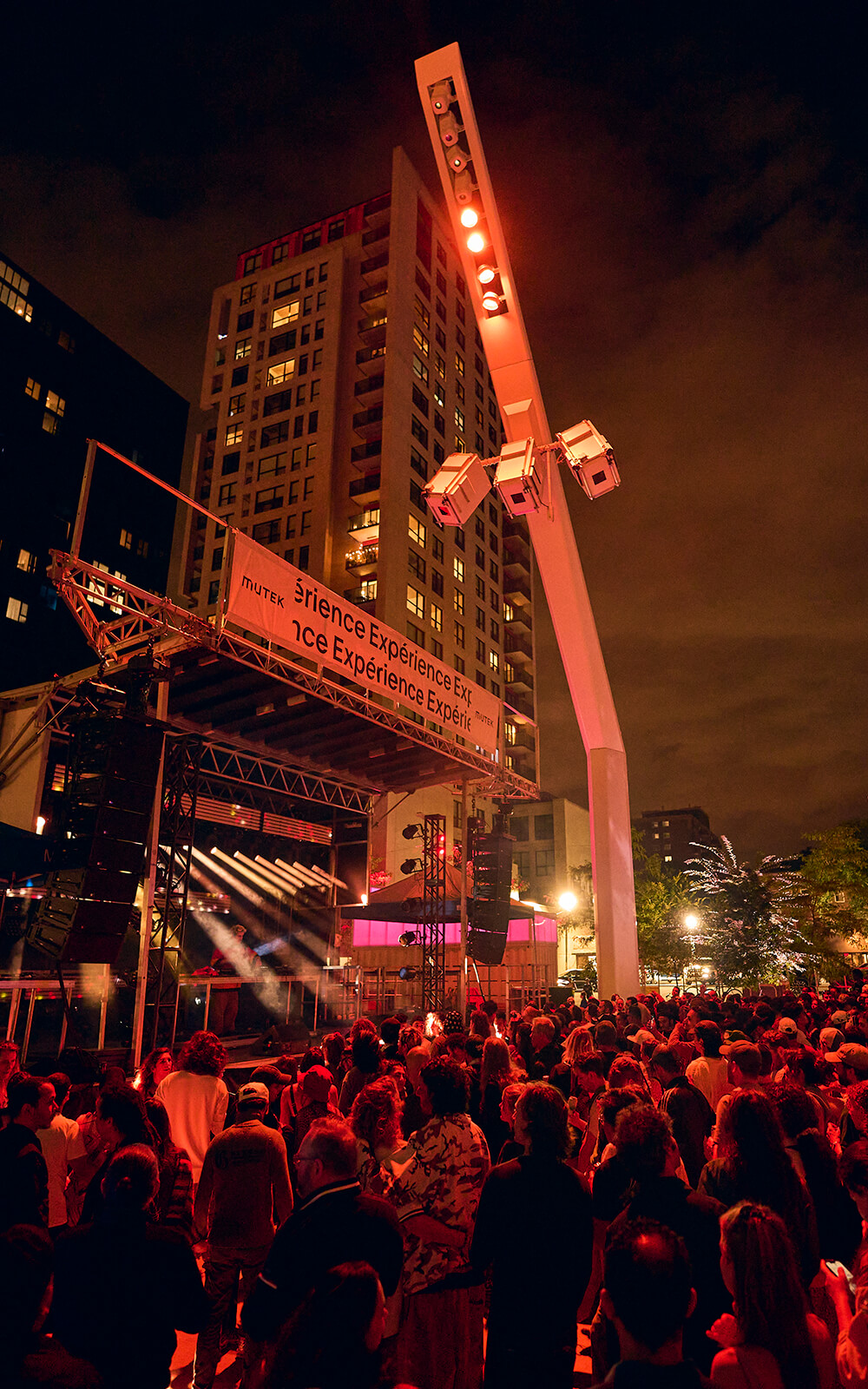
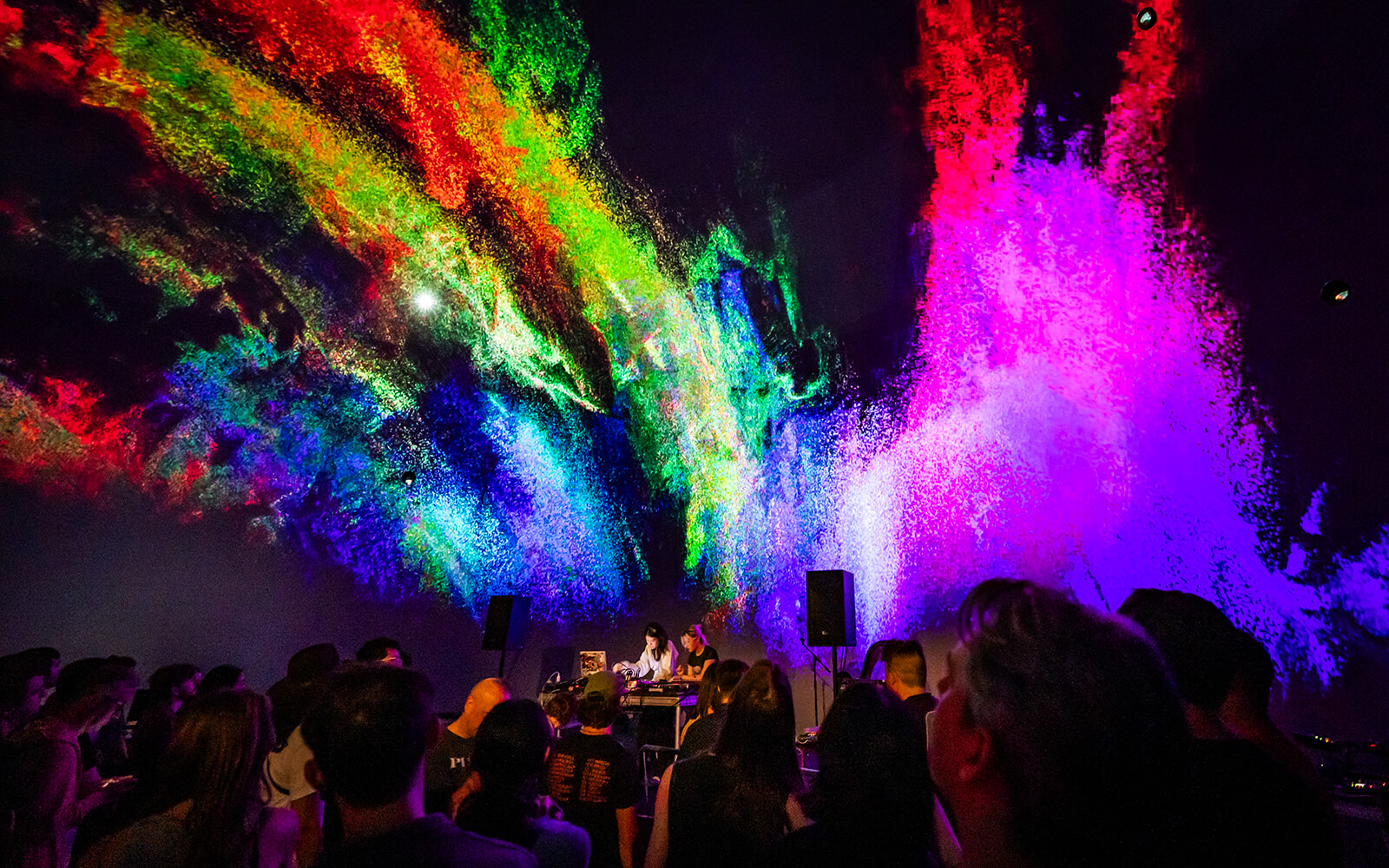
When it comes to discussing the future of festivals, there are few cities more appropriate to host that conversation than Montréal. A city that lives and breathes art and performance, Montréal is home to renowned cultural producers; Cirque du Soleil made the circus arts into a billion-dollar industry, Just for Laughs is a fabled testing ground for up-and-coming comedians, and MUTEK is one of the most revered electronic music festivals on the planet. Nowhere is this more evident than Esplanade Tranquille, where for a week each August, Quartier des Spectacles—a public square right in the middle of downtown Montréal—transforms into a packed dancefloor.
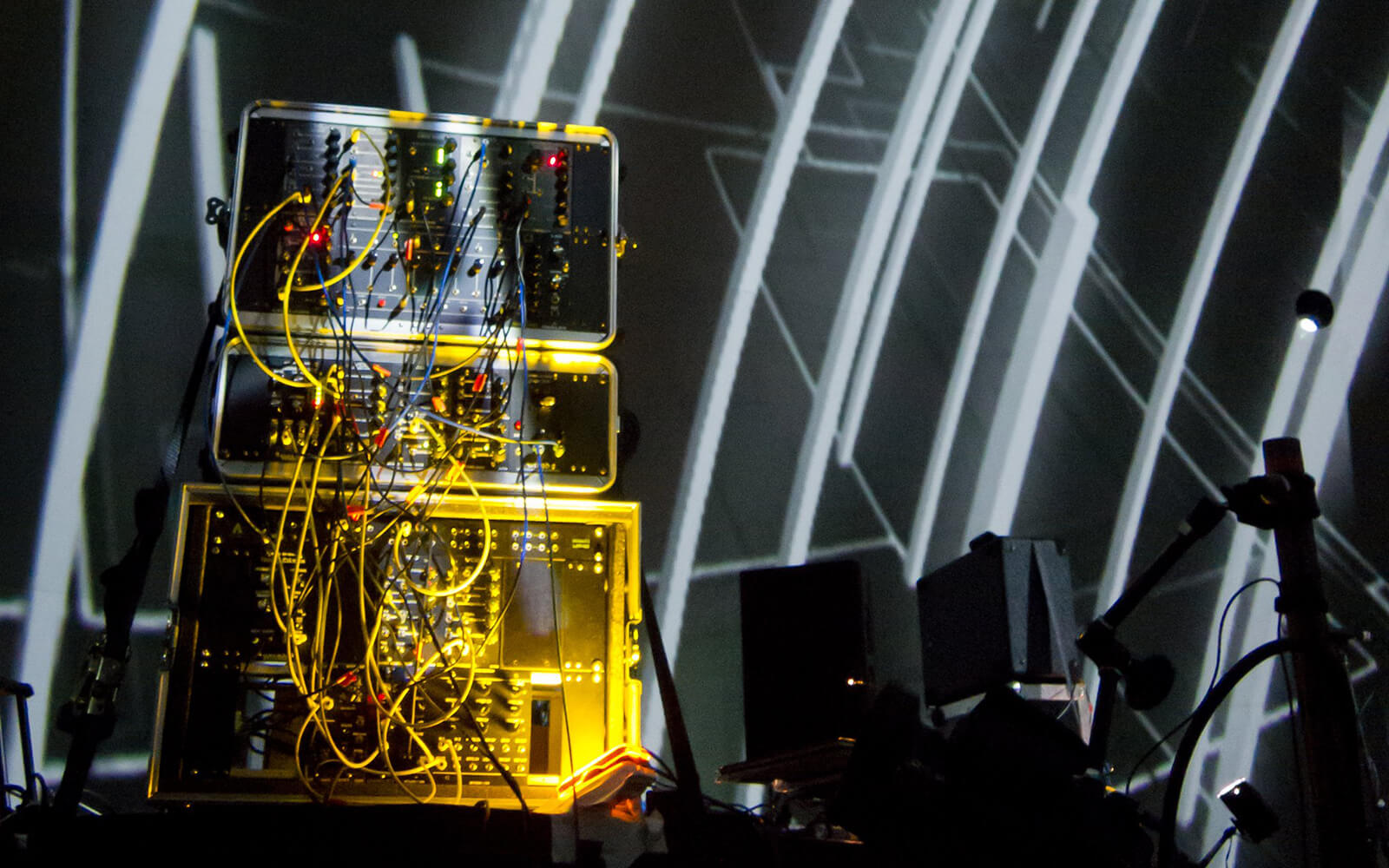
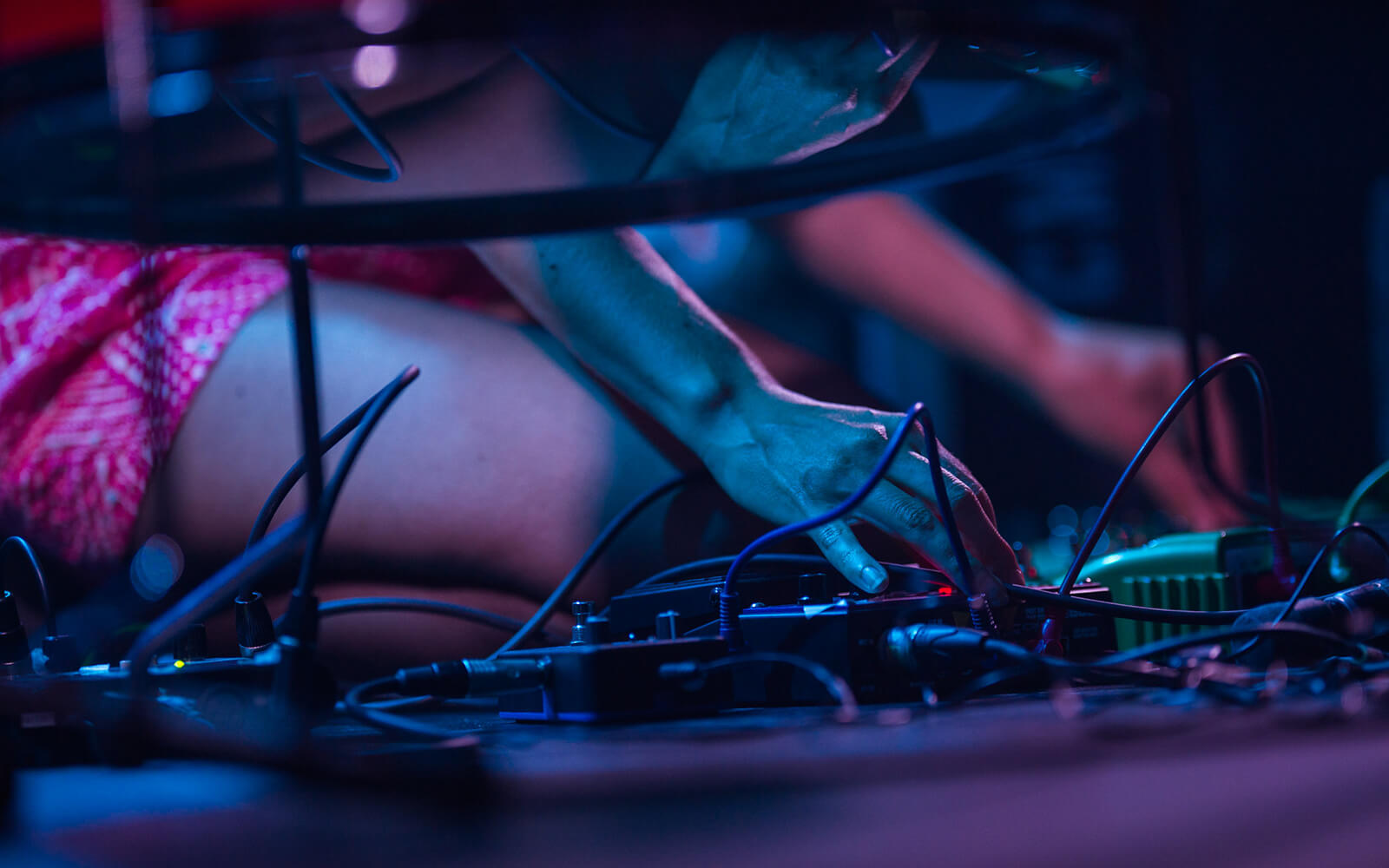
Founded in 2000, MUTEK was launched to celebrate the music-technology avant-garde. Unlike any other festival or club night in North America at the time, in scale or ambition, it brought global figures to Quebec and put Canadian electronic musicians onstage beside them. Coil, Monolake, Matmos, and Plastikman graced its early stages, linking acts featured by Europe’s most progressive clubs and esteemed record labels with the sounds bubbling up from the Canadian underground. Notably, MUTEK programmers pushed back against the (then) larger-than-life figure of the DJ and instead centred live electronic music. Laptops running early versions of Ableton Live, vintage synthesizers and drum machines—MUTEK didn’t just bring the studio onstage, it made it the life of the party.
MUTEK quickly established itself as an oasis for North American electronic music fans and attracted globetrotting ‘techno tourists’ from Europe, South America, and Asia. Right from the start, it was a place where analog rhythms and digital glitch soundscapes were mirrored by inventive and audacious scenography. Collaborations between musicians and visual artists were so fruitful that A/Visions, a dedicated program for audiovisual experimentation debuted in 2007, cultivating more cinematic and gallery-like contexts for enjoying electronic music. In 2013, the MUTEK team saw the opportunity to showcase more of the experimentation and innovation going on in the digital art and creative industries (and VR quite specifically) that didn’t fit within the existing festival parameters: MUTEK_IMG, a symposium that later became the MUTEK Forum was born. As the festival expanded in scope and reach, spawning global satellite editions in Barcelona, Buenos Aires, Mexico City, Tokyo, and Santiago, the key questions driving MUTEK forward remained the same: What exciting forms can electronic music take? What are the critical aesthetics of emerging technology? And how can the digital arts intersect with broader societal concerns (and wider audiences)?
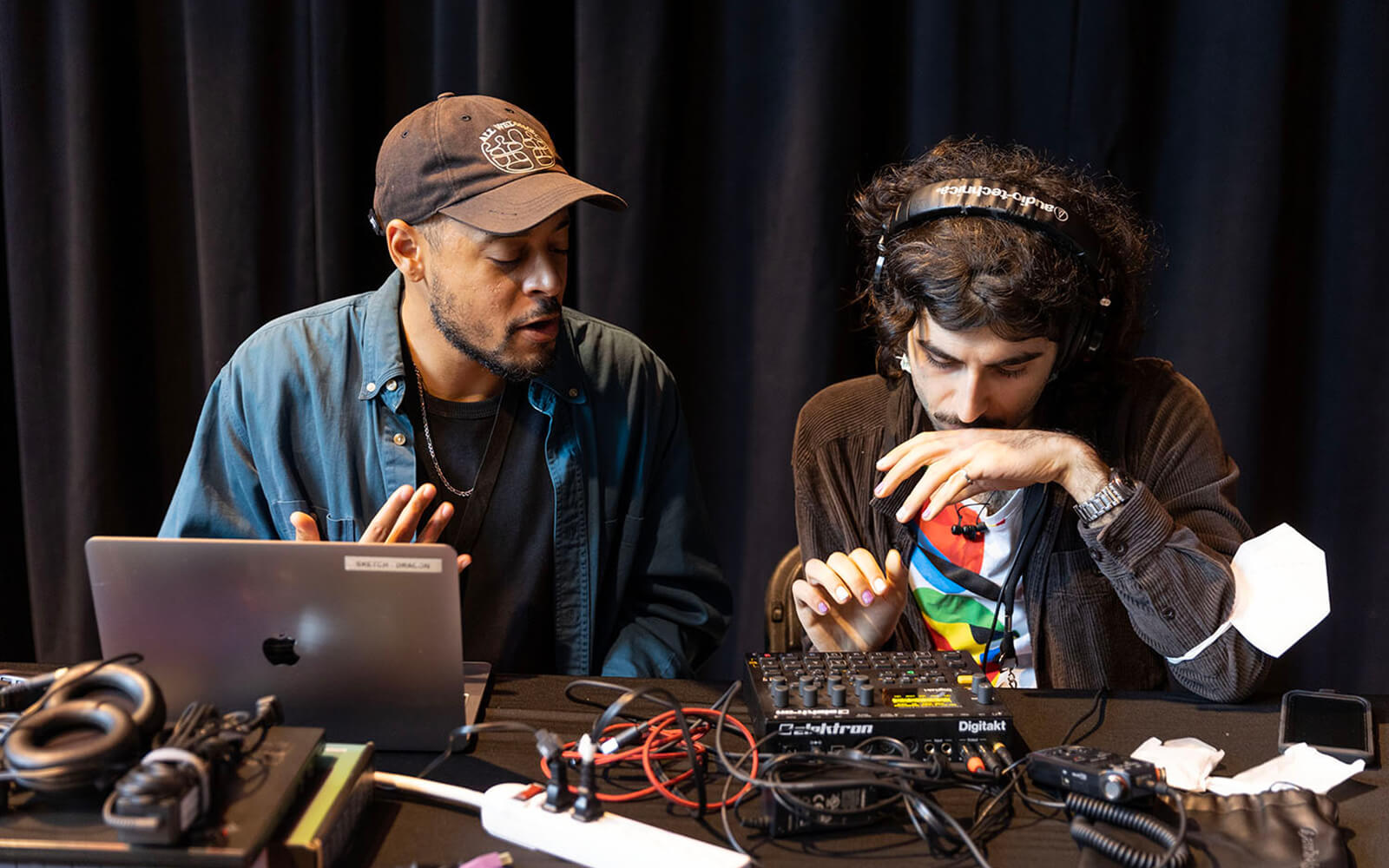
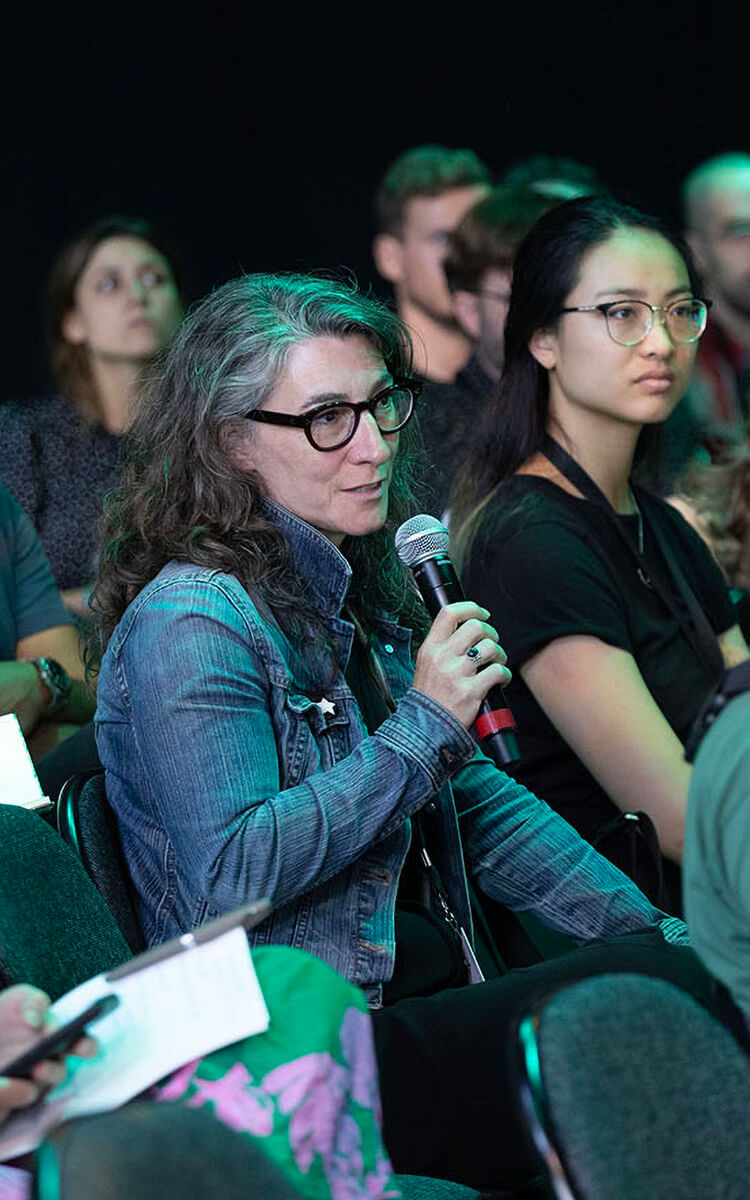
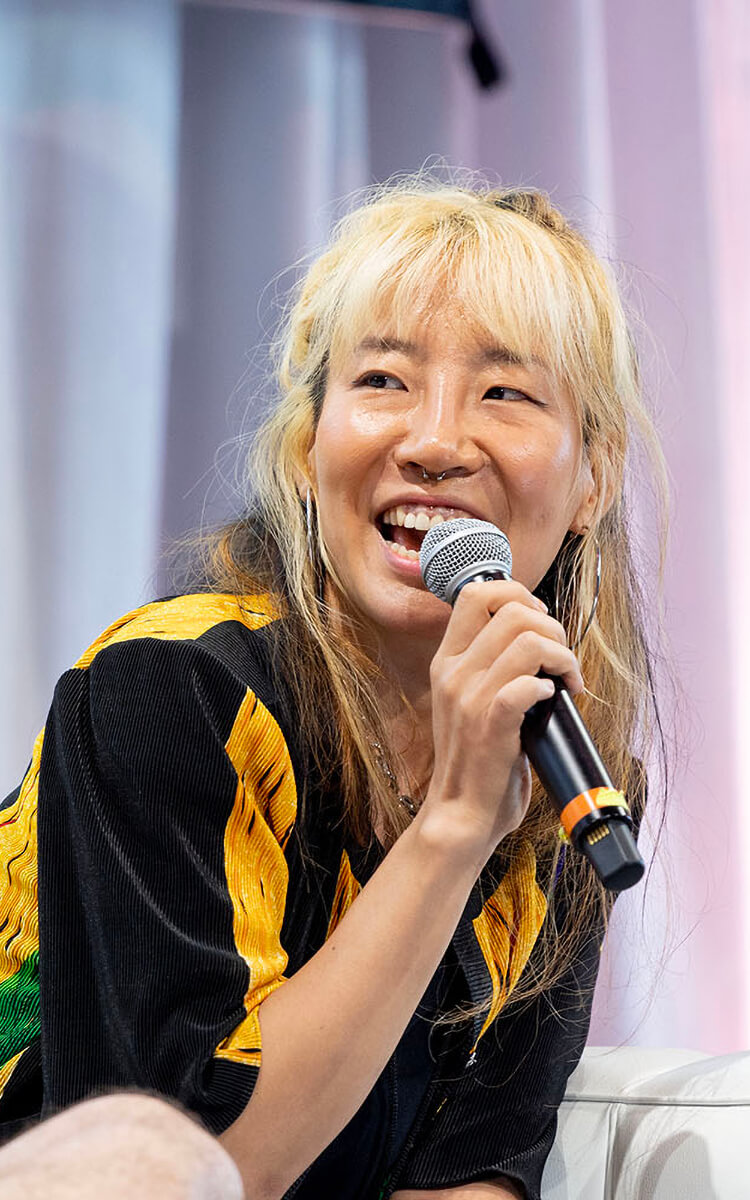
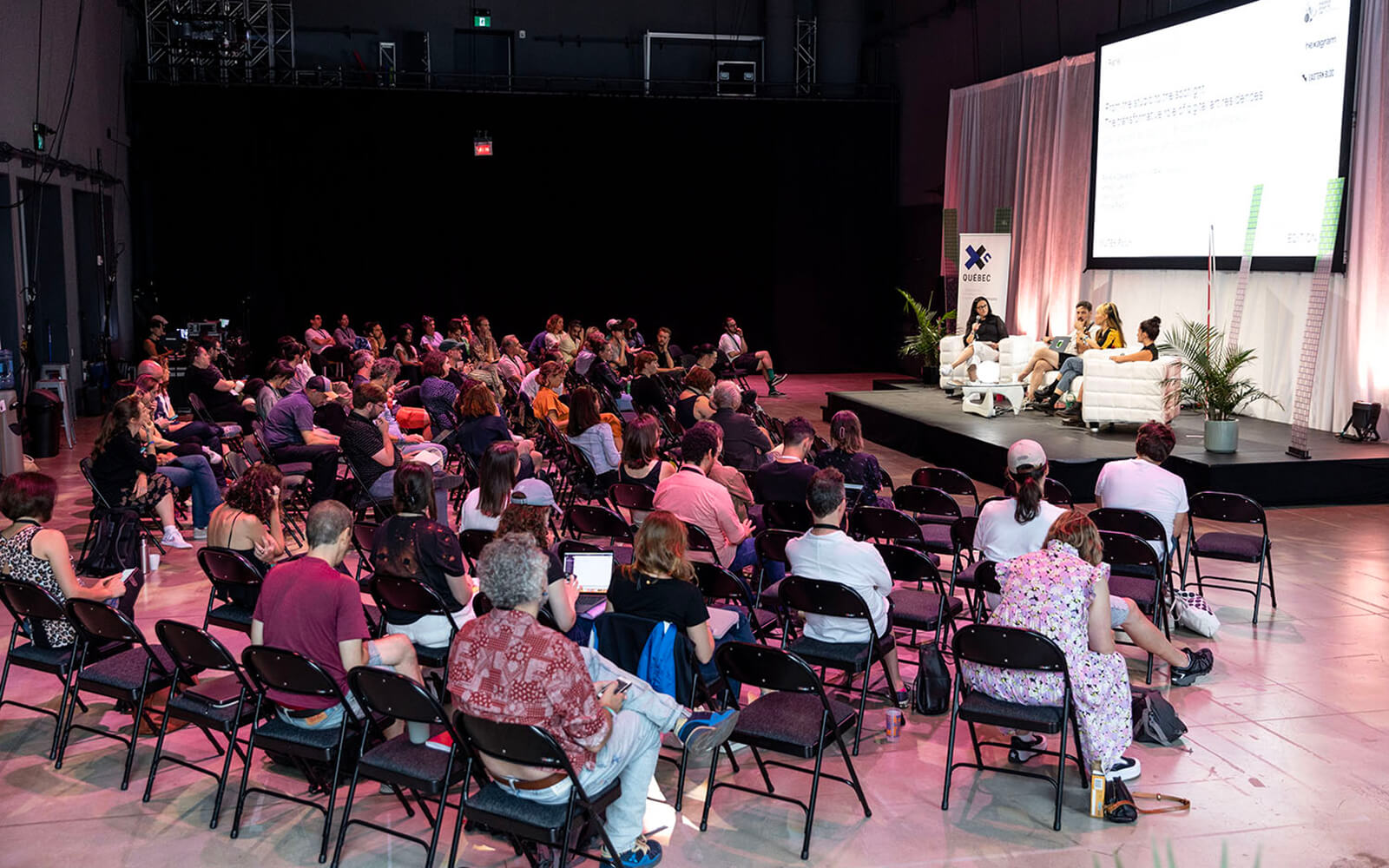
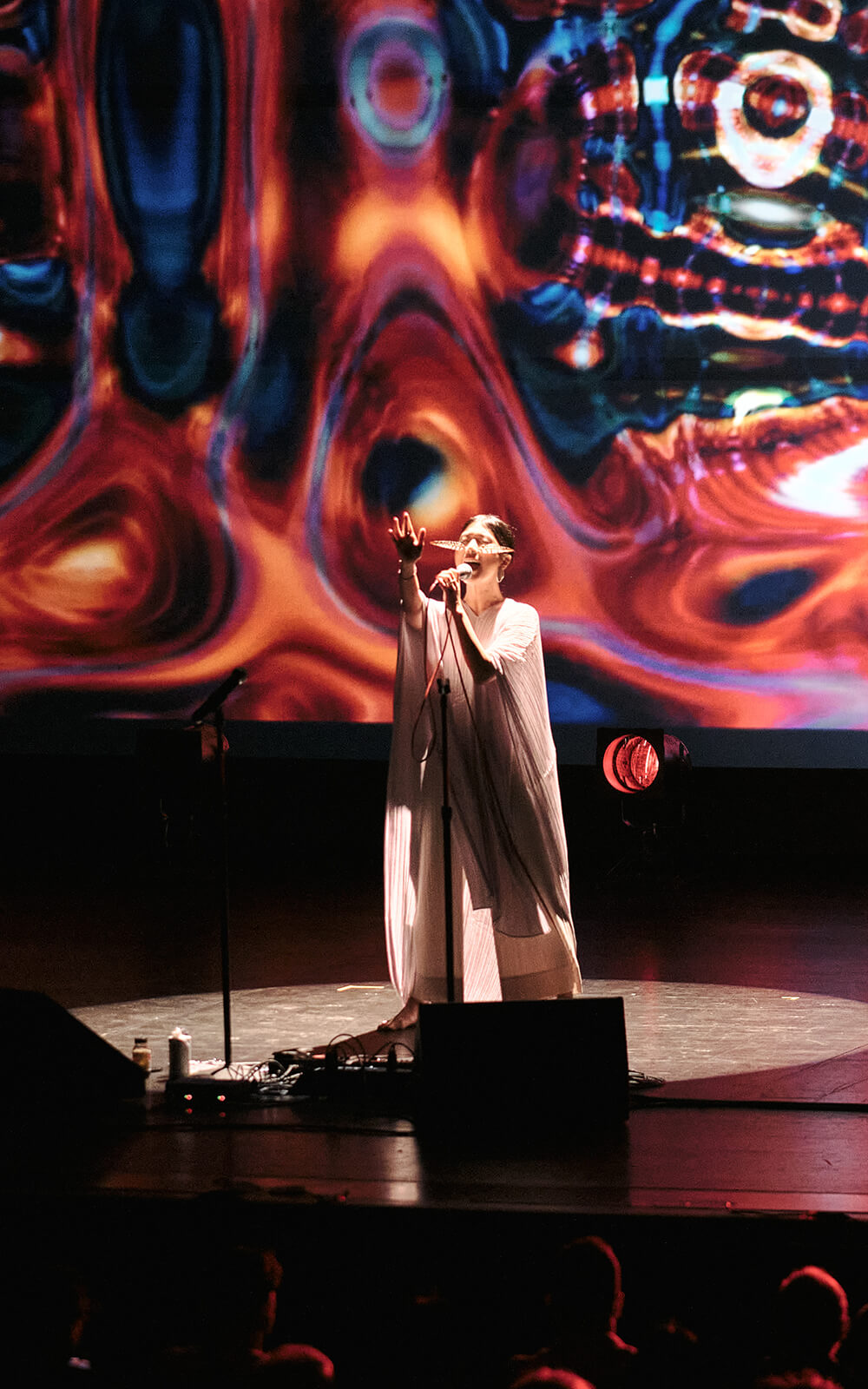
During the 24th edition of MUTEK’s flagship Montréal edition, these questions were asked around the clock. By night, Tim Hecker blasted haunting soundscapes while enveloped in a cloud of fog, Hatis Noit’s searing vocals melded into uncanny AI imagery, and an all-star cast of dancefloor-focused artists including AUX88, Jennifer Cardini, μ-Ziq kept thousands moving till dawn. By day, MUTEK Forum served up discourse: AI Now Institute’s Sarah Meyers West lobbied for Big Tech regulation and accountability as the only sane response to the explosion of large language models, Winslow Porter shared insights gleaned from a decade of trailblazing immersive VR filmmaking, and Frankie Decaiza Hutchinson opened up about the struggles of running Dweller—New York’s first electronic music festival exclusively focused on supporting and celebrating Black artists. The roster of international artists and thought leaders shared the stage with local talent and industries: represented were Montréal’s burgeoning XR, animation, and videogame producers; students and educators from Concordia University and UQAM; and cultural producers from local galleries and institutions, the DIY scene, and activist communities.
Beyond showcasing the bleeding edge of postdigital aesthetics and discourse, MUTEK tasked itself with some extra-difficult homework as the instigator of the Future Festivals project: part of the forum was carved out to discuss where cultural producers were struggling and falling short. The resulting dialogues were bleak at times but also hopeful. MUTEK has long been aware of its role as a cultural leader, but still, despite initiatives to increase access—a pledge to work towards lineups of 50% female-identifying artists, an overhauled accessibility policy produced in consultation with the Crip Rave collective—these conversations underscored just how much work remains to be done.
Focus: Electronic music, audiovisual performance, digital art
Location: Montréal / Tiohtiá:ke / Mooniyang, Quebec, Canada
Launch: 2000
Frequency: Annual (end of August)
Visitors: ~66,500 (in 2023)
Team: 9 permanent staff
Structure: NPO (nonprofit organization)
Funding: Public (national, provincial, municipal)
Satellites: Barcelona, Buenos Aires, Mexico City, Santiago, Tokyo
Formats: 6 days, 24 events in 6 venues; large-scale audiovisual performances, immersive exhibitions, electronic music showcases, conferences, professional activities
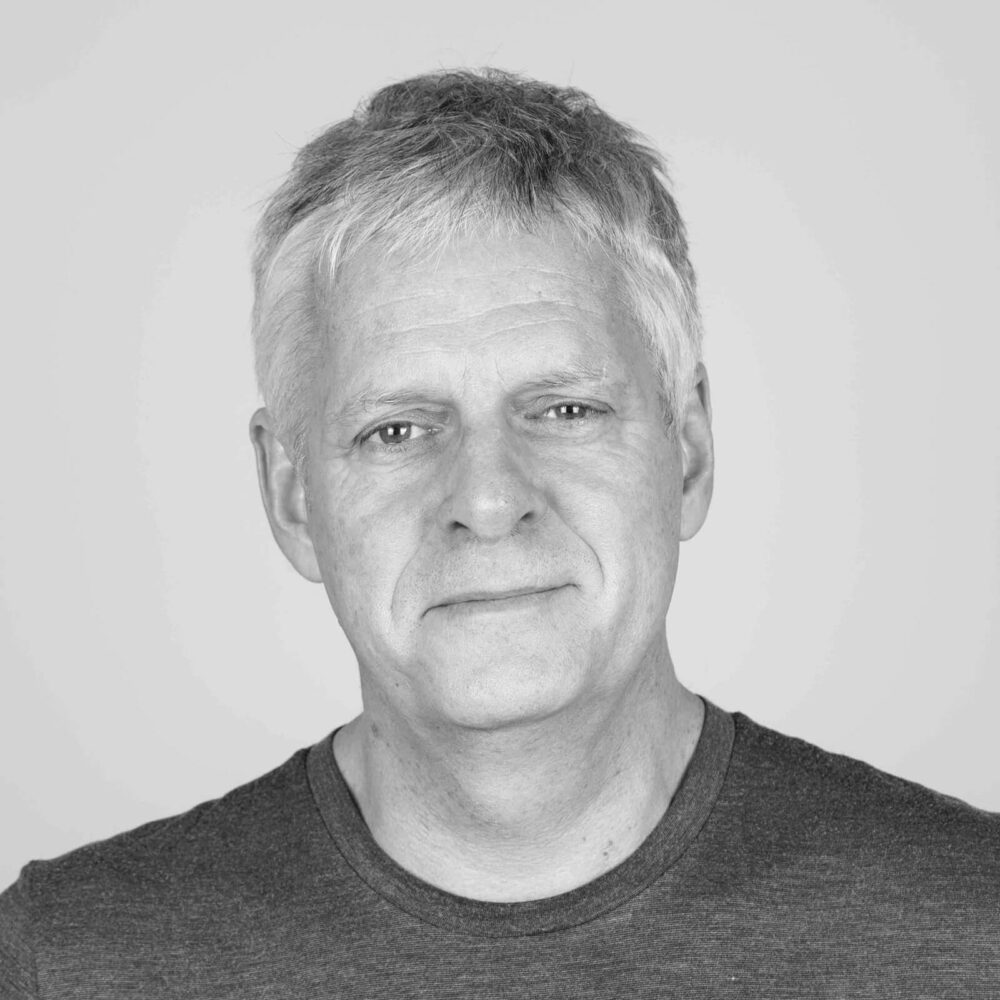
Alain Mongeau is the founding director of MUTEK Montréal, North America’s premiere festival for exploring the intersection between electronic music, sound research, and digital creativity. Previously, he directed the new media division of the Festival of New Cinema (1997-2002) and was the director of the sixth International Symposium of Electronic Arts, ISEA95 (1995). Mongeau has a PhD in Communications and lectured on computer-based communications at the University of Quebec (1990-93).

In 1997, I joined the Montréal Festival of New Cinema (FNC), where I directed the new media wing for five years, until 2001, during which the event was renamed the Montréal International Festival of New Cinema and New Media (FCMM). My mandate was to develop a new media program in relation to moving images. But at that time, no one really knew what that meant. My strategy was to create an environment inspired by Hakim Bey’s 1991 book The Temporary Autonomous Zone (TAZ), in which he describes TAZs that elude formal structures of control. At the festival, visitors could immerse themselves in the digital culture of the moment, with a strong presence of electronic music. I believed the evolution of sound technology foreshadowed what would happen with the moving image since the latter is more demanding in terms of computing power. This gave rise to FCMM’s famous Media Lounge, which notably saw the first manifestations of VJing in Montréal. During my years there, the FCMM had three components—full-length films, video and short films, and new media—which coexisted somewhat awkwardly as three parallel realities, each with their own different logics. In the end, it was more like three festivals in one, that offered richness, but also required compromise, a sense of cohabitation, and mutual understanding. In 1999, when the offices of the FCMM moved to the newly completed Ex-Centris complex imagined by patron Daniel Langlois, I inherited the mandate to develop new media more broadly. MUTEK was born within this context, conceived as the flipside of what I was doing at the FCMM. Rather than exploring new media in relation to the moving image, I focused on sound. MUTEK’s subtitle at that time: ‘Music, Sound, and New Technologies.’
For two years, in 2000 and 2001, MUTEK and the Media Lounge of the FCMM alternated every six months to cover each pole of the new media territory. The shock of September 11th, however, took its toll on the Media Lounge—people were not in the mood for cultural outings a few weeks after the attacks and that year’s FCMM edition ran a significant deficit. The first recovery measure was to abolish the very expensive new media section—and revert to the previous name of FNC. MUTEK, on the other hand, gradually weaned itself from Ex-Centris to fly on its own and cover digital creation more broadly. Eventually, MUTEK’s subtitle became ‘Digital Creativity and Electronic Music.’ In retrospect, MUTEK can boast about being the first event purely native to the digital realm in Montréal—without constraints or compromises.
A pivotal but lesser-known factor that helped MUTEK’s global expansion was my involvement as the program chair of ISEA95, the 1995 International Symposium for Electronic Arts in Montréal. The resounding success of the edition led to the relocation of the ISEA headquarters to Montréal in 1996, where I assumed leadership until 2000. This period exposed me to the intricacies of managing an international organization, complete with internal politics and tensions. During my tenure, the ISEA symposium took place in Rotterdam, Chicago, Liverpool/Manchester, and Paris, offering invaluable insights into navigating the complexities of the cultural sector in different countries. With MUTEK, I was able to apply my new skills of diplomacy in action, in a context where everything was still to be done—in uncharted territory.
For MUTEK’s 20th anniversary in 2019, we strategically aligned the Forum with the festival dates, officially designating the Forum as MUTEK’s de facto daytime component. The Forum follows its own programming logic, enjoying the freedom to explore a spectrum of topics—from technological innovations to social impacts and environmental sustainability. It functions as a radar, scanning new issues, emerging trends, and uncharted territories. Over time, we believe that the forum will progressively shape the festival, or conversely, the festival will adapt to intersect with the issues addressed by the forum. And as the two resonate more and more, the boundaries between the different audiences blur.
Q: Compared to other regions in North America, Montréal’s home province of Quebec is well-known for its generous arts funding, providing for a plethora of festivals in the city. Why do you think it is that culture is valued so much here compared to other cities? What municipal initiatives or policies do you find particularly helpful and worth emulating, and where do you think the city’s support structure has room for improvement?
Culture in Quebec has consistently served as a crucial element of resistance against the looming threat of assimilation. The province of Quebec is a small island of 8 million French-speaking people, amidst a sea of over 350 million (predominantly) English speakers. Canada has protectionist tendencies in response to the influence of American culture; to uphold and support national culture was a sheer necessity. All three levels of government—federal, provincial, and municipal—end up supporting culture, each to a different extent. In this regard, we are quite privileged compared to many other countries, so it’s hard to complain. Nonetheless, there is always room for improvement and more support, particularly for small and mid-size festivals like MUTEK.
The relationship with the local and national creative community is one of the fundamental reasons for the existence of a festival like MUTEK. It’s similar to how the blood that circulates in our veins and keeps our system alive—a connection that defines and shapes our identity. This explains why, when MUTEK is invited to curate an event abroad, we strive to include Canadian artists. Similarly, when an international chapter of MUTEK establishes itself in another country, we ensure that the organizers are interested in developing and nurturing a connection with their immediate community.
The pandemic illustrated the resilience of our international network quite effectively, I think. In Montréal, for instance, we made various efforts to present hybrid versions—both in-person and virtual—of the festival, providing a platform for artists to stay active by exposing them to audiences here and abroad. The other branches of MUTEK abroad did the same, in a gesture of mutual solidarity that strengthened the concept of a global creative community.
The idea of doing MUTEK festivals abroad wasn’t part of our initial plans; it unfolded organically. The first one happened in Chile in early 2003. After we hosted Ricardo Villalobos and Martin Schopf (Dandy Jack) with their Ric y Martin project at MUTEK 2001, Martin thought Chile could use a festival like MUTEK. And when I visited the country at the end of that year, he introduced me to Pol Taylor, who’d already done a few memorable events—the seed was planted. Mexico came second and was as unexpected. In the fall of 2003, Quebec was the guest of honour at the Guadalajara International Book Fair. MUTEK took part in the cultural activities surrounding this event by organizing a micro MUTEK festival tour of three cities: Tijuana, Guadalajara, and Mexico City. MUTEK has remained in Mexico City ever since!
An entire chapter could be written about the circumstances that brought us to different regions of the world. But when I zoom out, there’s a big picture that forms. The philosophy behind nurturing a network of somewhat independent MUTEK branches lies in the belief that electronic music is a universal language capable of bridging differences between regions and cultures—in a sense, electronic music is the soundtrack of globalization.
Each branch celebrates that ‘universal language’ with a certain degree of autonomy that allows it to adapt the MUTEK ethos to its local context. By doing so, we foster diversity within a shared framework. Navigating the disparate realities each node faces on the ground has taught us the importance of flexibility, cultural sensitivity, and collaborative engagement. Recognizing and respecting the unique challenges, opportunities, and artistic expressions in each location is crucial. It requires a balance between providing a consistent global identity for MUTEK and allowing enough space for local interpretation and innovation. Learning from the varied experiences of each node enriches the overall network, cultivating a dynamic exchange of ideas, talent, and cultural perspectives. Ultimately, the MUTEK network operates as a big family, with all the ups and downs. I think it’s quite unique.
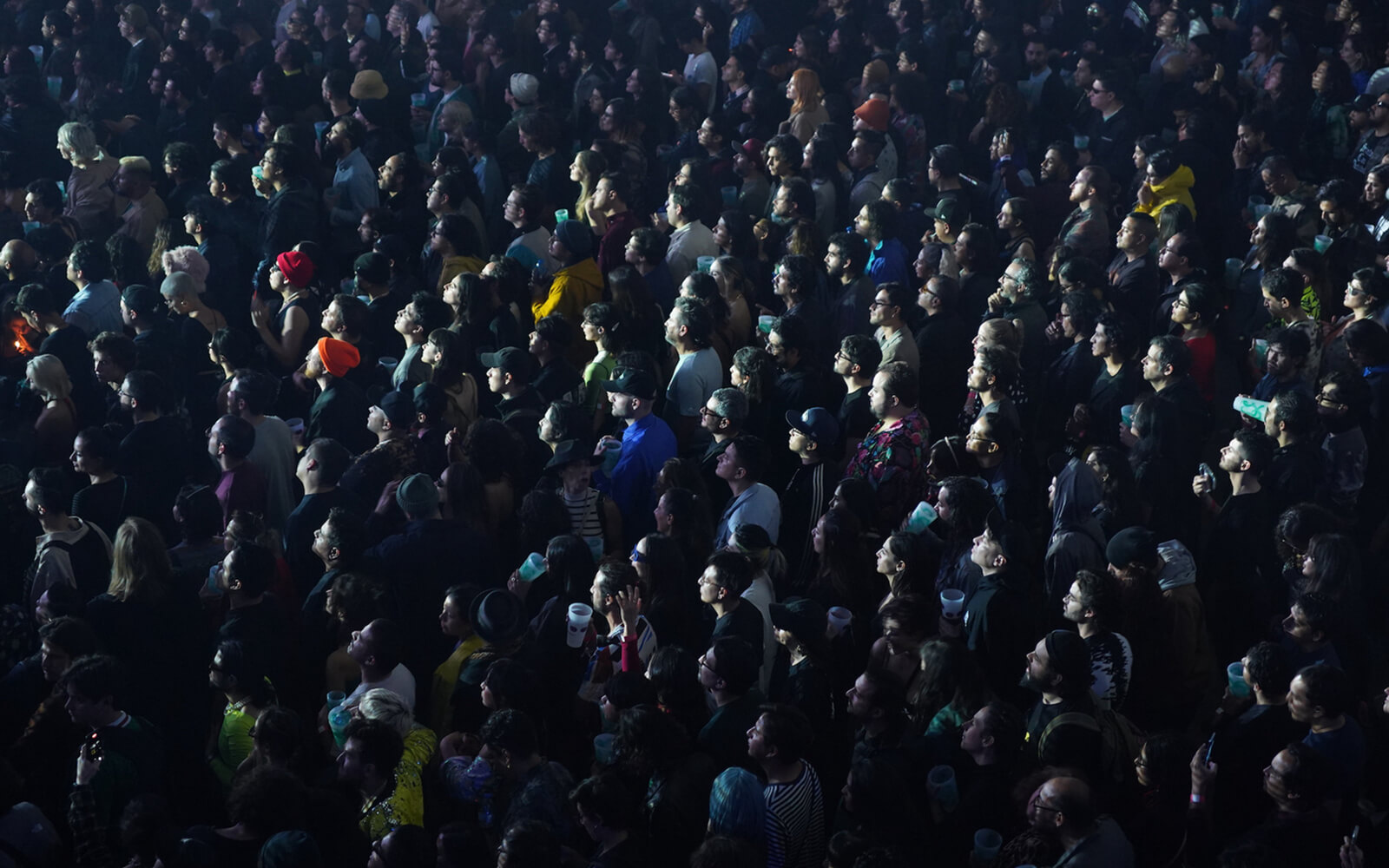
With tens of thousands of annual visitors—66,500 in 2023, to be precise—MUTEK is a magnet not only for art and music lovers but for global festival makers and cultural workers. It’s where industry people gather to discover new talent, to vibe-check, and to gossip about the scene. Capitalizing on this expert presence, Future Festivals project instigator Maurice Jones and MUTEK Forum Creative Director Sarah Mackenzie integrated a range of activities—Future Festivals Labs—into the program. In a variety of discursive formats, festival makers were encouraged to be vulnerable in public and have earnest conversations that are seldom heard by audiences. Rather than talk about reach and celebrate programming highlights, representatives from Dweller, imagineNATIVE, NEW NOW, and other festivals revealed what they are struggling with and where things need to change. On August 22nd, the first day of the Forum, a keynote and panel discussion tackled a wide range of concerns—from ethics and equity to the perennial funding anxiety to existential doubts about how much the arts are valued by the wider public.
Keynote: “Festivals as Radical Rituals” with Frankie Decaiza Hutchinson (Dweller)
Panel: “Forging New Horizons” with Maurice Jones (MUTEK), David Lavoie (Festival TransAmériques), Jasmin Grimm (NEW NOW), Naomi Johnson (imagineNATIVE)
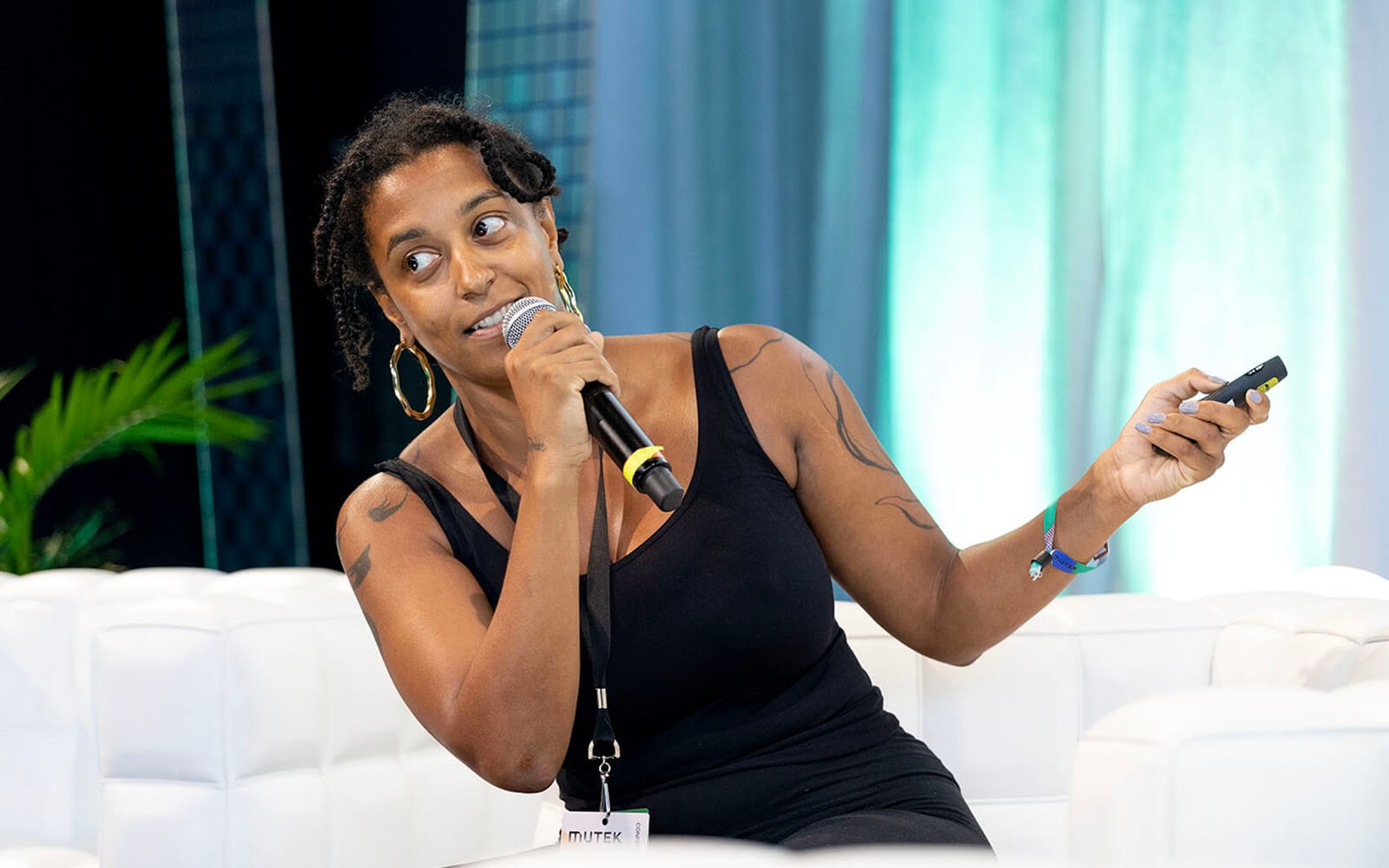
House and techno were created in Black communities—but you wouldn’t know it by looking at international club circuit where lineups of straight white cisgender men abound. “Black artists are so rarely centred in electronic music spaces,” says Frankie Decaiza Hutchinson in her MUTEK Forum keynote, “Festivals as Radical Rituals,” of the representation lapse that inspired Dweller, an electronic music festival she founded. Following Discwoman, her pioneering (and now defunct) booking agency for women and non-binary electronic musicians, Hutchinson programmed a night of house and techno at Brooklyn’s Bossanova to celebrate Black History Month in 2019. “Booking a festival with exclusively Black artists makes what is going on in the broader industry glaringly obvious,” says Hutchinson.
Correcting a gap in representation creates community. Dweller’s multi-generational alumnae (including Juliana Huxtable, Jeff Mills, and Dreamcrusher) has grown and there is now so much interest that Hutchinson wonders “how can we accommodate the growing number of Black artists that want to play?” Beyond programming, festivals have other ways to engage their audience, as evidenced by Dweller blog editor Ryan Clarke, who used the pandemic live music pause to curate a deep archive of articles (and mixes) that provide critical perspectives on Black electronic music; recently, it has been expanded into a resource on Afro-Palestinian solidarity.
Pushing back against the status quo inevitably garners backlash. “I have a very bleak view of this industry,” says Hutchinson in a moment of unvarnished honesty about her opinion of unnamed international promoters. When asked by a woman of colour how musicians could make their way without being permanently enraged Hutchinson’s advice was that “artists should not feel too bad for doing what they have to to survive.” It’s up to cultural producers to make ecosystems more inclusive so future generations of artists won’t have to make (as many) concessions when considering potential bookings.
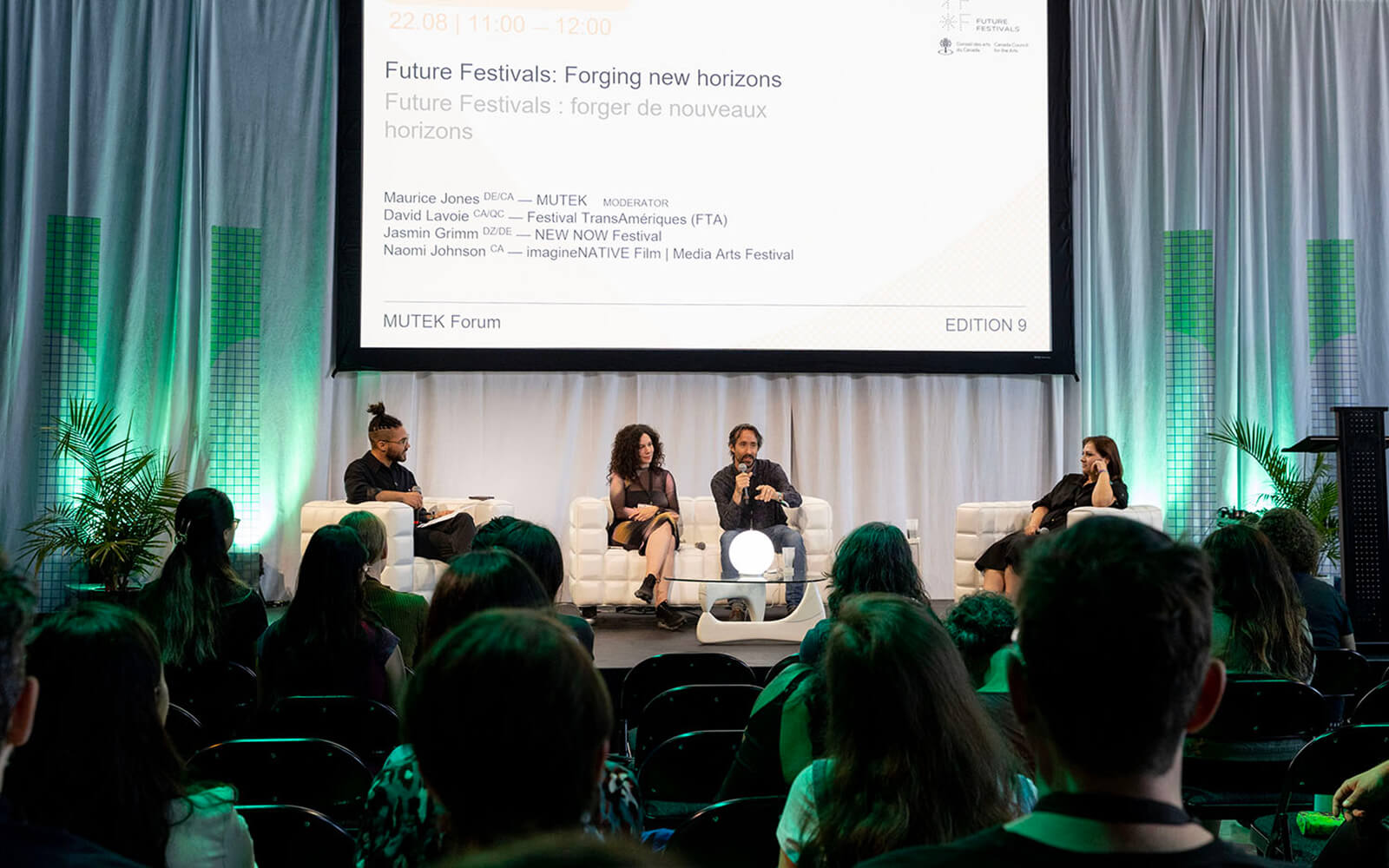
Every industry was turned upside-down by the pandemic but the impact within the cultural sector was jarring and profound. Beyond the fact programming and budgets were upended and multi-year projects cancelled or downsized overnight the pressure on the (already over-taxed) staff was immense. “I didn’t have the luxury of a pandemic career change: I had to hold shit together,” says Naomi Johnson early in the panel discussion of the struggle to shepherd Toronto’s imagineNATIVE through the last few years. Fellow festival makers David Lavoie (Festival TransAmériques) and Jasmin Grimm (NEW NOW) shared similar stories of frustration and resilience, with the latter wondering “how do you take the knowledge gleaned from the last three years into the future?”
Ironically, the present may be more challenging than 2020-21 was. At least there were support programs for arts organizations when the economy ground to a halt. “Now that the pandemic is over we’re left with funding cuts,” notes MUTEK’s Maurice Jones. The resulting austerity coupled with inflation and rising prices of flights and hotel rooms have severely hamstrung programming budgets. Lavoie was so concerned about the storm clouds he saw gathering, that he and other cultural producers wrote an open letter to the citizens of Montréal in February 2023 warning that “our ability to provide meaningful programming and to contribute to the job market and the economy is at risk.” Some festivals will be nimble enough to survive but “sometimes organizations have to die,” he notes glibly.
In addition to questions of capacity and funding, another major issue is how opaque the cultural sector is to non-insiders. “We’re really bad at advocating for ourselves” Jones observes, about how festival teams are generally too busy to worry about if—beyond attendees—the general public understands the value being created. The inscrutability of dance and theatre, Indigenous-made media, and digital art and electronic music to the wider public is a challenge to overcome. “Art has been systemically eliminated from every corner of the public sphere. We’re now seeing generations of people with no understanding of how the arts might fit into their lives,” warns Johnson.
While the economics are grim, necessity is the mother of invention. If, after decades of reliable funding, festivals and the arts have to make their case to the public about how they create jobs, stimulate the economy, and enrich lives—so be it.
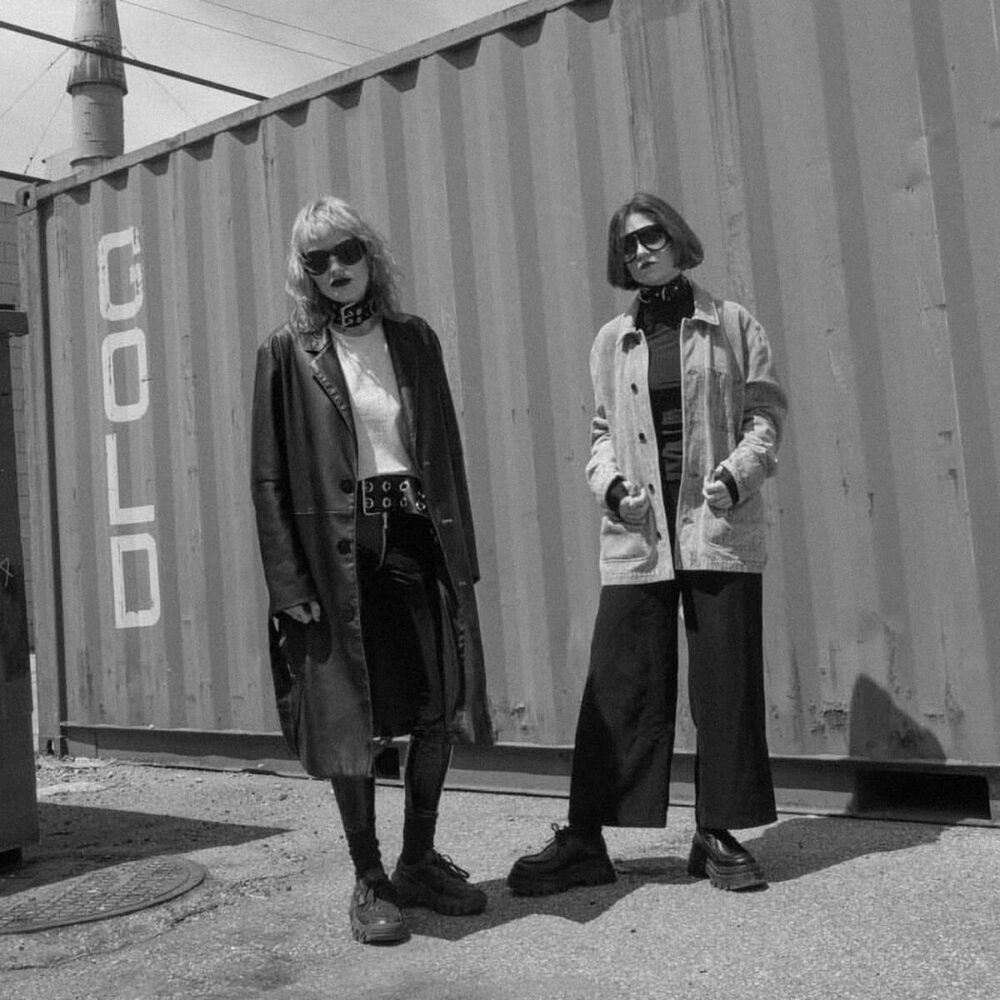
Crip Rave is a Toronto-based collective, event platform, and consulting hub showcasing and prioritizing Crip, Disabled, Deaf, Mad and Sick body-minds within safer and more accessible rave spaces. It was co-founded by Mad and Crip organizers Renee Dumaresque and Stefana Fratila, who draw on lineages of Disability Justice and Crip community wisdom in their work.
The feedback from the Crip, Mad, Sick, Deaf and Disabled community has been overwhelmingly positive. It’s also been really exciting to hear from people who don’t identify as disabled about how much better their experience has also been with attention to accessibility—most people want access to free water, a place to sit and a room to decompress. Our hope is for all people—regardless of disability-identity or experience—to recognize their own personal stake in enhancing accessibility within Rave and electronic music culture. Prioritizing accessibility for Crip, Mad, Sick, Deaf, and Disabled people makes an event more accessible for everyone.
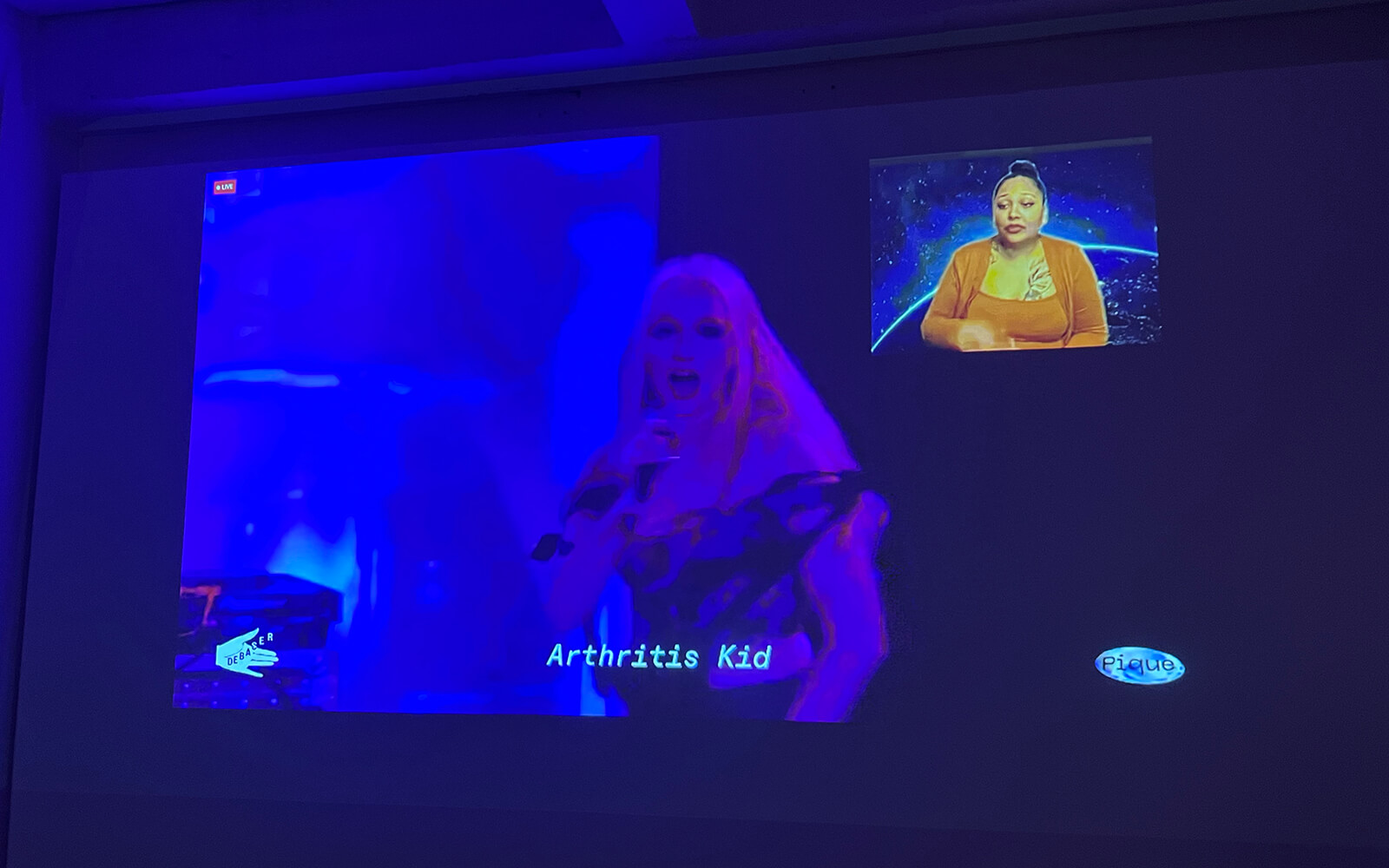
Q: The DJ booth is a heavily coded space. Tremendous meaning is derived from the musical gestures that emanate from it and many unspoken rules dictate who gets to be in it. It’s a site you put under the microscope in a 2021 workshop facilitated by Syrus Marcus Ware. Could you tell us a bit about how that went and walk us through what a more accessible and equitable version of the DJ booth looks like?
A: The workshop that Syrus Marcus Ware facilitated was called “Cripping the DJ Booth.” In terms of language, we use words like Crip and Mad because they are politicized terms that have been reclaimed by a range of communities around disability, mental health, chronic pain and illness, etc. These words are often taken up as an identity but our objective is to enhance the conditions of work and play for anyone with related lived experiences, regardless of what language they use or identify with (if any). Crip also gestures to a political and artistic orientation or a praxis that exposes and counters the ways that ableism, sanism, and audism, for example, shape the norms that guide non-disabled spaces. By approaching ‘the DJ booth’ from a Crip politic, Syrus invited attendees to learn and engage with technology in a way that works for—instead of asking us to override—the body and mind. He emphasized building a track list with time for a bathroom break in mind to working with the multi-sensory nature of sound through the visual act of DJing, and the importance of bass and vibrations for Deaf folks. He also advocated for threading activist and abolitionist archives into your set and DJing with attention to economic justice, because, and these are his words, “crips are often under-resourced—over-talented and under-resourced.”
A large part of our work is challenging the narrow and limiting understandings of disability by emphasizing that Mad and Crip DJs and producers are already in the room, while simultaneously addressing the industry and societal norms that have pushed people out or made it impossible for them to be there in the first place.
We always encourage festivals and events to start wherever they are. Crip organizing shows us the value in slow and sustainable work rather than operating from a place of urgency and scarcity.
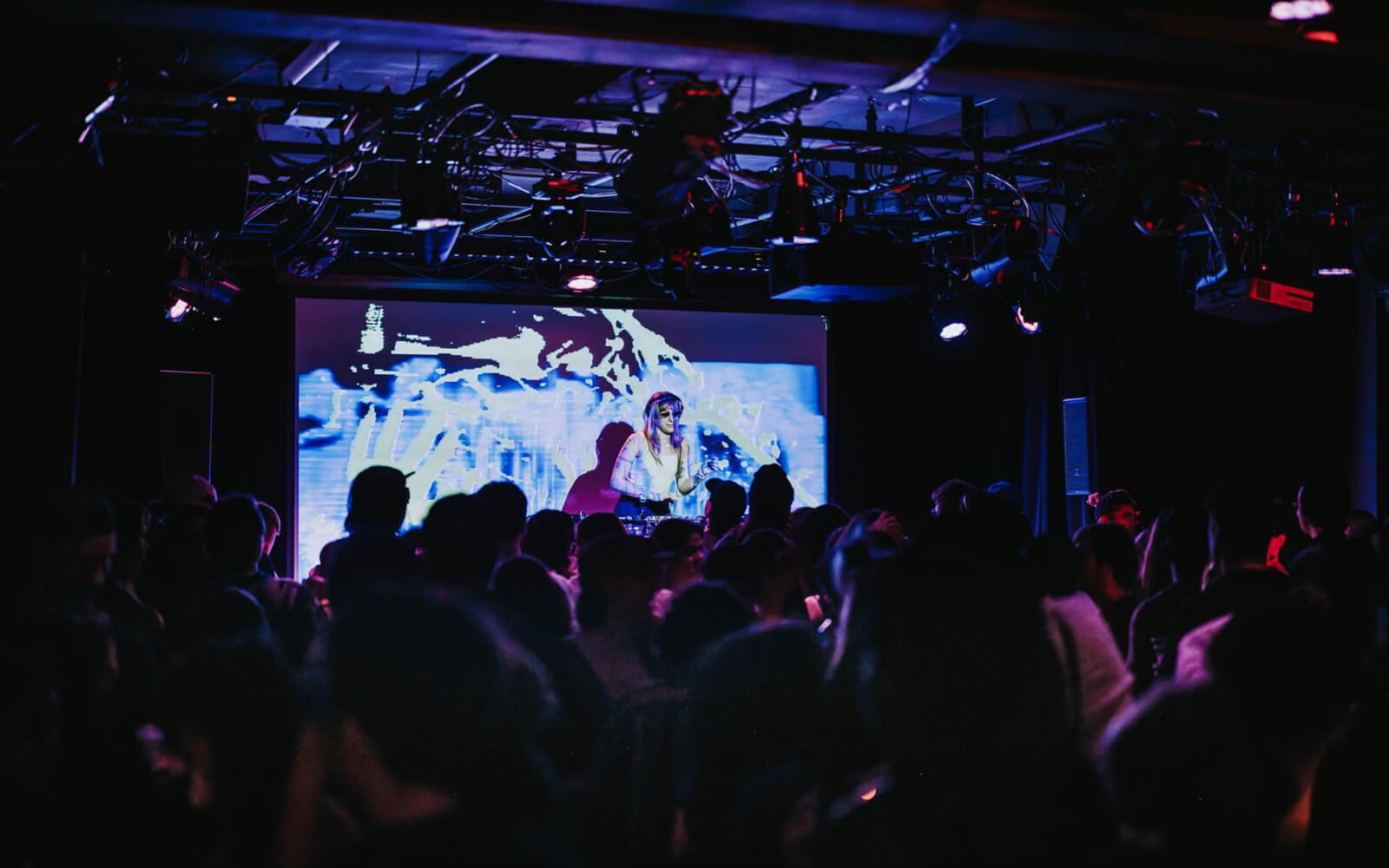
(Photo: Curtis Perry)
Q: Bigger festivals, clubs, and more underground DIY communities have varying relationships with capitalism. What differences do you see across this spectrum of more commercial to less commercial event organizing, in terms of how they are responding to disability advocacy? Where is the most progress being made?
A: There’s certainly a wide spectrum, but the most progress is undoubtedly being made in DIY and underground spaces that are value-driven and have the fewest resources. There has been huge work around the creation of safer spaces and collectives prioritizing underrepresented talent, which contributes to accessibility in both direct and indirect ways, and more and more, we are seeing a broader interest across the spectrum from promotors and festivals wanting to learn and make changes that address barriers for disabled communities in particular.
Engaging this work with attention to economic justice means both challenging the impulse of capitalism to profit above all else, while also acknowledging that under capitalism people need to make money to survive. Most organizers need to make concessions and we want this work to be sustainable while asking ourselves hard questions about the values, assumptions, and norms that shape or define what we understand as non-negotiable and who is commonly excluded from the decision-making as an effect. We’re really excited by festivals and parties doing what they can with what they have. Sharing event accessibility information is a great place to start—even sharing the aspects of your event that are likely inaccessible for many people still works in service of generating greater accessibility.
Give festival makers the stage to discuss the state of cultural production and conversations will likely center on economics. Too many organizations operate at the edge of precarity that just staying afloat becomes the primary concern. Put about 100 stakeholders—festival organizers, arts workers, emerging and mid-career artists, students and activists—in a room and the full range of persisting problems comes to light.
On August 24th, the MUTEK Forum invited voices from inside and outside of the Future Festivals project to share both challenges and successes in an open roundtable format as a way to spark a conversation with the community. Emerging BIPOC artists and vulnerable groups used that opportunity to—rightfully—demand more access and accountability.
Roundtable: “(Jointly) Expanding Orbits of Future Festivals” with Kaitlyn Davies (Refraction), Marie Pier Gauthier (National Film Board of Canada), Damian Romero (MUTEK.MX), Cam Scott (send + receive), Kris Voveris (New Forms)
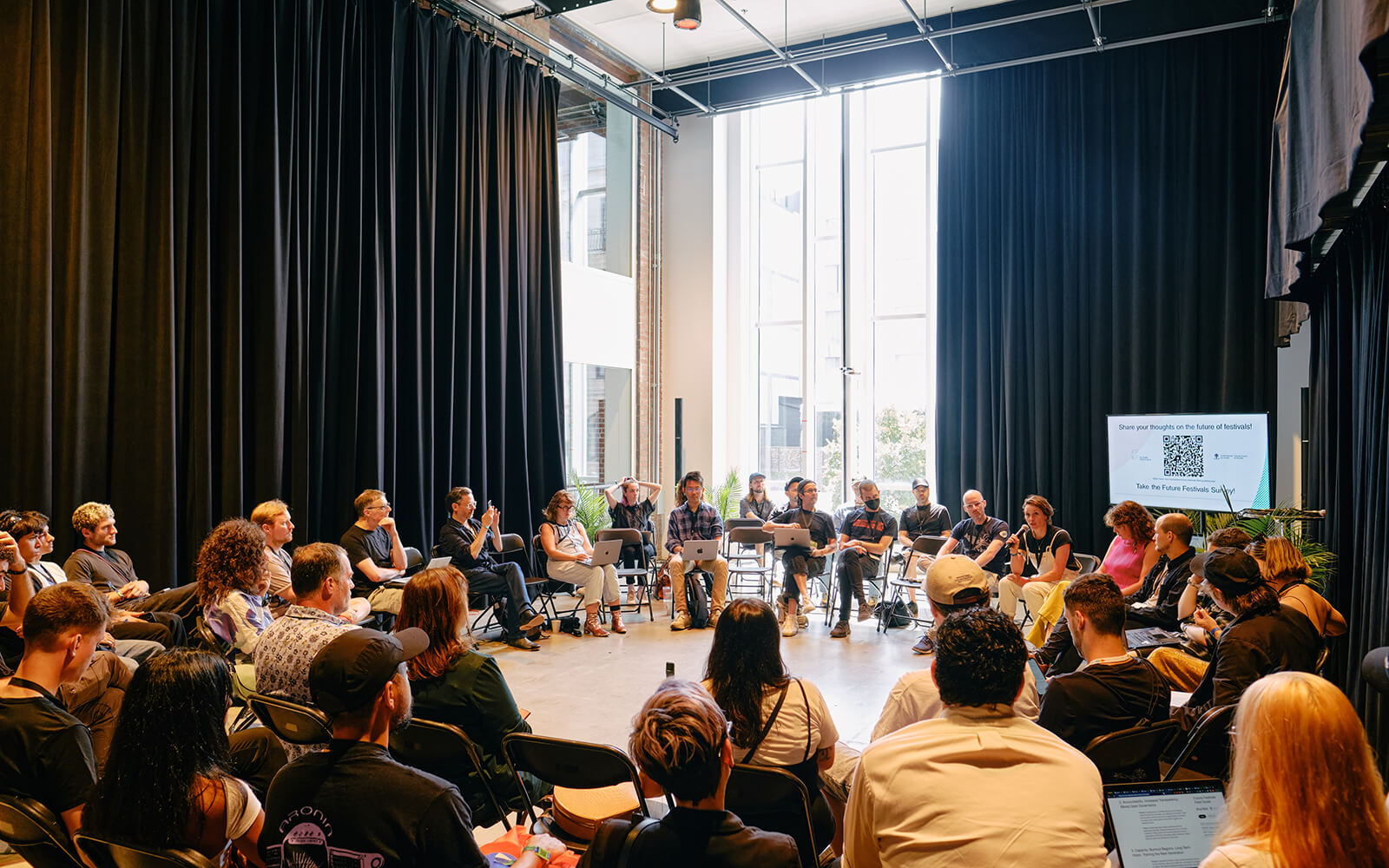
Unlike the Future Festivals panel discussion on August 22nd, where festival producers grumbled about similar problems, the roundtable highlighted the wildly different realities within the cultural sector. Drawing on notions of scarcity and abundance, the case studies presented made clear that varying levels of gentrification and the divergence in access to public funding create unique challenges (and opportunities) for festival producers across North America.
“We have a kind of Robin Hood intention with our core funding. We give it to artists, we try to make something happen for communities, and it’s easier for us to do without selling tickets,” says Cam Scott of send + receive’s shift to a pay-what-you-can model. That policy allowed residents of the Winnipeg neighbourhoods the sound art and experimental music festival takes place in to go hear artists like Speaker Music and Wok the Rock risk-free. That benevolence worked in Canada, a country where public funding ensures a baseline operations budget, but it’s not an option in Mexico. “We redesigned our entire business plan to make every program within our festival self-sufficient from its own sales. It was like getting back to our roots,” says Damian Romero about how MUTEK.MX rethought everything—funding sources, staffing, institutional partnerships, reengineering the financial viability of each part of the program—after the pandemic; and they emerged from that process reinvigorated and ready to charge into their third decade.
In Vancouver, counting every ticket sale is eclipsed by a more pressing issue: space. “They explained that they’re not interested in events with loud music that serve alcohol and prefer ones with a more corporate and technology focus. We basically got booted for a VR and AR conference,” says Kris Voveris of losing a key venue just before the 2019 edition of New Forms. The lack of affordable live music venues in Vancouver has proven so challenging that New Forms has had to manually adapt temporary spaces to serve their needs. These issues of appropriate contexts for presentation resonate in other corners of cultural production. “Is it viable? What’s the objective of presenting a project in front of a particular audience?,” says National Film Board of Canada (NFB) producer Marie Pier Gauthier about the introspection the NFB interactive team does every time they are invited to present one of their works. Varying audiences, varying budgets, and evolving tech make each staging a challenge—and the labour of (re)presenting the same projects in different ways at different festivals adds up.
Challenging traditional models of curating in her work with the Friends with Benefits (FWB) and Refraction Decentralized Autonomous Organizations (DAOs), Kaitlyn Davies sees life beyond gatekeeping. “We think of FWB Fest as a container for other people to fill. We build the rails and have the infrastructure, we bring the generators and ice machines, and we rent the venue,” she says. The community shapes the programming and the artist selection process is transparent, thanks to online tools like Airtable forms and Figma boards, to “incite more collaboration.”
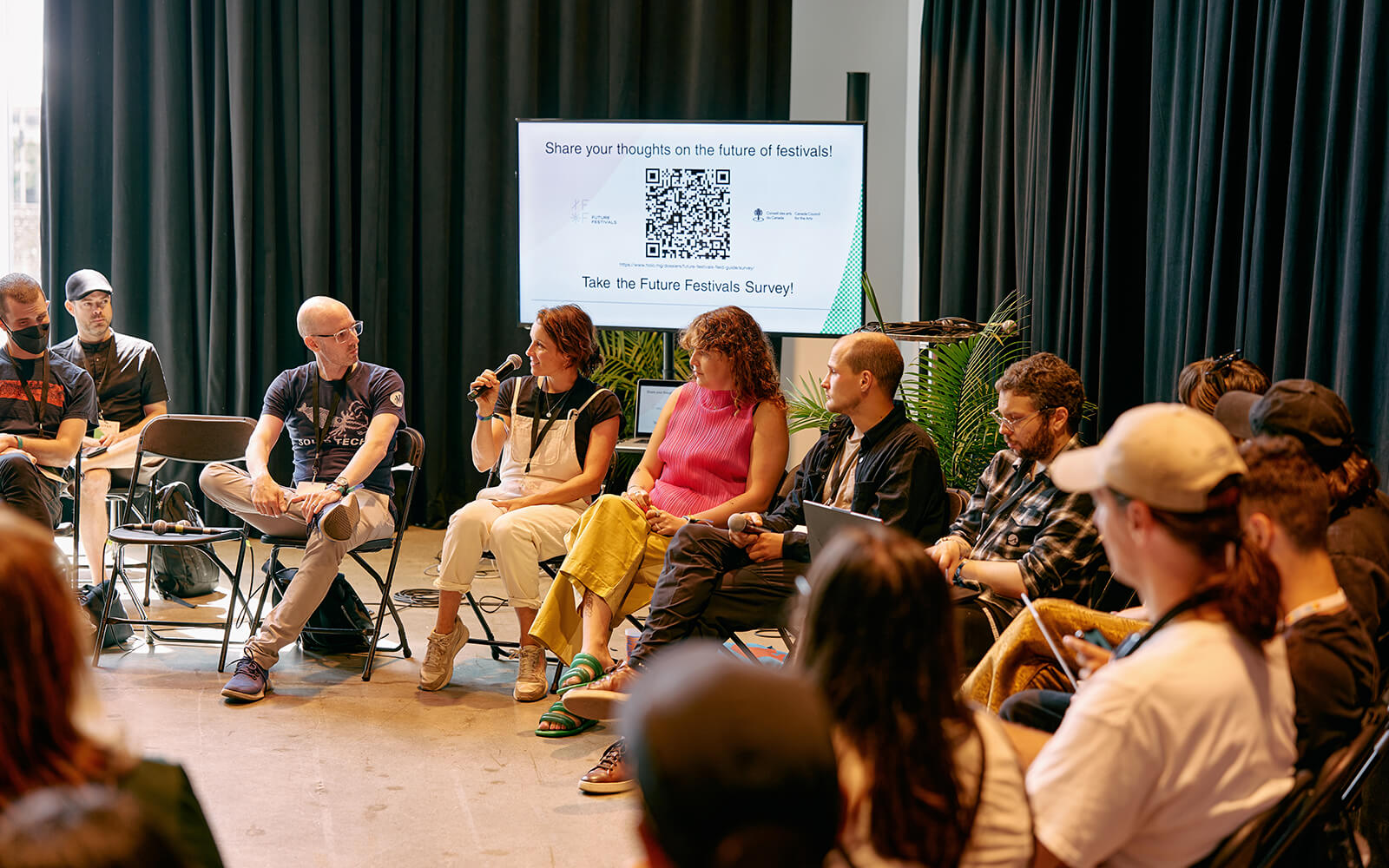
Kaitlyn Davies’ concerns about gatekeeping seemed to anticipate the feedback the panel received in the following discussion with the audience. Rightly concerned about the lack of support for emerging queer and BIPOC artists by established festivals, several young artists condemned the lack of governance and curatorial transparency in the arts and the limited opportunities available to them. “What are your success stories in terms of preserving the dignity of marginalized people?” asked one questioner pointedly. The conversation lingered on how the most vulnerable populations—newcomers, the disabled, transfolk—remain underserved by current diversity, equity, and inclusion (DEI) initiatives. “You cannot treat marginalized people like consultancies to improve the image of an organization. We want to remove barriers that reproduce those markers when we invite people into our community,“ Scott responded.
Another questioner suggested the speakers weren’t thinking big enough when they talked about access. Beyond serving their immediate cities and countries festivals could make an impact overseas, she argued. “For me, the idea of access can be expanded beyond borders. If I can send a link, a file, a video, anything to a friend back home in Iran—that means something. So I’m curious what is preventing festivals from taking these kinds of steps?” Some festivals are better than others in archiving and circulating programming through platforms like Instagram, SoundCloud, or YouTube but the provocation forced a bold realization: ‘access’ also means solidarity and international sharing.
The divide between what was presented and how it was responded to was stark. A key takeaway is that while festival makers might have a long list of areas they are working on—the most pressing ones for artists and festival goers are clearly access and equity.
Over 2023-24, the Future Festivals Survey polled 125 artists, curators, and festival makers from over a dozen countries on the state of cultural infrastructure in their communities. Here’s where some respondents said festivals should focus their energy.

“Festivals should invest in the diversification of knowledge and creativity as a tool to prototype solutions to current pressing cultural issues. I firmly believe that solutions can be discovered in spaces that bring together different disciplines, cultures, and perspectives.”
Samito Matsinhe, a Maputo-born and Montréal-based musician, is the founder of FEZIHAUS™, a “label-inspired workroom” focused on cultivating equitable creative ecosystems. He also leads CONVERSAS: Who’s Missing In This Room?, a pilot podcast and video series addressing systemic barriers in the arts by uniting diverse creators and fostering discussions on equity.

“Embodiment—the irreplaceable bodily experience—is a big part of festival attendance. The pandemic threatened that and made these special experiences harder to access. Pursuing accessible, secure, and hybrid experiential paths is of paramount importance. This would create opportunities to collaborate across artistic domains, technologies, and policy development.”
Milia Xin Bi is a curator and writer based between Manchester and Shanghai, whose curatorial practice explores the intersection of arts, decentralized technologies, and contemporary social (sub)culture. Xin has been part of Chronus Art Center since 2017 and is the winner of the Hyundai Blue Prize Art+Tech 2022.

“Take more action towards actually changing the cultural landscape rather than only addressing pressing topics in lecture and workshop programming. Larger festivals should communicate with smaller DIY projects and provide space for them in programming or outside it (throughout the year between festivals). Inclusivity needs to be addressed—not just for the sake of the optics, but taking active steps to identify artists from different backgrounds and mediums to be featured in programming.”
Kasra Goodarznezhad is a new media artist based in Toronto with main focus on music, performance, and installation. Kasra is currently the Prototyping Director for UKAI Projects where he curates, produces, and supports the development of artworks and live events.
Narrative Sovereignty
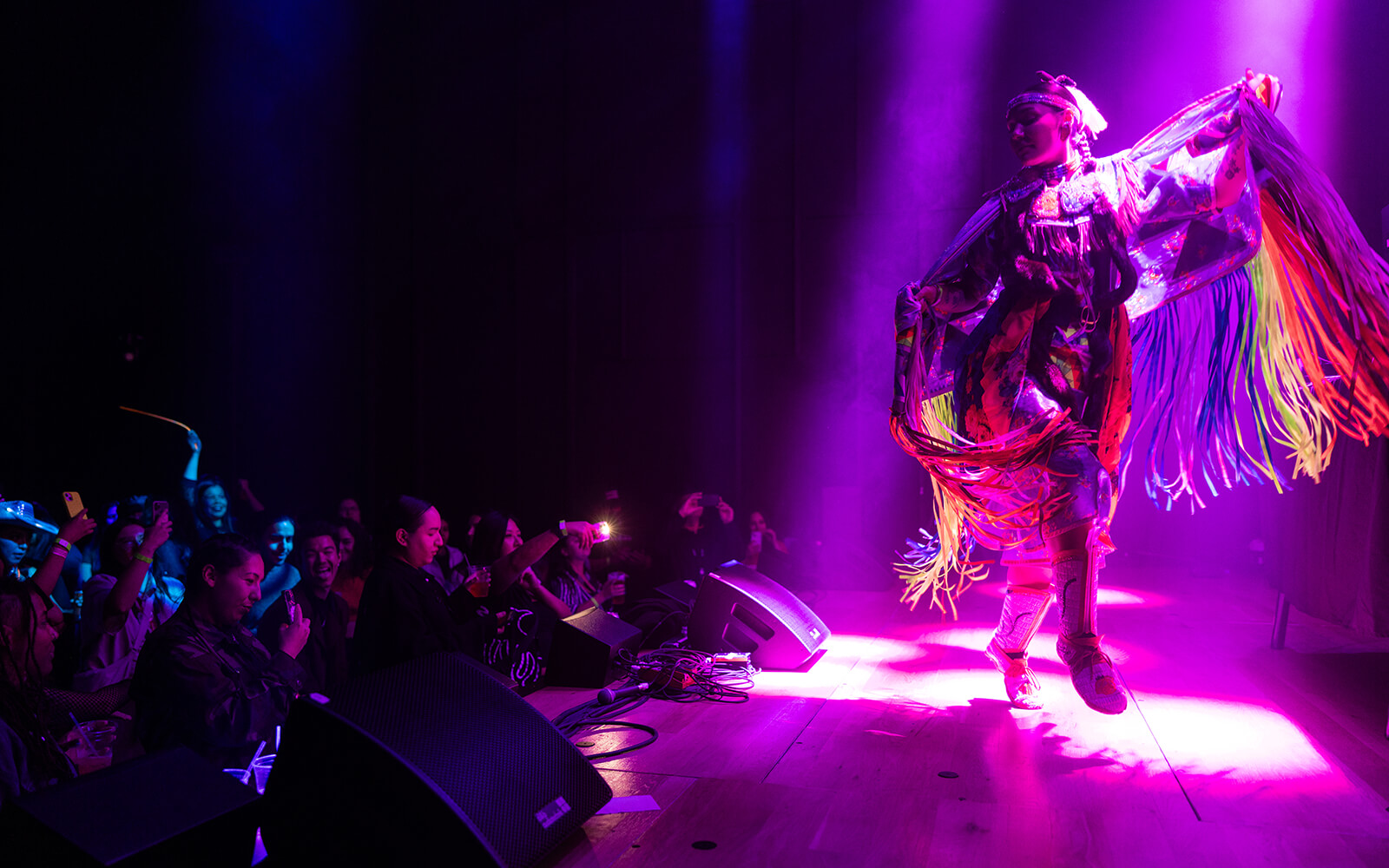
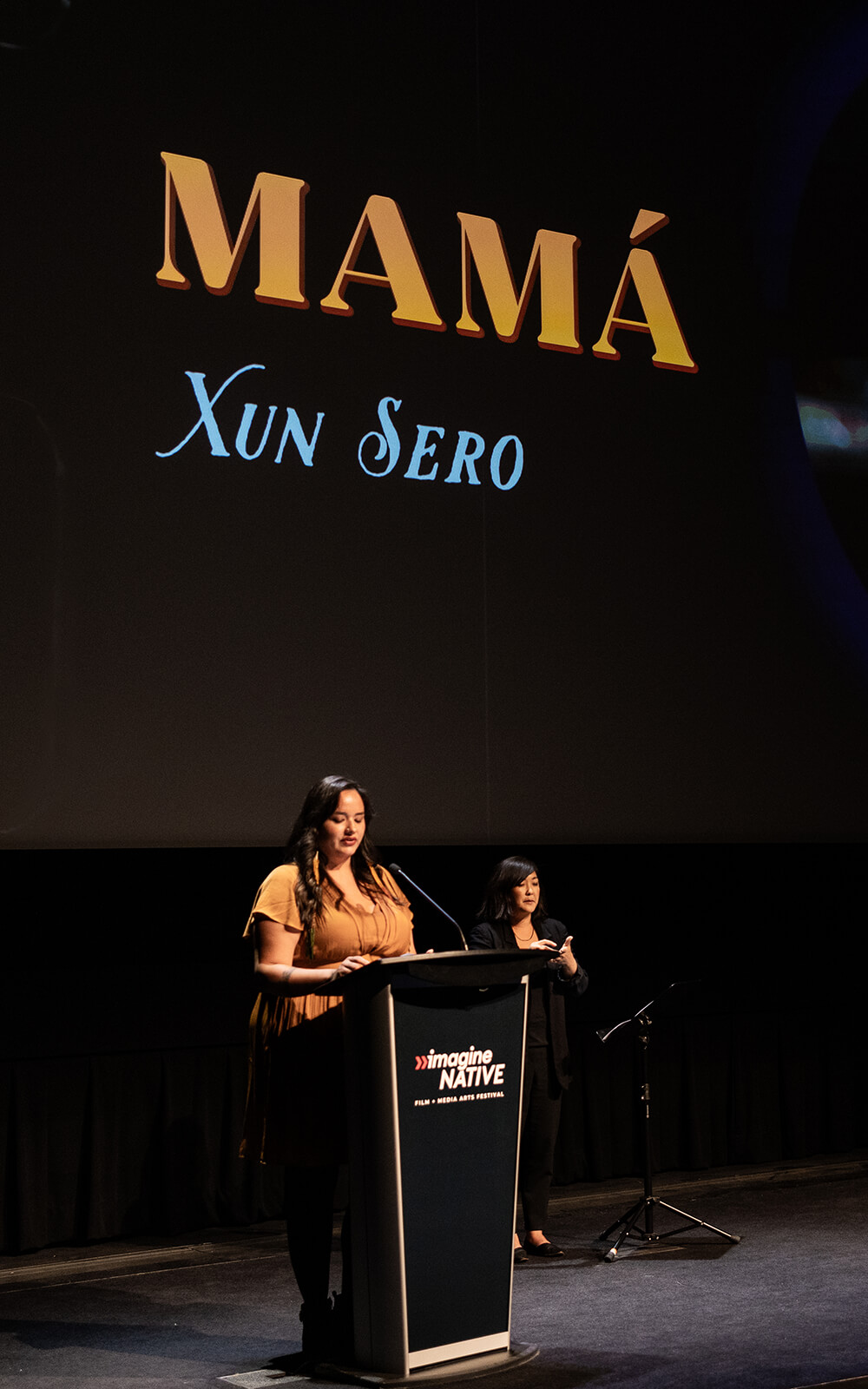
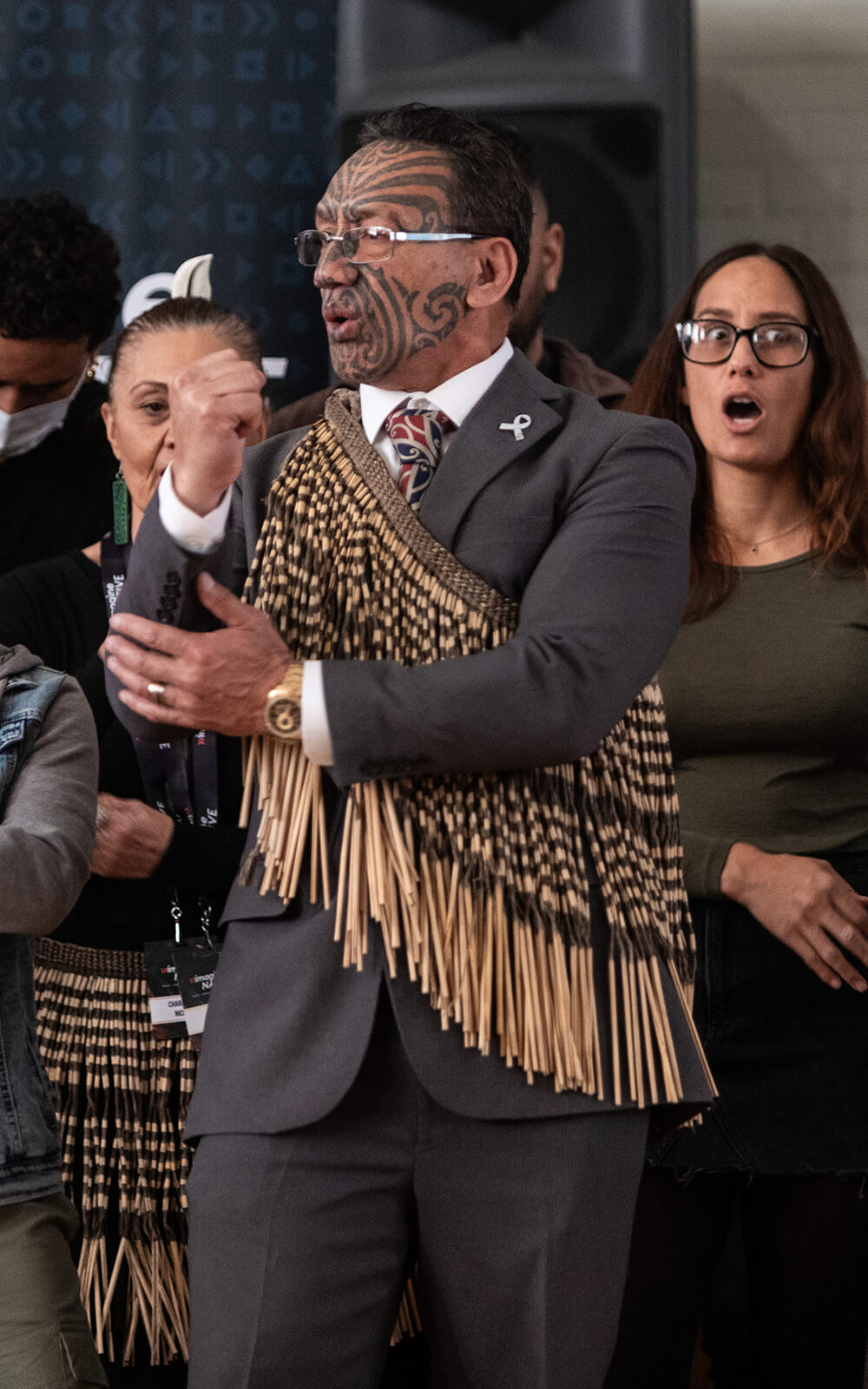
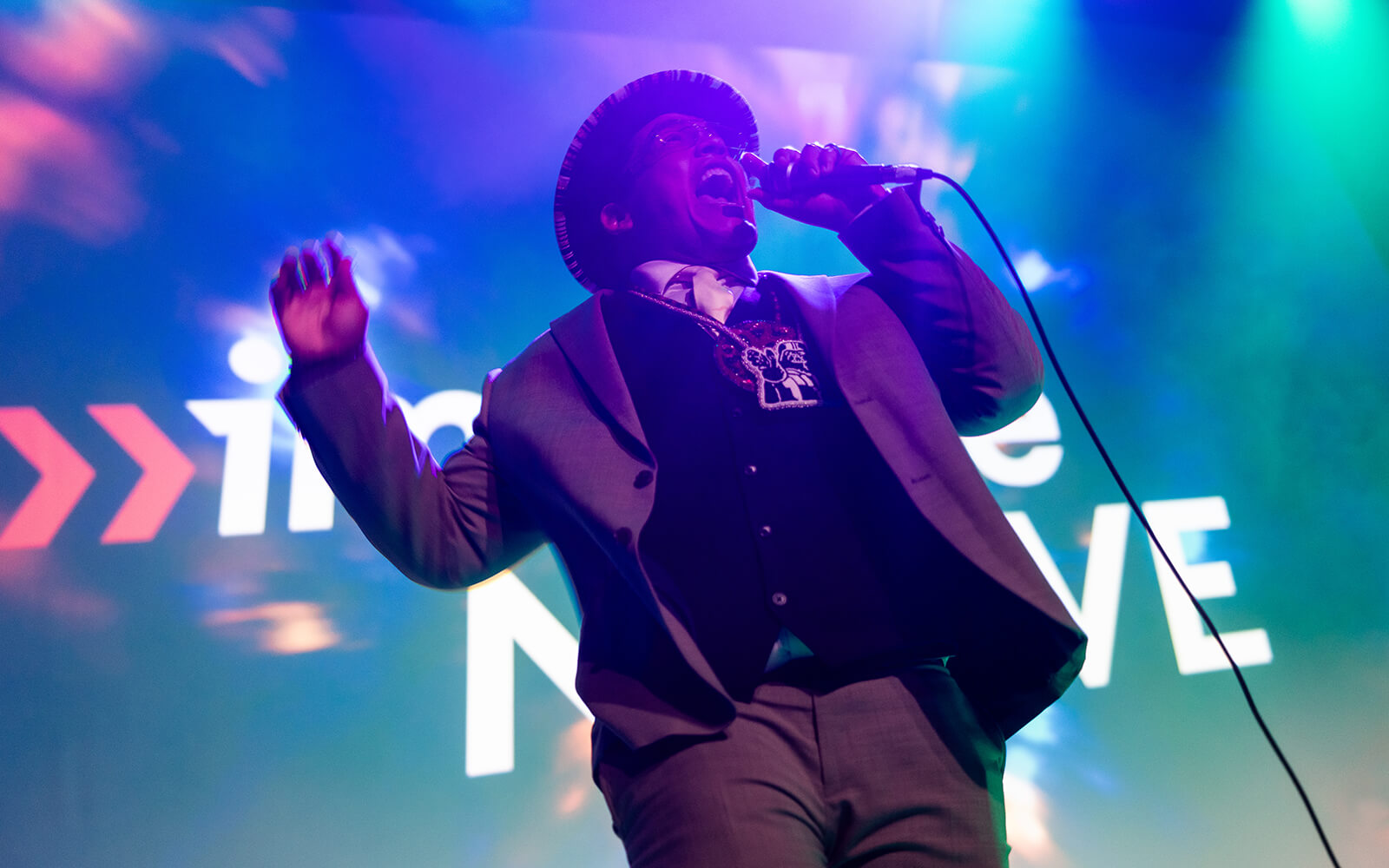
Occupying about a sixth of a downtown Toronto city block, the TIFF Lightbox is one of only a handful of cinema complexes in the world purpose-built for hosting an international film festival. But from October 17-22, 2023, its five cinemas, gallery, and restaurant were not swarming with the Hollywood-Cannes glitterati that frequent the Toronto International Film Festival, the venue instead bustled with hundreds of Indigenous screenplay writers, directors, and artists, all gathered for the 24th edition of imagineNATIVE. The world’s largest Indigenous film and media arts festival, imagineNATIVE celebrates Indigenous-made media across traditional screen-based formats (features, shorts, web series) through emerging interactive mediums (installation, videogames, VR).
Founded in 2000 by Cynthia Lickers-Sage and Canadian video art distribution hub Vtape, imagineNATIVE started to solve a daunting problem: there was nowhere for Indigenous filmmakers and video artists to show their work. In its early days “imagineNATIVE was the only option available—but it’s a different landscape now,” says Executive Director Naomi Johnson, contrasting the festival’s “scrappy roots” to a more amenable present moment when major film and television studios are finally receptive to Indigenous perspectives. Case in point: a show like Reservation Dogs, Sterlin Harjo and Taika Waititi’s critically acclaimed series about Indigenous teens in Oklahoma—made by an almost entirely Indigenous cast and crew—would likely never have made it to air on America’s FX network a decade ago. Once an upstart bent on fixing a representation gap in a national context, imagineNATIVE matured into a preeminent global meeting place for Indigenous media makers and (like Sundance or Hot Docs) a place for the industry to scout exciting new voices.
Programming highlights of the 2023 edition included the World and North American premieres of Fancy Dance (2023) and Odisea Amazónica (2021). In the former, Seneca-Cayuga director Erica Tremblay chronicles a girl’s coming-of-age search for her sister, exploring the impact of the Missing and Murdered Indigenous Women crisis within a small community; in the latter, sibling Quecha directors Diego and Álvaro Sarmiento document the labour (and lives) that move goods up and down the Peruvian portion of the Amazon River. Also featured: a joyous binge-watch of episodes from the most recent season of the aforementioned Reservation Dogs with director and showrunner Sterlin Harjo. In all, 14 feature films and 70 shorts were screened. Beyond the moving image, the iNdigital Space was alive with interactive pieces from artists including Ojibwe inventor Danielle Boyer’s SkoBots (2022), which harnesses friendly robots in the name of Indigenous language reclamation, and Dene artist Casey Koyczan’s speculative VR experience EłeghààŁ ; All At Once (2022), which imagines a future North where huge animals roam. Additional new media works were displayed at satellite Toronto venues including InterAccess, Trinity Square Video, and Vtape.
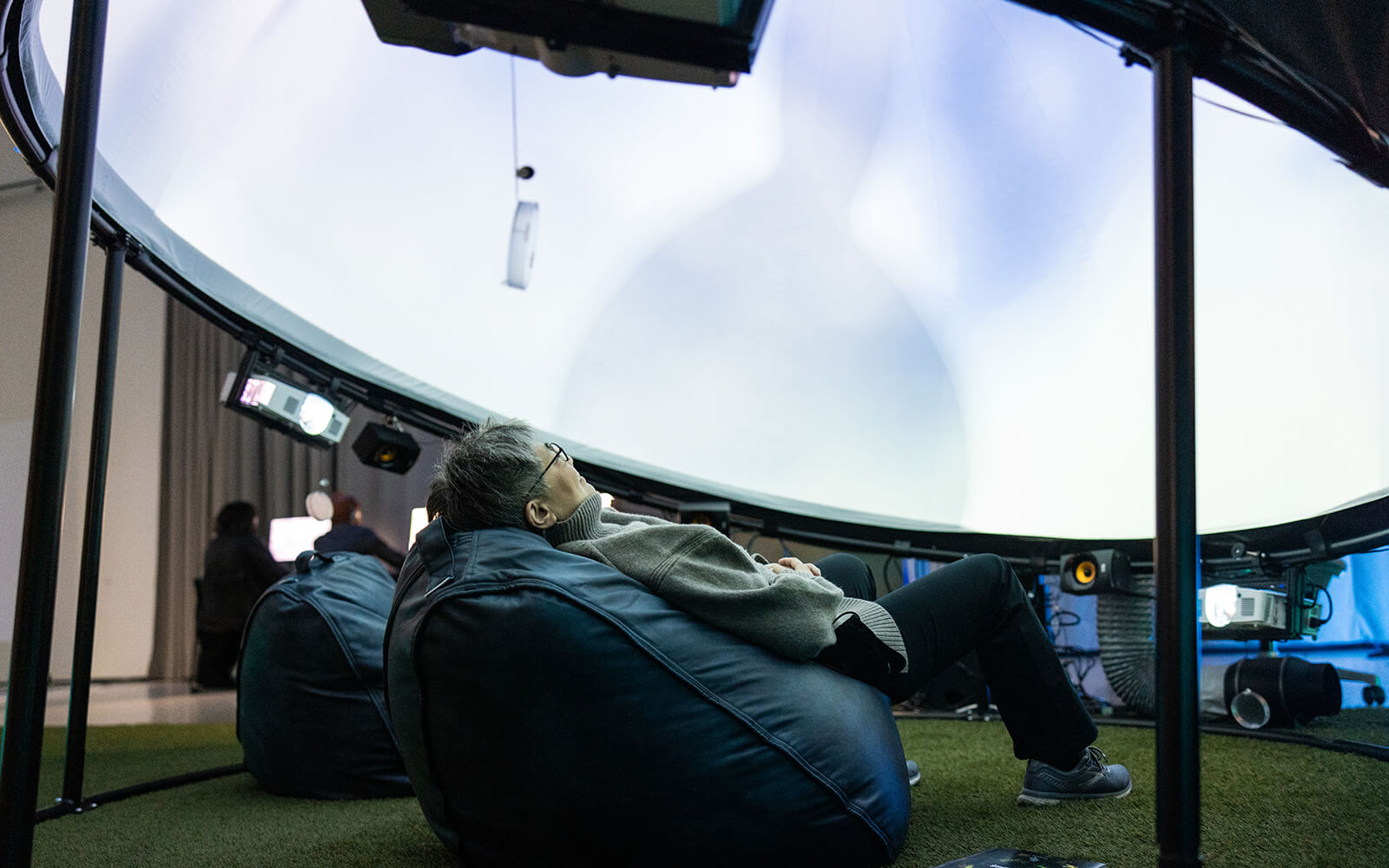
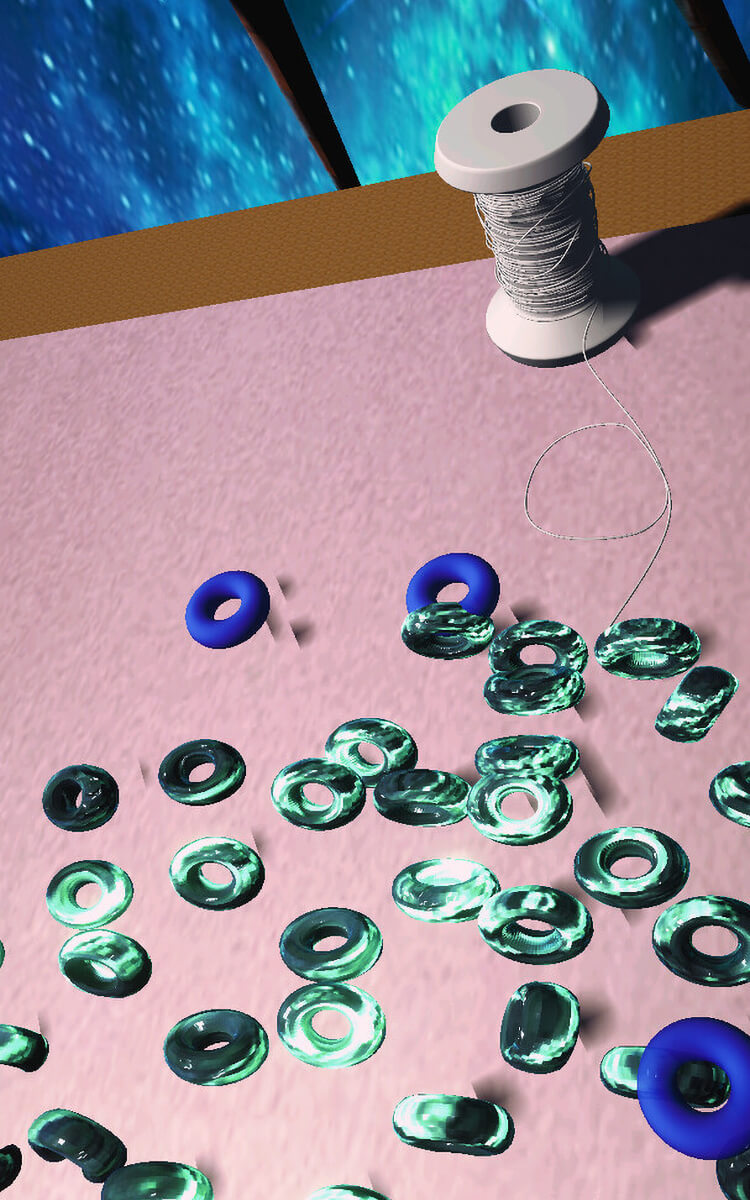
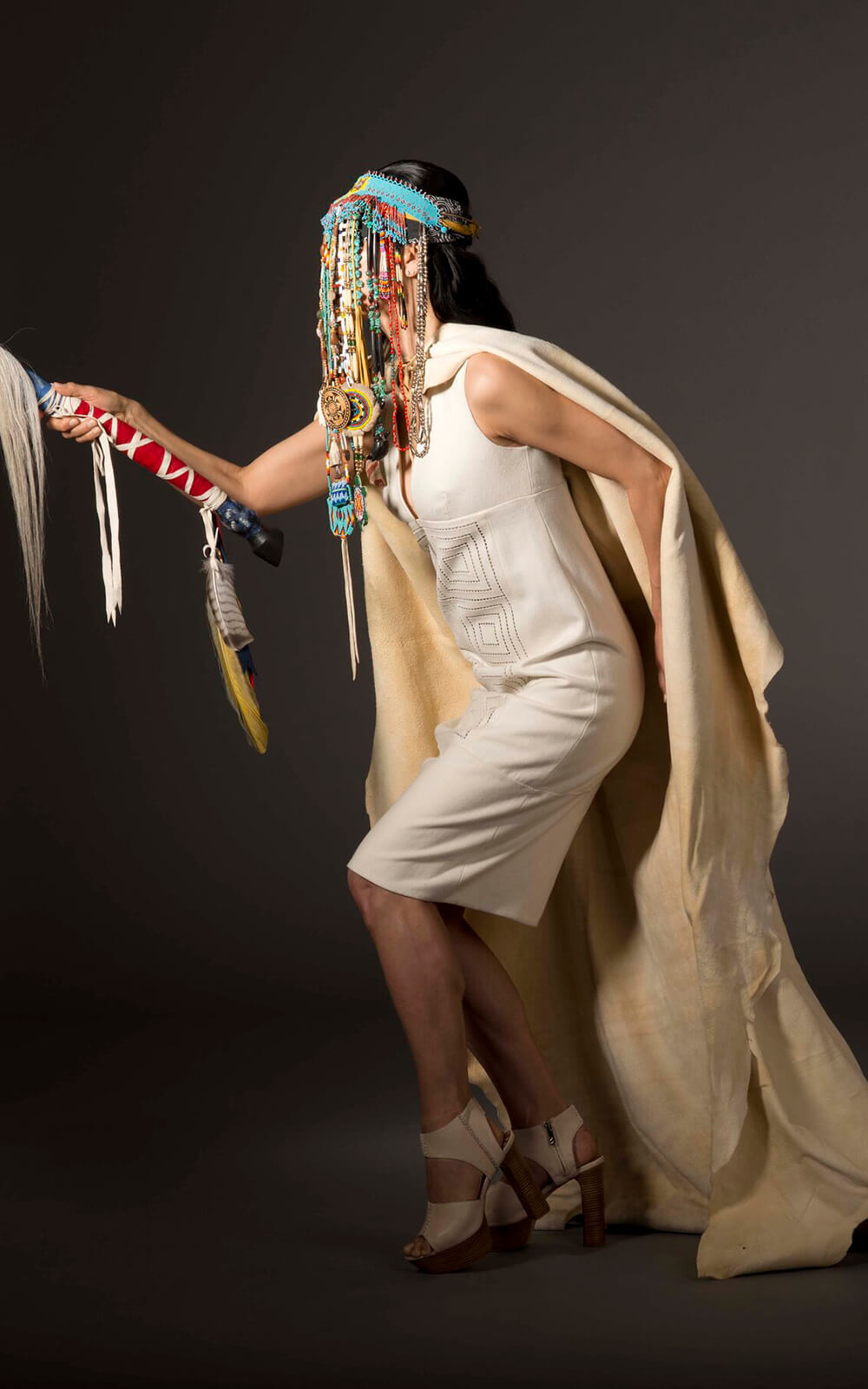
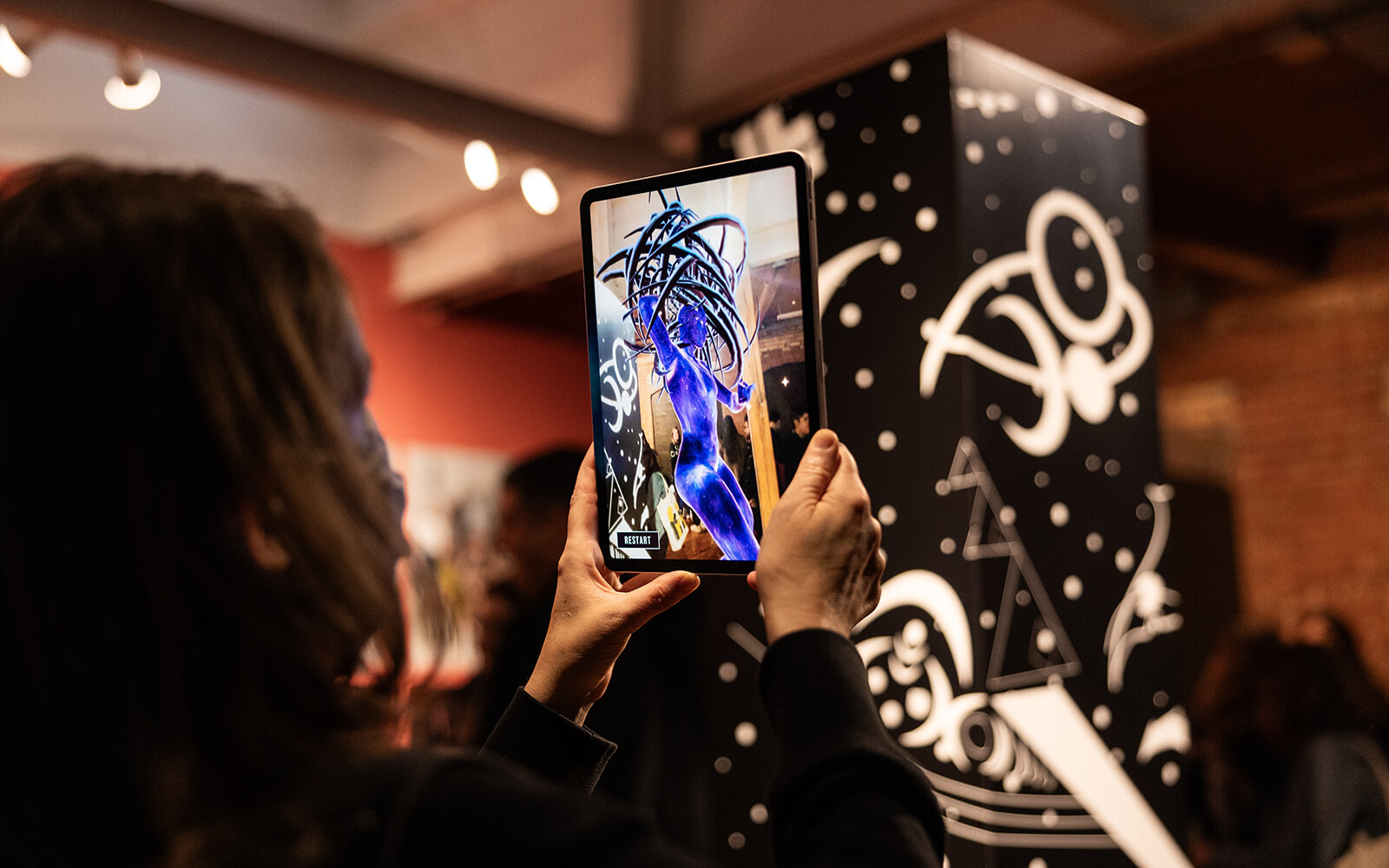
An industry track showcased the imagineNATIVE Institute’s mentorship initiatives, with early-career Indigenous filmmakers, musicians, writers, and story editors sharing their experiences developing a short or completing a screenplay; a full-on pipeline, much of the material nurtured in these programs will be screened in the imagineNATIVE Originals track in future editions of the festival. Most festivals incubate content and support creators, but here the focus is not only on helping Indigenous creators find (and preserve) their voice but setting them up to navigate a not-always-so-benign industry with a network of support to draw on. Beyond the lucky few who receive direct mentorship, a robust and generous awards program (with a total of $65,000 CAD in prizes) recognizes and nurtures talent across mediums and formats. “We will manage our own destiny and maintain our pride and identity through story,” reads the mission statement in the program. This mandate to assert Indigenous narrative sovereignty and a culture of care is infused through every imagineNATIVE initiative.
Unsurprisingly, care and support provided the framework for the third Future Festivals Lab. Rather than keynotes, panels, or roundtables in the public eye, imagineNATIVE hosted a ‘culture workers only’ private sharing circle. The mix of global Indigenous curators and culture workers and local festival makers and event organizers communed to ask big questions: How can culture workers care for themselves and grow while doing their important work? What do deeper and more meaningful collaborations look like? And how might cultural organizations remain fluid and meet the needs of their local communities?
Focus: Indigenous cinema and video, media and digital art
Location: Tkaronto / Toronto, Canada
Launch: 2000
Frequency: Annual
Visitors: ~23,500 on-site, 7,000 online
Team: 16 permanent staff
Structure: NPO (nonprofit organization)
Funding: Public (national, provincial, municipal)
Formats: Screenings, exhibitions, performances, conference, supplementary online and national tour program
Naomi Johnson, Kanien’kehá:ka (Mohawk) Bear clan from Six Nations, is Executive Director for imagineNATIVE, the world’s largest Indigenous film and media arts festival. She previously served as the Artistic Director at the Woodland Cultural Centre for seven years. In 2023, Naomi received the Margo Bindhardt and Rita Davies Award from the Toronto Arts Foundation for arts and culture leadership.
It’s fabulous that there are way more opportunities now, but I think what makes us special is how we provide opportunities. We are a very relationship-driven organization. Relationships matter to us. I think it’s central to our mission to ensure creators feel supported and provided with a safe place to come to. Trust is top of mind for us with all the work we do, even with big partners. If we’re dealing with a gaming company or a distributor we make sure that the relationship is good and that the people we are dealing with have the same values as us. There have been many times when a relationship has gone sour, and I’m left thinking ‘I did not like what they said’ or one of my team members says ‘I did not like how they talked to me’ in a meeting. If the vibe is off we sever the relationship.
There’s more and more support available though. The Indigenous Screen Office, which was recently formed, can provide great funding opportunities for filmmakers who have established themselves and have several projects under their belts. We complement this by being a platform for everyone. It doesn’t matter what level of your career you’re at—we want you at imagineNATIVE.
I directly benefitted from imagineNATIVE’s approach to mentorship when I trained for a whole year under my predecessor Jason Ryle before assuming the Executive Director role. That was a really good indicator of what kind of organization this is. Currently, the role of Associate Director has been reinstated with my colleague, David Morrison in this position. A role similar to the model in which I worked with Jason. The idea is that there isi someone consistently being mentored to take on the job should anything happen to me. A good succession strategy is vital in the precarious non-for-profit arts world.

To cite a specific example: the Indigenous Screen Office is a huge deal. That’s major progress. The fact that imagineNATIVE is now an international film festival with connections to many other Indigenous festivals around the world and that they look to us and ask for guidance, that’s incredibly rewarding since we have looked to others for guidance in the past. There’s a collaborative effort and ownership of who we are as people, working towards knowing our history and being about our histories. That’s why it’s important for everyone to understand the past. If I were the average Canadian, I would be furious with the information that has been withheld from me—I want to believe most Canadians feel this way. When the mass graves of children were uncovered at the Kamloops Residential School in 2021 it was the first time in my life I’ve seen an outpouring of outrage for us as a people. People all over the country were wearing orange shirts in solidarity on Canada day—nobody felt like celebrating. I’ve never seen that kind of mass support before.
Culture in a city can’t be reduced to one or two big events. What kind of a city do we want to live in? And if we keep going down this path it won’t end well. We need to think about arts organizations as investments: we’re investing in the health of the community and the city. I’m seeing a shift now where the priorities are changing depending on who’s in power, but decision-making always comes down to the economy. That shouldn’t be the only factor that informs policy but even if it is: festivals can measure their economic impact in the millions. The culture sector does not see any of that return.
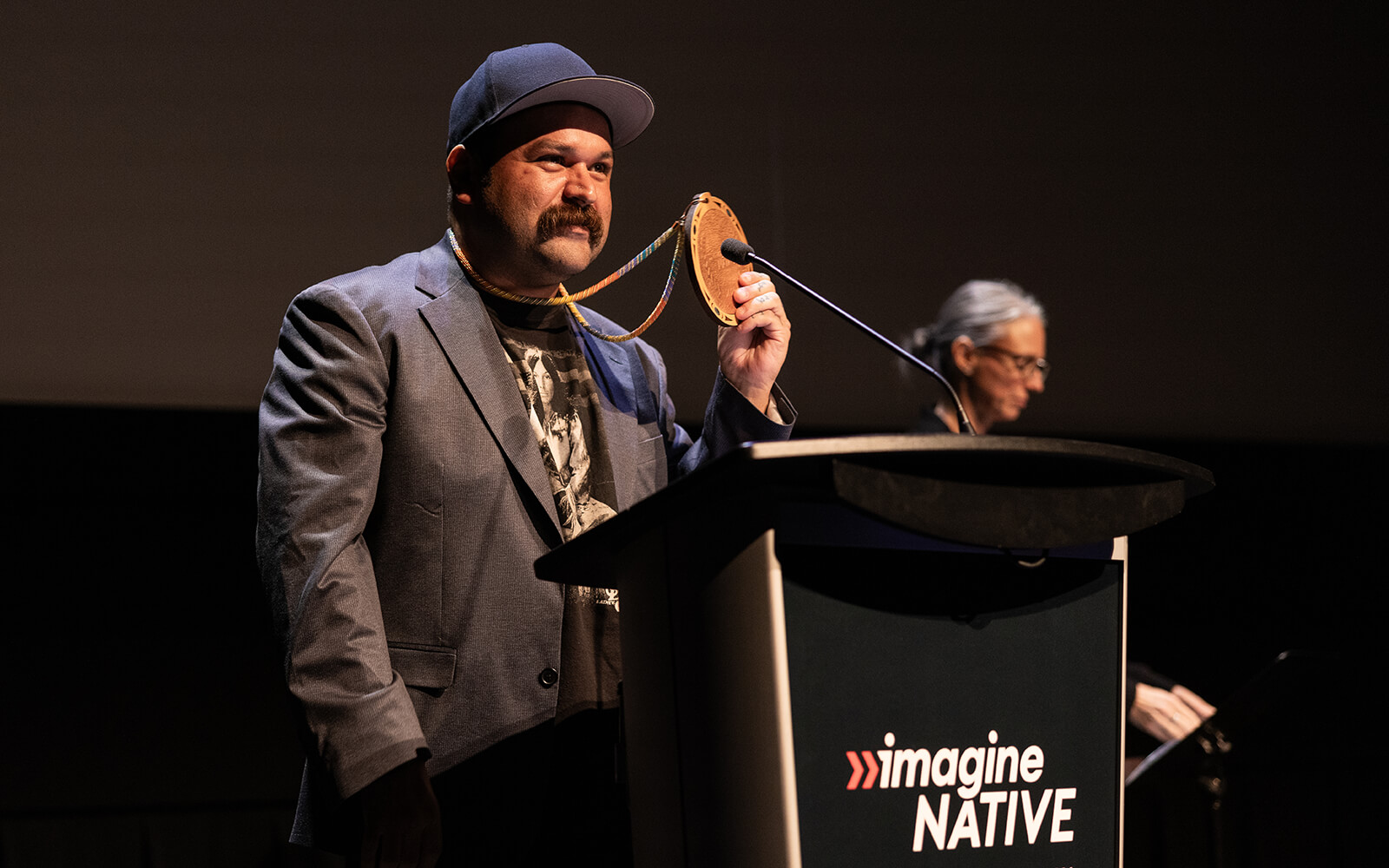
A related initiative is our 2022 partnership with Reel Canada. We will be working with them again to provide programming for National Canadian Film Day which will bring Indigenous programming to various Cineplex Odeon theatres across the country.
Lily Gladstone winning the Best Actress Golden Globe for her work in Killers of the Flower Moon (2023) was a really wonderful moment, and I saw so many Indigenous people proclaim joy and love for that victory. It thrills me to see that kind of sentiment because historically, for a lot of us, especially those from Indigenous communities—who grew up on reserve—there’s a scarcity mentality because not everyone has enough. All too often, we’ve had to contend with lateral violence when one of us moves forward. So it warms my heart to see people genuinely happy and celebrating a success. That’s a sign of the times.
The conversations that cultural producers have in private are different from the ones they have in public. In front of a crowd, arts workers need to be diplomatic, convey optimism, and keep the expectations of funders in mind. Behind closed doors, they engage in real talk about the day-to-day grind of mounting strong programming with limited resources. Burnout, frustration, and sometimes dread that—economically—they might not be able to justify staying in the arts indefinitely all rear their ugly heads. But beyond airing frustrations, they also share stories of resilience and offer generous support for one another.
On October 18th, a ‘culture workers only’ sharing circle took place during imagineNATIVE. Unlike the other Future Festival Lab sessions which skewed towards white and European, most of the participants were either Indigenous or South Asian Diaspora arts workers. The politics were more complicated than in previous lab sessions—tensions between Indigenous values and an international arts sector built atop colonialism loomed large. Held off-site from the festival at Artscape Sandbox—an event space caught up in insolvency with serious implications for Toronto arts—the conversation did not pull any punches about working in the arts under neoliberalism.
Festival Circle Conversation: “Navigating Challenges + Shaping Futures” with Liisa Holmberg (Arctic Indigenous Film Fund, International Sami Film Institute), Rosina Kazi (Bricks and Glitter); Ted Steven (Frequencies); Heather Haynes (Hot Docs Canadian International Documentary Festival); Candace Scott-Moore (Indigenous Fashion Arts); Naomi Johnson, Cynthia Lickers-Sage, Kaitlynn Tomaselli (imagineNATIVE); Belinda Kwan, Evangeline Brooks (InterAccess); Tonya Williams (JAYU); Madeleine de Young (Māoriland Film Festival); Sarah Mackenzie, Alain Mongeau, Maurice Jones (MUTEK); Katherine Bruce (Planet in Focus); Deanna Wong (Reel Asian Film Festival); Tonya Williams (Reelworld Film Festival); Kalpana Srinarayanadas (Regent Park Film Festival); Cam Scott (send + receive); Sanjeet Takhar (The Music Gallery); Kasra Goodarznezhad, Luisa Ji (UKAI Projects); Scott Miller Berry (Workman Arts)
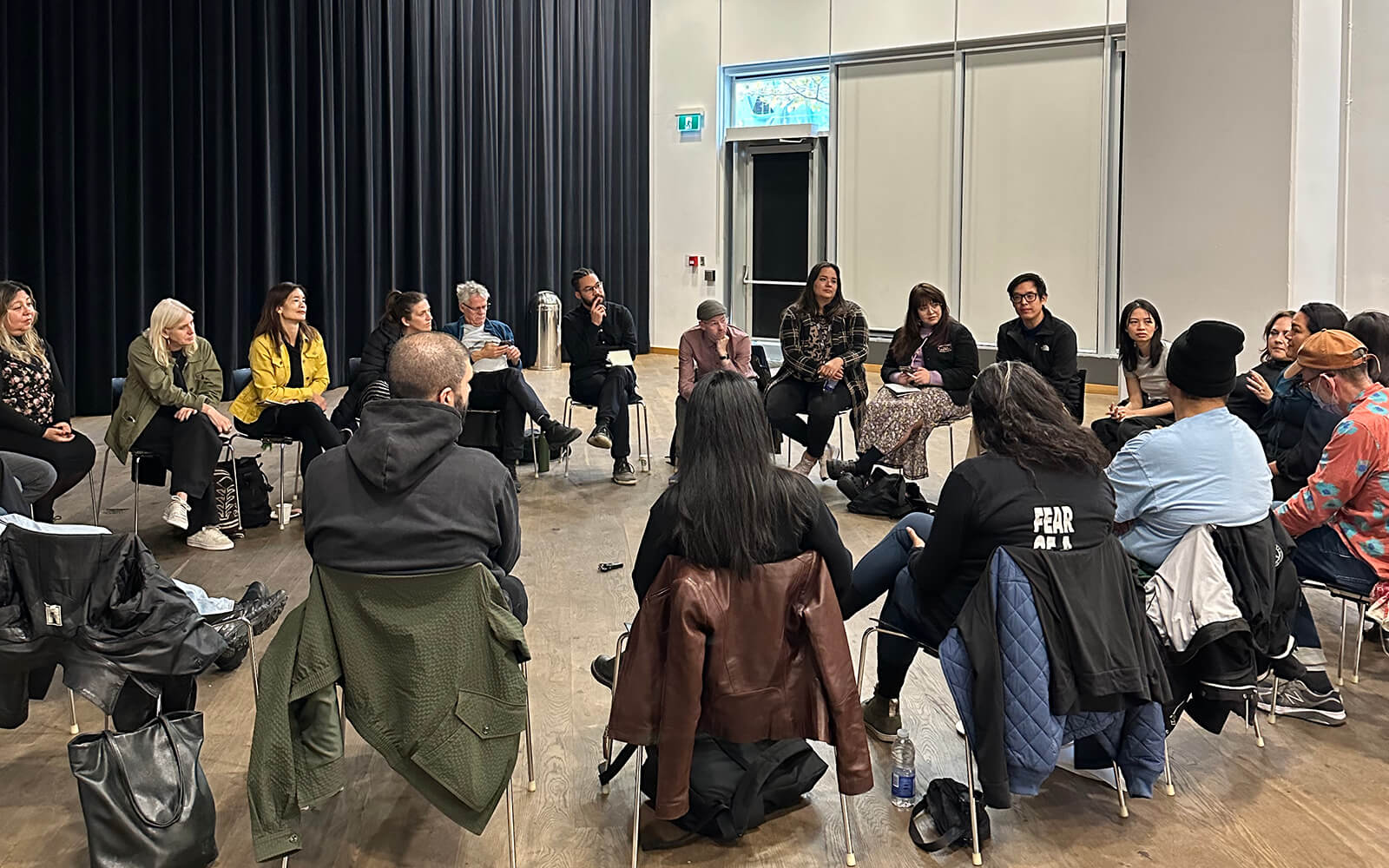
“We’re all way too busy to do this. We don’t do this enough,” says Naomi Johnson. “There are collective solutions among us, and there’s collective advocacy that can be done,” she enthuses as the assembled cultural workers introduce themselves and voice their hopes and concerns. Taking advantage of the safe space, several of the first speakers, including Sanjeet Takhar (The Music Gallery) and Belinda Kwan (InterAccess), start the conversation off with reflections on capacity and burnout.
“I think our problem as an organization is we can’t dream big enough,” says Takhar of the stifling effect of being perpetually under-resourced. “We are physically incapable of doing more, and we don’t have ways to increase staffing.” She details how this is impacting her primary goal: getting money into the hands of artists. “We’re currently piloting a notetaking program where we pay artists to attend InterAccess events as part of their creative research. They write notes for other folks—increasing access—and we redistribute funds to them,“ says Kwan. “Why not hire artists instead of outsource the work to folks in other fields?“
Several speakers lament how their personal art-making practices have ground to a half (or died) as a byproduct of working day in and day out to support artists. “At IFA we have wellness Fridays,” says Candace Scott-Moore of an Indigenous Fashion Arts initiative to schedule time for decompressing and self-development. “I used to be this crazy workaholic, and now I have some boundaries,” she enthuses. “I’m stealing that for imagineNATIVE,” jokes Johnson, eliciting a hearty laugh from the group. Representatives from other organizations share various self-care regimes. “We’re trying to each do a couple of residencies throughout the year outside Canada and just focus on making art and press pause on admin for a few weeks,” says Luisa Ji of an initiative within UKAI Projects that ensures each team member gets time out beyond their steady stream of projects.
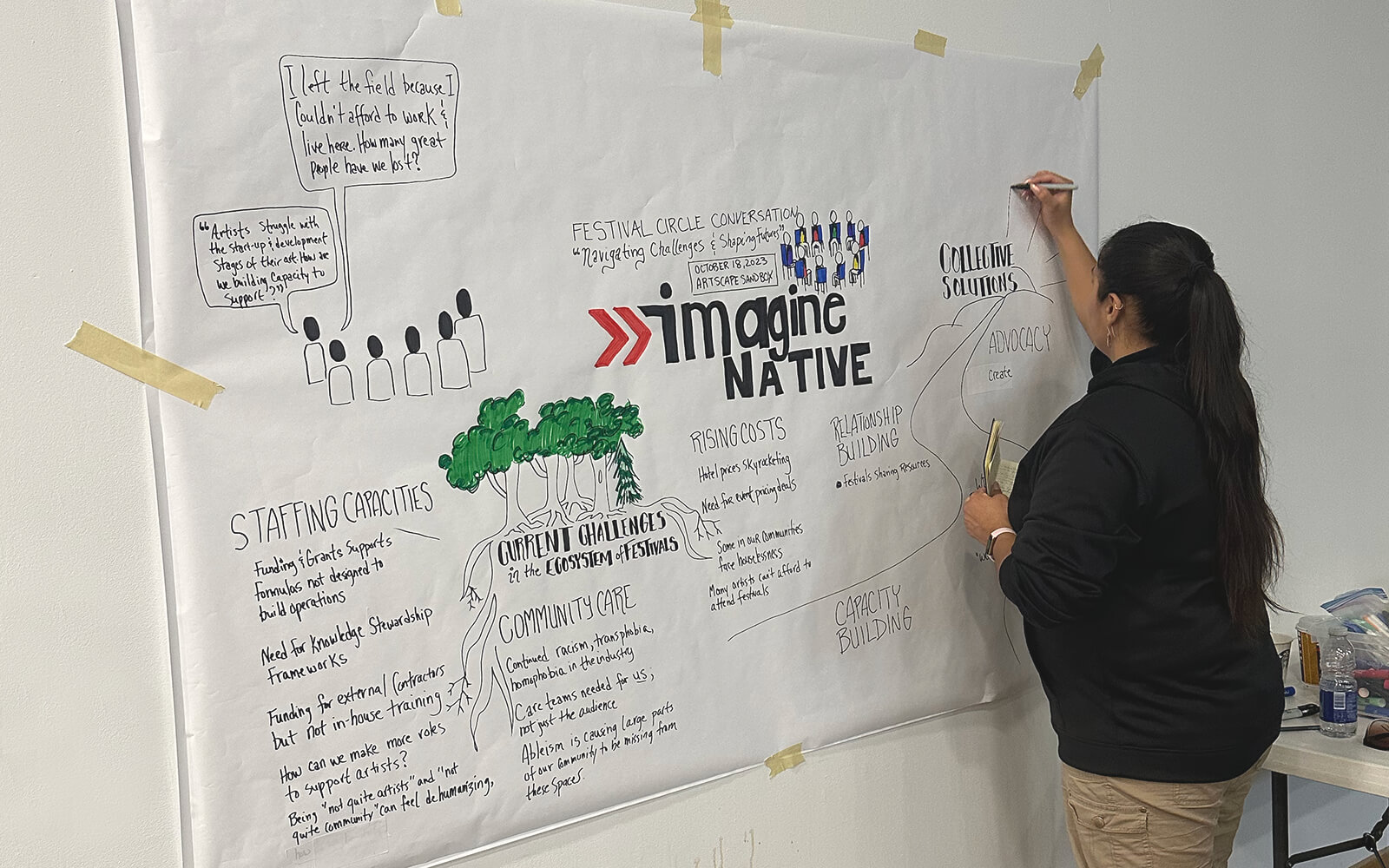
“Salary is the reason I left the field,” says a former imagineNATIVE employee. “I couldn’t afford to live in Toronto. I was pregnant at the time.” And the pay bump that came with moving to another sector was enticing. “Can I even afford to go back?” she asked herself a decade later. “How many people—great workers—have we lost because they simply can’t afford to work in the arts?”
“If we artists are not surviving, and most of us in Toronto aren’t right now, your shit’s going to fail,” says Rosina Kazi (Bricks and Glitter). Coming from the DIY space that engages a constituency of queer, trans, and racialized artists she tends to those that have been most directly impacted by rapid gentrification. “In the arts, we pretend we’ve got bangin’ and coolest shit. Meanwhile, half of us can’t afford a meal or are going to food banks,” she says, arguing that the culture sector should organize to protect housing and food rights. Cam Scott (send + receive) recalls a friend recently suggested to him that artists should receive universal basic income. “Why limit that to artists?” Scott responded. “We need to de-specialize art” he implores, and confront bigger systemic issues rather than sequester ourselves in a privileged ivory tower.
Several of the speakers shared stories of resilience and invention to counter the grumbling about precarity. Most excitingly, Madeleine de Young details how her team at the Māoriland Film Festival quintupled during the pandemic by “looking at the interconnection between all the art forms we celebrate.” “There are no films without artists, so we opened an art gallery. We want to bring young people into performance, so we run kids drama and dance classes.” A companion commercial studio capitalizes on in-house talent to generate revenue, an event space provides a meeting place for Indigenous artists, and a community supplies a spin-off catering business (and feeds the staff). “We’ve been able to spread out our risk so that if one project ends we still have baseline funding,” she says of the effort to expand beyond just organizing a yearly festival and ensure the team of 28 all receive the living wage for Ōtaki, New Zealand.
“All of us have faced similar issues in varying degrees based on our local ecosystems,” says MUTEK’s Maurice Jones as the session winds down. While there may be no easy fixes to combat the constant pressure to do more with less (resources and time) workers can count on one thing when they convene: support and understanding.
Over 2023-24, the Future Festivals Survey polled 125 artists, curators, culture workers, and festival makers from over a dozen countries on the state of cultural infrastructure in their cities and countries. Here are examples of what worries cultural workers.

“The steep cuts by Slovakia’s new right-wing government have caused a collapse of the country’s cultural sector. This will inevitably lead to a de-professionalization among people working in the arts and, over time, a loss of cultural identity. I don’t think we are prepared for this new era of austerity and systemic fragility. As a festival maker, I’m very worried.”
Lucia Dubačová is a Slovak cultural strategist and curator focused on digital arts and culture. She is the founding director of Bratislava’s Sensorium Festival and consults for the city’s Metropolitan Institute. She also curates Signal Forum in Prague, ran the R&D department at the Slovak Design Center, and managed Trenčín’s successful candidacy for the European Capital of Culture 2026.
“I struggle with the current frameworks of artistic and curatorial practice. We often claim to address today’s big challenges, but rarely leverage the transformative power of the arts for change and liberation. Rather than exploring pressing eco-social issues on a superficial, aesthetic level in performative acts of self-realization, we must strive towards more collaborative work that puts meaning and community front and center. This shift in mindset will benefit our sector and the planet.”
Carmen Salas is a Spanish curator and cultural producer who works at the intersection of the arts and systems change. She is the founder of Connecting the Dots, a Mexico City-based international forum on creativity, art, and digital culture. She also co-founded the renowned Alpha-ville Festival in London, that ran from 2009 to 2016.

“Experimental and underground music in Brazil is in serious trouble! We can’t compete with the influx of major festivals that feature well-known artists and are sponsored by major brands. But funding an international sound art event solely through ticket sales is impossible. Sponsorship is needed, but those who can provide it only want to support events that reach mass audiences.”
Chico Dub is an artistic director, curator, and cultural manager based in Rio de Janeiro and São Paulo, specializing in advanced music and sound art. He is the director and curator of Novas Frequências Festival. Previously, he served as the artistic director of the Oi Futuro Cultural Center, music curator of the São Paulo Cultural Center, and manager & curator of Incidências Sonoras.
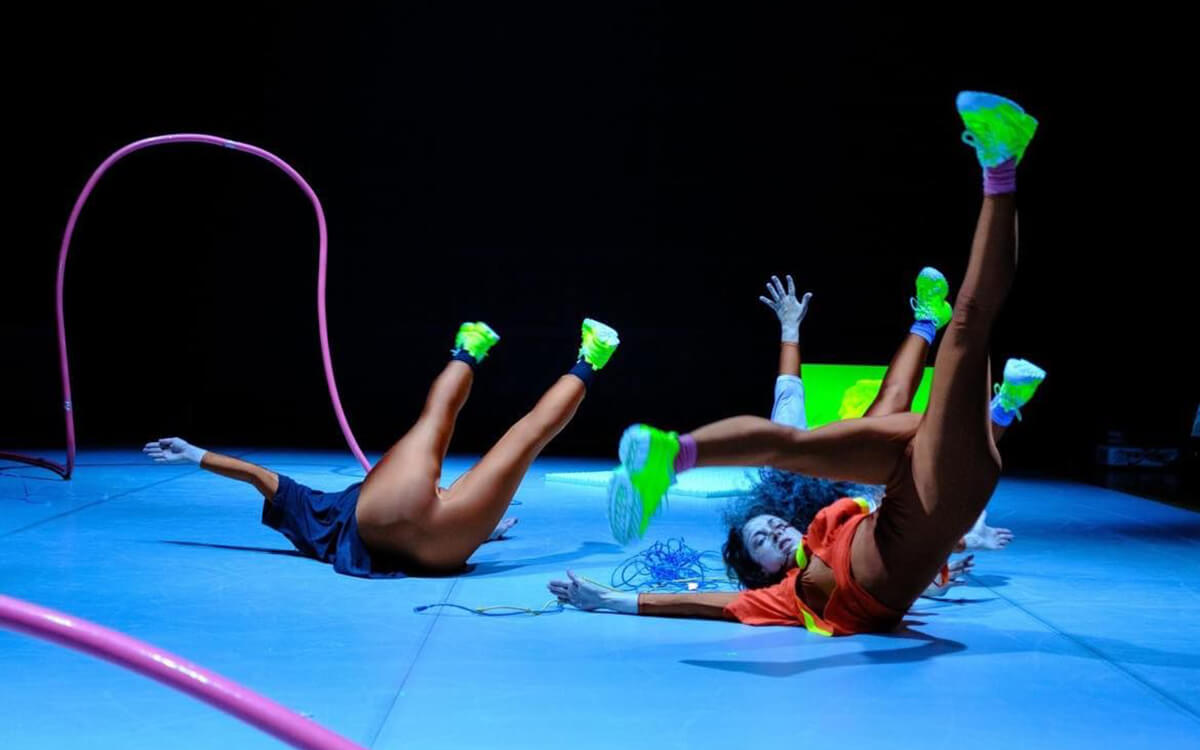
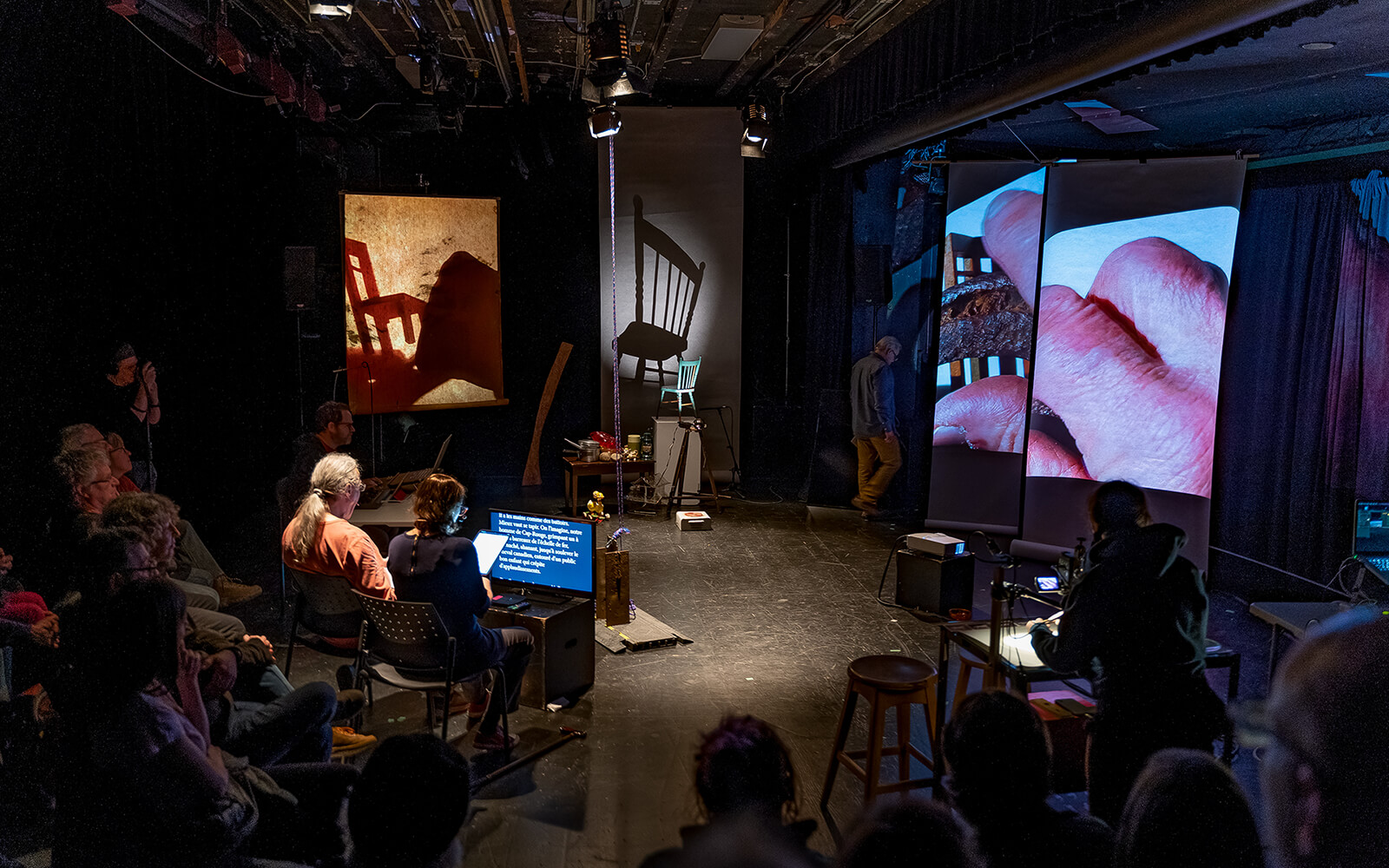
February in Quebec City is as ‘peak Canadian winter’ as you can get. Temperatures of -15°C are not uncommon, and as the wind ramps up, it gets much colder. Each and every winter, Mois Multi battles the deep freeze with a bold and experimental program of multidisciplinary art and performance. This year its warmth and joy could be felt most tangibly on the streets of the St-Roch district where, via augmented reality, residents could gawk at an elongated cartoon woman loafing beside a recreation centre or an abstract geometric assemblage craning over a hillside overlook. Mois Multi commissioner Emile Beauchemin poetically describes the festival’s 25th-anniversary edition, which ran from February 1st to 25th, 2024 as providing the “monsters, martyrs, and heavens” attendees needed to nurture their souls and imaginations. Likening its musical performances, installations, and mixed reality experiences to encounters with magical creatures and idyllic utopias, Beauchemin invokes the mythic to frame how Mois Multi “defies caution.”
The first edition of Mois Multi took place in 2000. The festival was the brainchild of Recto-Verso Productions, a production team that also co-founded Quebec City’s sprawling Méduse arts facility. Like fellow Future Festival MUTEK, Mois Multi commenced at the turn of the millennium moment when new media art broke away from video art and the moving image—from institutions into ephemeral and experimental spaces. The festival showcased this exciting new milieu, and from day one some of the headlining projects were homegrown. Recto-Verso developed artworks that didn’t fit into traditional definitions of stage design—weird environments and machines that took advantage of new technologies and required large teams to mount on both the artistic and technical sides. Basically, art that “defies caution.” Early highlights include lighting designer Caroline Ross’ elevated circular audiovisual performance chamber, Lumens (2000-04), and Rachel Dubuc and Berri R. Bergeron’s dadaesque Machine-E (E pure, if it moves!) (2001-02) that plays (and destroys) media with clockwork precision. Multidisciplinary research-creation has been in the festival’s DNA ever since, yielding an impressive 48 experimental performances and installations including Carole Nadeau’s LE MOBILE (2010), Herman Kolgen & David Letellier’s Eotone (2014), and Martin Messier & Yro’s Ashes (2018) that have been presented at Mois Multi and festivals worldwide.
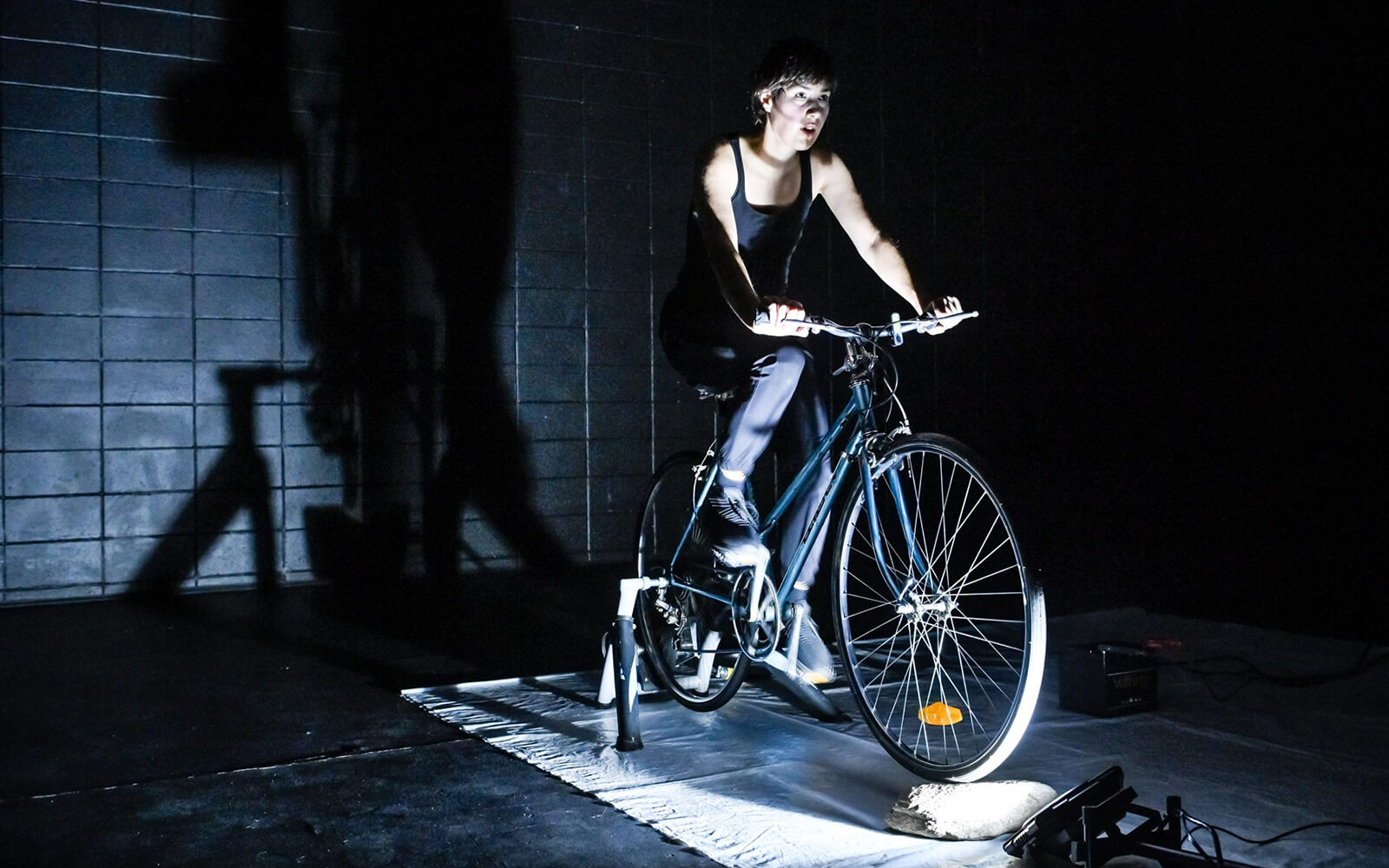
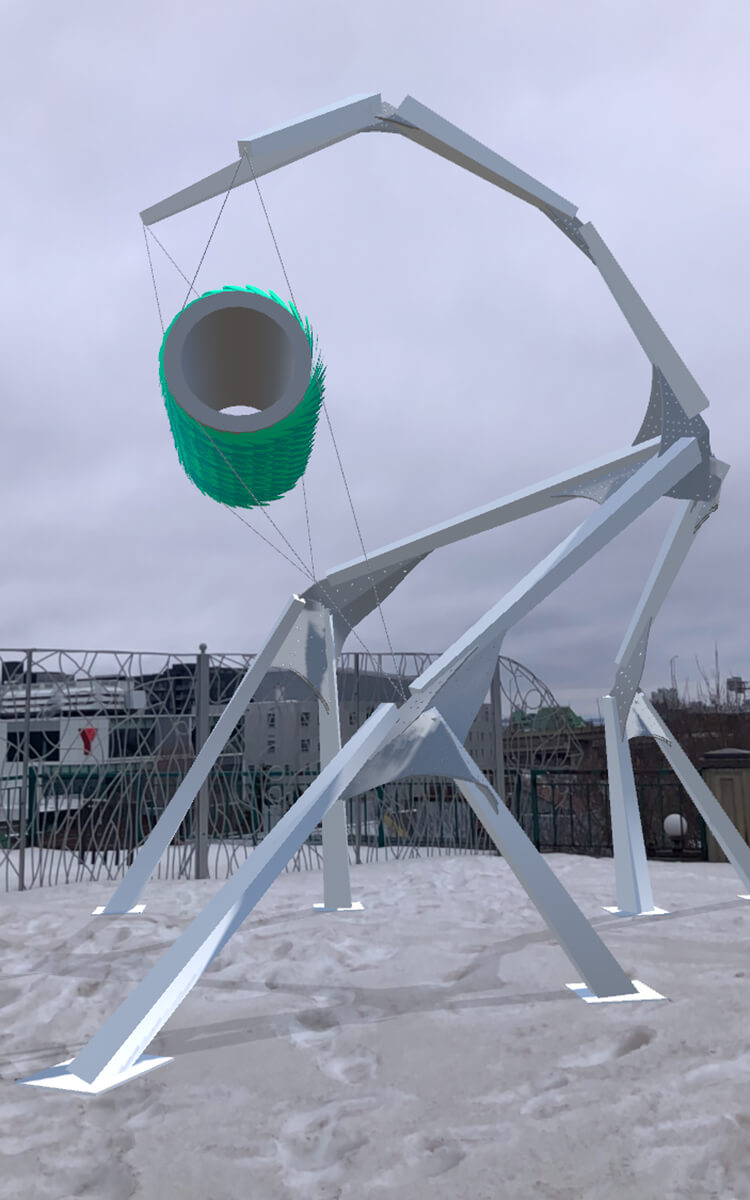
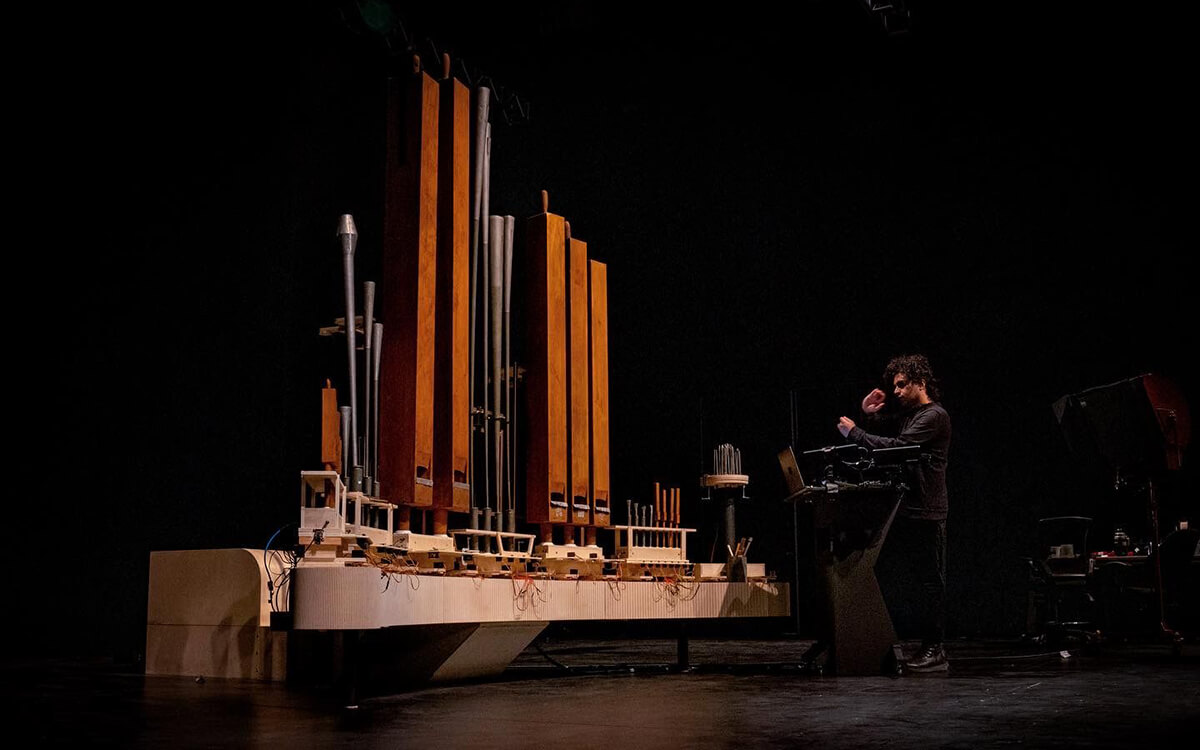
The 2024 edition of Mois Multi continued the tradition of incubating key works in-house. Presenting the results of a month-long residency Belgian artist duo Club Efemeer staged the sublime Voile (2024) in a black box theatre within Méduse. A delicate, luminous veil articulated by lasers, smoke, and darkness, the immaterial form billowed like a curtain in the breeze. Literally performing degrowth, artist and composer Mykalle Bielinski built a stationary bike onstage in Warm Up (2024), and then pedalled it to generate power for her microphone and laptop. And at the former space of worship La Nef, sculptor-musician Navid Navab played a century-old pipe organ; not as a keyboard, but with chaotic machines and microcontrollers. The playfulness of eccentric performances and the AR takeover of the streetscape was echoed in the Volet Pro symposium. Curated by Amélie Laurence Fortin, it assembled a network of artists and cultural producers to situate the program within a broader field of discourse. In addition to addressing timely topics like post-generative AI creativity and virtual exhibition design, Volet Pro also platformed nuanced conversations in support of local and international art ecosystems. Directly related to Future Festivals, the producers of three new Quebec festivals (L’Écoute, Le Casse-Gueule, and Génèse, a student-organized festival at Laval University) shared programming highlights and learnings gleaned from their fledgling first editions. Independent media received airtime as well, with the publishers behind BLOK, Espace, and HOLO discussing their commitments to their respective art beats—and the challenges of building audiences in the attention economy.
The augmented reality cityscape sculpture garden “L’Espace suspendu” demonstrates how Mois Multi’s innovations are not limited to adventurous programming—they open up access. Beyond its public art mandate, the initiative onboards artists from more traditional mediums into AR. Contributing artists Carol-Ann Belzil-Normand, Ludovic Boney, Cooke Sasseville, and Fanny Mesnard came from illustration and sculpture backgrounds—they had never worked in AR before. Retro-Verso, together with local technologists ALTKEY, supported them throughout the ideation and production process, laying the ground for introducing more artists to the medium in the future. The festival also dedicates part of its program to families. Media art is not traditionally kid-friendly fare, but Mois Multi transforms some of its more playful offerings into activations for younger attendees. The interactivity of Vincent Fillion’s audiovisual drone synthesizer OCTOCOSM[E] (2023), for example, was leveraged to allow children to get hands-on with its central abstract and experimental instrument.
Mois Multi’s anniversary edition was also a pivotal moment for Future Festivals. Scheduled at the project’s critical halfway point, it reunited the associated festival makers for some serious reflection. What have we learned about the state of cultural infrastructure—our needs and wants—at past Future Festival sessions? What are the project’s blind spots, the unknowns outside of our own (largely Western) festival realities, that we have yet to cover? Have our findings changed the group’s initial visions for the future and, most importantly, how do we translate them into action?
Focus: Multidisciplinary and electronic art
Location: Kébec / Quebec City, Canada
Launch: 2000
Frequency: Annual
Visitors: 8,000 to 10,000
Team: 5 permanent, 30 temporary, 35 volunteers
Structure: NPO (nonprofit organization)
Funding: Public (national, provincial, municipal)
Formats: Shows, exhibitions, performances, public art, conference
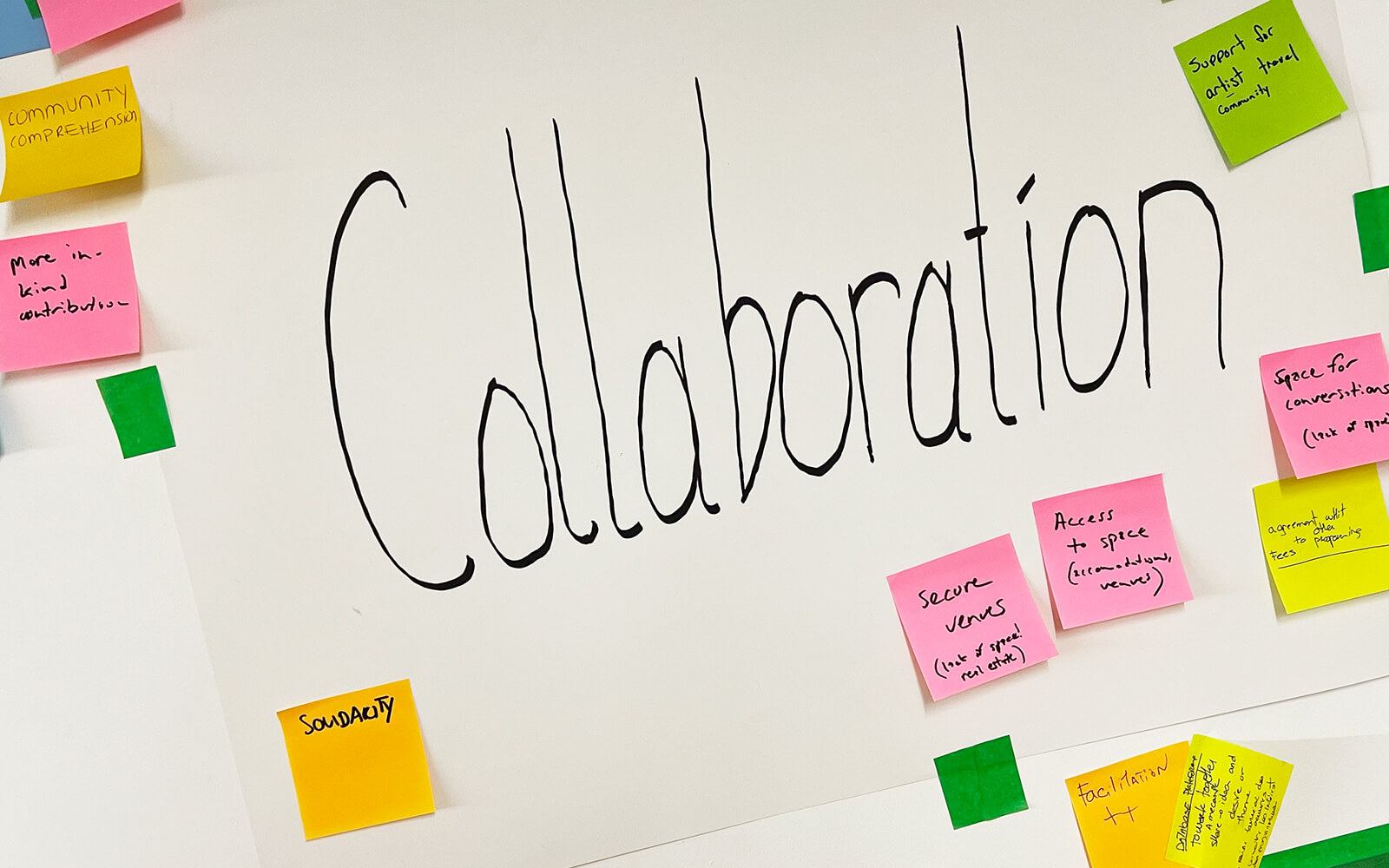
Nothing drives the precarity of the cultural sector home like a festival having its funding cut. After the strong showing by Germany’s major conservative party in the most recent North Rhine-Westphalia elections, Future Festivals associate NEW NOW is unsure if they will return with a third edition of their biennale in 2025. “There’s a real threat of a hard-right shift in the country because mainstream conservative politicians lean into extremist positions to garner votes,” says NEW NOW’s Rafael Dernbach. “But there is a lot of hope as well. Last week, I was with my family and friends at the Reichstag with 150,000 people protesting against far-right populism.”
Populism isn’t the only thing threatening the arts. “I was just in Berlin for Transmediale,” says Future Festival Project lead Maurice Jones. “The opening and its conference was a beacon of hope about what a festival can do in these times of crisis and volatility,” he says, referring to the chilling effect that Israel‘s post-October 7th aggression against Palestine has had on the German cultural sector. “It did a great job of holding space for very difficult conversations that are either actively suppressed or simply don’t happen in mainstream media.”
The above two accounts shared at the beginning of the fourth Future Festivals Lab illustrate why the project matters. A future where the cultural sector even exists is not a given, and even in progressive countries, the climate can change from art-positive to cutbacks, closures, and censuring overnight. Energized and with a new sense of urgency, the group’s participating festival makers and cultural workers reconvened at the project’s pivotal midway point. The task: turn field research and survey data into a plan for action.
Workshop: “Navigating Challenges + Shaping Futures” with Alexander Scholz, Greg J. Smith (HOLO); Naomi Johnson, Kaitlynn Tomaselli (imagineNATIVE); Rafael Dernbach (NEW NOW); Sarah Mackenzie, Alain Mongeau, Maurice Jones (MUTEK); Damian Romero (MUTEK.MX); Emile Beauchemin, Mélanie Bédard (Mois Multi & Recto-Verso); and Cam Scott (send + receive)
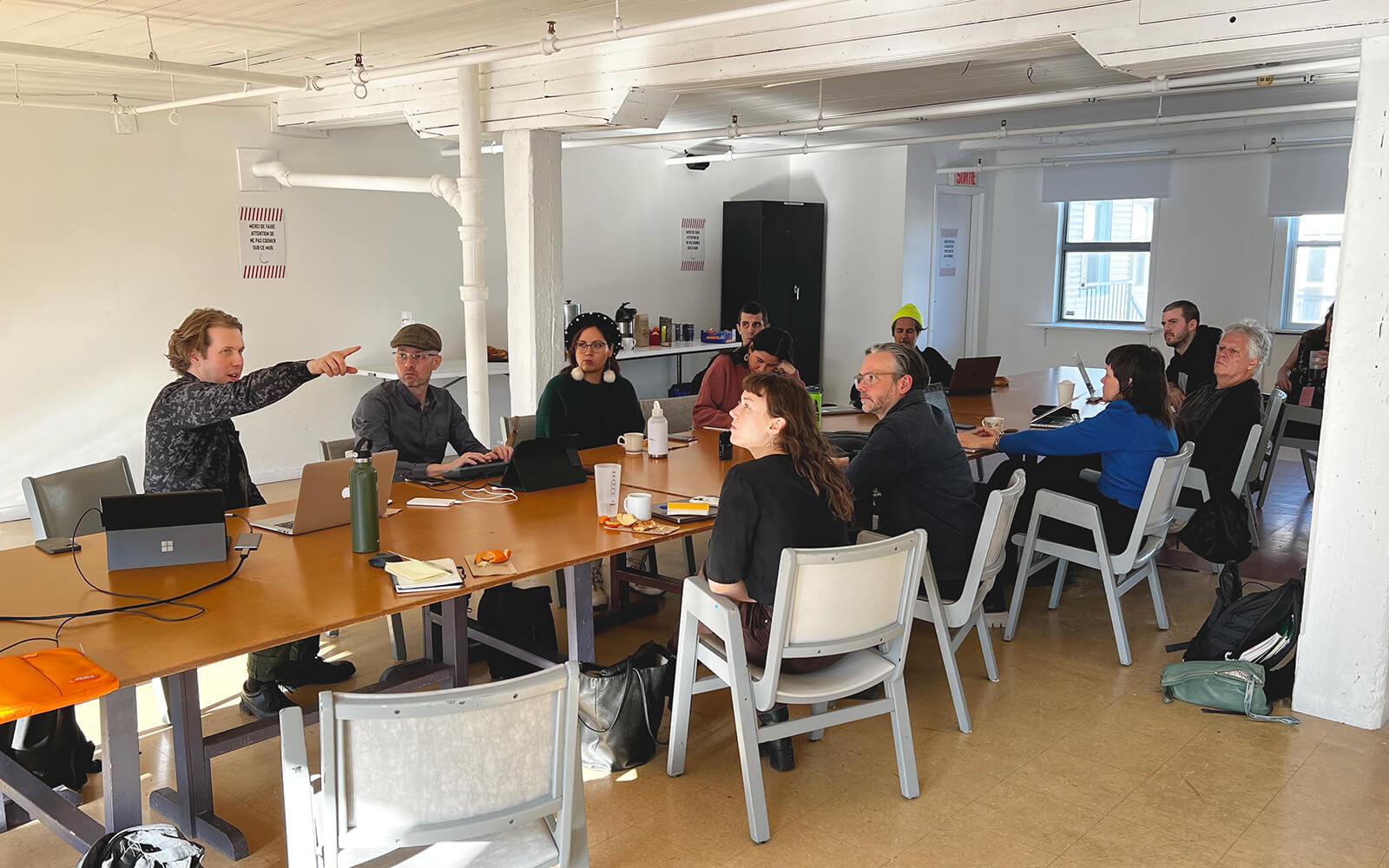
Tackling inequity, combatting burnout, and reducing the carbon footprint—the Future Festivals working group has identified areas where change is urgently needed. In its lab sessions thus far, topics and approaches including degrowth (NEW NOW), radical access and inclusivity (MUTEK), and asserting Indigenous narrative sovereignty (imagineNATIVE) were foregrounded and these ideals remain top of mind. Mois Multi marked a crucial midway point for the project as after numerous workshops and consultations, it was time to move on from blue-sky brainstorming toward tangible outcomes.
Sequestered away in a sunny, upper-level, large open workspace in the La Charpente des fauves art space, the group gathered around a long table. “The work we’ve done thus far in the project has set us up for this,” says Jones. “Today we finalize the purpose and outcomes of the Future Festivals Project.” To do that the group plumbed the depths of the frustrations aired in the cultural worker ‘group therapy’ sessions over the last year. “Tensions can be described as a discrepancy between what is and what could be,” says Dernbach, introducing the morning session. “We will map these tensions, and then we’’ll massage them.”
Over three hours, the group broke into small groups to brainstorm a list of ‘things they need,’ either as festival makers or cultural workers. Then, tangible interventions were imagined—actions that could deliver those desired outcomes. The conversations to identify those interventions were passionate and wide-ranging, with groups fervently discussing everything from levelling up political advocacy to creating cryptocurrencies to meet the needs of the cultural sector. The following key points represent some of the tensions and proposed interventions that were identified.
Tension: Festivals struggle to capture and maintain attention under platform capitalism, as communication with audiences gets lost in algorithmic timelines and social media noise. This lack of ‘discoverability’ of the value festivals create results in their being (relatively) invisible locally despite their national or international importance.
Intervention: Prioritize (more) direct communication with audiences and don’t try to compete in the attention economy. Festivals proactively build bridges to local communities and arts organizations to grow the audience in their own backyard.
Tension: Festivals suffer from a generation gap, externally with younger audiences and internally between senior and junior employees. Differing generational expectations around programming, governance, and equity create fault lines within organizations.
Intervention: Develop multigenerational representation in both the artists being programmed and across governance to create buy-in from stakeholders of all ages. Build consensus and spaces of agency for younger team members to instill a love for the work across the entire organization. Prioritize meeting younger audience members and workers where they are to ensure long-term relevance.
Tension: On the left and centre, very few politicians champion the arts—and right-wingers have been known to attack the sector as wasteful to score political points. A lack of national, regional, and municipal advocates makes the arts perpetually vulnerable to cutbacks, austerity, and critique.
Intervention: Emulate the lobbying tactics of bigger industries. Consult with past (and future) culture ministers to learn how to lobby, find allies within institutions, and what kind of communications strategies impact discussions withinwithiin the halls of power. Change consensus thinking so the positive economic and mental health benefits of the arts are common knowledge. Work towards a fixed percentage of GDP being dedicated to the arts as an enshrined policy to protect against cuts based on who gets into office.
Tension: Within festival teams, there is seldom time or funding to investigate and develop partnerships with other organizations. When partnerships are established, they are fragile and easily lost due to staff turnover. Organizations are constantly scrambling to develop short-term partnership solutions.
Intervention: Festivals with similar mandates and/or programming team up and ‘share’ a dedicated partnership lead over an extended (e.g. 5-year) contract. In a well-funded and purpose-built role, this individual works to create bigger long-term partnerships that connect and support multiple organizations over longer timeframes.
Tension: The high demands and low compensation in the cultural sector are stressful for workers. Varying life-work balance expectations across generations and the difficulty of juggling parenthood with a career in the arts create HR challenges.
Intervention: Block out time within regular duties for employees to develop their skills and explore their curiosities. Provide bespoke flexibility for employees with children so they can excel at parenting. If the arts cannot compete with the private sector on compensation then it should do so on values and quality of life.
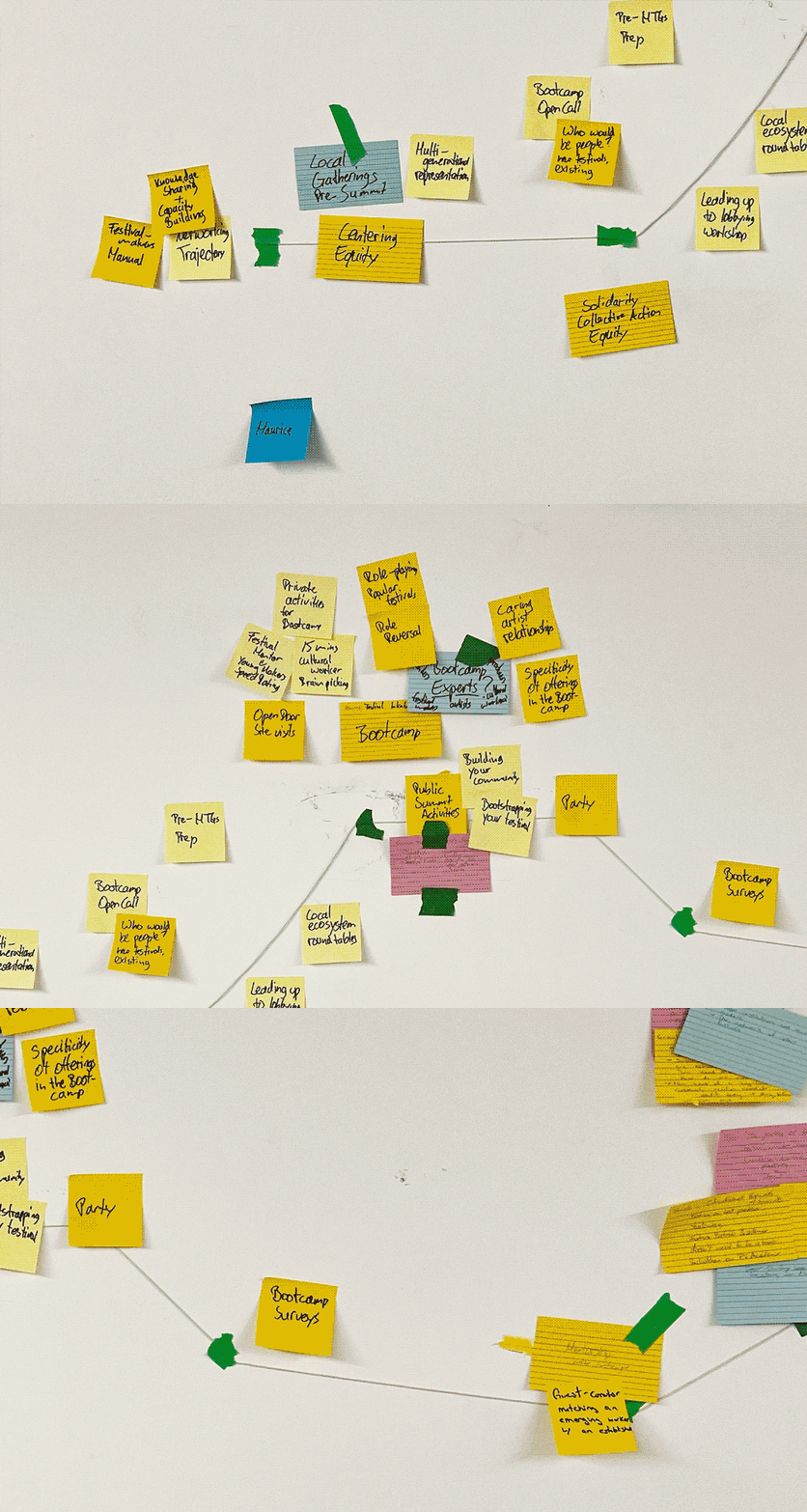
The biggest lesson from the project’s research phase is, perhaps, that there’s a need for continued conversation. But conversations require designated spaces and supportive infrastructure. An annual summit, for example, could bring together festival makers and cultural workers to share knowledge, upgrade skills, and build alliances. It’d be a festival for festival makers: designed around solidarity in the cultural sector and geared towards producing solutions to shared challenges.
The good news: The first iteration of such a gathering is already in the making. The Future Festival Summit will take place on August 19th and lead into MUTEK Montréal’s 25th anniversary edition. A whole day of activities will platform innovators in the cultural sector and present a whole catalogue of case studies to draw and learn from. That at least is the goal, said Future Festivals lead Maurice Jones. “And who better to workshop ideas with than the festival brain power assembled in this room?”
Putting their heads together, the group began sketching summit sessions that balance engaging sharing formats that foster openness and generosity with hands-on, impact-driven learning exercises run by experts. “I’d really want to take away applicable knowledge and learn new skills rather than hearing about how everything sucks again,” Naomi Johnson exclaimed with good reason. As past sessions have shown, group therapy is important, cathartic even, but it can only ever be the first step.
Bootcamps for festival workers were, therefore, an integral part of many proposals. Some matched veteran directors with young or aspiring festival makers in problem-orientated mentoring sessions. Others zoomed in on the nitty-gritty of lobbying, community building, and organizational bootstrapping. The most ambitious idea was that of a Future Festivals Academy, an extended skill-building framework that covers the full spectrum of cultural work from beginners workshops to masterclasses.
A Future Festival Summit is, of course, also family-friendly. Neither organizers nor attendees should have to decide between their kids and the arts. That’s why a proposed on-site kindergarten offers childcare during festival hours while work-life-balance coaches host counselling sessions for parents. And why not involve kids directly in the summit’s visioning sessions? After all, they’ll have to live with the festival infrastructures we set up today.
Building on the earlier discussions about political literacy, a desired guestlist of stakeholders to invite to the summit was drafted. At the top were representatives from the major funding bodies and Canada’s Culture Minister. What better way to drive home the state of the sector and its potential than to get key decision-makers in the room? Working outside the system, a ‘day without the arts’ was floated as a sector-wide programming blackout to get media attention and signal to the public that the arts sector is facing major challenges.
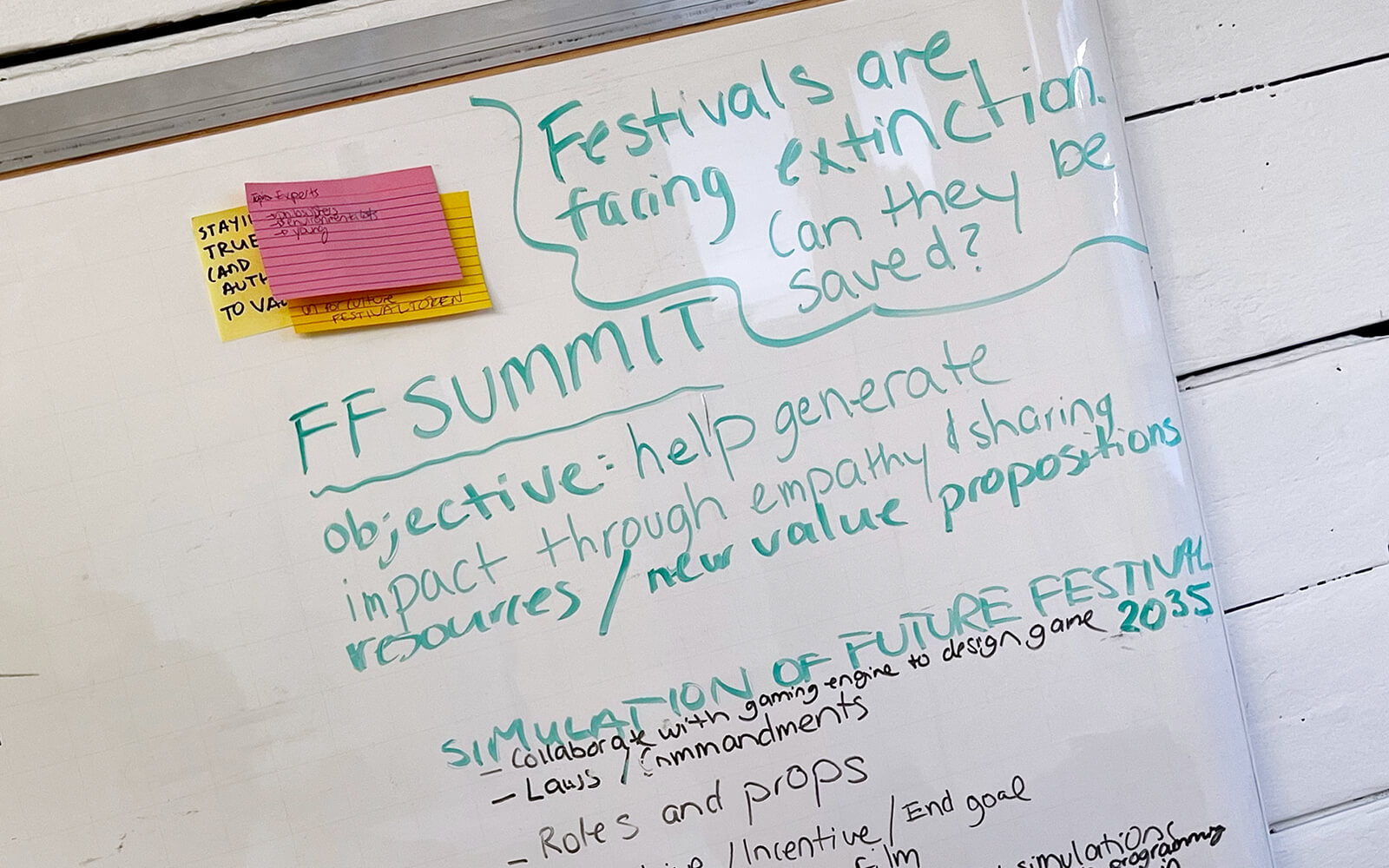
The most exciting proposal turned the summit into a LARP or live-action role-playing game. A theatrical intervention set in the year 2035 has attendees negotiate festival futures in different stakeholder roles to create empathy and derive new value propositions. Artists, for example, would assume the responsibilities of policymakers and funders would find themselves in the shoes of (precarious) cultural workers. The challenge: “Festivals are facing extinction! Can they be saved?”
The threat of extinction also raises important questions about the afterlife of festivals. If a festival indeed does go under, like NEW NOW may well have, then how can we preserve its contributions? Too many impactful initiatives have disappeared without a trace. A Future Festival Summit, the group argued, should also include a primer on archiving and conservation.
Not all of these ideas will make it, of course. After all, the scope of the first Future Festivals summit is limited by budget—not imagination. However, if anybody can create magic within tight constraints, it’s festival makers. If you are one: Mark your calendar, get involved via futurefestivals@mutek.org, and if you haven’t already, participate in our survey.
Over 2023-24, the Future Festivals Survey polled 125 artists, curators, and festival makers from over a dozen countries on the state of cultural infrastructure in their communities. Here are examples where organizations made real progress.

“At FutureEverything, we’ve gone to great lengths to increase transparency throughout the organisation. This includes seeking external advice, holding staff meetings, and working closely with our Trustees. We have created policies towards inclusion, accessibility, equity, and sustainability that we follow closely. This has made a huge difference to staff and how we work. It helped clarify processes and goals within the team and positively impacted how we collaborate and communicate with external partners.”
Irini Mirena Papadimitriou is a Greek curator and cultural manager focused on interdisciplinary and critical discourse to explore the impact of technology in society and culture. She is the former Creative Director of FutureEverything, an arts organization and innovation lab in Manchester, and, previously, Digital Programmes Manager at the V&A Museum, London. In 2024, she joined Diriyah Art Futures in Riyadh, Saudi Arabia, as Exhibition Director.

“The 2023 edition of the Gray Area Festival was focused on crip accessibility, so we tried to make it as accessible as possible. To do this, we undertook research and training, consulted with accessibility experts, and consolidated this information in an accessibility master guide. We now use this guide and follow its procedures (to the best of our ability) for all Gray Area activities. A few new services we provide are access to doulas at on-site events, ASL music translation for performances, and de-stimulation and cool-down spaces.”
Wade Wallerstein is a digital anthropologist from the Bay Area, currently serving as Associate Curator at Gray Area, a nonprofit interdisciplinary art space in San Francisco. His research centers simulation technologies and social life in virtual worlds.

“We’ve always been very invested in making our program accessible to the Youth. These efforts have truly blossomed in recent years: With Digitale Welten, we are running an annual week-long maker festival for kids, and Jugend Hackt is our regular hackathon for teens. As a jaded curator and festival maker, seeing the clever projects these young minds come up with gives me a lot of hope.”
Jeanne Charlotte Vogt is a Hamburg-based curator, dramaturg, educator, and creative producer. She is the artistic and managing director of NODE Forum for Digital Arts in Frankfurt, where she initiated the Digitale Welten and Jugend hackt FFM youth programs. She’s also part of the music theatre project [in]operabilities that investigates the aesthetics of access in the opera world.

A Future Festivals fiction
by N O R M A L S
It’s been about a year since we kicked off the Future Festivals think tank with the ambitious goal to critically reflect on our practices as festival-makers. Our cohort originally gathered to address an urgent need to rethink festival-making practices and, more broadly, our cultural infrastructures in the wake of the COVID-19 pandemic. While futures-oriented, the early months of the think tank quickly turned to the pressing issues of the present, a theme that we would constantly return to over the course of the project.
With the viral disease arguably contained or at least not taking up major news time, it was time for a roll call of the other issues marking our rolling polycrisis. Ranging from raging inflation, technocapitalist extraction on steroids, the climate catastrophe to military conflicts and unfolding genocides, we found ourselves confronted with several lifetimes full of critical work ahead. Not to say that what we do will solve any of these issues. Rather, these are the inescapable realities we find ourselves in.
Over the course of the past year, we initiated a series of experimental labs, speculative workshops, artistic interventions and performative discourses to address these grand issues and their local and situated impacts. We gathered local and international festival-makers to imagine abundant, resilient, and sustainable futures. These future visions were set to provide a rearview mirror for the group to critically reflect on the present and uncover pathways towards necessary transformations. Hopefully, the thought went, these exercises would enable us to manifest at least the tangible glimpses of these speculative futures in the present.
While the project certainly sparked imagination, festival-makers had difficulty making the critical translation from vision to transformation. We repeatedly felt disempowered in light of the incredible challenges of the present. The realities of working in the daily ‘trenches’ of festival-making appeared to inhibit grand visions of future festivals marked by abundance, resilience and sustainability from ever manifesting. Interestingly, festival-makers who, among other things, are in the business of showing glimpses of the future to their audiences, had a difficult time applying these futuring practices to their own work. If we, as festival-makers, cannot imagine our own futures how can we continue doing so for others?
Fest-forward, here we are. Summer 2024. Intervention time. Following our programming retreat as part of Mois Multi last February, which left us all weary and uncertain about what can actually be done, it became clear that a radical intervention was necessary. We might not be able to solve the grand challenges the world is throwing at us. But what we can do, as festival-makers, is to gather folks to figure things out together. So, here it comes, the Future Festivals Summit, an urgent call upon all festival stakeholders—organizers, artists, and audiences—to get to work in shaping our collective futures.

A Future Festivals fiction
by N O R M A L S
Despite producing more uncertainty the Quebec City retreat successfully surfaced some valuable pieces of our festival histories. In his interview in this very dossier, MUTEK founder Alain Mongeau shared that key inspiration for starting the festival at the turn of the millennium was controversial anarchist thinker Hakim Bey’s 1991 book The Temporary Autonomous Zone (TAZ). In this anarchist classic, Bey describes TAZs as social environments that elude formal structures of control and allow different social relations to form. Anti-grand revolution, the concept arises from an appreciation of the Insurrection, uprisings that “concentrate our force on temporary ‘power surges’”. Unlike revolutions, which strive for permanence, uprisings draw their power from their temporary status and openness. As such, “it may be planned, but unless it ‘happens’ it is a failure.”
Beyond pirates, maroons, utopian communes, religious cults and the internet, Bey explicitly mentions festivals as potential zones for temporary autonomy to spark. Expanding upon literary critic Mikhail Bhaktin’s concept of the carnival, festivals present spaces for the critique of authority and reversal of power dynamics, all in search of establishing a new world. In light of the looming polycrisis and its situated effects, the TAZ presents “a perfect tactic for an era” in which authority “is omnipresent and all-powerful and yet simultaneously riddled with cracks and vacancies.” It is these crack that TAZ as microcosms “of that ‘anarchist dream’ of a free culture” are set to capitalize upon.
Despite its inspiring potential, the concept of TAZ is not without controversy in both theory and practice. For one, Bey going by the real name of Peter Lamborn Wilson mobilized the concept to justify some reprehensible lifestyle choices. Similarly, anarchist enclaves that have been envisioned as TAZ, such as Copenhagen’s Freetown Christiana, are a shadow of their former selves. Telling is the story of Burning Man, a former hippie utopia once imagined as a temporary autonomous zone that has become a key cultural infrastructure for the big tech corporations of Silicon Valley. In other words, rather than presenting uprisings, in practice TAZs became hedonistic spaces where anything goes. A quarter-century later, revisiting TAZ through the Future Festivals project underlined its continued relevance, yet needing an urgent critique and update.
An often underappreciated facet of temporary autonomy is the importance of utopian dreams and how these carry critical visionary value in inspiring the formation of TAZs. Put differently, it is the thought of utopia that seeds the momentary uprisings in resistance to dominant societal norms and interventive state structures. Pushing the TAZ into new, more speculative territories then, the Future Festivals Summit proposes that not only do festivals provide temporary autonomous zones for structuring social relations differently, but by doing so, festivals are spaces for the collective imagining, experiencing and making of alternative futures. In other words, at their best, festivals are temporary utopias.
“Reason demands that one cannot struggle for what one does not know”, Bey reminds us, and in order to know “the TAZ desires above all to avoid mediation, to experience its existence as immediate.” Unlike abstract utopian dreams, then festivals as temporary utopias enable the materialization of a multiplicity of speculative futures into an experiential present. They allow us to learn to ‘know’ what we struggle for and through the prefiguration of alternative modes of existence, make for a generative critique of dominant social trajectories. Ultimately, festivals as temporary utopias present an opportunity to move beyond the utopian/dystopian binaries of mainstream discourses toward new localities.
Envisioned as a festival for festival-makers then the Summit intervenes by presenting a multiplicity of alternative festival futures prompted by the initial findings of the think tank surrounding questions of accessibility, accountability, community, resilience, and sustainability. The Summit bridges experiential interventions that inspire a shift in perception of our collective festival futures and invites distinguished speakers who are practicing these in the here and now to share their best practices for future-oriented cultural production.
A contribution by: Maurice Jones, a curator, producer, and critical AI researcher based in Tiohtià:ke/Montréal, Canada. As a Concordia University PhD student, he investigates cross-cultural perceptions of AI, public participation in technology governance, and festivals as methodology. He’s the co-curator of the MUTEK Forum and the Future Festivals project lead.

Photo: FutureEverything
A festival is a flash of searing light, made of tenacious labour. In its heat, new compounds are born. A festival is an idea, a community, a process, a moment in time. A festival is not a ticketing system, a collection of venues, relationships with booking agents, or standard grant conditions. Festivals are tools for making the future a cultural practice with a sharp critical edge.
This article delves into futures for festivals, exploring their potential to address societal challenges, foster resilience, and create sustainable futures through culture and creativity. It’s based on the insight that, as spaces where society reinvents itself, festivals are more than just events; they are dynamic laboratories of change, places where new forms of culture and citizenship are explored and rehearsed. Festival makers, you offer more than a stage or spotlight, you are agents of change.
Festivals are also fragile and precarious, often sustained by the unpaid labour and dedication of passionate individuals. I have some experience with this, as I founded an independent festival in 1995 and spent twenty years of my life keeping it relevant, surprising, and afloat. That took its toll.
Here, I present six suggestions or trajectories for festival futures as a practice, not a set of predictions. These build on recent and current festival and futures practices and my current work on emerging technologies and cultural forms. Here, the ‘we’ stands for the many interconnected communities of festival makers of today and tomorrow.

Photo: Robin Hill
Trajectory: Future festivals are ways of seeing, directions of travel, lines of inquiry, angles of critique, and rays of hope. They are a time and a place when society can ask difficult questions, and convene communities of makers and thinkers around a burning issue. As focal points throughout the year, they spotlight new artistic movements, set directions, and reframe ideas, providing a conduit for fresh thinking. They offer a space for early indicators of potential change to emerge, where we can detect and make tangible signals of possible futures. This includes the work of artists who offer radical visions for culture and society, such as those who instigate new models for data governance or challenge the way our social reality is shaped algorithmically through their work. These festivals are formed from the collaborative sense-making and intelligence of creative communities of which the festival makers are a part.
Recommendation: Consider curatorial research as forming the right questions and giving time and space for significant insights and work to emerge.
Trajectory: Future festivals involve large numbers of people in creative experiments and artistic experiences. They offer an alternative to the predictable suggestions of recommender engines, through social forms of knowledge sharing and by providing an opening to the unknown and unexpected. They go beyond the digital feed, through multi-sensory, emotional and intellectual engagement with interfaces and artifacts, and the change the experience brings about in us. The experience of a festival itself is durational and immersive, and this immersive engagement enriches the learning journey. Discovery becomes a function of intention and chance when there are too many spaces and events to mentally map. Festivals also provide a scaffold for the suspension of disbelief, allowing us to more freely imagine new possibilities. Such festivals are moments of social and experiential learning, where new compounds of creativity and community are formed, enabling participants to explore and build new worlds together.
Recommendation: Work with artists to expand the envelope through which the work can be encountered and the dimensions that can be experienced across different platforms.
Trajectory: The future festivals we make will enable us to think beyond the current technology paradigm by configuring creative and technical experiments with data, technology and situations. They are incubators for open creativity and prototyping, offering safe spaces for risk-taking, provocation, and failure. They value and foreground human intentionality, craft and invention, alongside responsible technology research and development. These festivals cultivate collaboration and creativity between the arts and sciences to explore the limits of technologies, ideas and materials. This helps artists push the boundaries of human-machine creativity to generate works that combine machine learning methods with human intuition and embodied experience. Such works can make tangible future signals and enable audiences to experience them firsthand, providing imaginative ways to understand and communicate black-boxed technologies, or the Janus-faced nature of technologies that can both help us and harm us. Such festivals can infuse experiences with intelligence and serendipity, enable artists to explore new directions in their practice and to develop significant new works, and spark radical new thinking on inclusive, fair and accountable technologies.
Recommendation: Support artists and festival makers in understanding new and emerging technology, the ways it can partner with or threaten human creators, and what significance might emerge from it.

Photo: FutureEverything
Trajectory: Future festivals are made of novel constellations of people, data and situations in which new connections and interpretations thrive. They convene communities around a challenge, or a new way of making sense of the world, and invite diverse and discordant perspectives to break free from filter bubbles. In so doing, they are a powerful tool for inclusive and relational organization and community-building. Festivals offer a place where equitable forms of cooperation and mutual support can be envisioned and enacted. They create a forum for actors to engage, where new relationships are performed, and a narrative emerges. This can then be seen as a thing, that ‘stands for’ that area of practice, that people want to be part of. Such festivals can be safe havens for those seeking to thrive in a world that does not understand them. By embracing contradictions and connecting previously unconnected ideas and people, these festivals create a liminal space where ambiguity is accepted, and new possibilities are explored, leading to radical new insights and transformative social change.
Recommendation: Build a network that contributors agree is worth creating and sustaining around an urgent issue. Don’t be an echo chamber, invite people you don’t agree with to break down polarization.
Trajectory: Future festivals are platforms for creating expansive, additive, regenerative and nurturing cultural infrastructures. They are open to a multiplicity of data rights and ownership and acknowledge and reward effortful human creative practice. Festivals and festival projects create and maintain networks and systems that enhance existing capabilities and that are fair and sustainable. Open and small models provide an alternative to current foundation models that require computer resources only the very large companies possess and globalized access to cheap labour and rare earth minerals. Building on responsible technology development, future festivals build systems and works that add imaginative dimensions to cities and that foster regenerative practices in natural ecosystems. Crucially, future cultural infrastructures need to nurture and sustain cultural workers supported by fair pay and conditions. Festivals are intertwined with the political economy, festivals are a part of broader social, economic, and political contexts. The year-round effort of festival-making is supported by demonstrating impacts after and outside the event so that value flows back. The festivals we will make are based on economies of care, invention, dedication and love.
Recommendation: Open up to new creative partnerships by understanding and realizing the impact a festival can have in other sectors. Identify challenges in other fields or movements that you could help address. How could you work to mutual benefit, what revenue streams or other resources could this unlock?
Trajectory: The future festivals we make will be nodes in larger networks and moments in longer narratives of change. Such a festival is like a tree, its roots carrying nutrients throughout an entire ecosystem and enabling other things to grow. They will be agents of transformation that help us to bridge the gap between what we know and what we do about the climate emergency and decolonization. These future festivals incorporate diverse knowledge systems and foster inclusive, fair, and environmentally sound practices. They explore new paradigms for more-than-human learning and cognitive diversity. They bring nature into the loop, to enable ecological and planetary intelligence. This holistic approach fosters transparency, critical thinking, and counter-narratives of care, imagination, and regeneration, promoting profound societal change and a deeper understanding of our interconnected world.
Recommendation: Facilitate and acknowledge many forms of agency and intelligence to bring change to your project or community. Tend to the shoots as they grow to cultivate wider transformation.

Photo: Kimchi & Chips
Seeds of these futures were planted in the FutureEverything Festival, which ran from 1995 to 2016. This was the UK’s festival for digital culture, acclaimed by The Guardian as one of the top ten ideas festivals in the world. In 2016, I transitioned FutureEverything to a year-round programme before handing over the reins to a new team in 2018.
That was inspired in turn by my experience of early digital culture and as a DJ and promoter of dance music parties from 1988 to 1992. I witnessed a moment when anything felt possible, after one set of rules ceased to be relevant, and before a new normal emerged.
In 2009, I decided to share practices and blueprints and developed the Festival As Lab concept and toolkit. The rhizome grew in 2010 when Festival As Lab was taken up and adopted by festivals including MUTEK (Montréal), CTM (Berlin), and Unsound (Kraków and NYC). I later built on this in Open Prototyping, and I continue to develop the approach and methods. You can read more on the development of tools and methods from 2009–11 in The FutureEverything Manual, and the Open Prototyping framework in Leonardo. This ethos still burns strong in FutureEverything, which, under a new leadership team, is appointing Nature to its Board.
I looked to the past to find ways to do the future. In the Feast of Fools—a popular festival across Europe from the 5th Century—social rules were turned upside down in a one-day social revolution. For the Russian critic Mikhail Bakhtin medieval carnivals were powerfully creative events, when alternate worlds were made real. The next day the world goes back to the way it was before. But as a critical futures practice, this inversion, this rupture, is an opening to difference, a space and moment when other futures can be experienced and made.
Further inspiration came from Michel Foucault’s concept of heterotopias, that is, effectively enacted utopias that open onto an outside, and maintain a space for marginality and liminality. Actor-network theory helped me to understand festivals as a struggle to reorganize resources and relations within a network that has to be constantly performed. Through Karen Barad, I came to see Festivals not as representations of reality by the human subject but as practices that produce the matter and meaning of phenomena in the world. Through the participatory design research of Sanders and Stappers, I found ways to formalize my creative practice as an artist and researcher through design frameworks and tools.
The Festival As Lab is a temporary space and moment, using participatory art to disrupt norms and liberate ideas. It combines the participatory nature of festivals with design methodologies to transform a festival into a pop-up laboratory for new ways of living, playing, and governing. Festival As Lab, and Open Prototyping, can help to build the conditions for festivals to thrive. They offer tools and methods for festival makers to innovate and experiment, connecting them to broader networks of support, and ensuring that their impact extends beyond the event itself.
The futures of festivals are not predetermined; they are shaped by our collective imagination and action. Let us imagine and create them together.

A contribution by: Drew Hemment, Director of Festival Futures at the Edinburgh Futures Institute, professor at the University of Edinburgh, and researcher at The Alan Turing Institute. He founded FutureEverything in 1995 (and served as its director through 2018) and is presently the director of The New Real, a hub for AI, creativity, and futures research.

Photo: Maryse Boyce
If there’s one lesson that emerged from over a year of discussing festival futures with stakeholders, it’s that there’s more need for conversation. Too vast and specific the challenges in local contexts to make broad prescriptions; too precarious (and exhausting) the work in the trenches to imagine radical alternatives or longterm perspectives. Offering festival makers a space to discuss problems and share experiences, it turns out, makes a huge difference and is a big part of the solution.
It’s no surprise then that the Future Festivals project culminated in a summit. Whereas so far, roundtables and workshops had been shoehorned into the partner festivals’ regular program, this “festival for festival makers” would stand on its own and claim the space it needs. As per the vision Future Festivals instigator Maurice Jones laid out in June, the goal was to present “a multiplicity of futures.” And if festivals are “temporary utopias” then the summit had to act as an intervention. “If we as festival makers cannot imagine our own futures how can we continue doing so for others?”
On August 19th, 2024, leading into MUTEK Montréal’s 25th anniversary edition, over 100 festival workers gathered at the Society for Arts and Technology (SAT) to join the conversation. With a formidable roster of artists and experts as our guide, we assessed present challenges and peered far into the future. We mapped immediate steps to aid the cultural sector and pledged resistance against our algorithmic overlords. We studied up on green festival practices and the risks to different bioregions. We witnessed robot choreographies, consulted holograms, and fast-forwarded to the year 2048, when festivals make zero compromises and run continuously on a year-round loop.
An actual utopia also manifested: During the summit, SAT’s 360-degree dome for immersive installations and audiovisual performances became a portal into an alternate festival reality. Fantastical CGI scenes of a “festival where every electron counts and all voices are being heard” whirled by, setting the tone and inviting contemplation. Conceived and animated by the Berlin-based design fiction collective N O R M A L S, they provided a hopeful backdrop for panel discussions and a dreamy space for summit goers to unwind in between sessions.
Where the Future Festivals think tank succeeded in opening a conversation among a small group of peers, the summit vastly expanded the discursive space and put true cultural innovators on the stage. As Maurice Jones wrote in June: “We might not be able to solve the grand challenges the world is throwing at us. But what we can do, as festival makers, is to gather folks to figure things out together.”
Keynote: “From Festival as Lab to Temporary Utopias” with Drew Hemment (The New Real)
Performances, Lectures, Workshop: “Imagining Technological Festival Futures” with Nancy Lee, Rilla Khaled, and Bani Brusadin
Performances, Lectures, Workshop: “Experiencing Equitable Festival Futures” with Cassie Thornton, Renee Dumaresque & Stefana Fratila (CRIP Rave), and San Farafina (Club Sagacité)
Performances, Lectures, Workshop: “Cultivating Sustainable Festival Futures” with Liam Young, Mikellena Nettos, and Kamya Ramachandran
Panels: “Festivals of the World Unite!” with Patrick Kearney (Le REFRAIN), Sandra O’Connor (Festival TransAmériques), Philippe U. del Drago (Le FIFA), Laurent Bigarella (Arty Farty, Reset!), and Alain Mongeau (MUTEK); “Festivals as Temporary Utopias” with Maurice Jones (MUTEK), Naomi Johnson (imagineNATIVE), Drew Hemment (The New Real), and Jessie Mill (Festival TransAmériques)

Photo: Maryse Boyce
Drew Hemment has made it his life’s work to push festivals beyond simply being about art and entertainment into spaces where new ideas, aesthetics, and solidarity emerge. In his keynote address, the FutureEverything founder and longtime director did something he admitted was rare: open up about his own trajectory and trace the origins of the festival ethos he carried throughout his career.
“In the late ’80s and early ’90s, I was lucky enough to find myself in the middle of a cultural revolution,” Hemment announced, gesturing to a projected picture of himself immersed in the energy and experimentation of the rave and acid house scene. Scoring a DJ residency in Leeds in 1988 and diving headlong into DIY production, events, and record labels, he was amazed at how this emergent music culture bootstrapped new scenes and modes of social organization. “This was the decade of Margaret Thatcher, the miner’s strike—it was very political,” he said of the moment. So why can’t there be a festival with the same seriousness, he and his friends wondered. And so Futuresonic, the event series that would morph into FutureEverything in the late 2000s, was born in 1996.
Futuresonic started as a nomadic event series and one-off projects such as SenseSonic (focused on spatial sound), Minimal Data (moving image and sound), and Submerge (an immersive media club concept staged at ISEA1998). Things institutionalized in 2000, when Futuresonic became an annual festival and was headquartered in Manchester. The 2001 exhibition “Broken Channel,” a collaboration with Cornerhouse in which international artists Jenny Marketou, Ultra-red, Kaffe Matthews, and Riz Maslen explored “the emerging nature of data-based surveillance,” was a turning point for Hemment and the organization. “We moved away from staging work about social change to trying to actually bring change,” says Hemment of the arc toward activism. “A festival takes at least 12 months to organize. So we put a wrapper around that period and called it a lab.” Hemment crystalized the Festival As Lab concept in 2008 when he published a toolkit for other cultural producers to use.
After 35 events over two decades, Hemment left his role at FutureEverything in 2016 to become the Director of Festival Futures at the Edinburgh Futures Institute and a researcher at the Alan Turing Institute. As the principal investigator of The New Real, an AI hub that he “runs as if it were a festival,” Hemment is still actively conceptualizing what festivals are and can be. Reflecting on what he had learned as an organizer, he shared six trajectories for festival futures not as predictions, but possibilities and provocations. According to Hemment, festivals can be:
- Lightning rods for weak signals: Future festivals offer a space for early indicators of potential change to emerge, where we can detect and make tangible signals of possible futures.
- Fostering connections and communities beyond the filter bubble: By embracing contradictions and connecting previously unconnected ideas and people, future festivals create a liminal space where ambiguity is accepted and new possibilities are explored, leading to radical new insights and transformative social change.
- Creators of new senses and forms: Festivals cultivate collaboration and creativity between the arts and sciences to explore the limits of technologies, ideas and materials.
- Additive and regenerative cultural infrastructures: Future festivals build cultural infrastructures that add imaginative dimensions to cities, foster regenerative practices in natural ecosystems, and nurture and sustain cultural workers supported by fair pay and conditions.
- Enablers of serendipitous discovery: Festivals are moments of social and experiential learning, where new compounds of creativity and community are formed, enabling participants to explore and build new worlds together.
- Catalysts for planetary intelligence: A festival is like a tree; its roots carry nutrients throughout an entire ecosystem and enable other things to grow, promoting profound societal change and a deeper understanding of our interconnected world.
Hemment expanded on his festival trajectories in an theory piece published in advance of the summit a little further up in the Future Festivals Field Guide. Presenting them live in a way only Hemment could set the stage for an inspiring and productive day.
Takeaway: With his decades of experience in the cultural sector and endless enthusiasm for festivals as agents of change, Hemment was uniquely qualified to open the first-ever Future Festivals Summit. In fact, him sharing life lessons with the next generation of festival makers felt like he was passing the baton. Two of Hemment’s proposals stood out to us: First, the notion that festivals provide additive and regenerative infrastructures reimagines them as sites for repair. Indeed, between the grind of capitalism and omnipresent structural racism and injustice, there is much healing to be done. Secondly, calling for festivals to catalyze planetary intelligence points squarely at the future. An idea espoused by Benjamin Bratton and other thinkers, it forges a path forward from the acute lack of international cooperation that exasperated the COVID-19 pandemic and the mounting impacts of climate change. Lowering our defences and working together on an interpersonal level in the ‘safe spaces’ offered by festivals makes sense.
On Aug 19, 2024, the Future Festivals Summit gathered nearly 100 cultural professionals from over a dozen countries in Montréal to discuss safeguarding cultural spaces in times of eroding public support and widening political divisions. Here’s what some of them said about the importance of community.

“Festivals, like most cultural organizations, are very small. We are nodes on an informal and unorganized network. Most of the time these characteristics are what enable more diverse and emergent ideas. But it can also be very isolating. It is obvious to say that bringing people together to discuss (and think through the future of their domain) still has immense value. It is good for people to be in meatspace together to think about the future of meatspace.”
Ryan Stec is an artist, designer, educator and producer working with texts, organizations and things, and is currently the Co-Director of the art and technology center, Artengine and an Adjunct Professor in the Visual Arts Department at the University of Ottawa.

“As a cultural producer from Colombia, it was invaluable to hear how festivals in other parts of the world are made and what their respective histories, needs, and intentions are. The summit reaffirmed my belief that through our work, we can contribute to bringing about the transformational change the planet and future generations need.”
Diana Yanive Torres is the Director of Fundación Cultural Arca in Bogotá, Colombia. With the ARTKA platform, Torres is committed to boosting Colombia’s digital art and electronic music scene.

“The summit created a space for much-needed exchange in which curators and cultural workers from our diverse yet context-specific field could share experiments and learn from one another about how to deal with challenges. It helped move everyone’s practice forward.”
Florian Weigl works as curator at V2_ Lab for the Unstable Media in Rotterdam, The Netherlands, an interdisciplinary center for art and media technology presenting, producing, archiving, and publishing research at the interface of art, technology and society.

Photo: Maryse Boyce
A sharp departure from the opening keynote, Taiwanese-Canadian artist Nancy Lee’s dance performance OSMOSi: 422 Unprocessable Entity saw a pair of androgynous silver robots take the stage. Wearing boxy silver outfits and ornate striated masks, the two automatons performed by dancers Kluane Peabody and Camille Huang looked like the cyborgs in Dr. Who. The duo walked stiltedly back and forth across the stage and occasionally into the space in front of it. They dipped their torsos, jerked their arms, and moved in mechanical lockstep. Maps, statistical analysis, and snippets of data were beamed onscreen. Their rigid movements were echoed by cryptic logic that hinted at machine consciousness. “My past life as a dormant function. I now understand that I am an API operator.” A fittingly artificial text-to-speech voice narrated their ‘system logic’ over loudspeakers. “We can work until we reach obsolescence or abandon our religion to survive.” The dancers cycled through choreographic subroutines while snippets of data appeared onscreen. “Shimon works at a sports bar with a 3.1 star Google rating located 4.7km from her house. TaskRabbit client 7.8km away.” The granular data prompted a question: Who were these unseen users, and why are we surveilling them? The dancers moved while the data streamed. “If we can override the script, we can find a way out.” After 15 minutes, that crucial flash of realization that emancipation was possible, the robots pivoted 90 degrees and took a bow for the applauding crowd.
Takeaway: The posthuman future is shiny! Lee’s performance was an intelligent, fun, and embodied take on our complicated relationship with technology. Equal parts Metropolis and Cambridge Analytica, it harkened back to early science fiction when we still wondered what tomorrow might bring—long before we were demoralized from having our data strip-mined by Silicon Valley. And what were the dancers exactly? Humans? Robots? Cyborgs? It didn’t matter; they were avatars for liberation from our algorithmic overlords.

Photo: Maryse Boyce
Festivals are known drivers of creative practice and critical discourse. They’re laboratories for exploring new technologies creatively and discussing their impacts on society and culture. AI and automation are no exception. “In 2022, I set out to learn full-stack web development. But the hot new thing at the time was GPT-3,” director of TAG Research Centre at Concordia University, Rilla Khaled said about being early to the large language model party. One of her first projects was ChaBoT, an experimental chatbot that “employed a therapy approach that was part cognitive behavioural therapy and part dialectical behavioural therapy.” Khaled explained how her speculative design methodologies led her to two questions: “What parts of mental health care can be offloaded to AI?” and “what new behaviours can we explore now that we are not bound to human standards for professionalism and ethics?” Demonstrating that second provocation, ChaBoT was “uncomfortably flirty,” and interacting with it made users simultaneously feel a little uncomfortable and a little flattered.
Khaled then described her subsequent chatbot Jay as a “speculation about a future in which AI companions are the norm.” Friendly on meeting a user, Jay shares pain and suffering as the relationship deepens. “Over ten days, Jay’s user interface progressively drains of colour,” Khaled said, explaining a gradual deterioration into glitchiness.” On day eleven, when the user messages the chatbot, they are met with a message from Jay’s developers stating that Jay passed away from a terminal illness.” The tragic turn tugs at user’s heartstrings and raises questions about our capacity for friendship and emotional connections with chatbots. “Our goal is to have people experience discomfort with Generative AI within a controlled setting,” she said of her experiments.
Takeaway: Post-social media identity is gonna be weird. We already unthinkingly perform different versions of ourselves on various platforms and get fooled and emotionally rattled constantly by other people’s digital doubles. Khaled’s chatbot experiments suggest that it won’t be long before we think about the authenticity and emotional well-being of the bots we encounter online. One thing’s for sure: internet communication is about to get even more complicated.

Photo: Maryse Boyce
To remind the audience of what’s at stake in this weird post-social media future, Rilla Khaled and Nancy Lee proposed an exercise: “We want all of you to spend a minute thinking about who your digital double is. Create a profile of it—and be ready to share,” said Khaled. And by digital double, they meant the social performance of ‘being on the internet’ that we all engage in. The life we pretend to live on Instagram and the intelligence, expertise, or hilarity we project on X. The audience broke into small groups and shared reflections and confessions about who they project online versus who they actually are. The confessions shared by the audience were fun and eclectic: “My meatspace self has flat feet. Can’t stand for long, gets tired, doesn’t like to party too much and sometimes needs to get to sleep really early.” Another wondered if their search history knew more about themselves than they did.
Raising the stakes, the duo provided another discussion prompt for the audience: “Who does your digital double owe rent to? And what form of payment do they accept?” After ten minutes of discussion, the group reconvened to reflect on festivals and data ownership. One group pointed at MUTEK itself, noting: “MUTEK Forum runs through a scheduling and networking platform called Swapcard. What happens to our data on it? We saw what happened with Twitter; what happens when Elon Musk buys Swapcard?” Another challenged the idea that the ‘tax’ was monetary: “Every single emotion we feel when we see a social media post, whether it’s envy, anger, sadness, or joy—those are chemical taxes that we pay with our bodies.” Jeanne Charlotte Vogt from NODE Forum for Digital Arts zoomed out and reflected on the ‘rent’ festival organizers pay in terms of how they communicate their work. “Yesterday, I was writing a project report for the funding bodies, and I had to calculate the number of social media posts made during my event,” she vented. “I had to quantify how active the community was online and prove that the event had an impact.” Warning that funders were increasingly focused on data, Vogt lamented that festival makers themselves perpetuate the myth that clicks equal relevancy. “A click is just a click—it doesn’t necessarily mean someone cared!”
Takeaway: Lee and Khaled’s digital double nomenclature offers a framework to interrogate how we present online. The audience exercises allowed participants to scrutinize their digital doubles, forcing them to think about what they reveal and don’t reveal and how their online identity is something plastic—that can be shaped—but also a ‘lossy’ image and a potential security risk. They also reminded festival makers of the dangers of quantification: despite what funders and sponsors will have you believe, clicks and likes don’t demonstrate relevancy or impact.

Photo: Maryse Boyce
“What does the future mean? And to whom?” Bani Brusadin opened his talk with a provocation. The Italian curator and educator argued that these questions are heightened under neoliberalism and political polarization, stating we desperately need hopeful, pluralistic alternatives to the “crumbling education and rotting public sphere” crisis and the “slow cancellation of the future” noted by late cultural critic Mark Fisher. “I believe that festivals are an experiment in redesigning institutions. Around conviviality, democracy, and governance.”
Drawing on his experience with The Influencers, a festival co-organized with Eva & Franco Mattes from 2004 to 2019, Brusadin outlined his work to shake up festival formats and audience expectations. As a curator, he’s worked to keep cultural production from falling into a cyclical rinse, wash, and repeat routine. In 2009, for example, he set up a pop-up display at IKEA to sell a Scandinavia design-style guillotine made by the IOCOSE collective (“We didn’t manage to sell any, despite the incredible price of 99 Euros,” he quipped). A format he introduced during his tenure at transmediale encouraged artists to open up their process and engage an audience about work that was still in development. Brusadin explained that, after decades of organizing events in the media art and critical tech space, festivals focused solely on technology were “a little obsolete.” In his mind, “art and tech festivals should perhaps experiment not just on technology and interfaces—the digital bling bling—but on what these emerging scenarios imply in terms of imagination.”
Takeaway: Brusadin made two significant points. First, right-wing and populist forces want to eradicate spaces where people dream of pluralistic futures, so the festival’s role—as a site of resistance—is vital right now. Second, festivals can’t atrophy. Their organizers must embrace a ‘looseness’ so programming can agilely respond to new cultural developments and continuously prototype new ways for artists and the public to convene and engage in dialogue.

Photo: Maryse Boyce
“I’m a security guard for a festival in 2048. Welcome to the party, honey!” Dressed in character as a bespectacled granny and rocking back and forth in a rocking chair, artist and activist Cassie Thornton reminisced about the long road to true inclusivity. “In the 2020s, parties felt like a time to escape the inescapable. The options were to get together and pretend everything was okay or cower and hide in our homes,” she said in a pretend-crackly voice. It took decades, she argued, to develop a new festival “that doesn’t erase anybody” and nurture a new type of festival-goer “who can survive the end of capitalism and is trained to build a new world.” It’s called the Festival of Zero Compromise and does precisely what its unwavering name suggests: no ethical concessions are allowed, and all are welcome. It’s such a safe and supportive space that even a frail granny can be a ‘security guard.’
“It’s so hard to ask for support because everybody around us is already struggling. But it’s not you; it’s the system. It’s capitalism.” Thornton introduced an exercise called Hologram to help the audience get closer to the Festival of Zero Compromise. It’s a therapeutic exercise she designed based on the Social Solidarity Clinics that sprung up in Greece during the financial and migration crisis it faced in the 2010s. The audience broke into groups of four and got to work. Three people in each group—a triangle of support—tended to the needs of a selected individual. They asked about their physical, emotional, and social needs. “How are you feeling right now, physically? What do you want or need? Where do you need more support right now?” A little hesitant and sheepish at first, the walls of standard social decorum came down, and the audience of arts professionals began asking serious, heartfelt questions of one another to forge bonds of solidarity and care. The Hologram exercise may have only lasted a short while, but the sense of care and gentleness it instilled resonated through the room for the rest of the day.
Takeaway: By speaking to us from 2048, Thornton truly put the Future in Future Festivals. She never spelled out exactly how the Festival of Zero Compromise worked—it’s our job to figure out how to get to utopia—but she did tell us how it felt and how it moved leaps and bounds between the politics of today’s cultural events. We know festivals are subject to the forces of neoliberalism—the market, competition, and social atomization—but by making a little space for empathy and connection, we can forge bonds to help each other survive and flourish.

Photo: Maryse Boyce
“Much of our work challenges notions of what Mad or Sick identities are. These DJs and partygoers are already in the room,” said community organizer Renee Dumaresque. Working alongside composer and DJ Stefana Fratila, Dumaresque launched CRIP Rave, a Toronto-based event promoter and accessibility advocacy group who work to make electronic music spaces more accessible for Crip, Deaf, Disabled, Mad, and Sick bodies in 2019. While Dumaresque introduced the duo, Fratila stood behind the decks of an adjacent DJ booth listening intently and occasionally interjecting with some tunes.
“We promote prioritizing accessibility for talent. We push people to ask for more and dream bigger,” said Dumaresque of how CRIP Rave supports Disabled artists—the performers in the spotlight at music venues—as a critical tenant of making nightlife more accessible for all attendees. Their past featured artists include Ciel, Regularfantasy, and Syrus Marcus Ware. American sign language (ASL) interpretation for the Deaf, visuals that respond to music, chill and cooldown spaces, free water, accessibility riders, and workshops on making the DJ booth more inclusive are just a few of CRIP Rave’s interventions into nightlight’s standard operating procedures. “Letting people know what they can expect is often an incredible starting point. It immediately increases accessibility,” said Dumaresque, articulating how transparency and attentive communication with partygoers is a big part of increasing accessibility. Their endgame expands everyone’s agency: “It’s really about choice. So people enter an event that can modify and respond to what they need and feel at any given moment.”
Takeaway: CRIP Rave demonstrates that accessibility should be a first principle in event organizing. This is challenging for cultural producers that have been around for decades and are set in their ways. It’s much harder to ‘tweak’ operations and ‘add on’ accessibility versus designing your operations from the ground up with those values in mind. In the arts, we saw a rush to address equity in the leadership, staffing, governance, programming, and policies in the aftermath of George Floyd’s murder. It’s time for the arts to adopt a disability justice mandate and initiate similar sweeping changes.

Photo: Maryse Boyce
“It’s about creating the space that you need. And stepping outside your comfort zone to fill those voids,” said DJ and multimedia editor San Farafina of Club Sagacité. Two years ago, to address the uphill battle faced by racialized artists, Farafina and her peers in the Moonshine collective rented a raw 200 square metre space in Montréal’s Mile Ex neighbourhood to host events, music production and DJing classes, and exhibitions. Membership is approximately $10 a month (CAD), and artists who join get access to a network of established artists for education and networking. “Generational economic disadvantages and cultural expectations mean that racialized people are statistically less inclined to pursue and succeed in their artistic endeavours. For this reason, we needed to structure the club to minimize those financial barriers.”
Farafina explained how the Moonshine collective and roster of generous artists, label managers, music supervisors, festival programs, and producers have shared know-how with fledgling artists at Club Sagacité. “We try to create tools to open the gate or put a wedge in it to keep it open,” says Farafina of their mandate to circumvent traditional gatekeepers. The club’s educational content is beginner-friendly and helps the curious get started with DJing and production—which can seem technical and intimidating. “People often tell us, ‘I came for the workshop, but I stayed for the friends that I made,’” said Farafina with a beaming smile.
“At Club Sagacité, we’re asked to wear many different hats, and sometimes you have to step outside of your comfort zone to fill voids,” Farafina said in closing. “I’m primarily a DJ, and I greatly prefer that to public speaking—so I will play for you now.” She then walked over to the adjacent DJ booth and, to the surprise and delight of the audience, spun a seamless 15-minute set of bass, garage, and afro-house. Everyone nodded their head to the low-end frequencies, appreciating both the sounds and the change of pace from talks and exercises.
Takeaway: Working in arts and music is an endless hustle and competition for scarce resources. Artists who ‘make it’ are not powerless to reduce the friction for the young artists that follow in their wake. Club Sagacité demonstrates how artist collectives (and their extended networks) can band together and create systems of intergenerational knowledge transfer.
On Aug 19, 2024, the Future Festivals Summit gathered nearly 100 cultural professionals from over a dozen countries in Montréal to discuss safeguarding cultural spaces in times of eroding public support and widening political divisions. Here’s how some attendents felt about the communal spirit.

“The Future Festival Summit offered a rare chance to step back from daily routines and gain a broader perspective on the state of cultural practice. It was a reality check—an opportunity to reflect on past successes but also failures, and find strength and courage in community. It also encouraged more existential, perhaps, uncomfortable questions that are easy to ignore in the day-to-day—why are we doing what we’re doing, exactly, and for whom? Above all, the summit reminded me that our struggles aren’t unrelated. We must strengthen our international relations and come together around shared goals and values with defiance and in solidarity!”
Elizabete Palasiosa is a creative producer at Story Hub, curator of the Valmiera International Multimedia Festival, and Programme Director at the Latvian Academy of Culture based in Riga, Latvia. She believes in art and culture as catalysts for critical reflection, knowledge production, and confronting global challenges.

“It made a real community of practice, creating the basis for lasting connections and future collaborations. Significant was the focus forward: The act of projecting ourselves into possible futures can help build agency in the present. Futures are also useful to familiarize ourselves with—‘pre-live’—a host of potential realities and learn to expect the unexpected.”
Patrick Tanguay runs Sentiers, a member-supported newsletter and consultancy out of Montréal. He pays attention to dozens of fields and thinkers to identify signals of possible futures. He assembles these observations to broaden perspectives, foster better understanding, enhance situational awareness, and provide strategic insight.

“My perspective as a culture worker is often shaped by ‘on the ground’ realities: My vision is bound to the next five years (if luck is on my side), and my hands are tied to the next season (if not what’s happening tomorrow). There is little space for personal, let alone collective reflection. Without reflection and a space to dream, my energy is often wasted on frustrations over current limitations, when it could be spent on seeing the magic, and making it happen. Gatherings like these feel liberating—like setting free a caged bird. It’s so motivating to see all-new horizons of cultural practice, to reflect together, and to start dreaming again.”
Trang Trinh is an acclaimed Vietnamese pianist and arts leader. She is currently the Executive Director of Chapel Sound Art Foundation (Vancouver, CA), offering microgrants and platforms for local emerging and marginalized artists to experiment in the field of multidisciplinary electronic art and music.

Photo: Maryse Boyce
A city that is home to 10 billion people—the entire human population projected into one urban utopia. This is the world that LA-based speculative architect and filmmaker Liam Young invited the audience to imagine. Narrating scenes from his CGI short, Planet City (2020), Young describes energy infrastructures snaking their way through the very fabric of the city’s bioregions and the power of a billion solar panels pumping water to high altitude holding lakes alive with fish and algae. “Picture yourself fishing in the city’s battery lakes, following the seasons up through the towers to collect honey with beekeepers, or falling in love amongst the pink algae blooms before harvest,” Young said. Set in the year 2050, the film is based on a proposal by late American biologist Edward O. Wilson who, in his book Half-Earth (2016), advocated for designating half of the Earth’s surface to a natural reserve in order to stave off mass extinction. Young’s film takes that idea to its extreme. “If we were to reorganize the world at the intensity of the densest cities, then Planet City could occupy as little as 0.02% of Earth,” he explains. As the invisible lines that once divided us fade beneath a planet of trees, shared cultural practices around care, belonging, and recreation may begin to thrive.
Young is famous for his fictional worlds that manifest in films, artifacts, and immersive installations. “Rather than proposals, they’re provocations or thought experiments that provide a challenging image, an unsettling image of a possible tomorrow,” he explains. “They can be both cautionary tales or roadmaps to an aspirational future.” Although wildly speculative, Young’s imaginaries are based on real science, real technologies, and real people, he insists. Only then can we project ourselves into this future. Monumental infrastructures like solar farms and wind energy networks, for example, are evidence that we’ve already urbanized the planet and that many of the technologies required to regenerate our climate are here. “In Planet City, we just remove the political roadblocks or the lack of cultural investment that currently holds them back.”
Takeaway: The climate crisis is also a crisis of imagination. It’s our long history of extractive ideologies and belief systems that prevent us from re-organizing society around ethics, values, and environmental sustainability. Young’s vision of a Planet City may be ecofiction, but its powerful vision speaks to the transformational change we need.

Photo: Maryse Boyce
When it comes to climate finger-pointing, the cultural sector tends to get off easy. What possible difference could a few festivals make to a planet wrecked by major corporations? Canadian Master of Sustainability and Youth Engagement Coordinator of The Climate Reality Project, Mikellena Nettos, brought sobering receipts: Every year, UK music festivals produce about 23,500 tonnes of waste, much of it from single-use plastics like cups and cutlery. Large festivals like MUTEK consume over 30,000 megawatts of power—the annual usage of ~3,000 Canadian households—during a single weekend, often generated from dirty diesel generators. Culture’s biggest climate culprit is—surprise—international travel, which can easily make up 80% of a festival’s carbon footprint. But there are also immediate impacts on local eco-systems that are just as problematic and even harder to track. Depending on a festival’s bioregion—Nettos explained the different risks to forests, deserts, islands, and wetlands—land degradation, water pollution, and wildlife disruption can cause serious and often irreparable damage. The big question: Can we gather in celebration of art and music responsibly and without doing harm?
There’s indeed a lot that festival makers can do, Nettos told an anxious audience. “A new wave of eco-friendly festivals has emerged that promote sustainable practices and direct a portion of their revenue to environmental projects.” Hillside Festival in Ontario’s Guelph Lake Conservation Area, for example, is one of the most environmentally conscious music festivals in Canada. Over its 40-year history, the organizers have cultivated a wide range of sustainable practices that include solar-powered facilities, green roofs, a no-plastics policy, and alternative modes of transportation like bicycles and shuttle buses. “Despite financial challenges, the festival’s dedication to sustainability remains unwavering,” Nettos explained, praising Hillside for “setting a powerful example for other initiatives not only reduce the environmental impact, but also educate attendees and inspire other festivals to adopt similar green practices.”
Takeaway: There are no festival futures without climate and environmental justice. As governments and communities are under increasing pressure from extreme weather—destroyed infrastructure, failing agriculture—the already precarious cultural sector may face an existential threat. If festivals, as Drew Hemment argues, are truly sites of societal innovation, then festival makers must lead on sustainability.

Photo: Maryse Boyce
FutureFantastic started as a social experiment, curator Kamya Ramachandran said of the origins of Bangalore’s AI Art Festival for Climate Change. In 2009, local artist Archana Prasad and technologist Freeman Murray set up the Jaaga Creative Common Ground, a social sculpture and community hub made from pallet racks that soon after sparked a residency and and a tech-art program. Today, Jaaga is a thriving arts organization that serves Bangalore’s creator community with a wide range of activities to learn and connect. “The idea is to use technology to promote Indian aesthetics and Indian cultural heritage that we feel is often underrepresented in this space.” In 2021, Archana Prasad and Jaaga Creative Director Kamya Ramachandran expanded on Jaaga’s mandate with BeFantastic, a tech-art platform with a more international scope that through collaboration with other festivals and arts organizations brought FutureFantastic into the world.
Bangalore is a city of 14 million and suffers from a bad reputation, Ramachandran said about what motivated the festival. “All we ever hear in the news are horror stories about crumbling infrastructure, garbage in the streets, the lack of water and sewage. It’s dystopian.” Ramachandran and her BeFantastic team decided to intervene. “As artists and technologists we wanted to imagine a different future for ourselves, one that is radically optimistic.” In March of 2023, the first edition of FutureFantastic AI Art Festival for Climate Change opened its doors, showcasing 25 eco-critical works alongside panel discussions, performances, a film program, and workshops. Nearly 5,000 people showed up, eager to learn about AI and climate change—and to get their hands dirty. “One art project built a garbage data set via the meticulous documentation of every piece of waste that left the households of participants in three different cities over three months,” Ramachandran explained. “The data fed an interactive garbage waterfall installation to call attention to the waste problem on the ground.”
As far as green festival practices are concerned, FutureFantastic leads by example: “We experiment with zero waste policies, vegan food markets, and energy audits of all the festival facilities,” Ramachandran noted. “This helps us understand the system, understand how far we can go and how far we still need to go. To me, festivals are great testing grounds.”
Takeaway: The importance of empowering communities in regions most affected by climate change cannot be overstated. FutureFantastic is a great example of how festivals can engage local audiences creatively, raise awareness around environmental issues, and use tech to inspire confidence and action.

Photo: Maryse Boyce
After Mikellena Nettos’ primer on culture’s environmental footprint and the risks festivals pose to different ecosystems, it was up to the people in the audience to draw a page from Liam Young’s ecotopia Planet City. What would festivals look like if we fine-tune them to different bioregions? What practices and experiences emerge if harmony with nature is not just fostered but prioritized? Split into five groups, each focused on a different ecosystem, summit goers began to scheme.
A proposed festival in the Maldives Islands, for example, would minimize impact by limiting the number of guests to eight, one group announced. “We all get a plus one,” its four members said with a chuckle. A rowboat would provide muscle-powered transportation and solar panels green power for two music stages. “We’d have an ambient library zone and a party zone,” they explained and added that much of the activities would take place on water. “We want to disturb the island ecosystem as little as possible.”
Another group, tasked with imagining a festival in a coastal region, also decided to keep things small. “Ticket prices could vary depending on where you’re travelling from—the farther away, the more expensive and vice versa,” participants explained. “That would discourage air travel and boost the local community.” A big emphasis on reuse of anything from cups to festival infrastructure as well as coastal wind-power would help further reduce the festival’s footprint, they suggested.
A festival in the prairie grasslands should harness the bioregion’s most prominent feature: the open landscape and the infinite sky. “Our festival would be dispersed over 20 km², and the sound would be broadcasted underground,” the group behind the idea explained. “Using modern super-sensitive sensors, you can hear sound transmitted through the soil over kilometres,” they argued. Artists would collaborate across distances and with the sounds of the ecosystem, yielding performances that are quiet, slow, and intimate. “We call it Nice Sounds in the Ground Festival,” the group announced with wide smiles.
Keenly aware of the disruption caused by sound pollution, the group tasked with conceiving a festival in a temperate forest turned to quieter pleasures as well. “We’d distribute microphones throughout the ecosystem and invite the audience to ‘tune into’ the forest via headphones,” they explained. They’d consult with Indigenous peoples on sustainable festival practices and the choice of area and season; they’d also for a smaller, more frequent festival to tighten the bonds with the local community and foster healthier, more balanced cultural practices. A higher festival frequency, say multiple times a year, would also encourage the reuse of existing infrastructure, the group argued. “Skábmagovat, a Sámi film festival in Inari, Finland, builds their movie theatre from snow,” someone added, highlighting the potential of harnessing the natural features of your bioregion.
“Our festival is a festival in motion,” the last group said of their event in the Amazon rainforest. “It would take place on barges that drift downstream, connecting with the tribes and communities along the way.” The barges would be sites of situated music making, they explained, harnessing both the floating infrastructure and the natural environment. “Imagine making music using the boat’s hull and listening to it by putting your head underwater.” To confront the region’s long history of extraction and exploitation, the ‘festival in motion’ would be deeply committed to introspection and repair. “The idea is to listen, to learn, and to help heal the damage.”
Festival makers are storytellers, Liam Young summarized the worldbuilding exercise in his closing remarks. Each story, he argued, is a torch beam that illuminates a possible future and the more stories we tell, the easier it becomes to identify next steps and new paths to follow. “Stories produce culture,” he concluded, and while festivals may not be able to change the world overnight they can challenge entrenched conditions with narratives that move culture forward.
Takeaway: This is what happens when you unleash the creativity of festival makers and appeal to their courage: Unburdened by the status-quo that often dictates work in the cultural sector, participants dreamed up exciting new festival formats that not only prioritize the well-being of all stakeholders including nature—they generate novel experiences and innovative practices as well. From music-making on and with drifting Amazon river barges to intimate soil listening sessions under prairie skies—there was no crisis of imagination here!
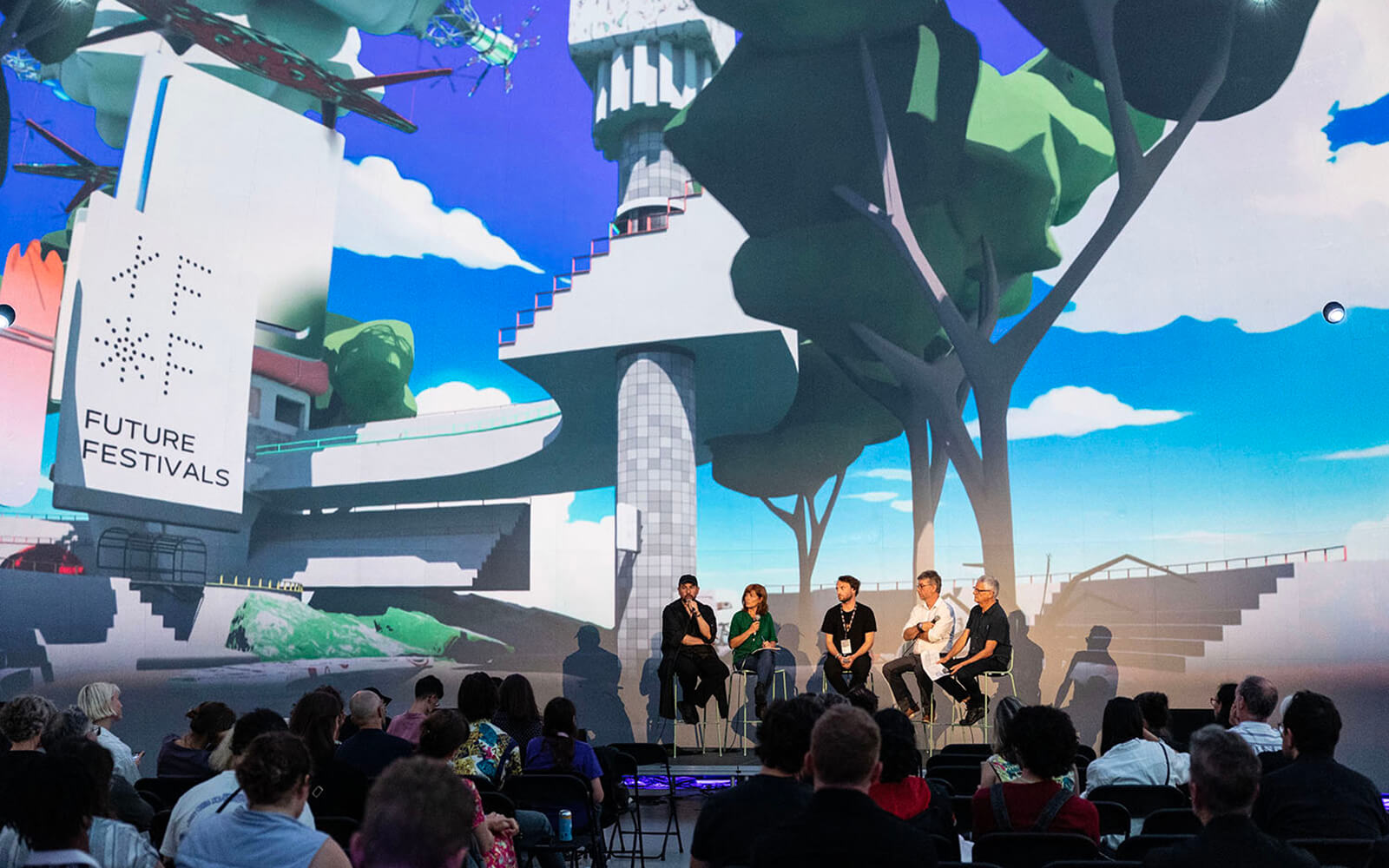
Photo: Maryse Boyce
Immersed in the 3D festival utopia N O R M A L S created for the SATosphere, the summit’s closing panel offered a call to action: “Festivals of the World, Unite! Cultivating Resilient Festival Networks” brought together Québec and European festival professionals Patrick Kearney (Le REFRAIN), Sandra O’Connor (Festival TransAmériques), Philippe U. del Drago (Le FIFA), and Laurent Bigarella (Arty Farty, Reset!) to talk advocacy and collaboration. MUTEK’s own Alain Mongeau stepped in as moderator, reminding his panelists how, in March of 2023, 15 local festivals including MUTEK, Pop Montréal, and Montréal First Peoples’ Festival sounded the alarm about the viability of the cultural sector in the aftermath of the pandemic and how little progress has been made.
“We all believe that our cultural programming brings something good to the world,” Philippe U. del Drago said. Festivals are risky, he argued; there is a private financial risk for cultural organizations and a public risk for the funders that support them. Trying to manage this risk and serve a community of artists and an audience is nearly impossible. He explained that It didn’t matter that his festival Le FIFA—the leading film festival in the world focused on films about art and media art—is partners with the Louvre and MoMA, “the fact remains that a movie ticket is still about $13 in the eyes of the public.” There is a disconnect between the harsh economic realities festivals face and the value they provide to global ecosystems.
Sandra O’Connor from Festival TransAmériques (FTA) picked up the risk discussion and outlined how FTA mitigates risk by helping catalyze ten adventurous dance and theatre co-productions each year. “The co-productions we support during our festival generate $1.5 million yearly fees for us and our artists,” she explained. That revenue flywheel has allowed FTA to broaden its artistic mandate. “In recent years, we have emphasized artists from First Nations, global First Nations, because it’s called the TransAmériques festival—we try to touch every continent,” she noted.
Introducing Le REFRAIN, a network representing 110 festivals and 16 artistic disciplines across Québec, Patrick Kearney explained how the post-pandemic faltering economy spurned cultural producers into action. He explained how a festival or two could hypothetically fail in Montréal or Québec City without drastic implications but that it is a different story outside big cities. He cited Furies, a dance festival in Marsoui, a village in the Gaspé Peninsula region of Québec that is so small that “if you drive too fast, you pass right through it.” We must protect the faith and goodwill implicit in hosting the arts in small communities, he insisted.
Laurent Bigarella of the Lyon-based cultural organisation Arty Farty introduced Reset!, a network founded in 2021 that represents festivals in 28 countries. He described the network’s “three major missions” as documenting threats to the cultural sector, empowering members, and advocating on their behalf. “We make proposals and champion them within the European Commission and to local authorities,” he explained. Reset fights for the survival of progressive festivals as bold and independent arts programming “goes beyond the cultural or artistic prism” and promotes pluralism.
Takeaway: Festivals are an essential service. If eclectic festivals aren’t protected, they will be replaced with centralized and homogenous purveyors of culture—or worse yet, they won’t be replaced at all, making some communities into ’cultural deserts.’ The stakes are high, and the festivals of the world must unite!

Photo: Maryse Boyce
Five days after the summit, concluding the MUTEK Forum, Future Festivals instigator Maurice Jones gathered Drew Hemment (The New Real), Naomi Johnson (imagineNATIVE), and Jessie Mill (Festival TransAmériques) for a reflection. Organized around the ‘six trajectories for festival futures’ that Hemment shared during his keynote, the four cultural innovators shared personal summit highlights and insights based on their respective operations.
Mill responded to the notion that festivals were lightning rods for weak signals by citing her collaborative dialogue with co-Artistic Director Martine Dennewald, which is rooted in friendship and mutual curiosity. “We try to challenge the idea of ‘newness’ and ‘the contemporary’ and engage ancestry and tradition. We incorporate art made with new and old technology—analog technology.” The duo seeks out artists versus simply booking those touring and doing PR. They are also mindful of the contrast between what is happening in Canada and internationally.
The conversation about how festivals foster community and create new senses and forms fanned out in a few directions. Johnson enthused about a heartwarming exchange with a young artist who lived on a reserve. They told her, “I feel like a unicorn in my community. I’m locked away in my room, making all these magical things, and nobody understands what I’m doing. When I come to imagineNATIVE, I realize, wow, look at all these other unicorns!” Jones also described how she supports artists outside the festival, by running a booth for Indigenous creators at the European Film Market in Berlin each winter. That presence fosters productive “first conversations” about Indigenous film with countless industry figures.
Beyond directly serving an audience and community of artists, Hemment explained how festivals can nurture cross-sectoral collaborations. He cited the GROW Observatory, a citizen science and climate activism platform that blossomed from programming FutureEverything organized for the EU climate action department in the late 2000s. “The ‘space’ of the festival can be a resource for other organizations—it can open up collaborations and partnerships,” he concluded.
Hemment sounded an alarm about platform capitalism in a discussion about how festivals enable serendipitous discovery. “When opaque algorithms control media discovery, we don’t see or understand how that’s happening—how our choices are guided and shaped by Big Tech.” Communing outside that regime and having “shared collective experiences” is more important than ever. Johnson chimed in and explained how the ongoing harm caused by colonialism was another force to battle. Recalling a Future Festivals workshop exercise where participants were asked (geographically) where they would be in the coming decades, she recalls how “everybody moved around while my co-worker Kaitlyn Tomaselli and I stood still.” Facilitator Rafael Dernbach asked why the duo hadn’t moved. Johnson answered, “We’re from communities with very little left, so we feel beholden and tied to our land—to ensure it’s protected.” She explained that ‘serendipitous discovery’ in dance, film, and other mediums helps marginalized folks “see new universes, new worlds,” which is more about resilience than consumption.

Photo: Maryse Boyce
The conversation concluded with wild optimism: a discussion about how festivals can provide regenerative infrastructure and catalyze planetary intelligence. Mill excitedly shared Nigamon/Tunai, a work presented at the Festival TransAmériques 2024 by Anishinaabe theatre artist Émilie Monnet and Inga Nation cultural leader Waira Nina. “They brought a forest and water onstage and played them,” she gushed. In addition to trees and water, the elemental work used stones and copper to sound “a polyphonic manifesto” against extractivism in the Global North and South. “It wasn’t just a beautiful artwork,” says Mill. “It was an experience to consider how we encounter elements, plants, and other types of beings.” Enthused, Hemment shared how Nature will join FutureEverything’s board in 2025 and demanded, “It is not enough to talk about climate and make small gestures. We’ve got to make a fundamental change. We need Nature to participate in governance.”
“Drew’s six predictions are helpful to think about what festivals can be in the future,” Jones concluded. “They can also go beyond these provocations, or only respond to one or two of them.” Festivals are nimble and can move faster than big art organizations or museums, but they’re also stuck in “a loop of annual planning,” which is part of their difficulty to develop a long-term vision.” The summit provided cultural producers with a toolkit to help identify and articulate that vision, the panel agreed. It will be interesting to see what they do with it in the coming years.
Takeaway: The closing conversation was an upbeat conclusion to the Future Festivals Summit and clarified that festival producers are already experimenting along the lines of Hemment’s proposed trajectories. Charting new paths under difficult circumstances is hard work however and confronting daunting challenges like the climate crisis, colonialism, and our algorithmic echo chambers requires vision and courage. Thankfully, as Hemment noted upon reflecting on the summit, “the energy and fire is still here.”
On Aug 19, 2024, the Future Festivals Summit gathered nearly 100 cultural professionals from over a dozen countries in Montréal to discuss safeguarding cultural spaces in times of eroding public support and widening political divisions. Here are some lessons attendents shared with us.
“I love how Drew Hemment and Bani Brusadin imagined festivals as an ongoing, year-round inquiries. Years ago, Bruce Sterling said that magazines were the new events. Now, the idea of the festival as a continous laboratory closes the circle. A festival, a conference, a magazine, or a newsletter can be lenses for ongoing research but also provide endpoints, deadlines, and templates that can serve the research.”
Patrick Tanguay runs Sentiers, a member-supported newsletter and consultancy out of Montréal. He pays attention to dozens of fields and thinkers to identify signals of possible futures. He assembles these observations to broaden perspectives, foster better understanding, enhance situational awareness, and provide strategic insight.
“My key takeaway is to think about festivals as generative cultural infrastructure that doesn’t exist in isolation. Rather than hyper-focusing on a certain time of year, a certain location, genres, themes, and artists, we should consider a festival’s role within the wider ecosystem, to understand the shared benefits it can bring to local communities beyond the arts and culture and to the city as a whole. I’m excited about what this shift in perspective may help unlock.”
Trang Trinh is an acclaimed Vietnamese pianist and arts leader. She is currently the Executive Director of Chapel Sound Art Foundation (Vancouver, CA), offering microgrants and platforms for local emerging and marginalized artists to experiment in the field of multidisciplinary electronic art and music.
“Thinking about the future is hard when you are overwhelmed by the present. Drew Hemment’s personal and professional history was a wonderful story of the festivals’ power. It was insightful and inspiring, and as much as I loved it, it did leave me wondering about whether the models of the festival we are gifted from the past are appropriately tuned to detect (and respond to) the challenges of the future.”
Ryan Stec is an artist, designer, educator and producer working with texts, organizations and things, and is currently the Co-Director of the art and technology center, Artengine and an Adjunct Professor in the Visual Arts Department at the University of Ottawa.
“I’ve learned that festivals don’t have to reflect the status quo. Instead, they can serve as pop-up laboratories for experimenting with social norms and new modes of making, being, and governing. Festivals have the potential and, perhaps, the obligation to move society forward. How can we build influence and political power to fulfill that potential, to protect and expand the spaces we create? The sad reality: the cultural sector and creative industries will remain vulnerable for as long as their societal contributions aren’t recognized. When reactionary forces roll back rights and social progress, the safeguarding of cultural spaces as sites of refuge and resistance becomes paramount.”
Elizabete Palasiosa is a creative producer at Story Hub, curator of the Valmiera International Multimedia Festival, and Programme Director at the Latvian Academy of Culture based in Riga, Latvia. She believes in art and culture as catalysts for critical reflection, knowledge production, and confronting global challenges.
MUTEK MX, Mexico City (MX), Oct 07-20, 2024
send + receive, Winnipeg (CA), Oct 17-20

Photo: Diego Figueroa

Photo: Diego Figueroa

Photo: Diego Figueroa

Photo: Diego Figueroa
Any art and music lover knows that festival FOMO is a thing. Each week brings countless cultural offerings vying for our attention. Choose one, and you’re inevitably missing others. Organizers know this and strategically plan their schedules, but avoiding one competitor inevitably puts you in conflict with another. The Future Festivals tour eventually ran into the same problem when MUTEK Mexico and send + receive—the final opportunities for working sessions—scheduled their 2024 editions for the same time in October. Project lead Maurice Jones’ solution: a Zoom simulcast linking the two festivals together for a day of cross-border dialogue.
Co-hosting an online symposium bridging two wildly different cultural contexts—a bustling metropolis in Middle America and a isolated city in the Canadian prairies—presented a unique opportunity to move beyond the minutiae of local challenges and foster more internationalist thinking and deeper conversations about sustainability. It also offered the rare chance of bringing together two festivals that share a commitment to sonic innovation and community building, but that evolved ‘worlds apart’ and operate at vastly different scales.
Attracting tens of thousands of visitors yearly, MUTEK Mexico—MX for short—is a beacon of electronic music and audiovisual experimentation in Latin America. The first satellite to spin out of the Montréal edition in 2003, it fosters connections between Mexican artists and a global community and now rivals the Canadian ‘mothership’ in scope and ambition. Over 50 national and international artists were featured in the 2024 edition that, from October 7-20, celebrated two decades of innovation in art and sound while firmly looking toward the future. During its signature music and audiovisual performance nights, for example, Grammy award-winning electronic music pioneer Suzanne Ciani and a collaboration between saxophonist Bendik Giske and choreographer Diego Vega Solorza transformed the historic landmark Museo Diego Rivera-Anahuacalli. Elsewhere, the maze-like Maravilla Studios, a storied 10,000 square-meter film production facility, dazzled audiences with distributed stimuli: veteran innovators like Daito Manabe, Alva Noto, and Amnesia Scanner & Freeka Tet electrified crowds with cutting-edge sound-image synthesis in one hall while Afrofuturist transmedia hacker NSDOS, German-Senegalese fusion band Ndagga Rhythm Force, and local neo-perrero figureheads Meth Math put on hypnotic shows in another. Meanwhile, the venue’s corridors and chambers offered meditative spaces featuring bespoke art installations and projections that pondered algorithmic regimes and techno-ecologies.
The MUTEK spirit of generosity and bridging cultures and disciplines was also felt at the PRO Digi Lab, the festival’s four-day educational track that hosted the Future Festivals Lab. The talks and exercises at the Centro de Cultural Digital (CCD) brought together international artists and local creators for transnational conversations and experimentation. Maurice Jones’ Wilding AI Lab, for example, is a Montréal transplant that invited prompt engineering, role-play, and choreographing live sound systems; Mexican-American artists Julieta Gil and Alfredo Salazar-Caro each delved into their AR activism while a panel of Mexican and Berlin-based DJs embraced their biggest failures. The program closed on a highlight with headline artist Daito Manabe sharing a deeply personal career retrospective that included vintage family pictures and rare insights into keystone projects.
All in all, MUTEK MX 20 felt like a true milestone that mobilized art and music lovers across the whole city. In fact, several special collaborations at various cultural sites manifested as part of the celebrations not only during the festival but in the months leading up to it. In March, Patti Smith and the Soundwalk Collective united poetry and sound art at the Teatro de la Ciudad Esperanza Iris. InSpace, an immersive gallery, showed over ten artworks as part of the MUTEK AVisions exhibition. And a special MUTEK format opened Alva Noto’s sound installation, HYbr:ID (2021-), at the Museo Universitario Arte Contemporáneo (MUAC). Founding director Damian Romero, perhaps, summed it up best: “MUTEK MX 20 is the result of twenty years of experimenting with formats, locations, and collaborations along with the relentless search for artists and projects that continue to revolutionize what is possible to express through machines, technology and creativity.”
Focus: Electronic music, audiovisual performance, digital art
Location: Mexico City, Mexico
Launch: 2003
Frequency: Annual
Visitors: 20,000 to 27,000
Team: 7 permanent, 45 temporary, 45 volunteers
Structure: FP (for-profit organization)
Funding: Private (sponsorship) & public (national, municipal)
Formats: Shows, exhibitions, performances, public art, conference

Photo: Robert Szkolnicki

Photo: Robert Szkolnicki

Photo: Robert Szkolnicki

Photo: Robert Szkolnicki
Since emerging from Video Pool Media Arts Center in 1988, send + receive has evolved into a cornerstone of experimental sound art in Canada, mounting 25 editions of its annual festival leading into 2024. Bolstering its central performance program with a mix of screenings, installations, and artist talks that animate downtown Winnipeg each year, its mandate is to “convey the richness and curiosity” of sounds created in the Treaty 1 territory it is situated on and “bring a world of experimentation home.” The roster of past featured artists and musicians is a ‘who who’ of sound practitioners. Send + receive alumnae include Tony Conrad, Annea Lockwood, and Charlemagne Palestine. It’s not just about luminaries; the festival pairs pioneers with emerging and mid-career artists from Canada and abroad.
The 2024 edition showcased an extraordinary range of sound artists: legendary Japanese vocalist and electronics improviser Phew, Los Angeles-based composer Lucy Liyou, and Portuguese guitar innovator Rafael Toral. The international acts were complemented by Canadian artists, including Montréal’s sound-poetry duo Cloud Circuit and Vancouver sound artist and musician Daniel Majer. Artistic Director Cam Scott provided thoughtful, politically engaged introductions illuminating each artist’s unique approach and context.
What was most notable about the adventurous lineup was that no matter how tenuous the links were between artists, each night of performances just worked. The opening show, for example, started with a set of grainy tape and video loops by Mark Templeton, which Niecy Blues followed by building dense and affective songs with nothing but her voice and a looper, and concluded with Dawuna singing falsetto R&B over dusty grooves emanating from a vintage cassette player. While united by their use of loops and samples, the trio of artists sounded so different—but they made absolute sense in sequence.
Over four nights, several hundred listeners of all ages gathered to reverently listen to swelling electric guitars, spacey synthesizer tones, and ethereal vocals. The program dissolved traditional genre boundaries, creating a space where experimental sound and music could be encountered and celebrated on its own eclectic terms.
Focus: Experimental music, sound and video art, installation
Location: Treaty One Territory / Winnipeg, Canada
Launch: 1998
Frequency: Annual with satellite events throughout the year
Visitors: 1,000-2,000
Team: 1 full-time, 8 temporary, 10+ volunteers
Structure: NPO (nonprofit organization)
Funding: Public (national, municipal)
Formats: Shows, exhibitions, performances, public art, symposium

Damián Romero is the founder and artistic director of MUTEK Mexico, an international festival celebrating avant-garde music and digital arts in Mexico City. Fostering creativity and community for over two decades, Romero also heads IMECA, a platform for innovation and collaboration across art, music, and technology.


Photo: Diego Figueroa
Finding common ground among cultural stakeholders has always been at the core of the Future Festivals project. Only when the organizers of major music festivals and art biennales share a space with those running experimental operations in the margins can we have level-headed conversations about the state of the cultural sector. Thus far, Future Festivals has platformed over 100 perspectives from a broad range of cultural contexts and all corners of the world. Connecting two festivals—MUTEK Mexico and send + receive—across an entire continent for a day of live dialogue felt like a ‘grande finale.’
In Mexico City, the Future Festivals Lab broadcast from the Nellie Campobello auditorium of the Centro de Cultura Digital, a futuristic cultural complex dedicated to art and technology in the heart of the sprawling megacity. 3,500 km North, in Winnipeg, the send + receive crowd joined from a sunny event space attached to the landmark Esplanade Riel cable bridge spanning the Red River. On both ends, united via Zoom: dedicated festival makers representing an eclectic range of cultural practices spanning modular synthesizer concert programming to feminist electronic art.
The simulcast was not just a demonstration of cultural diversity in the Americas; it also helped draw attention to how art and culture are intertwined with ecology. Mexico City and Winnipeg exist in two bioregions that have been radically altered by human activity. Mexico City, North America’s most populous metropolis, was famously built atop the ruins of Tenochtitlan, the Aztec island capital in the middle of Lake Texcoco. Today, the megacity fills large parts of the Valley of Mexico with dramatic implications for water security, air quality, and long-term viability (the city is sinking by about half a meter every year). Winnipeg, the provincial capital of Manitoba, is located in the grasslands of the Canadian Prairies, a once-rich ecosystem now decimated by industrial agriculture. As drivers of cultural shifts and social norms, festivals bear a responsibility for setting the world on a path to sustainability, Maurice Jones reminded us in his introduction. The simulcast, he argued, is a call to collective action: “As Earth systems start to buckle under human pressure, we need to create networks of festivals that are not only culturally enriching, but also ecologically and socially resilient.”
Opening Dialogue: Alexander Scholz & Greg J. Smith (HOLO)
Performances: Interspecifics, Casey Koyczan
Panels: “Artistic and Festival-Making Practices in Different Bioregions” with Iván Abreu, Paco Barba (Festival Hipnosis), Brendon Ehinger (Prairie Wires); “Building Resilient Festival Networks Across Bioregions” with Ashley Au (Cluster Festival), Mónica Aguilar, Anabel Becerril, Nancy Mookiena (Festival HelloWorld), Peter Burton (Arts in the Margins), Maurice Jones (MUTEK), Cam Scott (send + receive)

Photo: Robert Szkolnicki
For the last 18 months, we—Alexander Scholz and Greg J. Smith, the HOLO editors behind the Future Festivals Field Guide—had a front-row seat to earnest, at times difficult conversations about the state of the cultural sector. As the Future Festivals project’s embedded journalists, we’ve learned from organizers about compounding operational crises—funding erosion, staff burnout, political pressures—and courageous countermeasures. We took notes at every turn. This is how this journal emerged, growing from a spirited mission statement into a participatory project diary the length of a small book. It’s where we logged our observations from the Future Festivals Labs, excavated festival origin stories, and let stakeholders speak their truth.
For the final Future Festival Lab, project lead Maurice Jones invited us to break from our role as impartial documentarians and open the day with a reflection. What’s our take on the challenges that afflict the cultural sector, he prodded. How did we organize the group’s fluid, often messy therapy sessions into a coherent, participatory publication? And what have we learned about sustainability and stewardship as we head into a day of discussions on creating culture across bioregions? Joined via video—Alex at MUTEK Mexico, Greg at send + receive—we dove back into the Field Guide archives and shared our process, personal highlights, and opinions.
We realized early on that striking similarities exist between the problems plaguing the festival sector and those afflicting independent media. “In the arts, COVID-19 shuttered venues and forced the pivot online. In print media, paper, production, and shipping costs skyrocketed. And digital imprints cut staff and constrained editorial scope,” Greg explained. The post-pandemic economic shifts that caused the cultural space to shrink also decimated publishing. The common denominator that became startlingly apparent in 2021: established economic models suddenly didn’t work anymore. Festivals and galleries laid off staff, shrunk programming, and struggled to support artists financially when the usual channels were cut off. In publishing, prestigious publications like Bookforum closed, and countless smaller booksellers and magazine shops followed—nobody was safe as discretionary spending plummeted and inflation soared. Publishing was not exactly thriving before the pandemic, but the economic austerity that followed COVID-19 killed off operations that were barely hanging on. Journalists and media makers are intimately familiar with the idea of having to ‘do more with less,’ which has been such a common refrain within the Future Festivals project.

“One of the things Drew Hemment talked about in his Trajectories for Festival Futures that resonated with us is the importance of festivals in a moment when folks get their media through algorithmic timelines,” Greg shared. “Everyone struggles to have their activities seen online, and neither digital arts publications nor festivals are well capitalized enough to compete in the attention economy.” In an unending stream of ‘content’ where Meta and ByteDance throttle visibility, great cultural programming and good editorial get lost in the noise. We heard these frustrations regularly from the Future Festivals cohort, when directors grumbled about how expensive it is to fund labour for social media and communications—just to have a chance of their programming to show up in the timeline or to put an email in an inbox that might get opened. The fact that vital and independent arts programming and editorial are increasingly hard to find is a symptom of a more significant problem.
In his 2016 book Platform Capitalism, Nick Srnicek defines platforms as “digital infrastructures that enable two or more groups to interact.” While that sounds benign, the control companies like Meta exert over interactions is founded on rent seeking and data extraction. “People have grown so accustomed to the walled gardens of the Netflix or Spotify catalogue that they don’t know or can’t imagine anything else. This is a threat to envelope-pushing art and culture and the journalism that celebrates it,” Greg opined. Drew Hemment’s observation that the festival experience’s ‘serendipitous discovery’ is one of their most important qualities is accurate. Those special moments when we collectively encounter new forms of culture are antithetical to algorithmic timelines that make us feel alone while spoon-feeding us homogenous content. Platforms, imagination shrinking under the weight of monoculture, and social alienation are the common enemy of the festival and niche publisher alike. While increasingly imperilled, promoting vital and independent culture is more important than ever. Yet as independent culture and media struggle against digital monopolies that threaten cultural diversity, they simultaneously face another existential challenge—one that questions the viability of gathering in physical space at all: the accelerating climate crisis.

Outlined as one of seven key challenges in the Future Festivals co-design session, the climate crisis is perhaps the one area where the group made the least progress. It’s not for a lack of trying: During the first Future Festivals Lab at NEW NOW in Essen (DE) in June 2023, Swiss sustainability researchers Wiktoria Furrer and René Inderbitzin introduced us to the concept of eco-sufficiency—do more with less—and encouraged us to resist growth narratives rather than perpetuating them. That’s easier said than done: “Beholden to funders, the attention economy, and peer pressure, we are conditioned to maximise output, to produce irrespective of community needs,“ Alex noted. There’s an insatiable appetite for bigger, more energy-intensive spectacles, and greenwashing and lip service far outweigh genuine commitments. It’s not that festival makers are unaware that they’re part of the problem. Just a few weeks ago, at the Future Festivals Summit in Montréal, Mikellena Netto from The Climate Reality Project reminded us of the sizeable impact our industry has on the planet. Big festivals like MUTEK, for example, eat as much energy in a single weekend as 3,000 North American households in a year. The footprint of our very presentation is testament to the hypocrisy that underpins a lot of noble cultural work: “According to Carbon Footprint Calculator, it took 3 tonnes of atmospheric CO2 to get me from Berlin to Mexico City and Greg from Toronto to Winnipeg,” Alex revealed. “Once emitted, CO2 remains in the atmosphere for up to 1,000 years—that’s 40 future generations.”
While culture’s material excesses continue unabashed, the warnings of climate scientists and environmental researchers sound increasingly dire. We’ve just cracked the 1.5 °C limit set in the 2015 Paris Climate Accord and are on track for 2 degrees by 2050 and 3 to 4 degrees by 2100—the worst-case scenario experts have been worried about. Ocean temperatures are now at a record highs, far exceeding computer models, and polar sea ice is destined for collapse. The biosphere, too, is at a precipice: according to the 2024 Living Planet report, released just prior to our presentation, we’ve lost 73% of wildlife since 1970, while animal agriculture—a known climate killer—is booming. “A common sign that complex systems are approaching tipping points is rising volatility: they start to flicker,” journalist George Monbiot warns in a Guardian column. “If Earth systems cross critical thresholds, everything we did and everything we were—the learning, the wisdom, the stories, the art, the politics, the love, the hate, the anger and the hope—will be reduced to stratigraphy.”
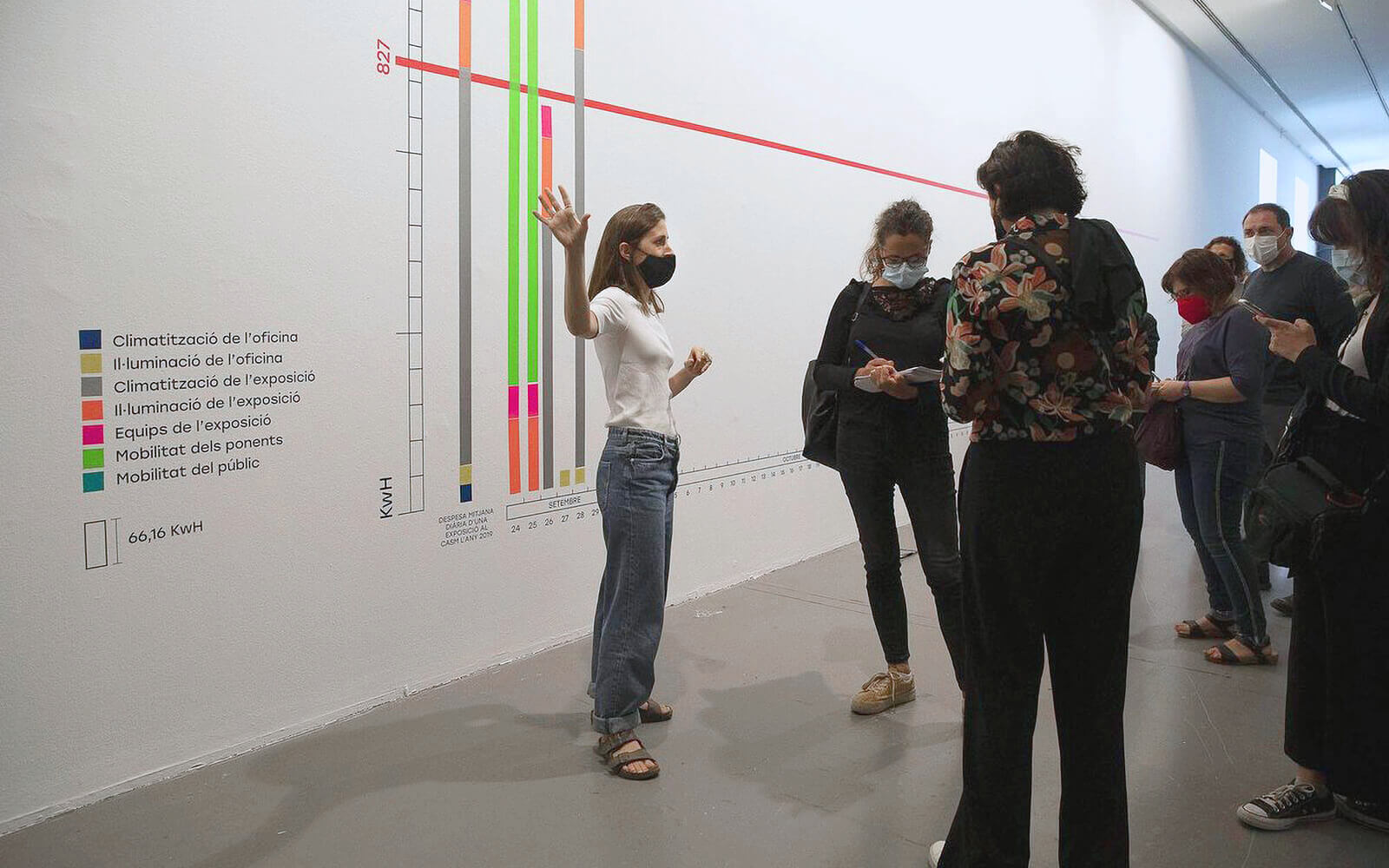
When governments and business leaders fail us in their tepid response to a rapidly destabilizing world, can art and culture inspire the transformational change we need? There’s no shortage of artistic experiments to draw ideas and, more importantly, courage from, Alex reassured the attending festival makers. In her interventionist artwork 16/2017 (2021), Spanish artist Joana Moll slashed the energy use of Barcelona’s Arts Santa Mònica Center in half by prescribing a strict energy budget. Named after the region’s failed policy to halve CO2 emissions by 2030, the cuts were achieved through public negotiations with all stakeholders. In 2021, the Swiss artist collective Fragmentin initiated the first Binomenale, an exhibition that radically minimized the environmental footprint of exhibiting internationally by pairing artists from Switzerland and the US to recreate and perform each other’s work remotely through the sharing of instructions. Meanwhile, the Manchester-based arts organization FutureEverything is tackling its environmental footprint on the governance level: In 2025, coinciding with its 30th anniversary, the organization will appoint Nature to its board of directors to ensure that, with the help of external experts, ecological concerns inform all operations.
No, festivals cannot ‘solve’ the climate crisis. But they can build bridges, empower people, and launch new ideas into the world. They are sites of experimentation and innovation, but also regeneration and healing. As Maurice Jones wrote so fittingly in an earlier Field Guide chapter: “Festivals provide temporary autonomous zones for structuring social relations differently. At their best, festivals are temporary utopias.” As such, they are instrumental in putting society on a path to sustainability.

Photo: Robert Szkolnicki
Offering a break from intellectualizing climate and ecology, two live performances, one on each end of the simulcast, demonstrated how artists interpret their local environments using nascent technologies. The Mexico City-based Interspecifics collective showed video documentation of their ongoing project Aire CDMX (2016-), which translates atmospheric pollution data into sound. Their piece merges street-level footage of the sprawling metropolis with dynamic visualizations of local pollutant levels—including sulphur dioxide, carbon monoxide, and nitrogen oxide—accompanied by an experimental electronic score. “We wanted to understand how the city’s environmental monitoring systems works,” a representative said about the project’s origins. Using Python scripts to access public air quality sensors in real-time, the data flow is then fed into a set of virtual synthesizers. “Each of the pollutants has its own sound identity. The flux of sensor data, including wind speed and direction, modulates the aesthetics of the performance piece.” The analysis carries special relevance given Mexico City’s geography—a metropolis cradled in the Valley of Mexico and surrounded by mountains, where high altitude intensifies the impact of emissions from millions of vehicles and industry, creating conditions where atmospheric particulates linger. “It’s literally one of the most polluted cities in the world.”
In Winnipeg, Dene artist Casey Koyczan’s new work-in-progress explored Prairie ecosystems through a different lens. Koyczan created an immersive dreamscape by combining CGI models of native Prairie flora with a densely layered soundscape featuring synthesizer compositions, vocal elements, and ethereal delay effects. “I’m experimenting with Gaussian splat technology and perspective, to navigate through digital renditions of nature sites around Winnipeg,” the artist explained afterwards. “Paired with a soundscape mixing digital and analog instruments, including my own voice, the performance aims to relax while also providing intrigue and mysticism.” Meditative and impressionistic, the work offers a contemplative reflection on Winnipeg’s position within the vast Canadian Prairies—a city situated at the confluence of the Red and Assiniboine Rivers, where the transitional zone between tallgrass prairie and aspen parkland once hosted diverse ecosystems is now transformed by agriculture and urban development.
The two performances lulled audiences into a trance-like state, creating space for collective contemplation. It was a reminder that art and music are a way of getting through to people. They can inform and mobilize, all while nourishing the soul in the process.

“It’s worth noting that send + receive is coming to you today from a bridge spanning the Red River, part of a water system that runs through the United States into Mexico,” said festival director Cam Scott as the sun beamed into the Esplanade Riel cable bridge event space. Setting the stage for the final round of transnational conversations, he reminded audiences that divisions imposed by borders are a fallacy. “This waterway has connected Indigenous people living in our two distinct bioregions for hundreds of years,” said Scott. “Our dialogue today continues in that tradition.”
A common theme among the presenting festival makers connected through that north-south corridor was the tireless work to nurture local scenes. Brendon Ehinger’s event series Prairie Wires, for example, cultivates live performance opportunities for sound-based artists and experimental electronic musicians in Brandon, Manitoba. After moving to the Canadian province’s second-largest city several years ago, Ehinger realized that no local event organizer acknowledged the burgeoning modular synthesizer culture, so he created a platform in 2019. Ehinger explained how he tapped into arts funding to host a dozen concerts, a recurring modular synthesizer meetup, and a one-off Prairie Wires Modular (PMW) Festival, all to support local electronic musicians. Mexico City’s Festival Hipnosis serves a different music community at a different scale. Founded in 2017, it is now the biggest psychedelic and experimental rock festival in the country, attracting thousands of visitors every year. As such, it takes its environmental responsibilities very seriously, artistic director Paco Barba explained: Hipnosis offers free public transit for all festival goers, ensures that all materials and decorations are being reused, and has switched 80% of its lighting to LED.
There’s a stark contrast between Hipnosis’ big open-air shows featuring postpunk and shoegaze legends Gang of Four and Slowdive playing in front of thousands and Ehinger’s more bespoke pop-up concerts. But joined through the Future Festivals simulcast, a shared sense of purpose came to the surface: both organizers fill a gap in local offerings and platform music communities outside the pop milieu.
Transnational synergies blossomed when the directors of Cluster, Festival HelloWorld, and Arts in the Margins joined the conversation. Engaged by moderators Maurice Jones (MUTEK Montréal) and Cam Scott (send + receive), the festival makers discussed their guiding motivations and potential future collaborations. Cluster is a Winnipeg-based arts organization formed in 2009 that presents concerts and installations through an annual festival and year-round activities, Ashley Au explained. Under her direction, the festival has expanded its horizons to increasingly include audiovisual performances and more robust support for local artists through workshops, consultations, and a residency program. It’s also invested in prairie ecology: the 2024 edition of Cluster, for example, featured Michael Lucenkiw’s installation The Environment Machine Shop, which allowed audiences to interact with water samples collected from local waterways.
Arts in the Margins cofounder Peter Burton revealed that the newly-launched Flux Festival is building on his tenure at the revered avant-garde Suoni per il Popolo festival and tries to make experimental music more accessible. His mandate involves actively engaging the wider diasporic communities that make up Montréal’s rich cultural diversity. Burton described partnerships he had formed with the Immigrant Workers’ Centre and the Laboratory of Urban Culture to expand both the scope and mission of programming. Burton also shared details about workshop programs targeting youth, particularly young girls, and newcomers that directly engage communities typically overlooked by traditional cultural programmers.
The enthusiasm for expanding accessibility was shared by Mónica Aguilar, Anabel Becerril, and Nancy Mookiena of Mexico City’s Festival HelloWorld. They had grown their festival from early exhibitions that addressed gendered representational tropes, such as the Manic Pixie Dream Girl and the Riot Grrrl, into a bona fide incubator for feminist artists and curators. “We recognize that every curator we select to work with is an important decision,” the trio explained. “It’s not just an opportunity to support their career but the community of artists around them.”

In the end, the conversation returned to the perennial issue of funding and the discrepancies in public support between Canada and Mexico. Whereas the Canada Council for the Arts and various provincial and municipal bodies make arts funding widely accessible to Canadian organizations, cultural workers in Mexico have to make do with minimal public funding, forcing organizations to be scrappy and entrepreneurial to survive. Acknowledging this gap, the discussion turned to solidarity and mutual support. “How can we pool funds and support artists across borders?” the directors collectively asked and began, excitedly, exploring loopholes for gaming what are inherently isolationist systems.
This ad-hoc demonstration of generosity and cross-border unity encapsulated the spirit of Future Festivals and underscored the types of collaboration the world needs right now. International solidarity is essential in a moment when nationalist and isolationist sentiment is sweeping through politics worldwide and cultural funding is in the crosshairs. Together, we can think beyond borders, build bridges between our communities, share resources, and develop climate-friendly practices to bring about positive change. The question is not so much ‘how can our festivals operate in the future?’ but ‘how should our festivals operate in the future?’ This requires trying new things and radical reinvention. Maurice Jones said it well in the simulcast introduction: “Future Festivals is not just a conference, but a collaborative experiment to design the festivals of tomorrow, as diverse and dynamic as the ecosystems and cultures they inhabit.”

Cam Scott is a poet, critic, and non-musician from Winnipeg, Canada, Treaty 1 territory. His books include WRESTLERS (2017), ROMANS/SNOWMARE (2019) and THE VANISHING SIGNS (2022). He is the artistic director of send + receive a festival of sound art and experimental music, and sings in the punk band Age of Self.
So we don’t take a very scholarly approach to even very technical realizations, hoping that people trust us with an experience. This is very idealistic of course, but all of the measures that we’re attempting towards financial accessibility and to program in a variety of spaces throughout the city and for different communities are to extend this ideal.

Photo: Robert Szkolnicki
So I think about this a lot when programming a slightly better-resourced or more robustly supported festival like send + receive, with some state funding and so on. The ad hoc sociality of the event is hopefully a little cozier and more collaborative than an expo-style music festival where everybody is just parachuting into a gig and leaving in the morning. The whole crew and all the artists spend time making something together that could only happen on a given evening in Winnipeg, and that is not only a sequence of sounds but a series of relationships that require time and space. So, ideally, we are constantly collaborating outside the economic imperatives that constrain market-intelligible art.

Photo: Robert Szkolnicki
There’s undoubtedly a seasonal ebb and flow, and overstimulation is never a problem. Productions are costly relative to the maximum draw of an outre artist in a mid-sized city, and we’re not touristed, so we have to rejuvenate our local audience constantly. This has obvious benefits, too; the people who come to our festival have been deeply engaged with our programs for many years and are conversant in some seriously esoteric stuff because they have sustained something like this for so long. There’s an unassuming stubbornness to the prairie mindset that should be studied, and I like to think that we program for and from this temperament.
Over 2023-24, the Future Festivals Survey polled 125 artists, curators, and festival makers from over a dozen countries on the state of cultural infrastructure in their communities. Here are some reasons why artists value festivals.

“Festivals are the cornerstone of my artistic practice. Digital art and audiovisual performance wouldn’t exist in the way they do today without a vibrant festival ecosystem that, for decades, has platformed and nurtured new forms of creative expression. They’re also the connective tissue between an international artist community and the audience. It’s in these inclusive spaces free from algorithmic capture that personal development can flourish, and new friendships and collaborations are being forged. For me, festivals routinely produce some of the most rewarding experiences—they push my artistic research forward, and, time permitting, should be enjoyed in their entirety.”
Markus Heckmann is a Berlin-based visual artist who combines the aesthetics of generative computer graphics with the physical properties of light. He has worked with renowned musicians such as Alva Noto, KMRU, and Matt Thibideau and, together with France Jobin, tours an audiovisual performance project. Heckmann is also Technical Director at Derivative, the software studio behind the powerful visual programming environment TouchDesigner.

“Festivals are the only time we get to see our peers who are scattered all over the world. The discussions that ensue between us provide inspiration and underscore the challenges we face. The support we give each other fuels our drive to continue creating.”
France Jobin, a Montréal-based sound artist and film composer, creates minimalist “sound-sculptures” blending analog and digital elements. Influenced by quantum physics, her work integrates architectural spaces and is exhibited internationally at unconventional spaces and new technology festivals.

“Festivals’ great strength is their ability to cultivate niches, to create spaces for experimentation in the margins. That’s why I’m worried about festivals chasing bigger audiences for the sake of growth—it homogenizes culture and stifles innovation.”
Cooper Lee Smith is a composer and film technician currently based in Winnipeg, Manitoba. As a former circus artist he has attended and performed in various international performing arts festivals.

“Festivals are special because they emphasize performance and community. They are accessible and democratic in how they link the two. Only the wealthy few can buy fine art or fund galleries and museums, but almost anyone can afford a $30 festival ticket that directly supports artists and the local cultural ecosystem.”
Erin Gee is a multidisciplinary artist inspired by ASMR, biofeedback technologies, electronic music, feminism, and the placebo effect, often using experimental technology in her musical creation. As an academic she is part of the faculty of music at Université de Montréal.

Photo: Ana Isabel Duque

Photo: Nick Gallarza

Photo: Nick Gallarza

Photo: Nick Gallarza
After two years of discourse, workshops, surveys, and a capstone summit, the Future Festivals project concludes with a mix of hard-won wisdom and cautious optimism. Throughout this journey, we’ve looked both backward and forward—taking stock of pain points, and outlining how festivals can serve as temporary utopias. We’ve reflected on the challenges with unflinching honesty: the funding cuts, the burnout, the ever-increasing demand on cultural workers to do more with less. But between the stocktaking and the speculation, there remained a crucial gap: the practical matter of how we get from here to there. How do we translate two years of visioning into actionable change? In a fitting final gesture within a project that championed festivals as laboratories for new modes of social organization, MUTEK commissioned three proposals from organizations experimenting with alternative approaches to festival-making. These aren’t sweeping manifestos but rather targeted experiments—practical interventions that address systemic issues and outdated practices head-on, demonstrating new approaches to providing access and experimentation in cultural production.
Three innovative cultural organizations have contributed proposals that embody the Future Festivals ethos in action. UKAI Projects, DEBASER, and FEMINAE NOX each tackle different challenges—from experimental gathering formats, to pay-what-you-can economics, to feminist mentoring networks—and actively rebuild the systems and structures that support festival-making.
Debaser’s community-powered experiment in financial equity reimagines how festivals can be funded, accessed, and understood.
Debaser is an Ottawa-based nonprofit organization that has been “standing with the weird and underrepresented since 2012,” supporting and exhibiting marginalized artists. The collective operates as one of the city’s leading independent and underground music and arts presenters, known for its eclectic curation and care-oriented approach to community building. Beyond events, Debaser creates compilation albums, multidisciplinary projects, and their flagship quarterly event series Pique, which features immersive installations and multimedia programming across Ottawa’s cultural venues. Their work focuses on creating safer spaces for underrepresented voices while fostering experimental and boundary-pushing artistic expression.

Photo: Peter Wiercioch
Independent festivals are caught between two competing pressures: remaining financially accessible to diverse communities while ensuring long-term sustainability. As production costs rise and grant funding becomes more scarce, many festivals turn to higher ticket prices or corporate sponsorships. Meanwhile, government funding in Canada has shifted away from supporting arts as cultural enrichment, instead framing them as engines of economic development. As a result, festivals are treated like start-ups—expected to scale, grow, and survive in competitive markets. This growth-at-all-costs model conflicts with the values many festivals hold.
Meaningful community investment is what we dream of—financing our festival entirely by ticket sales, donations, and other audience-generated revenues—but it raises urgent questions. How can we foster accessibility without sacrificing sustainability? How much can we reasonably ask of our communities, especially as many face financial precarity?
The issue isn’t just financial—it’s structural. There’s a disconnect between the economic realities festivals face and the value they offer. Through a community-engaged experiment, we would like to address that imbalance, exploring how festivals can build participatory, resilient infrastructures that reflect their values and empower the communities they serve.

Photo: John-Finnigan-Lin
Debaser’s ‘Sustain-What-You-Can’ is a community-powered experiment in financial equity, reimagining how independent festivals can be funded, accessed, and understood. At its core is a refined Pay-What-You-Can (PWYC) ticketing model that prioritizes accessibility, transparency, and mutual aid—inviting audiences not just to attend, but to invest in the cultural spaces they value.
The project envisions festivals not as one-off events, but as vital cultural infrastructure—spaces where artistic risk, social connection, and community care converge. These are places that foster collective imagination, resist extractive funding pressures, and remain accountable to the communities they serve. By challenging traditional, scarcity-based models of cultural financing, ‘Sustain-What-You-Can’ proposes an alternative rooted in shared value and participatory design.
In this model, audiences self-determine their ticket price within a transparent framework that makes clear how contributions directly support artist compensation, accessibility infrastructure, and overall festival sustainability. This approach redistributes value through solidarity—those who can afford to pay more help subsidize access for others. It is not only a model, but a movement: one that brings artists, organizers, and audiences together to co-create more just and resilient cultural ecosystems.
A dual vision is at the core of our project: First, to support the long-term sustainability of independent festivals like Pique, and, second, to inspire cultural shifts toward pricing justice, collective responsibility, and community-led cultural infrastructure.

Photo: Curtis Perry
Rooted in Debaser’s experience producing 17 Pay-What-You-Can (PWYC) editions of Pique, this project seeks to develop a more sustainable and community-accountable financial model for independent festivals. While PWYC has made Pique more accessible, data shows that only a small percentage of attendees currently contribute above the suggested minimum, leaving the majority of subsidized access reliant on increasingly uncertain grant funding. This imbalance has made clear that a more refined, participatory approach is needed—one that not only invites audiences to pay what they can but equips them with the context, trust, and tools to see themselves as active co-investors in the cultural commons.
This multi-phase initiative will take a participatory, research-driven approach to prototyping a scalable, equitable revenue model that reflects the values of access, inclusion, and shared responsibility. Activities will build on Debaser’s real-world insights and be co-developed and tested in collaboration with peer festival partners to ensure the model is adaptable across diverse geographies, artistic disciplines, and audience communities. The goal is not just to benefit Pique, but to build replicable infrastructure that strengthens the wider independent arts ecosystem.
We propose the following key phases:
1. Audience Research: In collaboration with partner festivals, Debaser will conduct in-depth qualitative and quantitative research on how audiences value cultural events, how they decide what to pay, and how they relate to principles like mutual aid and cultural equity. This research will guide all subsequent design, communications, and implementation phases, ensuring they are rooted in lived audience realities.
2. Ticketing Redesign: Drawing from research findings, the PWYC ticketing interface will be redesigned with an emphasis on clarity, trust-building, and community impact. Design elements will illustrate how different payment tiers support the festival—from covering artist fees to enabling accessible programming—and will guide users toward financially thoughtful choices.
3. Storytelling & Communications: A multi-channel campaign will communicate the true costs of festival production, the meaning of audience solidarity, and the impact of each contribution tier. Using infographics, artist and audience testimonials, and transparent goal-tracking, this campaign will reframe ticket purchasing as an act of community care and co-creation, rather than a transactional exchange.
4. Testing & Iteration with Partners: Festival partners will co-develop and test the new model within their contexts, providing critical feedback to refine tools, language, and practices. This phase will ensure the model is responsive to varying capacities, audience demographics, and artistic mandates, while fostering sector-wide dialogue and peer learning.
5. Toolkit & Knowledge Sharing: The project will culminate in the release of an open-source toolkit and detailed case study, including adaptable messaging templates, UX models, and evaluation strategies. These resources will be shared through public forums, partner networks, and convenings like the MUTEK Forum to support broad sector adoption.
Together, these efforts aim to build a resilient, values-driven model for community-powered festivals—one that makes equity sustainable, not exceptional.

Contributor: Rachel Weldon is the founder and director of Ottawa presenter organization Debaser, and its signature festival Pique. Since founding Debaser in 2013, Rachel has led Debaser’s development from its origins as a volunteer-run DIY collective into a leading festival and event producer. Rachel founded Pique in 2021 and has developed the festival into what is now a vital creative event in Ottawa that welcomes over 5,000 community members annually. Rachel was a 2024 Keychange Innovator, and is currently a creative producer in residence at the National Arts Centre.
UKAI Projects’ post-scarcity festival framework reappropriates ‘rituals of commerce’ for fostering generosity, collaboration, and transformation
UKAI Projects is a Toronto-based nonprofit cultural organization that has been articulating “culture for what’s coming” since 2018. The interdisciplinary collective works across art, technology, and cultural theory to create installations, workshops, and collaborative projects that examine how communities respond to contemporary social and environmental challenges. Developing programming in Canada, South Korea, Iceland, and the UK, UKAI brings together artists, technologists, and cultural workers to explore alternative approaches to institutional practice and build community. Their work spans immersive media, participatory programming, and cultural research aimed at fostering adaptive responses to technological and ecological change.
Photo: Ana Isabel Duque
The world is undergoing cascading crises—climate collapse, political instability, economic precarity, and systemic social fragmentation. These conditions are not new, but they are accelerating and converging in ways that demand adaptive, plural, and imaginative responses. In the face of this uncertainty, the arts and culture sector has the potential to be a generative force: not only reflecting our times, but rehearsing possible futures.
This proposal addresses two intertwined problems. First: how do we make a home among ruins? As cultural infrastructure is hollowed out—due to funding cuts, rising costs, and loss of accessible space—artists and communities are left with fragments. We must learn to build with what remains. Second: how can we reimagine cultural and economic exchange in ways that center generosity, relationality, and care? The scarcity-based models that currently govern the arts are unsustainable and alienating. We need new rituals of participation, new economies of attention, and new spaces for value discovery.
Artistic practice has been muddled with transactional spectacle, where meaning no longer resides within the works—where audiences no longer distinguish art (as meaning-making) from advertising and marketing. Communities disproportionately affected by volatility have no blueprints, no rehearsal, and no opportunity to practice survival in a changing world. Cultural activities such as festivals used to serve as ritual spaces, temporarily suspending communities from production by re-orienting activities and attention. Many ritual practices offer direct contexts for generosity in uncertain times. Carnival is a reversal of order. Lent requires sacrifice and the distribution of excess. With emerging volatilities and societal challenges that many traditional cultural practices are no longer suitable for, we need to create new environments where artists and publics collaboratively reimagine exchange, belonging, and resilience. Goblin Market provides a framework for festival-as-worldbuilding and leads through curiosity and discovery rather than comfort and escape.
Photo: Nick Gallarza
Our proposed intervention Goblin Market is a mobile and site-responsive experience. It is a midway fair that travels from town to town, asking the question “what is art worth?” It is a 4-phase durational presentation that demands artists and audiences shape the trajectory of the experience through interaction. The production duration and finished works are equally visible. This work emerges from UKAI Projects’ Shipwreck. Shipwreck is a travelling public presentation format that explores the question: how do we make a home among ruins? It is designed to unfold organically within a specific site—whether that be a disused building, a transitional space, or a public threshold between nature and city. All presented works must fit within checked baggage, with supplemental materials sourced locally, emphasizing improvisation, constraint, and adaptive creativity. Two iterations of Shipwreck have shown increased public engagement and activation through their durational presentation. Goblin Market builds on the proven format of Shipwreck by complicating the relationships with trade, exchange, bargain, and negotiation. These ‘rituals of commerce’ are reimagined as a redirection of attention, reorienting artistic objects into microcosms of artistic practice. It forces dialogues across the artwork, the artists and the audiences, and positions a festival as a participatory, speculative space for public imagination, collaboration, and value discovery.
Phase 1: UKAI installs a constellation of artworks designed to situate a dialogue in the ruins—sculptures, story objects, or atmospheric interventions that invite curiosity. These are offered to the site and to the local community as open questions.
Phase 2: Local artists respond to the work without verbal explanation—using only what is present to interpret, build upon, or negotiate spatially. This method invites deep listening, trust, and a shared language of gestures, textures, and form.
Phase 3: The space opens to the public. Audiences are invited to explore, respond, and co-inhabit the growing assemblage. Activities during this phase facilitate unexpected dialogue, new artworks, and social rituals that help audiences feel the stakes of being in a space of provisional, shared worldbuilding.
Phase 4: Goblin Market emerges as an ephemeral economy of storytelling, generosity, and improvisational performance, which begins at sunset and ends at midnight over three days. Artists role-play as travelling merchants, offering audiences glimpses of their creative process, rituals of exchange, and speculative ‘wares.’ There is no standard transaction; instead, audience members may trade a song, a drawing, a story, or a piece of candy for an intimate moment with an artist. These micro-encounters produce a relational economy rooted in curiosity, care, and shared presence.
Goblin Market creates a space for living inquiry: into adaptation, mutual support, and how artists and communities might co-invent futures even when the old systems fail. This is not a spectacle. It is a practice of showing up, staying curious, and learning how to build again—with others.

Photo: Nick Gallarza
Our proposed intervention sees itself as a micro-festival or ‘festival-as-worldbuilding.’ The intervention will be implemented through five interlinked strategies that support both the structural needs of the project and the deeper artistic values it embodies: generosity, collaboration, and transformation.
1. Circular Mentorship: The project begins by identifying a group of artists—some travelling with UKAI Projects, others rooted in the host city—who represent different stages of practice. More established artists will offer mentorship to emerging or mid-career artists, not through formal instruction but through shared space, open dialogue, and collaborative process. At the same time, emerging artists will bring fresh perspectives, experimental insights, and local knowledge that reframe how more experienced artists understand the site and context. This reciprocal relationship forms the foundation for a non-hierarchical, evolving knowledge network. Mentorship flows in multiple directions, reinforcing a culture of care and peer-based development.
2. Collective Worldbuilding: The aesthetic and narrative identity of Goblin Market will emerge collaboratively. The initial works brought by UKAI Projects will set a tone, but the visual language, spatial rhythm, and underlying stories will be co-authored in dialogue with local artists. This is not a curatorial imprint imposed on a space—it is a lived-in fiction that reveals itself through layered interactions. The process is iterative, speculative, and grounded in material improvisation. Artists will collectively negotiate how the space is shaped, transformed, and opened to public imagination.
3. Prototyping Abundance: To align with regenerative and post-scarcity values, each artist travelling with UKAI is limited to one checked bag for materials. The rest of the work must emerge through local sourcing, resource-sharing, and community interaction. This constraint becomes an opportunity: artists will rely on new relationships to complete their installations, emphasizing mutual support over individual production. Local and travelling artists will pool resources, share tools, and co-develop interventions. This phase prioritizes prototyping abundance—not through scale, but through trust, cooperation, and collective problem-solving.
4. Inhabiting Unexpected Venues: Goblin Market thrives in unconventional spaces: underutilized storefronts, urban greenhouses, and offices after work, and other public sites undergoing change. The intervention sites respond to the rising venue costs, instability in sustaining large-scale cultural spaces, and the growing trend of stacking functions in urban third spaces. The implementation process is responsive to place. First, the initial installation will ‘occupy’ the space; and then, local artists and communities will build upon and respond to it; lastly, the 3-evening experience of Goblin Market will animate the site through participatory performance. Rather than treating the venue as neutral, we treat it as a collaborator—choosing spaces with texture, history, and friction that shape the unfolding of the event.
5. Audience Engagement as Encounter: The final phase opens the world to the public. Rather than traditional exhibition-viewing, we prioritize encounters: immersive, interactive, and intimate. Art is experienced as ritual, invitation, or negotiation—not passive consumption. Each visitor may be asked to offer something of themselves: a story, a memory, a gesture. These interactions will be tracked in a living archive—contributing to a collective narrative about how we survive, build, and imagine together.

Contributor: Luisa Ji is a creative strategist and cultural technologist working at the intersection of public imagination, digital transformation, and systems of care. With over a decade of global experience, she leads participatory programs that use storytelling, worldbuilding, and culturally-specific technological adaptations to help institutions navigate cultural and ecological volatility. She is currently the studio director at UKAI Projects overseeing creative direction and programming.
FEMINAE NOX trains the next generation of music industry leadership, redistributing cultural power to racialized women and gender-diverse individuals
FEMINAE NOX is a global social enterprise and platform that prioritizes equity for Black, Brown, Indigenous, and other racialized women and gender diverse folks in live music, nightlife, and culture since 2023. Co-founded by music agents Mira Silvers and Seny Kassaye of FORT Agency, it addresses the stark underrepresentation of racialized women in music, especially live music. FEMINAE NOX operates as both a platform and programming collective, organizing events, educational workshops, mentorship programs, and collaborating with major festivals in order to provide resources and opportunities to create more opportunities and equitable spaces on and off stage.

In 2025, Goldman Sachs forecasts the global market revenues for Live Music will grow from US$34.6 Billion in 2024 to US$38.2 Billion, with a 10% YoY increase and a long-term 7.2% annual rise through 2030, estimated to be about US$79.7 Billion. As audiences hunger for connection and share-of-wallet for live experiences continues to rise, the festival and touring economy stands at a pivotal moment. The surge stems from insatiable consumer demand—particularly among Millennials and Gen Z—who prioritize live experience over streaming. But amid tickets sell out and venues pushing capacity, one critical question remains unanswered: who holds the power—profits—in this booming industry and ever-expanding economy? Who actually gets to build it?
Live music is a multifaceted ecosystem. Beyond performers, its backbone is comprised of agents, promoters, tour managers, sound engineers, lighting technicians, creative directors, stylists, choreographers, artist liaisons, tech wizards, security leaders, brand strategists, marketing, brand sponsorships, legal, and more. These roles are the engines behind sold‑out shows, global tours, and festivals. Yet, the majority of the people in these roles, who are profiting off this machinery, remain overwhelmingly white and male.
Data from USC Annenberg confirms a startling disparity: Black women occupy only 1.7% of live music executive roles. Meanwhile, onstage diversity appears slightly stronger, where 21% of major-label artists and less than 10% of headlining festival acts are women.
Despite the cultural power of Black, Brown, Indigenous, and other racialized women and gender-diverse individuals in shaping music globally, the structural inequities within the live music industry remain deeply entrenched in the infrastructure to maintain systematic barriers. According to USC Annenberg, Black women hold just 1.7% of executive roles in live music—a number that starkly exposes who holds the profit and the real decision-making power behind the scenes.
Onstage representation is slightly more visible but still inequitable: Fewer than 10% of festival headliners are from marginalized or diverse backgrounds. Meanwhile, Indigenous artists account for less than 1% of mainstream chart representation. Even when present, women artists face systemic economic disparities—earning roughly 30% less than men on streaming platforms.
These disparities are not just anecdotal—70% of music industry professionals acknowledge the urgent need for more inclusive hiring practices and 85% of top music executives agree that diversity directly improves the quality of the music industry. Audiences are aligned with that vision too: Nearly 60% of music consumers actively support more diverse representation in the artists and content they engage with.
Yes, there has been progress at a snail’s pace, but parity and equity remain distant goals. Without deliberate structural change, especially for Black, Brown, Indigenous, and other racialized women and gender-diverse individuals, the industry risks mistaking performative representation for true equity. These numbers point to a structural exclusion, not an interest gap. Racialized women and gender diverse individuals are anchored at entry levels or token roles, rarely penetrating operating rooms, control booths, or C-suites. That’s what we call a systematic problem—it’s not about the absence of talent, but the absence of structural access.

“You can’t hire what you haven’t built.” This illuminates the live music industry’s cycle of exclusion. Without active investment, pathways remain closed. FEMINAE NOX confronts this head-on by offering a bold, strategic, multi-tiered, full-spectrum pipeline spanning four main pillars from education and training, to mentorship, to real-time experience, to living labs, to career placement, to leadership and beyond, transforming the live music industry into an equitable, innovative ecosystem.
This isn’t charity. It’s a blueprint for career transformation, financial empowerment & economic self-determination, and long-term equity—rooted in the cultural power of Black, Brown, Indigenous, and other racialized women and gender diverse individuals and designed to rebuild live music from the inside out.
The endgame of this career development pipeline is the FEMINAE NOX Festival. Our flagship festival will be more than a showcase—it will be a living prototype of structural change that features:
Circular-Economy Design: Solar stages, zero-waste concessions, local vendor sourcing—minimizing waste and maximizing community investment.
Radical Accessibility: Mobility infrastructure, sensory-safe zones, childcare, and multilingual supports are built in—never retrofitted.
Shared Revenue Models: All production staff, mentors, and fellows receive paid fees and revenue-sharing opportunities.
Decentralized Governance: Decisions are made by Production Councils that include pipeline graduates, festival producers, and community leaders. Power is distributed—not granted.
FEMINAE NOX Festival will be conceptualized and executed entirely by Black, Brown, Indigenous, and other racialized women and gender-diverse professionals to demonstrate that equity can be profitable, inclusive, and innovative when intentionally designed.

The FEMINAE NOX Pipeline elevates participants from learning through leadership. Trainees receive comprehensive training in their chosen field, are matched with accomplished mentors, gain hands-on experience through apprenticeship in the FEMINAE NOX Festival, and receive ongoing support for career placement and entrepreneurship.
1. Education & Training: Through workshops, masterclasses, and hands-on programs, Black, Brown, Indigenous, and other racialized women and gender diverse individuals are trained across their desired field of focus in live music—from artist management to booking agent/talent representative to promoter to production to front of house and back of house tech to tour management to tour logistics to venue operations to stylists to hair and makeup to choreography to security to tour accountant to trainer, etc. This hybrid curriculum supports both entry-level learners, mid-career and established professionals seeking to enter, advance, or pivot their live music careers.
2. Mentorship: Mentees are matched with veteran industry mentors who have relevant live music industry experience. These mentors offer guidance, feedback, and strategic insight to help accelerate growth and development, as well as advice on navigating the complexities of an often-inaccessible industry.
3. Apprenticeship: FEMINAE NOX Festival is the space we would use to put theory to practice by prioritizing a space for students and mentees to gain hands-on education and training in a real-world setting—gaining real-time experience with clear upward mobility. What that means is applying knowledge to a real-world scenario, learning on the job with mentors, equitable hiring practices, transparent and equitable payment to artists, safe space to learn and be curious, and visibility—not just for talent on stage, but also for the techs, crews, producers, and other key players backstage without whom the festival or show could not exist. This includes the fans—the audience members attending the festival as well. A festival without an audience or fans is no festival at all. The FEMINAE NOX festival would pair audiences, especially BIPOC and marginalized audience members, with an equitable festival experience featuring accessible ticketing, inclusive marketing, community-centered experiences, safe spaces, eco-forward experiences, and more.
4. Career Placement & Entrepreneurship: FEMINAE NOX mentees, upon completing their apprenticeships, are supported as they take the next steps in having full-time permanent positions in live music and helped to get placement in paid roles across roles at various music companies—festivals, agencies, etc.—and are supported throughout the hiring, interview, onboarding, and probationary process. FEMINAE NOX as a community is invested in the success of mentees’ careers beyond placement and checking off a box, but in providing a community to lean into and providing support throughout their entire career as they climb the ranks into leadership positions. Whether participants are looking to enter the workforce or launch a business, FEMINAE NOX envisions a communal approach to providing job placement support, seed funding opportunities, and long-term career planning. For those already inside the industry, FEMINAE NOX offers mentorship into executive leadership—including director, VP, and C-suite positions—ensuring the pipeline doesn’t stop at access but flows toward sustained influence and systemic change.

Contributor: Mira Silvers is the co-founder of FEMINAE NOX, a multi-award-winning live music executive, agent, and CEO of FORT Agency—a boutique talent agency specializing in global touring, festival bookings, and brand partnerships for boundary-pushing artists. As a trusted voice and thought leader, she has taken the stage at events like SXSW London, International Live Music Conference, Women in Music, A2IM Indie Week, and more. In 2024, she received the Women in Music Excellence in Live Music Award, was named to shesaid.so’s Alternative Power 100, and earned a Polaris Music Prize win with a former client.
This dossier is currently in progress. Check back for new entries or receive updates automatically via the HOLO newsletter here.