Playing with Fire: Alice Bucknell’s Game Worlds Probe the Polycrisis

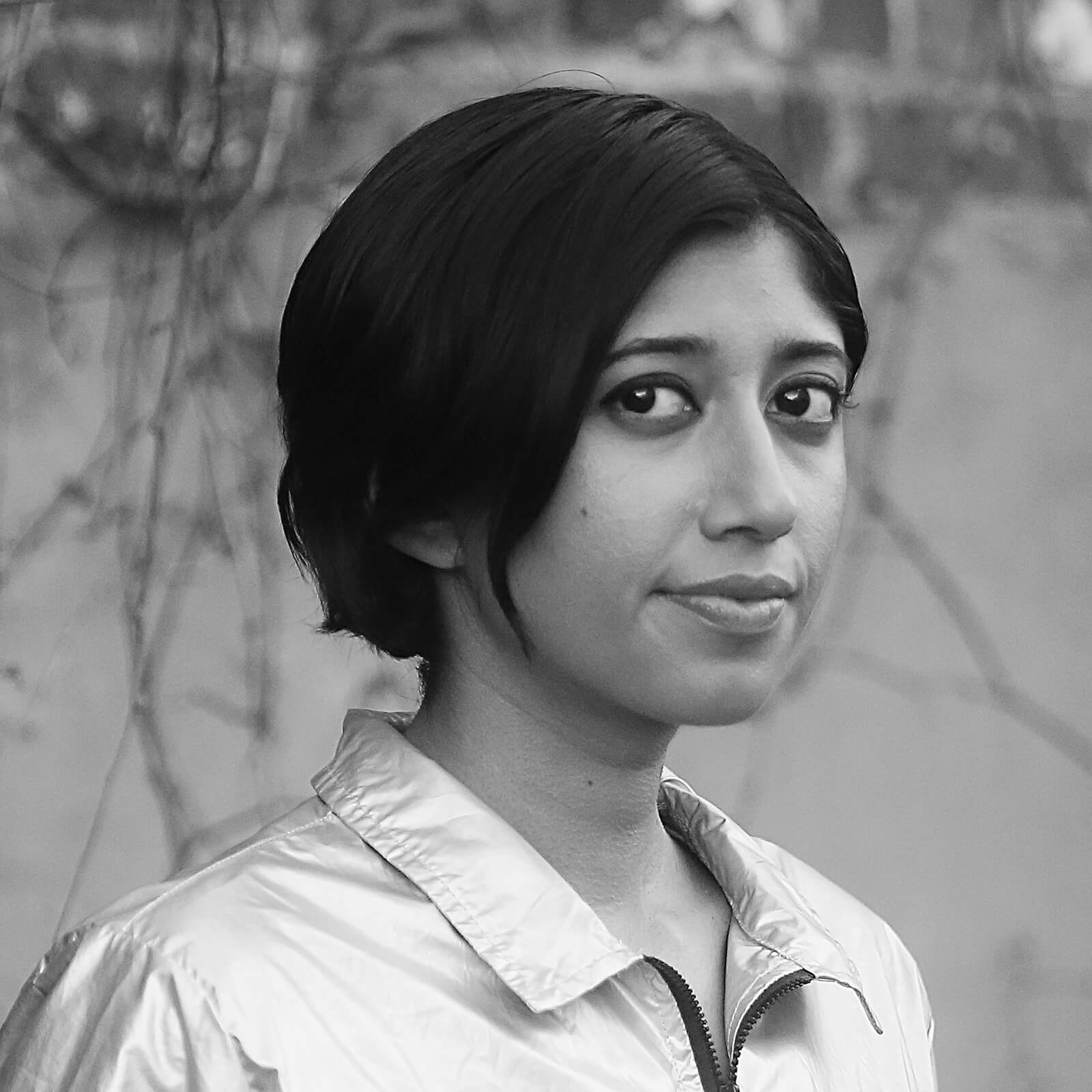
Alice Bucknell is an artist, writer, and educator based in Los Angeles. Their recent work has focused on creating cinematic universes within game worlds, exploring the affective dimensions of videogames as interfaces for understanding complex systems, relations and forms of knowledge. In 2025, they are a Creative Capital Awardee, a Year 11 Member of NEW INC, and a resident at Art Explora x Cité internationale des arts in Paris. They are currently faculty at SCI-Arc in Los Angeles, where they teach courses on worlding, videogames, and philosophies of technology.
Alice Bucknell’s playable ecofiction The Alluvials (2023-24) paints a grim picture of Los Angeles’s climate future: drought, water insecurity, and ruthless megacorporations perpetuating disaster narratives for profit. It’s a cautionary tale about privatization and technosolutionism told by the city’s silent inhabitants—the plants, animals, and elements—who remind us that Bucknell’s vision is already manifesting. The Alluvials has exhibited internationally, including at San Francisco’s Gray Area, FACT Liverpool, and HEK Basel, and recently became the first videogame to enter the SFMOMA collection. In conversation with HOLO, the LA-based artist, writer, and educator discusses diversifying video game ecologies, centering queer theory and Indigenous knowledge systems, and witnessing the polycrisis firsthand during the devastating LA wildfires.
Q: The Alluvials imagines a near-future version of Los Angeles grappling with drought and water scarcity—a dystopian vision that became all too real when, in January, wildfires destroyed more than 18,000 homes. As an LA resident, how did you experience the disaster personally? And what has it taught you about nature and the way we humans relate to and mess with it?
A: The January wildfires felt simultaneously like an all-at-once inferno that touched every aspect of life here and also something too massive to fully comprehend. I was in Altadena the night the fires broke out, visiting a friend and collaborator, and we both had to evacuate within hours. It honestly gave me a throwback to hurricane season in Florida: I saw the weather event referred to as a ‘hurricane of fire,’ and it tracks. Collective knowledge sharing and on-the-ground DIY reporting disseminated largely through the nonprofit app Fire Watch emerged in the absence of any real civic infrastructure or protocol; many friends pointed out the haunting abstraction of obsessively monitoring the unfurling reality of climate apocalypse through our screens even as the wildfires raged just a few miles from home. I think it was a scenario in which media and predictive technologies butted up against the edge of what’s mappable while also revealing the systemic issues that led to such an extreme wildfire.
“The LA wildfires created a scenario in which media and predictive technologies butted up against the edge of what’s mappable while also revealing the systemic issues underneath.”
Q: The Alluvials represents a cross-section of “wicked problems” that are central to your artistic practice—there’s climate breakdown, a collapsing ecosystem, technosolutionism, colonial trauma, and neoliberal excesses. Can you talk about how the polycrisis manifests in your near-future LA imaginary? And what does your dystopia reveal about the city’s (deep) past and present?
A: The Alluvials operates on a similar platform of speculation as Octavia E. Butler’s Parables series. It was not meant to be predictive or prophetic, but rather cautionary, trying to open up a space for alternative futures by looking into the deep past. The simple fact of the matter is that polycrises have always been endemic to Los Angeles, largely through colonial-settler relationships to land, the nonlinear temporalities of so-called disaster, and the particular political and social relationships that ushered this city into being. The Alluvials brings some of its past and future protagonists to the forefront, positioning the landscape itself as a narrator while also introducing speculative corporations doing what companies here are already doing: privatizing water resources, creating synthetic drinking water, and spinning an apocalyptic disaster narrative as an opportunity for speculative real estate development.

Q: The story is told from the perspective of a cast of unlikely protagonists you recruited from environmental video game assets. As the chapters unfold, we ‘mind meld’ with the LA River, a sycamore tree, a mountain lion, even fire. What do you want us to see (and feel) that we otherwise wouldn’t?
A: I’m principally trying to draw attention to nonhuman relationships with time. When it’s bent out of joint of a linear-capitalist narrative, new patterns and paradigms emerge. For instance, the history of controlled burning as practiced by the Gabrielino-Tongva people introduced so-called ‘destruction’ as ‘disturbance,’ a necessary cleaning and purging of forest and chaparral/brushland as a method of resilience against future ‘megafires.’ Obviously, when the Santa Monica mountains were privatized and built upon by white settlers, just as when the LA river was drained and barricaded with concrete reinforcement, these actions broke the cyclical methods of self-preservation practiced by the ecosystem and the Indigenous stewards of the region. It’s difficult to see in the fractalized dimensions of time, life and death, and disturbance and renewal that linear-progressive time has attempted to snub out. Still, I would hope that a glimpse into these alternative temporalities could be a similar clearing that’s capable of broadening the range of possible futures for which we advocate and eventually realize.
“When the Santa Monica mountains were privatized and built upon by white settlers, just as when the LA river was drained and barricaded with concrete reinforcement, these actions broke the cyclical methods of self-preservation practiced by the ecosystem and the Indigenous stewards of the region.”
Q: You’re a harsh critic of game ecologies for their cleanness and lack of diversity. What’s wrong with how nature is represented in most video games? Are there clues or patterns that can help us recognize the inherent politics of a simulated environment?
A: The environments of game worlds tend to be oversimplified variations of familiar environments, many of which are often the product of human fantasy. They tend to often veer into the utopic or dystopic: think emerald-green pastures popularized by cozy management farming sims, wild vistas seemingly untainted by human presence (I love Zelda, but you know what I mean), apocalyptic burnt-out cities ripe for disaster narratives and human-exceptionalist survival stories. I tend to design game worlds from a point of entanglement, drawing on ‘ecotopes’—or hybridized border zones between different ecosystems, as well as fusions between human and nonhuman imprints upon and worlds made within those landscapes. I’m quite inspired by Anna Tsing’s concept of patchwork ecologies and also the work of the game scholar Alenda Y. Chang. Sometimes this sense of ecological uncanny can be induced quite simply by kitbashing—combining off-the-peg game world assets—in contrasting ways. For instance, merging a regolith-hued map of the Grand Canyon with a gigantic oil refinery to create one of the worlds in The Martian Word for World (2022, a project that reveals the crises of current space politics and speculates on more-than-human futures for Mars.

The nonhuman protagonists in Alice Bucknell’s fictional Los Angeles include a local celebrity: P-22, a male mountain lion and former resident of Griffith Park. First identified in 2012, P-22 (P for “puma,” 22 for the specimen number in an ongoing puma study) was known as the “Hollywood Cat” and became a symbol of urban wildlife and conservation. P-22 roamed Griffith Park for over a decade until, in 2022, injuries from a presumed vehicle collision led to his euthanization. “P-22’s survival on an island of wilderness in the heart of Los Angeles captivated people around the world and revitalized efforts to protect our diverse native species and ecosystems,” California Governor Gavin Newsom said following the animal’s death. In The Alluvials, P-22’s ghost lives on, wandering the shores of the rewilded LA River.
Q: The Alluvials is an amalgamation of custom-built game environments, GTA V mods, 3D drone captures, and AI hallucinations. What is it about videogames as a medium that interests you as an artist? And how do you work with and against the loaded aesthetics of major franchises like GTA?
A: I love the totalizing worldbuilding capacity of game engines, but am also trying to create puncture spots or fractures where that control factor gets challenged, melts, or mutates. For me, working with Stable Diffusion was a nice way to melt the aesthetics between words—the hallucination scene you’re referring to (I love the ‘mind meld’ description from another question) was created by training the model on the simulated worlds of my own creation alongside both historical photographs, pre-channelization, and future-fictional renderings of the LA river, from Frank Gehry Architects’ imminent River Revitalization Masterplan. The stickiness between rendering and reality is something that AI is increasingly capable of blurring beyond recognition, so it felt appropriate to feed it both sets of images.
Similarly, the drone shots (which were then converted to 3D models/LIDAR scans) were really looking for moments of weakness in contemporary imaging technologies: the drone captured the ‘hard’ infrastructure of the river perfectly (concrete barriers and bridges) but failed to capture the water as it was a moving target. So the opacity of the river, or in a sense its refusal to render, became a really poetic way of understanding the limits of imaging technology in rendering the future. I utilized GTA V for a few reasons: one of them, pretty much, to speed up the workflow, but also to dabble in the lore of the ways LA is popularly conceptualized and consumed within the entertainment industry (the game’s fictional city of Los Santos is based on LA). By making small incisions in that simulated cityscape through mods like changing the type of trees present in the city or rewilding parts of the river, it’s introducing elements of friction by butting up against the loaded symbolism of that pre-fabricated world, adding a further sense of temporal and spatial slippage and ambiguity into the project.
Similarly, the drone shots (which were then converted to 3D models/LIDAR scans) were really looking for moments of weakness in contemporary imaging technologies: the drone captured the ‘hard’ infrastructure of the river perfectly (concrete barriers and bridges) but failed to capture the water as it was a moving target. So the opacity of the river, or in a sense its refusal to render, became a really poetic way of understanding the limits of imaging technology in rendering the future. I utilized GTA V for a few reasons: one of them, pretty much, to speed up the workflow, but also to dabble in the lore of the ways LA is popularly conceptualized and consumed within the entertainment industry (the game’s fictional city of Los Santos is based on LA). By making small incisions in that simulated cityscape through mods like changing the type of trees present in the city or rewilding parts of the river, it’s introducing elements of friction by butting up against the loaded symbolism of that pre-fabricated world, adding a further sense of temporal and spatial slippage and ambiguity into the project.
“By making small incisions in GTA’s simulated cityscape, like changing the type of trees or rewilding parts of the river, I’m introducing elements of friction that butt up against the loaded symbolism of that pre-fabricated world.”
Q: For the script of The Alluvials, you trained a large language model on wildly disparate inputs, including SpaceX press releases and the eco-feminist writings of Donna Haraway. Can you expand on the idea of ‘short circuiting’ human logic in latent space and share examples how it shaped—enriched—the project’s world and narrative?
A: This script you’re referring to was actually the tech bro character from The Martian Word for World (2022). But I took a similar approach in The Alluvials, for the synthetic water corporation Aquarius that I modelled on the very real desalination company Poseidon, headquartered in San Diego. There I was seeking a particular overlay of strung-out West Coast tech mysticism infused with a posthuman sensibility. So naturally I turned towards Erik Davis and Donna Haraway, along with some Yuk Hui and K Allado-Mcdowell thrown in. I think it’s interesting using language models as a kind of cognitive architecture to bring together distinctive and at times oppositional worldviews and philosophies, also imbricating historical theories with contemporary creative writing. The more chaotic and contrasting the input the more interesting the output; this kind of cognitive dissonance adds to the paradoxes at play in other parts of the narrative, such as the environment design.

Q: In 2024, The Alluvials spawned a playable game, where each of the four levels leverages a different gaming genre—first-person shooter, walking simulator, open world, and racing game. Can you talk about your interest in what you describe as “difficult gaming” and how the refusal of common modalities of play (better) reflects the game’s themes?
A: For me, difficult gaming is a conceptual tool that expands the possible parameters of how to feel with and through games. If we, as players, can move beyond the commonly held assumption that gaming is supposed to be fun and feel good, what else is the medium capable of? Personally, I think that for games dealing specifically with the climate crisis, it would be disingenuous to resolve in a ‘happily ever after’ narrative, or even resolve things at all. Difficult gaming can be a game that is impossible to beat, or a game that rewards loss, or a game with no clear resolution, even when it’s over. It’s about sticking with the bad feeling of frustration, anger, annoyance, disappointment, sadness, confusion and hurt and seeing what generative modalities of being in the world that ‘bad game feeling’ can introduce. In her book Playing with Feelings: Video Games and Affect (2018), the game scholar Aubrey Anable describes this conflux as “flailing with failure,” which is a nice gesture towards understanding the alternative states of being that gaming is capable of when we move past the idea of easy or fun gaming.
Of course, ‘bad feeling’ and failure are endemic to queer theory, which does have a habit of veering hard into pessimism and sometimes, a kind of turning away from the world, even as much as it can also be a liberatory practice. I’m not advocating for that kind of loss of world or belief in it, but rather a state of persistence, or persistent worlding—to continue to ‘play’ and exist despite the loss, the failure, the grief, the pain. The queer game scholar Bo Ruberg’s concept of permalife gaming—or games that are impossible to lose—has been a fundamental way for me to understand my own relationship to making games with and about nonhuman narratives, ecological precarity, and futures thinking. Understanding difficult games as a demand for more life despite the compounded crises of the present, for me, makes difficult gaming a paradoxically hopeful genre.
Of course, ‘bad feeling’ and failure are endemic to queer theory, which does have a habit of veering hard into pessimism and sometimes, a kind of turning away from the world, even as much as it can also be a liberatory practice. I’m not advocating for that kind of loss of world or belief in it, but rather a state of persistence, or persistent worlding—to continue to ‘play’ and exist despite the loss, the failure, the grief, the pain. The queer game scholar Bo Ruberg’s concept of permalife gaming—or games that are impossible to lose—has been a fundamental way for me to understand my own relationship to making games with and about nonhuman narratives, ecological precarity, and futures thinking. Understanding difficult games as a demand for more life despite the compounded crises of the present, for me, makes difficult gaming a paradoxically hopeful genre.
“For me, difficult gaming is a conceptual tool that expands the possible parameters of how to feel with and through games. If we, as players, can move beyond the commonly held assumption that gaming is supposed to be fun and feel good, what else is the medium capable of?”
Q: Your worlds revolve around said “wicked problems,” but they’re also steeped in deeply stimulating sci-fi literature, indigenous mythology, and queer eco-theory. Whose writings do you turn to for hope and guidance in this current moment of escalating political fires?
A: Many of the concepts, theories, and writings that my practice is engaged with are carrying a particular resonance at this time. Right now, I’m thinking a lot about T.J. Demos’s concept of Broken World Thinking, Patricia Reed’s “An End of a World and its Pedagogies” (2021), Bo Ruberg’s “Permalife” (2017), and Isadora Neves Marques’s essay “One or Many Dystopias” and book, YWY, Searching for a Character Between Future Worlds (2022). All of these texts in some way or another engage with the concept of a loss of world—sometimes from a decolonial approach, in the sense that for Indigenous cultures, the end of the world has already happened and continues to happen many times over. Demos and Reed deal with the tricky business of persisting and cultivating practices to process these endings through reading them systemically, as a space for other worlds to emerge.
On the environment side there’s the collected volume of essays, Arts of Living on a Damaged Planet (2017), as well as The Gothic Anthropocene (2022). These books read world ending through the landscape or environment as a protagonist, examining the ways that human imprints on the landscape are resulting in weird ecologies that hold the ghosts of previous worlds and monsters of future worlds. Reading the landscape in this way, the false binary between human and nonhuman, or nature and artifice, begins to melt pretty fast. On the queer theory side, I’m moving between dystopia and utopia, from Jack Halberstam’s Queer Art of Failure (2011) and José Esteban Muñoz’s Cruising Utopia (2009). Again, texts that explore paradoxical states and feelings arising from end-of-world states and putting in the work of cultivating alternatives.
Some of the reading and theories I encountered during my CERN residency regarding the black hole information paradox and the fecund universe theory, also known as cosmological natural selection, are traversing similar terrain on a cosmic scale and weirdly, are a superscalar metaphor for living through permacrisis, not on a human timeline but on the timeline of the universe itself. I am holding these ideas pretty closely right now. Other texts I’m returning to frequently at the moment are Ian Cheng’s Emissaries Guide to Worlding (2018), particularly the section on caring for ending worlds, Precious Okoyomon’s poetry collection, But did you die? (2024), Ursula Le Guin’s The Left Hand of Darkness (1969) and The Dispossessed (1974), Gary Zhexi Zhang’s Catastrophe Time! (2023), Emanuele Coccia’s The Life of Plants (2018), and, of course, Federico Campagna’s Prophetic Culture (2021).
On the environment side there’s the collected volume of essays, Arts of Living on a Damaged Planet (2017), as well as The Gothic Anthropocene (2022). These books read world ending through the landscape or environment as a protagonist, examining the ways that human imprints on the landscape are resulting in weird ecologies that hold the ghosts of previous worlds and monsters of future worlds. Reading the landscape in this way, the false binary between human and nonhuman, or nature and artifice, begins to melt pretty fast. On the queer theory side, I’m moving between dystopia and utopia, from Jack Halberstam’s Queer Art of Failure (2011) and José Esteban Muñoz’s Cruising Utopia (2009). Again, texts that explore paradoxical states and feelings arising from end-of-world states and putting in the work of cultivating alternatives.
Some of the reading and theories I encountered during my CERN residency regarding the black hole information paradox and the fecund universe theory, also known as cosmological natural selection, are traversing similar terrain on a cosmic scale and weirdly, are a superscalar metaphor for living through permacrisis, not on a human timeline but on the timeline of the universe itself. I am holding these ideas pretty closely right now. Other texts I’m returning to frequently at the moment are Ian Cheng’s Emissaries Guide to Worlding (2018), particularly the section on caring for ending worlds, Precious Okoyomon’s poetry collection, But did you die? (2024), Ursula Le Guin’s The Left Hand of Darkness (1969) and The Dispossessed (1974), Gary Zhexi Zhang’s Catastrophe Time! (2023), Emanuele Coccia’s The Life of Plants (2018), and, of course, Federico Campagna’s Prophetic Culture (2021).
“Games carry an obvious weight as a cultural medium. This kind of multidimensional positionality that gaming asks of you will be increasingly powerful and important as the space between game-world and world-world lessens.”
Q: The Alluvials recently entered the SFMOMA collection, marking the museum’s first videogame acquisition. What does the now more widespread institutional recognition say about the medium’s long-debated cultural and artistic significance?
A: We are well past the well-trodden debate of whether or not videogames qualify as art, which was doing the rounds around a decade ago. Games carry an obvious weight as a cultural medium, as engines get more sophisticated and the type of games people consume grapple with more complex narratives. Spiritfarer (2020), for example, is a cozy management sim about grief, dying, and loss, where you play as a death doula ferrying nonhuman souls to the afterlife. Or take the recently released Relooted (2025), an Afrofuturist heist game where players reclaim African artifacts from Western museums.
Moreover, gaming is an agential experience: You have to interact with the world and make choices to advance the story. As a player, you are always butting up against the edges of your knowledge system and are then invited to think orbitally around a system in order to find your way through. This kind of multidimensional positionality that gaming asks of you will be increasingly powerful and important as the space between game-world and world-world lessens: Narratives will continue to evolve and respond to contemporary politics, ecological realities, topics of gender and identity, and decolonization. The power of games to move across scales, perspectives, temporalities and integrate many worlds into an open-ended experience that requires real-time dialogue with the player is something I was thinking about a lot when making The Alluvials. I’m so honored to have the work be the first videogame in SFMOMA’s collection. It has me excited for the future of gaming’s increasing influence within contemporary art.
Moreover, gaming is an agential experience: You have to interact with the world and make choices to advance the story. As a player, you are always butting up against the edges of your knowledge system and are then invited to think orbitally around a system in order to find your way through. This kind of multidimensional positionality that gaming asks of you will be increasingly powerful and important as the space between game-world and world-world lessens: Narratives will continue to evolve and respond to contemporary politics, ecological realities, topics of gender and identity, and decolonization. The power of games to move across scales, perspectives, temporalities and integrate many worlds into an open-ended experience that requires real-time dialogue with the player is something I was thinking about a lot when making The Alluvials. I’m so honored to have the work be the first videogame in SFMOMA’s collection. It has me excited for the future of gaming’s increasing influence within contemporary art.

The Alluvials (2023-24) KILLSCREEN, Los Angeles

The Alluvials (2023-24), digital still

The Alluvials (2023-24), digital still

The Alluvials (2023-24) “Other Intelligences” HEK Basel (CH)

The Alluvials (2023-24), digital still

The Alluvials (2023-24), digital still

The Alluvials (2023-24), digital still
In Conversation
In this interview series, HOLO talks with artists, designers, curators, and researchers about a timely topic: a new project, a recent exhibition, or current events. Featured voices include Mindy Seu on Web3 and Cyberfeminism, Kyriaki Goni on colonial cosmologies, and Total Refusal on NPC labour.→ Interview back catalog
Alexander Scholz
Alexander Scholz (he/him) is a Berlin-based writer, curator, and publisher. He’s the founder and co-editor of HOLO, an independent media imprint that explores critical creative practice where art, science, technology, and culture intersect. Scholz works regularly with international festivals and cultural organisations and has, for example, developed exhibitions, conferences, and educational formats for A.C.C. (Gwangju, KR), Mapping (Geneva, CH), MUTEK (Montréal, CA), and NODE Forum for Digital Art (Frankfurt, DE).
More